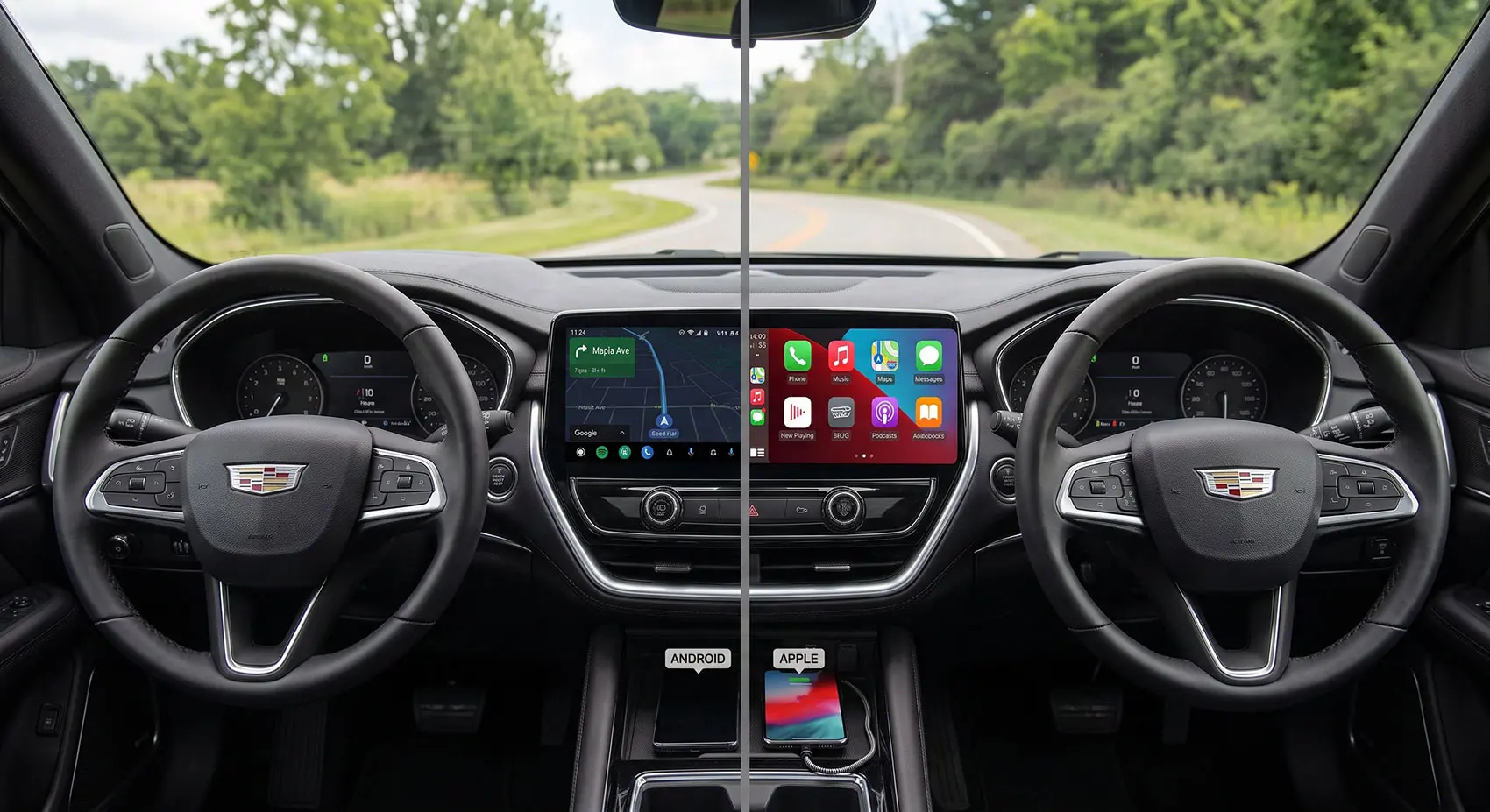
When you slip behind the wheel of a modern car, you might feel like you’re piloting a spaceship rather than a traditional machine of steel and horsepower. Over the past decade, the automotive industry has undergone a silent revolution. While sleek styling and fuel economy still grab headlines, the real magic happens deep inside the vehicle's cabin and software architecture. Manufacturers have packed modern vehicles with an astonishing array of hidden tech features designed to elevate comfort, enhance safety, and fundamentally transform your daily commute into an intuitive, seamless experience.
Yet, despite these technological leaps, many drivers barely scratch the surface of what their vehicles can actually do. Dealership walkarounds usually focus on the basics—touchscreen infotainment, Bluetooth pairing, and adaptive cruise control. But tucked away in sub-menus, integrated into hidden sensors, or activated through clever key fob sequences are some of the coolest, most futuristic innovations ever engineered. Whether it’s gesture-controlled climate systems that respond to a wave of your hand, augmented reality head-up displays that project floating navigation arrows directly onto the road, or advanced over-the-air diagnostic features that fix software bugs overnight while you sleep, cars have become rolling computers.
In this comprehensive guide, we are peeling back the dashboard panels to reveal the most incredible, under-the-radar in-car tech features you probably didn't even know existed. Buckle up as we explore the hidden innovations that are quietly redefining modern driving, turning your everyday vehicle into a smart sanctuary on wheels.
Advanced Interior Comfort & Hidden Convenience Tech
When you step into a modern vehicle, your interaction with the cabin is no longer limited to twisting knobs, pushing physical buttons, or pulling mechanical levers. Automotive engineers have completely reimagined the interior ergonomics, embedding invisible yet highly responsive technology designed to anticipate your needs before you even voice them.
Take, for instance, the rise of gesture-controlled infotainment and climate settings. Rather than forcing you to take your eyes off the road to hunt down a tiny touch button on a screen or center console, luxury and mainstream manufacturers alike now utilize overhead 3D cameras and infrared sensors. A simple circular motion in the air can raise or lower the audio volume, while a quick swipe to the left or right can skip your favorite track. Need to adjust the dual-zone climate control? A subtle upward wave of your hand can increase the cabin temperature. This touch-free interaction minimizes distracted driving, keeping your focus where it belongs—on the asphalt ahead.
Beyond gesture controls, modern cabins are packed with hidden storage compartments featuring integrated inductive charging and security locks. Gone are the days of messy center consoles tangled with auxiliary cords and loose change rattling around door pockets. Today's vehicles feature cleverly concealed storage vaults built behind sliding wood veneer panels, underneath floating center console arches, or even disguised as armrest linings. Inside these hidden compartments, wireless Qi-charging pads power up your smartphone seamlessly, while digital security locks—often tied to your profile or a secret PIN entered via the infotainment screen—keep valuables protected when the valet has your keys.
Adding to this suite of invisible luxury are biometric vehicle access and driver-monitoring seat sensors. While fingerprint scanners have become common for starting ignition buttons in performance and electric vehicles, newer systems go a step further. Infrared interior sensors scan facial features or monitor your posture and eye movement as you take the driver's seat. Instantly, the car recognizes who is behind the wheel, automatically adjusting your personalized seat memory, steering wheel depth, climate preferences, favorite playlist, and HUD positioning within milliseconds. If you share a vehicle with a spouse or family member, this seamless biometric identification eliminates the frustrating routine of manually resetting mirrors and seat positions every single time you switch drivers.
Cutting-Edge Safety & Visibility Innovations
When it comes to automotive engineering, safety and visibility have always taken center stage. However, the way modern manufacturers approach these critical elements has shifted dramatically from passive metal crumple zones to active, tech-forward digital sentinels. Today’s vehicles don't just protect you during a collision; they actively work to prevent accidents before they ever materialize, using high-tech optical and computing systems built directly into the vehicle's architecture.
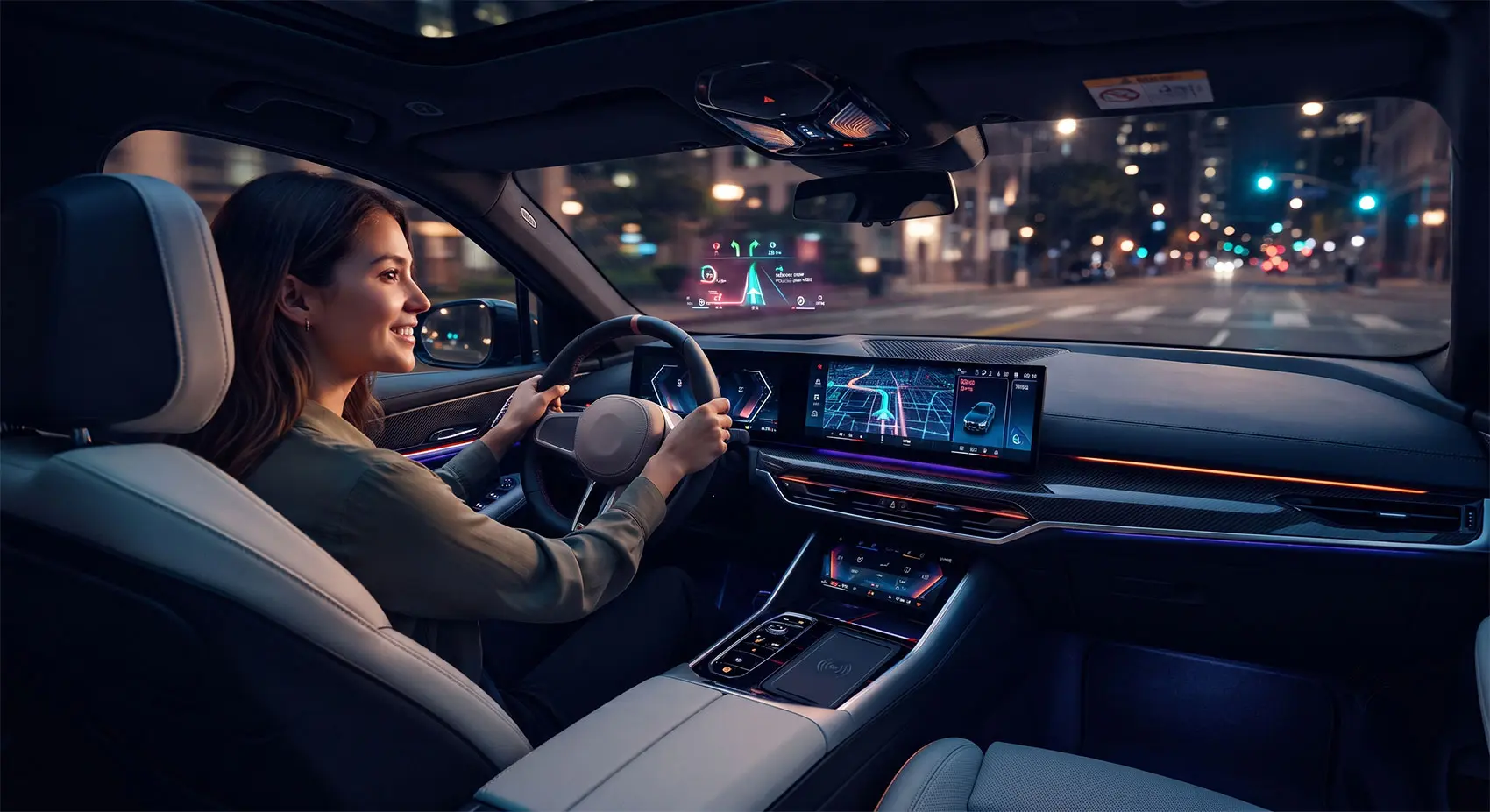
One of the most transformative advancements on the road is the augmented reality (AR) head-up display (HUD). Traditional HUDs were relatively simple, projecting basic digital numbers like your current speed and speed limit onto a small section of the windshield or a pop-up plastic combiner glass. Modern AR HUDs, by contrast, utilize sophisticated digital micromirror devices and deep spatial computing to project vibrant, dynamic graphics that appear to overlay the physical world outside. As you approach an upcoming turn, a vivid, three-dimensional directional arrow seems to paint itself directly onto the pavement in front of you. If a pedestrian steps into your path or a vehicle ahead slams on its brakes, the system instantly highlights the hazard with glowing amber or red warning cues mapped precisely over the actual obstacle. This keeps your eyes locked on the horizon, bridging the critical gap between digital information and real-world perception.
Complementing these windshield innovations are digital rear-view mirrors with integrated dash cams and night-vision capabilities. Standard glass rearview mirrors are frequently blocked by tall passengers, loaded cargo areas, or blinding high beams from tailgating vehicles. Modern digital mirrors solve this by swapping the glass pane for a high-definition, wide-angle LCD display fed by a waterproof camera mounted discreetly on the rear exterior of the car. With a single flip of a toggle switch, your standard mirror transforms into a crystal-clear digital feed that offers an unobstructed, panoramic view of the road behind you. Advanced iterations take this a step further by incorporating thermal imaging and low-light enhancement sensors, allowing you to spot wildlife, pedestrians, or unlit obstacles lurking in pitch-black rural roads long before your standard headlights can illuminate them.
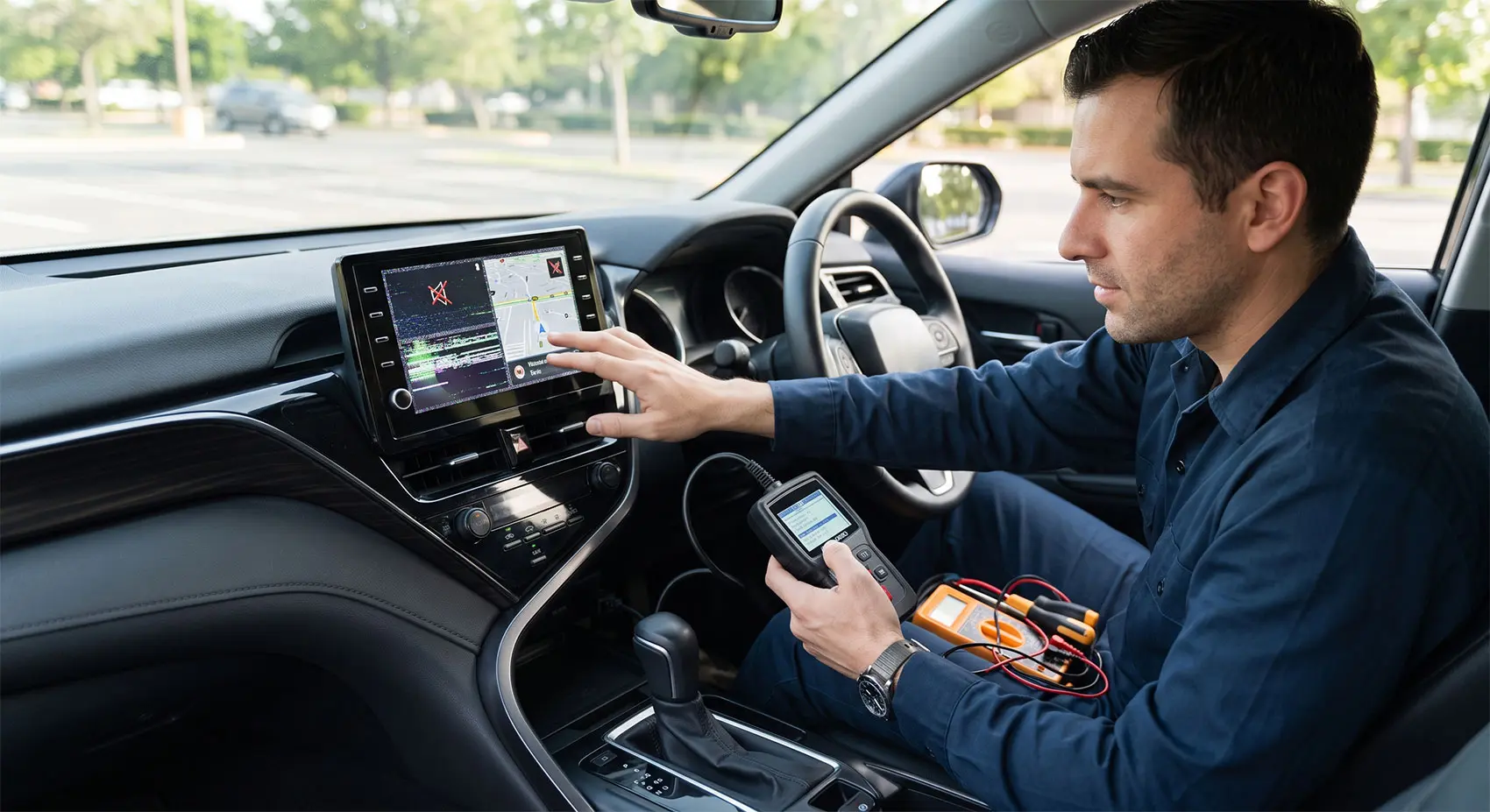
Finally, invisible safety and maintenance are constantly being managed through over-the-air (OTA) updates and hidden diagnostic features. Much like your smartphone receiving security patches overnight, modern cars routinely download critical powertrain optimizations, braking software enhancements, and infotainment upgrades while parked in your garage. This means your vehicle actually improves over time without requiring a trip to the dealership service bay. Hidden deep within the vehicle's hidden diagnostic service menus, technicians and tech-savvy owners can view real-time telemetry, analyze cell-level health metrics for electric battery packs, and monitor sensor calibrations, ensuring your rolling computer runs at peak safety and efficiency throughout its entire lifecycle.
Futuristic Exterior & Smart Connectivity Features
While the cabin of your vehicle is packed with invisible intelligence, the exterior and software ecosystem are equally transformed by futuristic tech features that blend convenience with seamless connectivity. We often think of a car's capabilities stopping at the doors, but modern engineering extends smart boundaries far beyond the sheet metal.
Take a look at your everydaysmart key fob tricks capabilities that most owners never realize are built into their standard hardware. Beyond simply locking and unlocking the doors, holding down the unlock button on your key fob from a distance will often automatically roll down all windows and open the sunroof to vent hot air on a sweltering summer day. Many modern fobs also house a physical emergency key cleverly hidden inside the plastic casing, while higher-end luxury vehicles feature smart display keys or digital phone-as-a-key capabilities. These allow you to remotely execute parking maneuvers or pull your car out of a tight garage stall using your smartphone screen while standing completely outside the vehicle, acting like a remote-controlled toy for adults.
Moving around the vehicle,exterior puddle lighting with embedded proximity sensors adds both safety and theatrical flair to your arrival. As you approach your locked vehicle at night with your key fob or paired smartphone in your pocket, hidden ultra-wideband proximity sensors detect your approach from several feet away. The car wakes up by projecting high-definition illumination patterns onto the ground beneath the doors, lighting up puddles or uneven terrain while simultaneously illuminating door handle recesses and folding out side mirrors. It is a stunning visual greeting that marries practical safety with high-end luxury aesthetics.
Finally, at the cutting edge of automotive connectivity is V2X (Vehicle-to-Everything) communication readiness. Modern vehicles are increasingly built with dedicated short-range communication (DSRC) hardware and 5G cellular modems designed to talk directly to the world around them. This means your car can communicate with other equipped vehicles to warn drivers behind you of sudden braking through thick fog, or talk directly to municipal traffic infrastructure. Approaching a smart intersection, your dashboard can display a countdown timer for upcoming traffic lights, allowing you to cruise smoothly and optimize fuel or battery efficiency without unnecessary stopping. Together, these exterior and connectivity innovations prove that a modern car is no longer just an isolated bubble, but an active node in a hyper-connected smart city ecosystem.
Conclusion
When we look back at the evolution of the automobile, it becomes clear that we have crossed a fascinating threshold. Cars are no longer defined solely by their mechanical prowess, displacement figures, or aerodynamic chassis designs. Instead, they have transformed into sophisticated, software-driven ecosystems that prioritize our safety, elevate our comfort, and seamlessly connect us to the world around us. The hidden features we’ve explored—from augmented reality displays that paint navigation directly onto the pavement and gesture-controlled climate hubs to biometric driver recognition and over-the-line software upgrades—demonstrate that modern vehicles are living, breathing pieces of technology.
What makes these advancements truly remarkable is their subtlety. They operate quietly in the background, anticipating our needs, shielding us from unseen hazards, and turning every ordinary commute into a personalized, first-class experience. As automotive engineering continues to push boundaries with V2X communication, automated convenience features, and predictive artificial intelligence, the gap between science fiction and everyday driving is disappearing entirely. By taking the time to explore and utilize these under-the-radar technologies, drivers can unlock a completely new dimension of ownership. Your car already holds an incredible arsenal of futuristic capabilities—it’s simply up to you to discover them.


Written by Maarukh Shahbaz
Published Aug 10, 2026 in Auto Tech.