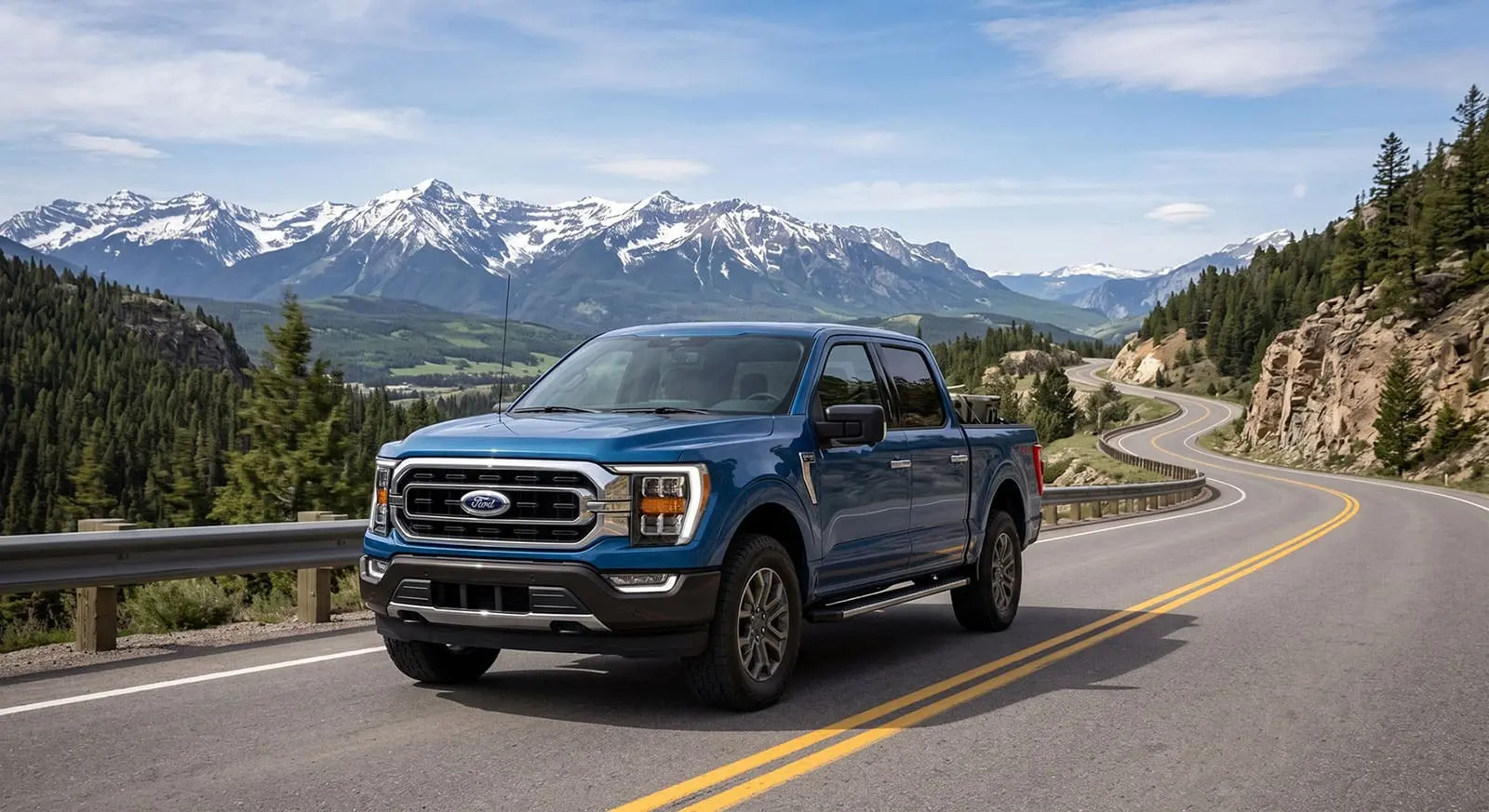
The full-size pickup truck segment has long been the backbone of the American automotive market, built on a reputation for uncompromising utility, brutal torque, and bulletproof endurance. When Ford introduced the all-electric F-150 Lightning, it sent shockwaves through a traditionalist demographic accustomed to rumbling V8s and high-output EcoBoost twin-turbos. Fast forward to the 2026 Ford F-150 Lightning, and the conversation has shifted dramatically from novelty experimentation to ruthless, real-world capability.
Electric trucks no longer get a free pass simply for existing. Buyers now demand answers to hard questions: Can an electric truck tow a dual-axle equipment trailer or a 28-foot travel trailer across state lines without turning every road trip into a logistical nightmare? Does the instant torque compensate for the unavoidable aerodynamic energy penalties? Most importantly, over a typical five-year ownership cycle, does the total cost of ownership justify the upfront price tag compared to traditional gas or hybrid alternatives?
The 2026 model year represents a mature, refined iteration of Ford’s electric workhorse. With structural refinements, a streamlined battery architecture that standardizes high-capacity packs, native integration into the expansive Tesla Supercharger network via NACS capability, and smarter route-planning software, the 2026 F-150 Lightning directly targets the pain points identified by early adopters. It retains the familiar, boxy profile of the classic F-Series, sidestepping polarizing sci-fi aesthetics in favor of drop-in commercial and recreational functionality.
This comprehensive review pulls no punches. We dive deep into the mechanical architecture, analyze empirical towing range depletion under varying payloads, explore real-world charging realities on active towing corridors, and crunch the five-year financial data to determine whether the 2026 F-150 Lightning delivers genuine, long-term value for modern truck owners.
Powertrain, Horsepower & Instant Torque Under Load
The heart of the 2026 Ford F-150 Lightning is its dual-motor all-wheel-drive powertrain. In extended-range configurations, this setup produces a massive 580 horsepower and 775 lb-ft of instantaneous torque. Unlike an internal combustion engine that requires gear-hunting, turbo spooling, and high revs to reach peak power bands, the Lightning delivers maximum twist from zero RPM.
-
Hill-Climbing Mechanics: When hauling heavy equipment up steep mountain grades, the electric powertrain maintains effortless acceleration without gear shifts or engine strain.
-
Chassis Balance & Independent Rear Suspension: The battery pack sits low between the frame rails, providing an ultra-low center of gravity that significantly reduces trailer sway and road wobble compared to traditional solid-rear-axle setups.
-
Integrated Drive Modes: Dedicated Tow/Haul modes optimize regenerative braking to assist in downhill speed regulation while preventing brake fade.
Real-World Towing Range: The Honest 40%–50% Depletion Test
While the 2026 Ford F-150 Lightning boasts an EPA-estimated range of up to 320 miles in unladen extended-range configuration, attaching a heavy trailer fundamentally alters the laws of energy consumption. Physics is unforgiving to electric vehicles under load, and real-world highway testing reveals the exact mechanics of range depletion.
When pulling a full load near its 10,000-pound maximum towing rating, drivers should plan for a realistic 40% to 50% reduction in total driving range. Under highway cruising speeds between 65 mph and 70 mph, energy efficiency drops from a nominal 2.0–2.2 mi/kWh down to approximately 0.9–1.1 mi/kWh. This brings your practical driving window with the 123 kWh usable battery pack to roughly 115 to 145 miles between charging stops.
-
Aerodynamic Drag vs. Dead Weight: The shape of your trailer impacts energy consumption far more than its actual scale weight. A low-profile, aerodynamic flatbed carrying 7,000 lbs of steel will yield significantly better efficiency than a tall, boxy 5,000-lb travel trailer acting as a giant wind sail on the interstate.
-
Cold-Weather Towing Penalties: Sub-freezing temperatures demand additional energy to keep the liquid-cooled battery pack in its optimal operating window while heating the cabin. Even with Ford's integrated heat pump system, winter towing can reduce range by an additional 10% to 15%.
-
Smart Hitch Real-Time Calculation: Ford’s onboard scale system and Intelligent Range algorithms automatically calibrate distance-to-empty projections based on trailer profile, ambient temperature, elevation changes, and route topography, eliminating guesswork before you depart.
Charging Infrastructure & Logistics on Towing Routes
Towing with an electric truck requires a strategic shift in how you plan long-distance transit. Because heavy towing cuts real-world range to between 115 and 145 miles, your charging strategy and access to reliable high-speed infrastructure become just as critical as the truck’s mechanical towing hardware.
The primary logistical challenge when towing is charging station geometry. The vast majority of public DC fast chargers (CCS networks like Electrify America or EVgo) are configured as traditional pull-in parking spots. Pulling into a standard stall with a 24-foot travel trailer or utility flatbed attached means you will either block the entire driving lane or be forced to unhitch the trailer before plugging in. While newly constructed charging plazas are increasingly adopting dedicated pull-through lanes, drivers on active towing routes must account for an extra 10 to 15 minutes of unhitching and re-hitching per charging session when pull-through spots are unavailable.
-
Tesla Supercharger Access via NACS: Access to Tesla's V3 and V4 Supercharger network dramatically expands high-speed charging density along major interstate towing corridors. Superchargers offer superior uptime and seamless plug-and-charge billing, drastically reducing range anxiety on remote routes.
-
Charging Curve and Dwell Times: The 2026 F-150 Lightning supports DC fast charging speeds up to 150+ kW, allowing the battery to replenish from 15% to 80% in approximately 41 to 44 minutes under optimal thermal conditions. Because the charging curve tapers steeply above 80%, the most efficient towing strategy is to charge only to 80% and make shorter, more frequent hops between stations.
-
Route Pre-Conditioning: Ford’s onboard navigation automatically initiates battery pre-conditioning as you approach an en-route DC fast charger. This ensures the pack reaches optimal chemical temperature before plugging in, maximizing peak kilowatt intake right from the start.
Worksite Utility: Mega Power Frunk & Pro Power Onboard
Beyond raw towing and acceleration numbers, the 2026 Ford F-150 Lightning establishes itself as an indispensable commercial tool through its unique integration of bi-directional power delivery and secure storage architecture. For contractors, outdoor enthusiasts, and fleet operators, these features transform the vehicle from a simple mode of transportation into a self-contained, mobile worksite generator.
At the core of this operational utility is the Pro Power Onboard system, capable of outputting up to 9.6 kW of total exportable electrical power. The system distributes electrical current across 11 distinct outlets located in the cabin, the truck bed, and the front trunk. With dedicated 120V (20-amp) and 240V (30-amp) outlets in the bed, the Lightning can concurrently run heavy-duty commercial equipment—such as commercial air compressors, table saws, circular miter saws, and plasma welders—without needing a noisy, fuel-guzzling auxiliary gas generator. In residential emergency scenarios, the same system integrates with Ford’s Intelligent Backup Power setup to deliver uninterrupted electricity to an entire home for several days during grid outages.
-
Mega Power Frunk Architecture: Because there is no internal combustion engine occupying the front compartment, Ford engineered a 400-liter (14.1 cubic feet), weather-sealed, lockable front trunk capable of carrying up to 400 lbs of gear. It features four dedicated 120V outlets, dual USB ports, and a built-in drain plug, allowing it to double as a secure tool chest, dry luggage compartment, or washable cooler.
-
Smart Hitch & Onboard Payload Scales: Integrated sensors throughout the suspension measure the real-time weight resting in the bed and calculate tongue weight when hitching a trailer. Visual LED indicators in the taillights and digital readouts on the central 15.5-inch touchscreen inform the driver instantly if payload or tongue weight exceeds safe operational limits.
-
Pro Trailer Backup Assist & Hitch Assist: Utilizing high-resolution cameras and ultrasonic radar, the truck can automatically align the hitch ball directly beneath a trailer coupler with the touch of a button. Once hitched, the Pro Trailer Backup Assist knob on the dash lets drivers steer the trailer intuitively while reversing, removing the traditional counter-steering complexity.
Long-Term Value: Depreciation, Maintenance & EV vs. Gas TCO
Evaluating the true financial return of the 2026 Ford F-150 Lightning requires looking past the window sticker and analyzing the five-year Total Cost of Ownership (TCO). While electric pickups carry an initial price premium over standard gas-powered trucks, significant operational efficiencies in fuel and mechanical upkeep offset upfront expenses over extended mileage.
The most substantial operating savings stem from energy and routine maintenance. Charging the Lightning at standard residential electric rates costs roughly one-third to one-half of fueling an equivalent twin-turbo EcoBoost or 5.0L V8 F-150 over 15,000 annual miles. Furthermore, because the electric drivetrain eliminates internal combustion components—doing away with engine oil changes, spark plug replacements, complex multi-speed transmissions, exhaust systems, and accessory belts—scheduled maintenance costs remain exceptionally low, consisting primarily of cabin air filters, tire rotations, and coolant flushes. Regenerative braking also extends friction brake pad and rotor lifespans well past traditional wear cycles.
-
Depreciation Dynamics: Depreciation remains the single largest financial factor over a five-year ownership horizon. While early electric pickups suffered accelerated initial value drops due to rapid technology cycles, mature battery platforms and normalized pricing have stabilized residual curves, with the 2026 model projecting value retention competitive with high-trim luxury half-ton trucks.
-
Battery Longevity and Warranty Coverage: Ford backs the high-voltage battery architecture with an 8-year / 100,000-mile warranty that guarantees at least 70% original capacity retention. Advanced liquid-thermal management circuits prevent thermal degradation during high-speed DC charging and sustained towing loads.
-
Tire Wear Factor: Because the dual-motor platform delivers 775 lb-ft of instantaneous torque across a curb weight exceeding 6,000 lbs, aggressive throttle application accelerates tire tread wear faster than on a lighter, gas-powered F-150, making proactive rotation and dedicated EV-rated tires essential for cost control.
Conclusion
The 2026 Ford F-150 Lightning proves that an electric pickup can handle the vast majority of demanding tasks modern truck owners require. With instantaneous low-end torque, class-leading onboard power export capabilities, a highly functional front trunk, and standard dual-motor all-wheel drive, it elevates daily utility and job-site productivity well beyond what traditional gas-powered alternatives offer. Furthermore, the integration into high-density charging networks like Tesla Superchargers substantially mitigates highway route friction.
However, long-distance heavy towing remains its most prominent operational hurdle. If your workflow demands frequent 400-mile highway towing trips with high-profile travel trailers or heavy commercial equipment, the 40% to 50% range depletion and the logistical realities of pull-in public charging stalls mean a traditional hybrid or diesel truck remains the more frictionless choice. Conversely, for local contractors, fleet operators, daily commuters, and weekend haulers operating within a 150-mile radius, the substantial fuel savings, minimal mechanical maintenance, and silent powerhouse performance make the 2026 F-150 Lightning an exceptionally compelling long-term investment.


Written by Maarukh Shahbaz
Published Aug 22, 2026 in Car Reviews.