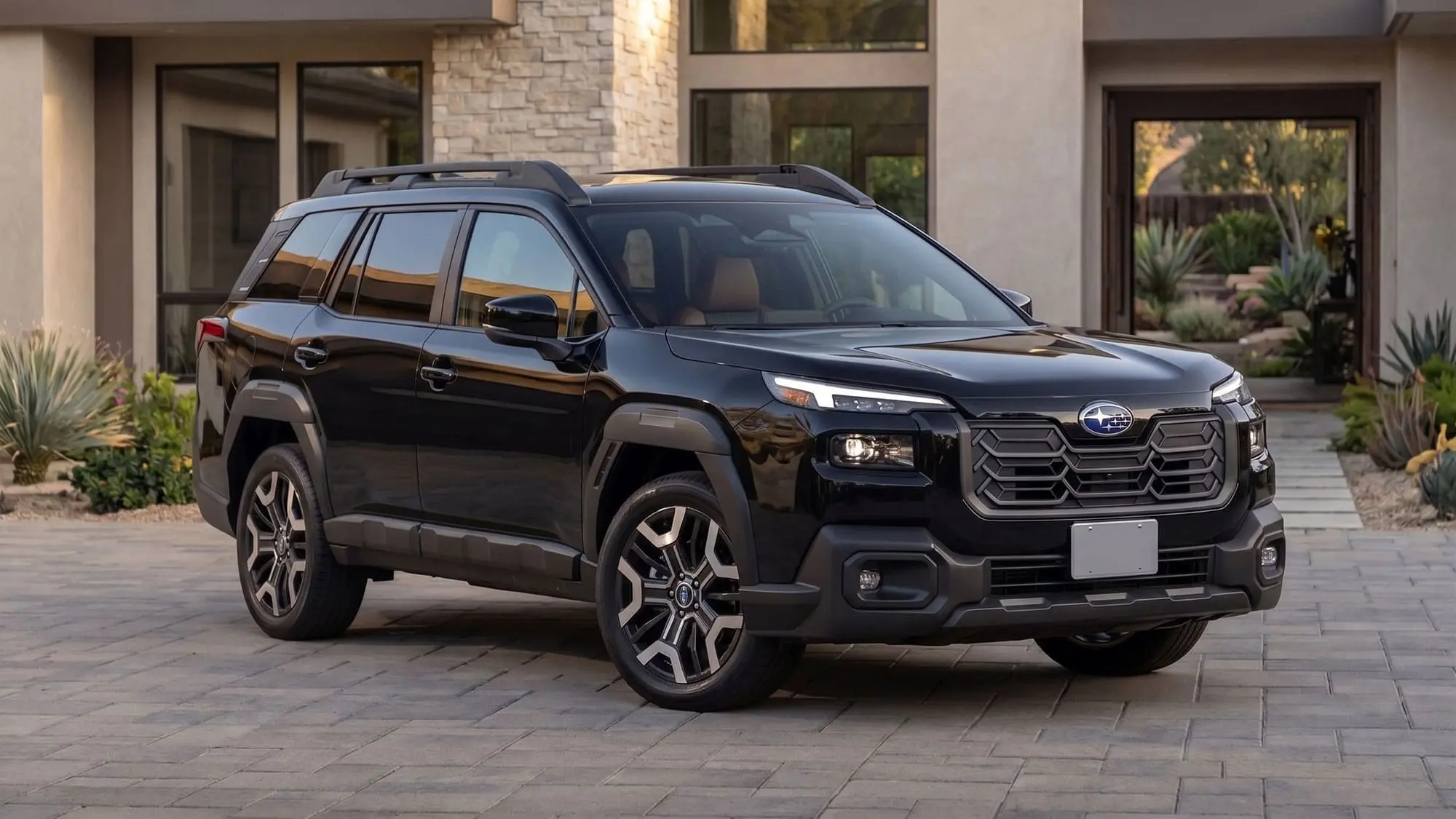
For three decades, the Subaru Outback has occupied one of the most distinctive niches in automotive history. While modern consumers have overwhelmingly surrendered to tall, heavy, and often generic two-row crossover SUVs, the Outback has remained steadfastly loyal to its lifted wagon heritage. It has consistently served as the pragmatic counterculture choice for outdoor enthusiasts, northern commuters, and families who prioritize real-world capability over aggressive styling pretense.
Now entering the 2026 model year, Subaru faces a much more crowded and capable landscape. Competitors are aggressively encroaching on rugged territory with dedicated off-road trims, hybridized powertrains, and heavily digitalized cockpits. In response, the 2026 Subaru Outback brings targeted exterior refinements, key chassis stiffening, improved cabin sound insulation, and a major overhaul of its onboard infotainment and driver-assistance systems.
Yet, the core question remains: In an era saturated with rugged-looking utility vehicles, does the Outback still hold the crown as the ultimate all-weather daily driver?
Under the sheet metal, the formula looks reassuringly familiar. Subaru’s legendary Symmetrical All-Wheel Drive system remains standard across all trims, paired with either an efficient naturally aspirated Boxer engine or an eager turbocharged unit. The ride height continues to embarrass most traditional SUVs, while the low center of gravity inherent to the Boxer layout delivers car-like composure when cornering on pavement.
In this comprehensive 2026 review, we put the Outback through its paces across slick highway tarmac, rutted gravel backroads, and freezing weather scenarios. We dissect its powertrain options, evaluate the real-world utility of the Wilderness package, analyze the modernized EyeSight safety suite, and see how it stacks up against prime rivals like the Mazda CX-50 and Toyota Crown Signia.
Exterior Styling & Ground Clearance: Rugged Wagon or Proper SUV?
The design of the 2026 Subaru Outback continues to toe the line between a traditional estate wagon and an authentic trail-ready utility vehicle. Subaru has resisted the urge to inflate the Outback's roofline into a bulbous, upright crossover silhouette, choosing instead to preserve the elongated greenhouse, low-profile stance, and distinct wagon proportions that long-time loyalists cherish. However, functional exterior enhancements give the 2026 model a more chiseled, aggressive presentation that serves practical outdoor demands.
-
Functional Armor and Protective Cladding:
Heavy-duty black composite cladding wraps the lower bumpers, flared wheel arches, and rocker panels. Far from being merely cosmetic, this protective perimeter guards vulnerable metal against gravel spray on logging trails and corrosive road salt during winter highway commutes. Redesigned integrated tie-down points and heavy-duty roof rails with swing-out crossbars remain a standard highlight, allowing users to strap down kayaks, rooftop tents, or cargo boxes without purchasing expensive aftermarket crossbars.
-
Class-Leading Ground Clearance (8.7" to 9.5"):
Standard Outback trims boast a generous 8.7 inches of ride height, which eclipses standard crossovers like the Honda CR-V (8.2 inches) and Toyota RAV4 (8.4 inches). For genuine off-pavement adventurers, the Outback Wilderness edition elevates clearance to a massive 9.5 inches. This setup affords steep approach (20.0°), breakover (21.2°), and departure (23.6°) angles, enabling the wagon to crest frozen snowbanks and clear sharp rock ledges without scraping its underbody skid plates.
-
Low Roof Advantage vs. Tall SUVs:
While traditional two-row midsize SUVs require stepping stools or precarious door-sill balancing to mount sports gear, the Outback’s lower overall vehicle height (66.1 inches) makes loading heavy mountain bikes or snowboards onto roof racks remarkably effortless. You get the obstacle clearance of a high-riding truck paired with the ergonomic roof accessibility of a family wagon.
Powertrain & Performance: Standard 2.5L vs. 2.4L Turbo Boxer
Choosing the right powerplant for the 2026 Subaru Outback defines your entire driving experience. Subaru continues to offer two distinct horizontally opposed four-cylinder engines, each engineered to serve radically different driving profiles, geographic needs, and towing requirements.
-
The 2.5-Liter Naturally Aspirated Boxer (The Sensible Commuter):
Standard on Base, Premium, and Limited models, the naturally aspirated 2.5-liter four-cylinder produces 182 horsepower and 176 lb-ft of torque. In daily low-speed city driving and flat highway cruising, this engine operates with quiet predictability and delivers peak fuel economy. However, when loaded with four passengers, weekend camping gear, and facing a steep mountain pass, the standard engine requires patience. Passing maneuvers at highway speeds require full throttle inputs, causing the engine to rev high into its powerband.
-
The 2.4-Liter Turbocharged Boxer (The Enthusiast & Towing Choice):
Equipped on the XT trims and standard on the Wilderness, the 2.4-liter turbocharged Boxer turns the Outback into an entirely different machine. Delivering a punchy 260 horsepower and 277 lb-ft of torque starting low at 2,000 RPM, the turbo variant surges up steep mountain grades with effortless authority. It completely eliminates the power loss typically experienced at high altitudes and boosts maximum towing capacity from 2,700 lbs up to 3,500 lbs, easily accommodating small travel trailers or dual-motorcycle haulers.
-
Lineartronic Continuously Variable Transmission (CVT) Refinement:
Both engines mate exclusively to Subaru’s Lineartronic CVT. For 2026, revised hydraulic controls and improved stepped-ratio programming make the transmission feel remarkably close to a traditional 8-speed automatic during brisk acceleration. The stepped logic eliminates excessive engine droning, while steering-wheel-mounted paddle shifters give drivers immediate manual control over engine braking when descending icy slopes or rocky declines.
All-Weather Mastery: Symmetrical AWD and Dual-Function X-Mode
The hallmark of the Subaru Outback experience has always been its unflappable composure in treacherous weather. While most modern crossovers employ front-wheel-drive-biased, slip-and-grip on-demand systems that only route power rearward after wheel slippage is detected, the 2026 Outback’s full-time Symmetrical All-Wheel Drive remains permanently engaged, distributing continuous torque to all four wheels for instant, predictable traction.
-
Permanent Symmetrical AWD Mechanical Layout:
Because the horizontally opposed Boxer engine is mounted longitudinally along the chassis centerline, the entire drivetrain forms a straight, symmetrical path to each axle. This layout eliminates torque steer entirely and yields a balanced weight distribution across the left and right sides of the vehicle. When hitting patches of black ice or hydroplaning through deep standing highway puddles, the chassis resists pulling sideways, tracking straight with minimal steering correction.
-
Dual-Function X-Mode System:
Available on Onyx, Limited, and Wilderness models, the Dual-Function X-Mode system allows drivers to tailor the drivetrain, throttle response, and traction control logic to specific low-friction surfaces via a single touch interface:
-
Snow / Dirt Mode: Calibrates throttle sensitivity to avoid sudden wheel spin while applying subtle brake pressure to spinning wheels, maximizing forward momentum on slick, packed snow or loose gravel.
-
Deep Snow / Mud Mode: Disables standard traction control intervention, allowing controlled wheel spin to dig through heavy slush, unplowed driveways, and thick trail mud without cutting engine power.
-
-
Hill Descent Control & Low-Grip Composure:
Navigating steep, icy mountain declines can be unnerving in a heavy crossover, but the Outback’s integrated Hill Descent Control automatically manages braking pressures at individual wheels, keeping descent speeds strictly regulated without locking up the brakes. Combined with Active Torque Vectoring, the 2026 Outback rotates smoothly through snow-covered curves without the sudden understeer typical of front-heavy utility vehicles.
Interior Comfort, Practicality & Cabin Tech
Step inside the 2026 Subaru Outback, and you will find an interior designed with an emphasis on rugged durability, ergonomic comfort, and long-distance travel endurance. Rather than adopting fragile piano-black surfaces and finicky touch-only panels that scratch and smudge easily, Subaru continues to build cabins engineered for actual outdoor use and harsh weather routines.
-
Upgraded Infotainment & Restored Physical Ergonomics:
The center stack features an updated, high-definition 11.6-inch STARLINK touchscreen powered by a faster on-board processor that virtually eliminates input lag. Wireless Apple CarPlay and Android Auto pair instantly, providing fluid navigation mapping. Critically, Subaru listened to customer feedback and preserved tactile physical knobs and dedicated hard buttons for key climate functions and volume control—allowing drivers to adjust cabin temperature and defrosters seamlessly without taking their eyes off slippery winter roads or taking off thick winter gloves.
-
Durable Upholstery & All-Weather Seating:
Material selection strikes a practical balance across the trim hierarchy. While Touring trims offer supple, ventilated Nappa leather, adventure-oriented models like the Onyx and Wilderness feature water-repellent StarTex synthetic upholstery. This durable material resists mud, dog hair, melted snow, and beverage spills, wiping completely clean with a damp microfiber cloth. Front seats provide generous lumbar support and multi-stage heating that extends upward into the shoulder area, ensuring maximum relief on freezing morning commutes.
-
Wagon Cargo Utility vs. Bulky SUVs:
The Outback’s elongated station wagon silhouette delivers massive functional cargo advantages. With rear seats upright, you get 32.6 cubic feet of storage, expanding to a cavernous 75.6 cubic feet with the 60/40-split rear seats folded flat via one-touch cargo area release levers. Because the loading floor is notably lower to the ground than in a traditional truck-based midsize SUV, lifting heavy coolers, full camping crates, or helping older dogs hop into the cargo hold requires substantially less physical effort.
Safety & Driver Assistance: The Enhanced EyeSight Suite
Safety remains the cornerstone of the Subaru brand identity, and the 2026 Outback reinforces that reputation with the latest generation of the EyeSight Driver Assist Technology suite. Engineered to act as a vigilant second set of eyes, the updated hardware and software calibration deliver smoother interventions and fewer false alarms during complex daily driving scenarios.
-
Tri-Camera Vision with Wide-Angle Mono Camera:
The 2026 Outback pairs its traditional dual stereo camera setup with an additional wide-angle monocular camera mounted behind the windshield. This expanded field of view dramatically accelerates recognition of crossing pedestrians, cyclists, and perpendicular cross-traffic at blind suburban intersections. When entering crosswalks or navigating congested parking lots, the system identifies potential obstacles much earlier, prepping the Pre-Collision Braking system for rapid, smooth deceleration.
-
Advanced Lane Centering & Adaptive Cruise Dynamics:
Subaru’s Advanced Adaptive Cruise Control with Lane Centering has been recalibrated for more natural driving behavior. Rather than ping-ponging between highway markers, the system tracks smoothly along subtle road curvatures and handles speed adjustments with gradual, progressive throttle and braking inputs. Automatic Emergency Steering works in tandem with Pre-Collision Braking at speeds below 50 mph to guide the vehicle safely around unexpected roadway debris if an open adjacent space is detected.
-
Inclement Weather Resilience & Rear Autonomous Braking:
Unlike radar-reliant competitors whose front-facing grille sensors frequently ice over during heavy winter storms, the Outback’s windshield-mounted cameras operate cleanly within the wiper sweep zone. Rear Cross-Traffic Alert and Reverse Automatic Braking (RAB) provide essential low-speed protection when reversing out of steep, snowbank-lined driveways, applying immediate emergency stopping force if a vehicle or obstacle crosses your path.
Fuel Economy, Trim Levels & Buyer's Guide
Selecting the ideal 2026 Subaru Outback requires balancing upfront cost, power demands, and efficiency goals. With multiple trims spanning basic utility to luxury and serious off-roading, Subaru ensures there is a configuration suited for every budget and lifestyle.
-
Real-World Fuel Economy & Efficiency Penalties:
-
Standard 2.5L Engine: EPA-rated at approximately 26 MPG city / 32 MPG highway (28 MPG combined). In real-world mixed commuting, owners consistently see 27–29 MPG, making it the clear fuel efficiency winner.
-
2.4L Turbocharged (XT trims): Rated at 22 MPG city / 29 MPG highway (25 MPG combined). Spirited mountain driving and heavy passing will pull real-world figures closer to 22–24 MPG.
-
Wilderness Edition: Due to shorter final drive gearing, aggressive Yokohama GEOLANDAR all-terrain tires, and higher aerodynamic drag from its 9.5-inch ride height, fuel economy drops to roughly 21 MPG city / 26 MPG highway (23 MPG combined).
-
-
Trim Level Breakdown:
-
Base & Premium: The foundation of the lineup. The Premium represents the entry point for most shoppers, adding heated front seats, dual-zone climate control, and the 11.6-inch touchscreen.
-
Onyx Edition / Onyx XT: Blackout exterior accents, water-repellent StarTex seating, dual-function X-Mode, and 18-inch black alloy wheels. Ideal for pet owners and outdoor adventurers.
-
Limited & Touring (Naturally Aspirated & XT): Luxury-oriented models featuring leather upholstery, Harman Kardon premium audio, ventilated front seats, and a power sunroof.
-
Wilderness: The dedicated off-road warrior with exclusive rugged styling, copper interior/exterior accents, all-terrain tires, full underbody protection plates, and an upgraded dual-function X-Mode with low-speed gradient control.
-
-
The Sweet Spot Recommendation:
For most all-weather commuters, the Outback Onyx Edition XT strikes the ultimate compromise. It pairs the high-torque 2.4L turbo engine with durable StarTex seating, standard heated rear seats, and dual-function X-Mode, delivering maximum cold-weather durability and mountain performance without paying for top-tier luxury leather that gets ruined by wet snow gear.
2026 Subaru Outback vs. Key Competitors
The midsize crossover and wagon market has never been more competitive. To determine if the 2026 Subaru Outback retains its all-weather crown, we must benchmark it directly against its three fiercest category alternatives: the sporty Mazda CX-50, the electrified Toyota Crown Signia, and the traditional Honda Passport.
-
Outback vs. Mazda CX-50 (Pavement Dynamics vs. Off-Pavement Dominance):
The Mazda CX-50 offers sharp, athletic steering, a conventional 6-speed automatic transmission, and a near-luxury cockpit design that appeals to driving purists. However, when the pavement ends or a blizzarding storm hits, the Outback quickly pulls ahead. The Subaru provides superior suspension travel, softer damping over jagged rocks and potholes, higher baseline ground clearance (8.7" vs. 8.3"), and a more resilient Symmetrical AWD setup that handles deep snow with significantly less wheel slippage than Mazda’s reactive i-Activ AWD.
-
Outback vs. Toyota Crown Signia (Hybrid Efficiency vs. Utilitarian Capability):
Toyota’s Crown Signia is an elegant, hybrid-only lifted estate that delivers a staggering 38+ MPG combined and refined road manners. However, the Crown Signia is fundamentally designed for paved touring, offering only 6.7 inches of ground clearance and an electric on-demand AWD system (Electronic On-Demand AWD with a standalone rear electric motor) that cuts out under sustained, heavy off-road strain. For buyers facing genuine unplowed rural roads, steep snowy driveways, and rough logging trails, the Outback’s mechanical AWD and underbody protection remain in a different league.
-
Outback vs. Honda Passport (Bulky SUV Brawn vs. Low-Center Wagon Practicality):
The Honda Passport brings a naturally aspirated V6 and a tall, traditional two-row SUV footprint. While the Passport provides slightly more vertical passenger volume and standard 5,000-lb towing, it is significantly heavier, harder on gas, and exhibits pronounced body roll through high-speed turns. The Outback delivers a noticeably smoother, car-like ride, far easier roof-rack loading height, and unmatched fuel efficiency during standard highway commutes.
Conclusion & Final Verdict
After rigorous testing across frozen tarmac, rutted gravel, and daily highway slogs, the 2026 Subaru Outback proves once again why it has outlasted nearly every other station wagon in North America. While other automakers chase cosmetic off-road packages and increasingly bloated crossover silhouettes, Subaru sticks to a proven, utilitarian formula that simply works when real-world conditions deteriorate.
-
The Verdict:
The 2026 Outback is not trying to be a razor-sharp canyon carver like the Mazda CX-50, nor is it aiming for the sleek, urban hybrid luxury of the Toyota Crown Signia. Instead, it offers unmatched all-weather confidence, superior mechanical Symmetrical AWD traction, class-leading ground clearance, and family-friendly practicality with a low, easy-to-load roof profile. The targeted interior updates, improved touchscreen responsiveness, and tactile climate controls fix previous pain points, keeping the cabin refreshingly functional.
-
Who Should Buy It?
-
Outdoor enthusiasts and campers who need genuine off-pavement clearance and integrated roof rails without the bulk of a full-size SUV.
-
Drivers living in the Snow Belt or mountainous regions where full-time AWD and steep driveway clearance are non-negotiable necessities.
-
Practical dog owners and road-trippers who value low cargo floor lift-over heights and durable, easy-to-clean StarTex upholstery.
-
If your priorities are authentic four-season dependability, high crash-test safety scores, and honest versatility over showroom flashiness, the 2026 Subaru Outback remains the gold standard and the undisputed champion of all-weather wagons.

Written by Maarukh Shahbaz
Published Aug 28, 2026 in Car Reviews.