
Off-lease electric vehicles are showing up on used car lots in bigger numbers than ever before. Lease terms usually run for two to three years, and thousands of EVs leased during the early boom years are now coming back to dealers. For buyers, this is good news. These cars are often low mileage, still under warranty, and priced well below a new model.
But an EV is not the same as a used gas car, and a lease return is not automatically a safe buy just because it looks clean on the lot. The engine and transmission checks that used car buyers grew up with do not apply here. Instead, the real risk sits in the battery, the electronics, and the way the previous driver treated the charging routine.
Many first-time EV buyers walk onto a lot expecting the same inspection process they used for a gas-powered car, only to be caught off guard when the salesperson cannot answer a single question about battery capacity. That knowledge gap is exactly why a clear checklist matters so much here. This guide walks through exactly what to check before you sign the paperwork on an off-lease EV, so you can buy with confidence instead of guesswork, and so you know which questions to ask even if the dealer does not bring them up first.
Why Off-Lease EVs Are Different From Regular Used Cars
A lease return has its own history that a normal used car does not always have. Most lease returns were driven by one owner, serviced at the same dealer, and kept within a mileage cap. That sounds ideal, but it also means the car may have been driven hard in the final months to squeeze in errands before the mileage limit hit, or barely driven at all if the lessee moved to a new car early. Either extreme can hide problems that a quick walk around the lot will never reveal.
Lease Return Volume Is Rising Fast
The number of EVs coming off lease is expected to jump sharply this year, with hundreds of thousands of units returning to dealers and even more expected the following year. This surge means more choice for buyers, but also more variation in condition, since dealers are processing higher volumes and may not inspect every unit as closely as they should. When lots fill up quickly, some vehicles get a fast reconditioning pass instead of a full check, so the burden often falls on the buyer to ask the right questions.
The Gap Between Expected and Real Value
When a lease is signed, the manufacturer sets a residual value that predicts what the car will be worth at lease end. With EVs, that prediction has often missed by a wide margin because of fast depreciation and quick battery technology upgrades. This gap can work in your favor as a buyer looking for a deal, but it is also a sign that pricing and condition can vary a lot from one unit to the next, so never assume two similar-looking listings are equally good. A car priced thousands below a similar model on another lot might simply reflect weaker battery health rather than a bargain, so price alone should never replace inspection.
Not Every EV Ages the Same Way
Battery chemistry, climate control systems, and software all differ between brands and even between model years of the same car. A three-year-old EV from one automaker might hold up far better than a two-year-old EV from another, simply because of how the battery management system was designed. This is worth remembering before you compare two off-lease listings side by side purely on age or mileage.
Battery Health Is the Most Important Check
On a gas car, buyers worry about the engine. On an EV, the battery pack plays that role, and it is far more expensive to replace. A degraded pack can cost thousands of dollars, so this single check matters more than anything else on this list, and it deserves more time than any other part of your inspection.
Ask for a State of Health Report
Every EV battery has a State of Health, or SoH, rating that shows how much of its original capacity remains. Many EVs display this in the infotainment menu, and some dealers can pull it with a diagnostic scan tool. A pack showing below 70 percent capacity should raise a red flag, and you should treat that number as a bargaining point or a reason to walk away. If the dealer cannot produce this figure at all, ask why, since a legitimate seller should have no trouble getting it.
Compare Real Range to Original Range
Take the car for a longer test drive if possible and note the estimated range at the start compared to the end. Range should drop in a steady, predictable way as you drive. A range that drops much faster than expected, or one that does not match the original window sticker figure once you adjust for age, points to a weaker battery. Try to drive a mix of highway and city roads during the test, since range behaves differently at different speeds, and a single short drive around the block will not tell you much.
Ask How the Car Was Charged
Frequent fast charging wears down a battery faster than slow, overnight charging at home. Ask the previous owner or the dealer how the car was typically charged. A car that was mostly charged slowly overnight is generally a safer bet than one that relied heavily on public fast chargers every day. If charging records or an app history are available, request them, since actual usage data is more reliable than a verbal answer.
Check for Physical Battery Damage
Look for signs of corrosion, leaks, or any unusual smell near the underbody where the battery pack sits. Coolant leaks from the thermal management system are uncommon but serious, since overheating can shorten battery life significantly. Also ask whether the car has ever been in standing water or flooding, since submerged battery packs can suffer damage that is not always visible from the outside.
Charging System and Electronics
Since EVs have far fewer moving mechanical parts than gas cars, a large share of what can go wrong lives in the electronics and the charging hardware, and this is an area many buyers skip entirely.
Inspect the Charging Port
Open the charging port door and look closely for damage, bent pins, corrosion, or debris. A damaged port can prevent a solid connection and lead to slow or failed charging, and repairs are not cheap. Check that the port door itself opens and closes smoothly, since a broken latch is a small but annoying repair that adds up over time.
Test the Onboard Charger
If you can, plug the car into a Level 2 charger during your test and confirm the connection feels solid and the charging rate matches what the manufacturer lists for that model. A charging rate that is noticeably slower than spec could point to a fault in the onboard charger. Ask the dealer if you can leave the car connected for at least twenty minutes so you can watch the charging speed settle rather than judging it from the first minute alone.
Check the Regenerative Braking
Regenerative braking should feel smooth and consistent as you ease off the accelerator. Jerky or inconsistent regen braking can be a sign of a software issue or a problem in the braking system that needs attention. Try adjusting the regen setting through the car's menu if the model allows it, and confirm each setting behaves the way the owner's manual describes.
Review the Infotainment and Software
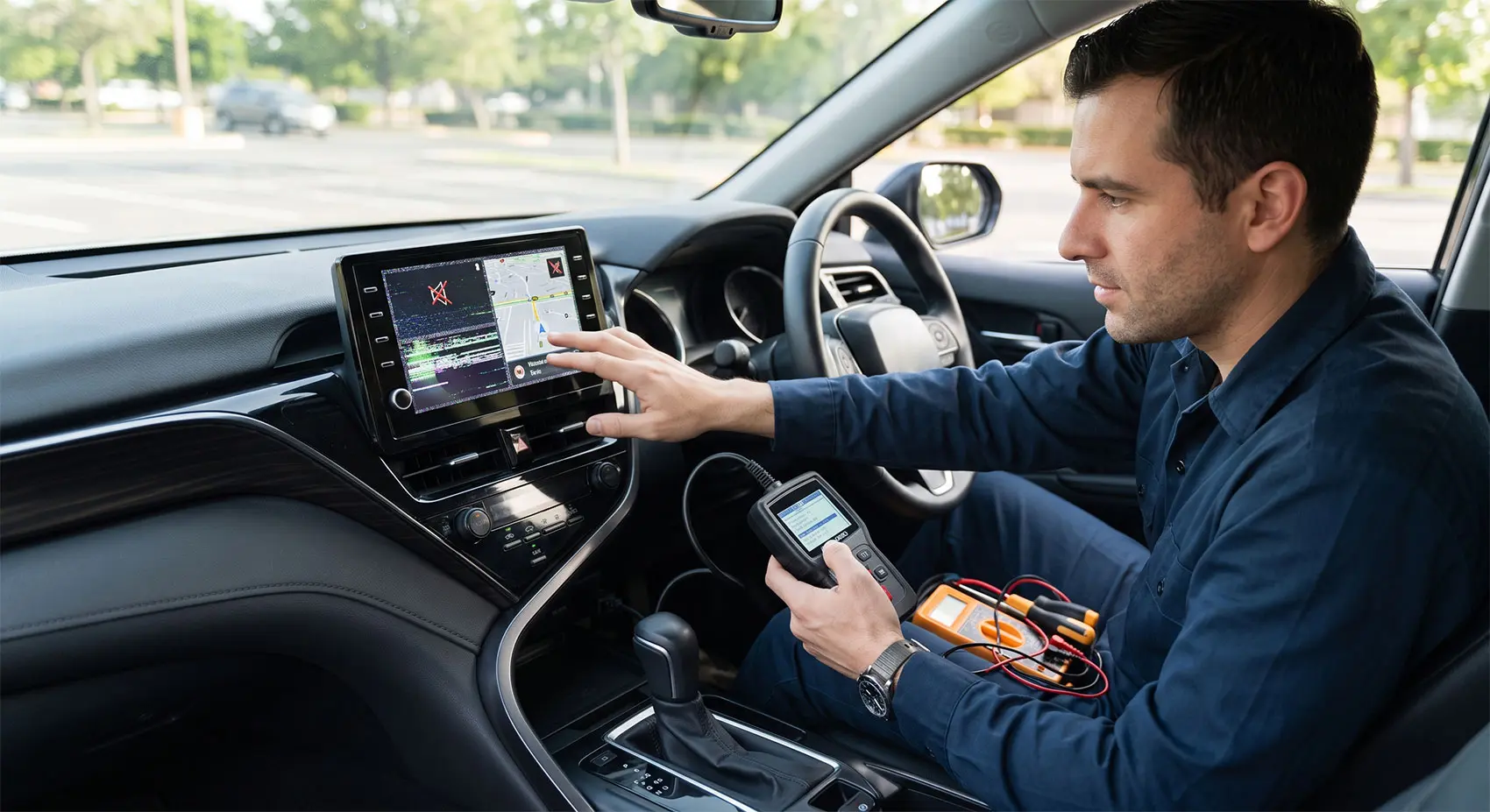
Turn on every screen and cycle through the menus. Check for error codes or warning notifications sitting in the service menu, since these can reveal problems the previous owner never got fixed. Also confirm the car has received its latest software updates, since older EVs sometimes miss updates that improve range calculation and safety features. A car running outdated software may also show an inaccurate range estimate, which can be mistaken for a battery problem when it is really just a software gap.
Listen for Unusual Noises
Without an engine to mask sound, EVs reveal noises that would be hidden in a gas car. Turn off the radio during your test drive and listen carefully for rattles, whines, or clicking coming from the suspension, the drive motor, or the wheels. These sounds are often easier to trace in an EV, which makes this an easy check to skip only if you are not paying attention.
Mileage, Warranty, and Paperwork
The paperwork side of buying an off-lease EV is just as important as the physical inspection, since it protects you long after you drive off the lot.
Pull a Full Vehicle History Report
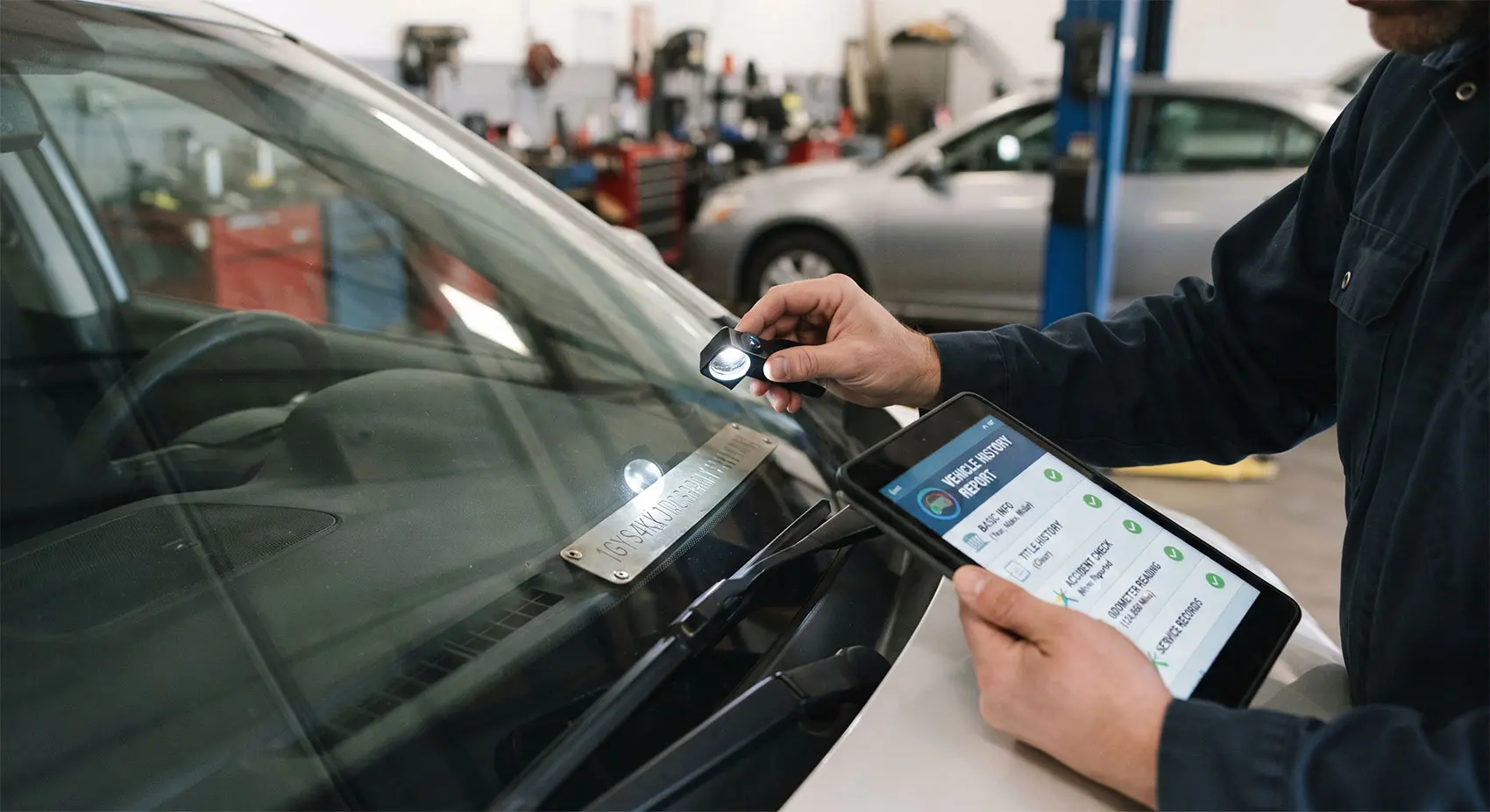
Get a history report using the VIN to check for accidents, flood damage, or title issues. This step matters for EVs just as much as for gas cars, and it is an easy way to catch problems before they cost you money. Pay close attention to any accident that lists frame or undercarriage damage, since that is exactly where the battery pack sits.
Confirm What Warranty Remains
Most EV battery and powertrain warranties last around eight years and 100,000 miles, and most now transfer to a new owner, but this was not always the case on older models. Use the VIN to confirm the exact model year and original warranty terms, then ask the dealer in writing what coverage will transfer to you. Get this in writing rather than relying on a verbal promise, since warranty terms can be easy to misremember months or years later.
Check for Mileage Overage Wear
Some lessees go over their mileage cap and simply pay the penalty at return instead of trading in early. A car that ran over its limit may carry more wear on tires, brakes, and suspension than the odometer alone suggests, so factor this into your inspection of those components. Ask the dealer directly whether the vehicle came back over its mileage limit, since this detail is not always advertised.
Review Maintenance Records
Ask for service records covering tire rotations, brake pad checks, and any 12 volt battery replacement, since EVs still rely on a small 12 volt battery for accessories and start-up systems. Cross-check these records against the vehicle history report to make sure nothing was left out. Gaps in the service history are worth asking about directly, since a missing record does not always mean missed maintenance, but it is worth a clear answer either way.
Inspect Interior and Exterior Wear
Not every lessee treats a leased car carefully. Check the interior for stains, worn seats, and scratched trim, and check the exterior for dents or paint that does not match, which can point to earlier repair work. Run your hand along panel edges to feel for uneven gaps, which can be a sign of past bodywork that a quick visual scan might miss.
Arrange an Independent Inspection
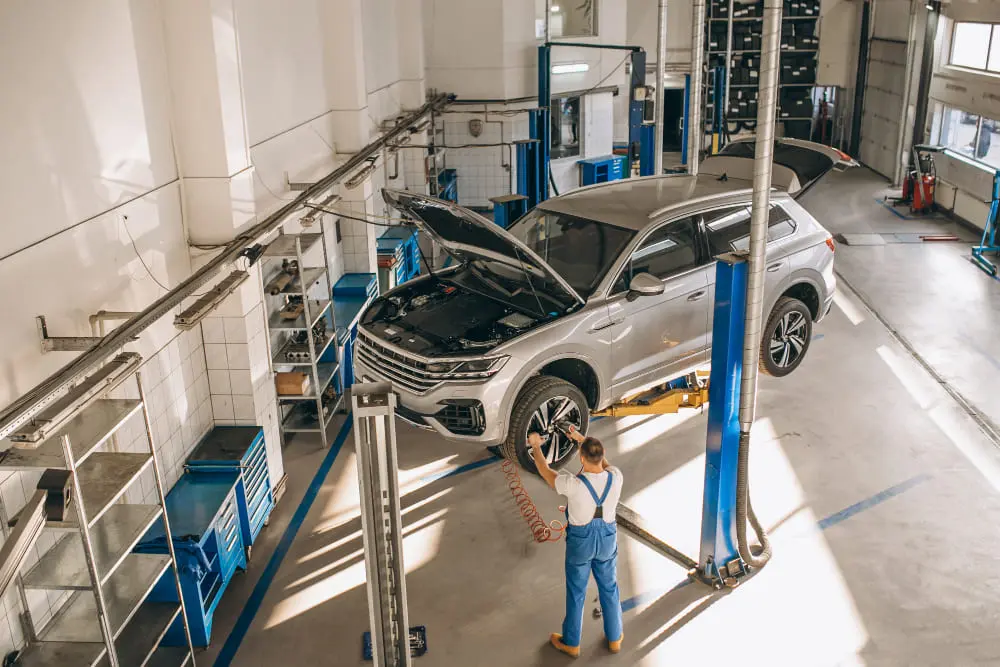
Even with a certified pre-owned label, it is worth paying for an independent pre-purchase inspection from a technician who understands EVs specifically. A dealer's own inspection may miss things a neutral third party will catch, and the cost is small compared to the price of an EV. Look for a shop that specializes in EV diagnostics rather than a general mechanic, since battery testing tools and training differ from what most gas car shops use every day.
Conclusion
Buying an off-lease electric vehicle can be one of the smartest moves in today's car market. Prices are often lower than new, mileage tends to be reasonable, and many units still carry solid warranty coverage. The catch is that the checks that matter most are not the ones traditional car buyers grew up learning.
Focus your attention on the battery's State of Health, the condition of the charging port and onboard charger, the smoothness of regenerative braking, and the paperwork trail covering warranty transfer and maintenance history. Take your time, ask direct questions, and do not skip an independent inspection just because the car looks new.
Do this groundwork before you sign, and an off-lease EV can turn into one of the best value purchases you make this year, with none of the surprises that scare buyers away from the used electric market. A little patience at this stage saves real money later, and it turns a lease return from a gamble into a genuinely smart buy.



Written by Kousar Shabbir
Published Sep 17, 2026 in Buying Guides.