
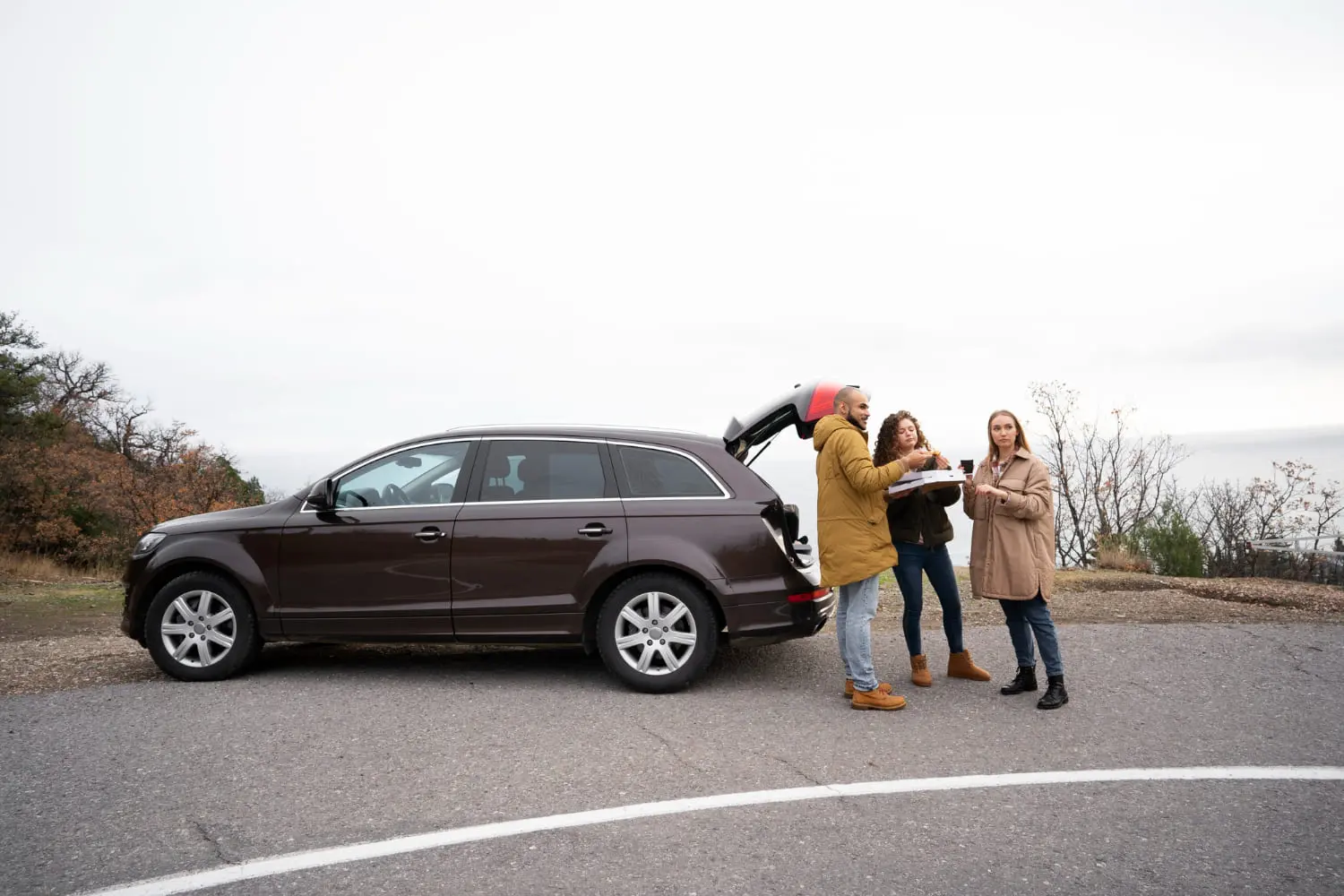
When it comes to transporting precious cargo, whether it is screaming toddlers, heavy-laden sports gear, or teenagers begging for legroom, choosing the right family vehicle is one of the most significant automotive decisions you will make. For decades, the automotive market has swung back and forth like a pendulum between two distinct schools of thought: the dedicated, purpose-built minivan and the stylish, rugged 3-row crossover SUV.
Choosing between these two heavyweights is rarely just about horsepower or torque; it is a daily lifestyle commitment. On one side, 3-row crossover SUVs dominate the American landscape with their muscular stances, higher ground clearance, and undeniable curb appeal. They promise adventure, projecting an image of outdoor readiness even if their primary mission is navigating the drop-off lane at school. On the other side, the modern minivan has evolved into an absolute fortress of ergonomic efficiency, offering unmatched ease of entry, clever interior packaging, and tech features designed explicitly to make parenting on wheels just a little bit easier.
The central dilemma for modern families boils down to a classic battle between form and function. Do you prioritize the emotional appeal and weather-conquering stance of an SUV, or do you surrender to the supreme practicality and sliding-door convenience of a minivan? Understanding how these two vehicle classes compare across daily usability, cargo flexibility, and real-world ownership costs is essential to finding the ultimate hauler for your driveway.
Evolution and Design Philosophy: Sliding Doors vs. Traditional Doors
When analyzing the core division between minivans and 3-row crossover SUVs, the conversation almost always starts with the doors. This might sound like a minor architectural detail, but it profoundly defines daily living with children, gear, and tight urban infrastructure.
Minivans are purpose-built from a clean sheet of paper to solve the logistical nightmare of passenger and cargo loading. Their signature feature, the power sliding door, is a masterclass in spatial engineering. In cramped parking lots, tight garage spaces, or dense parallel parking spots, traditional swinging doors on SUVs create a high-stakes game of avoiding dents on neighboring cars. Sliding doors, by contrast, glide open effortlessly along the vehicle's body, revealing a massive aperture that allows unrestricted access to the rear rows. Combined with a notably lower floor and step-in height, minivans allow toddlers, elderly grandparents, and pets to climb inside without a minor mountaineering expedition.
On the other side of the showroom floor, 3-row crossover SUVs lean heavily into emotional styling, rugged stance, and traditional swinging doors. They project an aura of capability and athleticism. However, those traditional doors require a significant outward swing radius. Trying to buckle a wriggling toddler into a car seat while parked inches away from a concrete pillar in a parking garage highlights the inherent limitations of SUV door design. Yet, buyers gravitate toward crossovers for their higher ground clearance and commanding driving position, accepting the trade-off in door convenience for a vehicle that looks ready for a weekend trail excursion even if it spends 99% of its life on suburban asphalt.
Ultimately, this design divergence sets the tone for the entire ownership experience. Do you choose the uncompromised, pedestrian-friendly loading utility of a sliding-door box, or do you prefer the proud, traditional stance and elevated ride of a modern SUV?
Space, Seating, and Versatility Face-Off
When families weigh the practical merits of a vehicle, interior packaging is where the rubber truly meets the road. Both minivans and 3-row crossover SUVs promise accommodation for seven or eight passengers, but how they achieve that capacity and how they handle the chaotic intersection of passengers, luggage, and daily gear reveals a massive functional divide.
Inside a modern minivan, space utilization borders on the miraculous. Because engineers design these vehicles from the ground up to maximize interior volume without the mechanical constraints of a tall engine bay or heavy-duty rear-wheel-drive floor tunnels, the floor is remarkably flat and low. Seating configurations typically offer captain's chairs in the second row alongside a stowable or removable third-row bench. Many modern minivans feature clever "Stow 'n Go" seating systems that allow the second and third rows to fold completely flat into floor wells, instantly transforming a passenger carrier into a cargo van with a flat, unobstructed floor. Hauling massive furniture items, bicycles, or plywood sheets becomes a stress-free affair. Furthermore, third-row accessibility in a minivan is effortless; the large sliding doors and wide-opening apertures mean adults and teenagers can slip into the rearmost seats without performing awkward gymnastics. Once back there, passengers enjoy genuine legroom and headroom, making multi-hour road trips comfortable rather than claustrophobic.
3-row crossover SUVs approach passenger and cargo logistics differently, prioritizing a raised, commanding seating position and rugged styling lines. While many large SUVs offer generous overall dimensions, their interior packaging is often compromised by mechanical architecture, sloping rooflines, and higher floor heights. Second-row seats usually slide and tilt forward to grant access to the third row, but the aperture remains narrow, making it tight for adults or bulky child safety seats. Speaking of child safety seats, the third row of many midsize crossover SUVs lacks the lower anchors and tethers (LATCH) flexibility found in minivans, and legroom in the rearmost row is frequently restricted to small children or luggage. When all three rows are upright, cargo capacity behind a crossover's third row can be surprisingly limited, often barely enough for a couple of grocery bags or a single compact stroller. To get serious cargo volume, you have to fold the third row down, which immediately sacrifices your passenger capacity.
Ultimately, if your lifestyle involves daily carpooling with teenagers, transporting bulky sports gear while keeping all seats occupied, or packing for a family vacation without playing architectural Tetris, the minivan delivers an unmatched level of functional superiority. Crossover SUVs certainly offer plenty of space for five passengers plus occasional extra seating, but their daily versatility remains bounded by their stylish, lifestyle-oriented proportions.
Performance, Fuel Economy, and Hybrid Options
When you move past the showroom doors and interior ergonomics, the rubber literally meets the road under the hood. For years, the minivan powertrain recipe was remarkably uniform: a smooth, naturally aspirated V6 engine sending power to the front wheels. While efficient enough for highway cruising, this setup offered little choice for buyers looking for modern all-weather capability or cutting-edge fuel savings. Today, however, the performance and efficiency landscape has shifted dramatically, offering stark contrasts between how minivans and 3-row crossover SUVs harness power.
Underneath modern 3-row crossover SUVs, you will find a diverse buffet of mechanical options designed to cater to diverse driving dynamics. Many midsize and large crossovers utilize turbocharged 4-cylinder engines or stout V6s, paired with sophisticated torque-vectoring all-wheel-drive (AWD) systems. If your weekend plans involve towing a camper, navigating snow-packed mountain passes, or tackling muddy trailhead parking lots, a crossover SUV shines. Its higher ground clearance and robust AWD configurations provide a sense of security and genuine capability that front-wheel-drive-biased platforms struggle to match. Furthermore, performance-oriented crossover trims deliver responsive acceleration and athletic handling that make them feel more like oversized sports sedans than practical family haulers.
Minivans have countered this by doubling down on efficiency and smooth, effortless power delivery. Most contemporary minivans feature potent V6 engines or, increasingly, advanced hybrid powertrains that completely redefine fuel economy for large vehicles. For instance, hybrid minivans achieve staggering EPA ratings often crossing the 35+ mpg threshold in combined driving, which translates to fewer stops at the gas station during grueling road trips or weekly school runs. While most minivans traditionally relied on front-wheel drive, select models now offer intelligent AWD systems that automatically engage when slippage is detected. However, their lower ground clearance means they are built strictly for paved roads and light inclement weather rather than off-road adventures.
Ultimately, your choice here hinges on your operational environment. If all-weather security, towing flexibility, and a spirited driving dynamic top your priority list, the crossover SUV wins. If your primary goal is maximizing fuel economy and cutting down on fuel expenditures while hauling a heavy family load across states, the modern hybrid minivan holds a massive advantage.
Cost of Ownership, Safety, and Resale Value
When the dust settles on showroom comparisons and weekend road tests, the long-term reality of automotive ownership comes down to three critical pillars: the total cost of ownership, family protection, and long-term resale value. For families managing tight household budgets, how a vehicle holds its financial and physical value over five to ten years can make a massive difference.
When examining the upfront cost and ongoing maintenance, minivans and 3-row crossover SUVs occupy a surprisingly competitive space, though with distinct financial nuances. Minivans generally offer a higher baseline of standard features for their price point, meaning you often get more interior tech, sliding doors, and seating versatility for less money compared to an equivalent luxury-leaning or top-trim crossover. Insurance rates for minivans are frequently lower than those for popular crossover SUVs, primarily because minivans are statistically driven by more conservative demographic profiles (parents and carpoolers) and have lower reckless-driving and single-vehicle accident rates. However, 3-row crossover SUVs often claw back financial ground in the used market through robust, albeit fluctuating, depreciation curves driven by relentless consumer demand.
Safety is paramount for any family hauler, and both vehicle classes are engineering fortresses equipped with advanced driver-assistance systems (ADAS) like automatic emergency braking, blind-spot monitoring, and lane-keep assist. Crossover SUVs leverage their physical mass and all-wheel-drive traction to provide immense security in adverse weather conditions, earning top marks in crashworthiness. Yet, minivans hold a distinct psychological and physical advantage in day-to-day school zones and tight parking lots: their expansive glass house, low beltlines, and specialized rearview cameras minimize blind spots far better than the thick D-pillars and high tailgate lines typical of modern bulky SUVs. Furthermore, installing rear-facing and forward-facing child safety seats is inherently safer and easier in a minivan due to the wide-opening doors and accessible LATCH anchors, reducing the physical strain and awkward stretching that can lead to improper installations.
Ultimately, while crossover SUVs command a broader market appeal that supports steady residual values, minivans reward the budget-conscious owner with lower insurance premiums, higher utility-per-dollar ratios, and a safer daily loading environment.
Conclusion: Choosing Your Ultimate Family Hauler
When the rubber meets the asphalt and the final decision is made, choosing between a minivan and a 3-row crossover SUV comes down to a deeply personal evaluation of your family's daily lifestyle, priorities, and stages of growth. There is no universally superior vehicle, only the vehicle that makes the chaos of modern family logistics feel just a little bit more manageable.
If your life is defined by tight urban parking garages, relentless carpooling schedules with growing teenagers, multi-child car seat juggling, and road trips requiring cavernous cargo-swallowing capacity without compromising passenger legroom, the minivan remains the undisputed champion. It is a purpose-built tool designed to eliminate parenting friction points through sliding doors, low step-in heights, flat-folding floor wells, and exceptional space efficiency. It may lack the rugged exterior aesthetic of an off-roader, but inside, it is an ergonomic masterclass that consistently reduces daily stress.
On the other hand, if your lifestyle demands a blend of family transport and weekend adventure, navigating snowy mountain passes, towing a small camper, or simply enjoying the elevated seating position and athletic styling of a modern crossover SUV, the 3-row crossover earns its keep. It trades away some ease of loading and ultimate interior versatility in exchange for all-weather confidence, commanding road presence, and dynamic driving performance.
Ultimately, your driveway will reflect your core values: the uncompromised, utilitarian peace of mind offered by the minivan, or the stylish, weather-conquering versatility embodied by the 3-row crossover.


Written by Maarukh Shahbaz
Published Sep 29, 2026 in Car Reviews.



