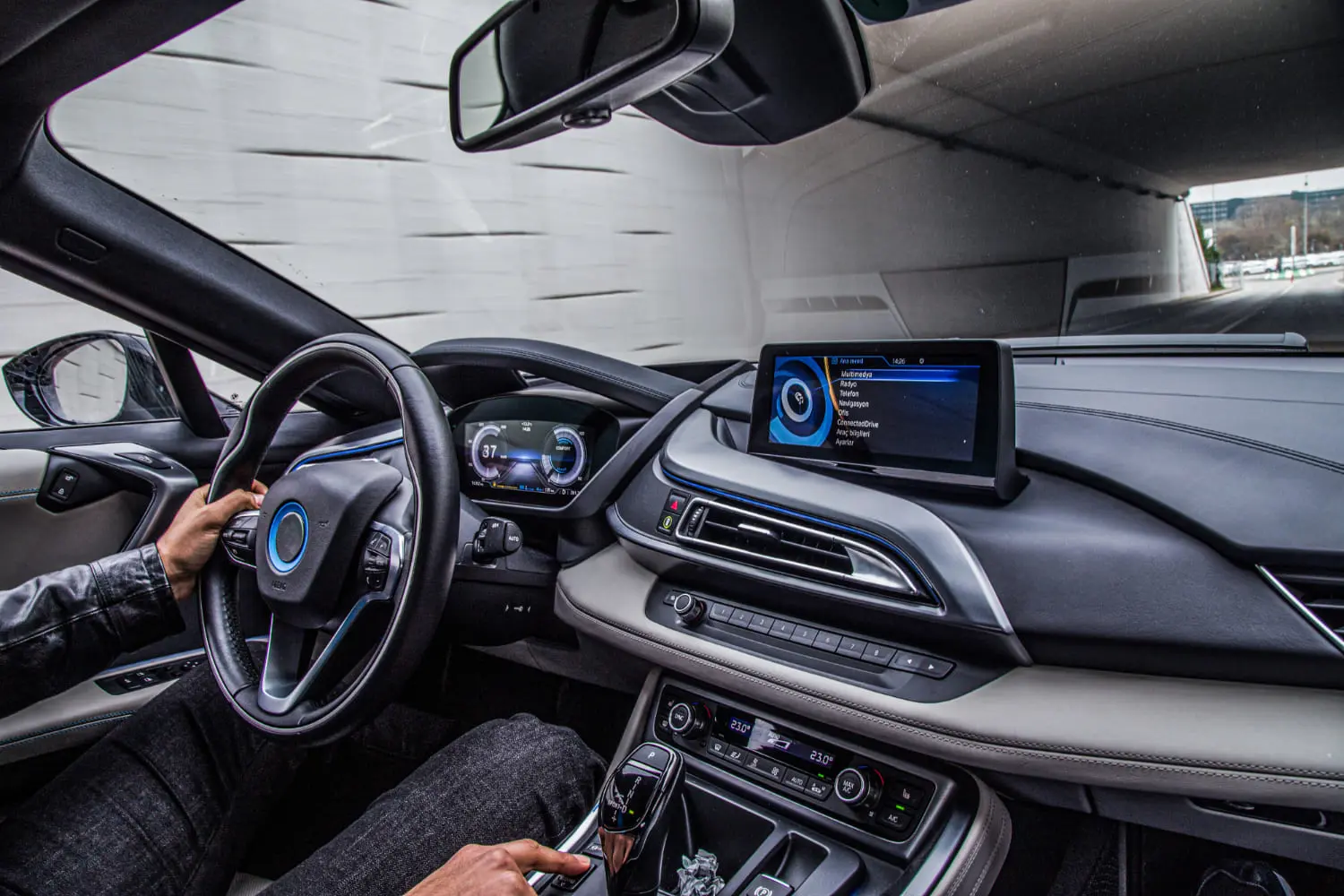
The automotive landscape is undergoing a silent, yet profound revolution. For decades, the primary safety focus in vehicle design revolved around external variables: crumple zones, airbags, anti-lock braking systems, and lane-departure warnings designed to react the split second a crash became imminent. However, a far more insidious threat has quietly taken the driver’s seat: internal driver distraction. With modern cabins morphing into high-tech entertainment centers featuring sprawling touchscreens, endless menus, and digital instrumentation, drivers are increasingly overwhelmed.
Enter the next generation of smart dashboards. Moving far beyond simple multimedia interfaces, these advanced systems serve as vigilant digital co-pilots. Leveraging cutting-edge computer vision, sensor fusion, and predictive artificial intelligence, modern dashboards actively monitor driver attentiveness in real time. Instead of merely waiting for a collision to happen, smart dashboards are engineered to intercept distraction before it causes disaster, fundamentally shifting the paradigm of automotive safety from reactive protection to active prevention.
As connected vehicles become standard, the sheer volume of information vying for our attention has skyrocketed. Climate controls, navigation prompts, smartphone pairing notifications, and streaming apps all compete for cognitive bandwidth. Traditional design philosophies assumed drivers could effortlessly glance away and back without consequence. Real-world safety data proves otherwise, highlighting a critical need for in-cabin technology that doesn't just add to the digital noise, but actively manages it. This deep dive explores how smart dashboards are transforming the driving experience, utilizing advanced Driver Monitoring Systems (DMS) to keep our eyes on the road and our minds in the game.
Understanding the Threat: Beyond Visual and Manual Distraction
When discussing driver distraction, most people naturally picture a classic hazard: a driver glancing down to text, fiddling with a radio dial, or searching for a dropped item. While these manual and visual distractions remain perilous, modern automotive engineering faces a far more complex adversary: cognitive distraction.
The Hidden Danger of Cognitive Overload
Cognitive distraction occurs when your hands are on the wheel, and your eyes are technically pointed forward, but your mind is completely disengaged from the driving task. Modern infotainment architecture packed with multi-layered menus, streaming service controls, climate sub-menus, and smartphone mirroring apps creates a massive cognitive drain.
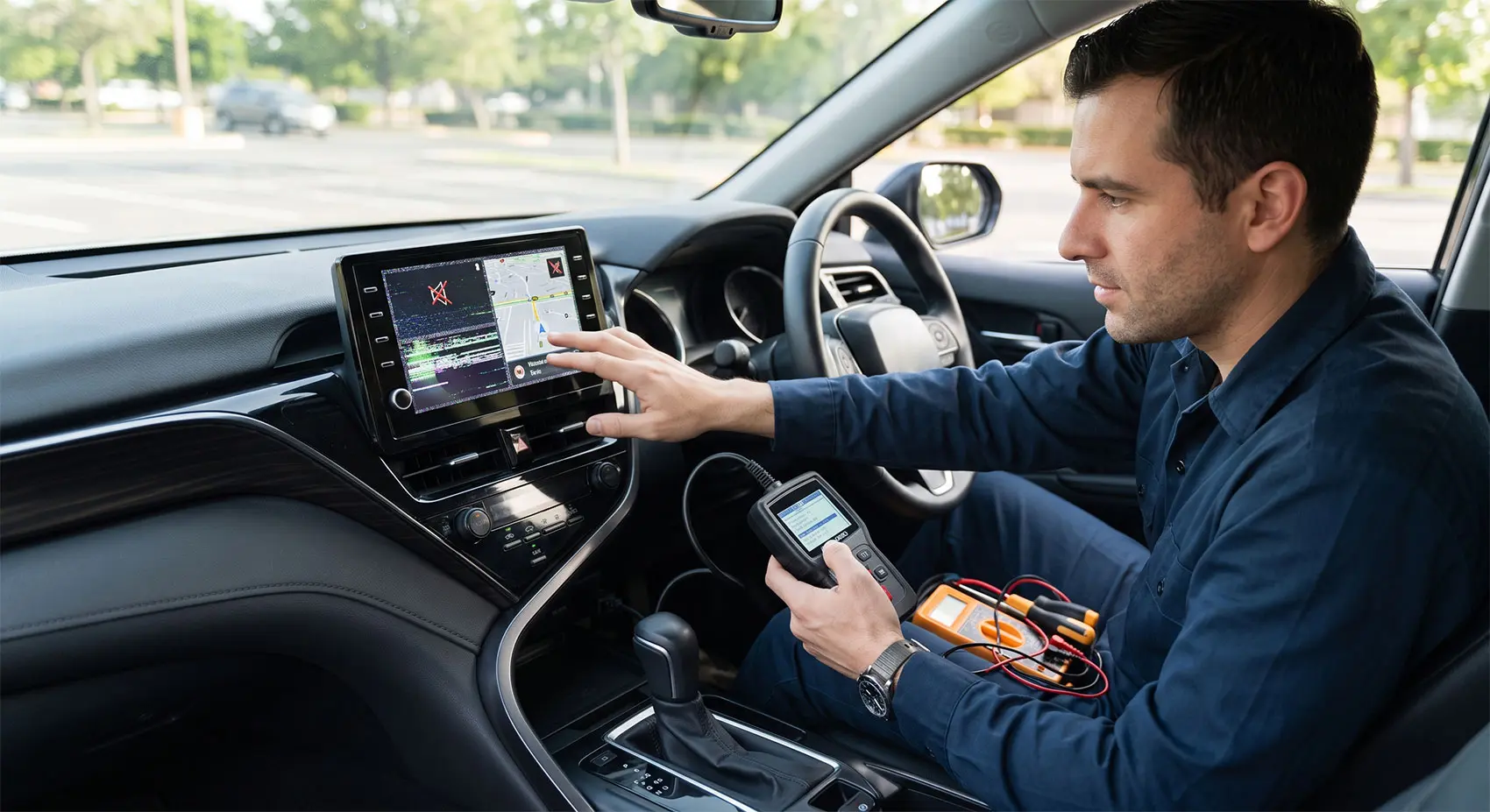
Research shows that navigating complex dashboard touchscreens can take a driver’s eyes and attention off the road for terrifyingly long stretches. When a digital interface requires a driver to scroll through three different sub-menus to adjust cabin temperature or find a podcast, it induces high mental workload. The driver experiences "inattention blindness," staring directly at the road ahead while mentally processing information elsewhere, rendering them effectively blind to sudden hazards like braking cars or crossing pedestrians.
Why Traditional Alerts Backfire
For years, automakers attempted to solve driver disengagement with blunt instruments: persistent, high-frequency audio beeps, flashing warning lights, or abrupt steering jerks. However, human factors engineering reveals that these legacy alerts often backfire. Instead of refocusing the driver, jarring alarms frequently induce panic, frustration, and cognitive fatigue. A driver startled by an aggressive chime is more likely to make a sudden, uncalculated corrective maneuver, accidentally escalating the danger rather than mitigating it.
Real-World Data and Modern Infotainment Risk
Data from traffic safety organizations underscores a direct link between modern digital cockpit design and rising urban accidents. As physical buttons have been systematically replaced by flat, glossy touch panels, the tactile feedback loop that once allowed drivers to operate controls blindly (by feel alone) has vanished. Drivers are forced to rely on visual confirmation for even the most basic adjustments. Smart dashboards combat this exact vulnerability by shifting away from reactive, irritating alarms and moving toward intelligent, continuous behavioral tracking that intercepts distraction long before cognitive overload turns into a collision.
The Anatomy of Smart Dashboards: How Driver Monitoring Systems (DMS) Work
To truly appreciate how modern vehicles are overcoming the epidemic of driver distraction, we have to look beneath the sleek glass surface of the dashboard and examine the invisible engineering of Driver Monitoring Systems (DMS).
Computer Vision and Infrared Gaze Tracking
At the heart of every smart dashboard is an array of high-resolution optical sensors and infrared cameras typically mounted on the steering column or embedded within the instrument cluster bezel. These cameras are engineered to operate seamlessly in all lighting conditions—blinding midday glare, pitch-black night driving, and everything in between using invisible near-infrared illumination.
Utilizing advanced computer vision algorithms, the DMS tracks far more than just where your eyes are pointing. It maps complex facial landmarks, tracking gaze vectors, head rotation, eyelid closure rates, and micro-expressions. If a driver’s eyes drift away from the forward roadway for a fraction of a second too long, or if their head droops in the early stages of microsleep, the computer vision architecture logs the anomaly instantly.
Sensor Fusion: Merging In-Cabin Telemetry with Vehicle Dynamics
An isolated camera can misinterpret data; a sophisticated smart dashboard relies on sensor fusion. This involves cross-referencing in-cabin biometric telemetry with external vehicle dynamics gathered from radar, LiDAR, and steering angle sensors.
For example, if the cabin camera notes that a driver’s gaze has shifted downward toward the center console, the sensor fusion algorithm immediately evaluates external context: Is the car traveling at 65 mph on a busy highway, or idling in a parking lot? Is the vehicle drifting slightly toward lane markings? By tying driver behavior directly to situational risk, the vehicle can distinguish between an innocent glance at a passenger and a dangerous cognitive lapse, tailoring its response precisely to the urgency of the moment.
Regulatory Pressures and Industry Standards (Euro NCAP 2026 and Beyond)
The rapid proliferation of smart dashboards and Driver Monitoring Systems (DMS) is not merely a competitive differentiator among forward-thinking automakers; it is quickly becoming a non-negotiable regulatory baseline. Global safety bodies and consumer testing agencies are completely overhauling their evaluation criteria to crack down on the rising tide of distraction-related traffic fatalities.
The Euro NCAP 2026 Mandate
Chief among these regulatory catalysts are the updated protocols introduced by the European New Car Assessment Programme (Euro NCAP). Under the 2026 safety roadmap, vehicle manufacturers seeking a maximum five-star safety rating are heavily penalized if their cars lack robust, direct driver monitoring capabilities.
Euro NCAP’s updated testing criteria explicitly require vehicles to detect both visual distraction (such as eye-off-road tracking) and cognitive impairment (such as microsleeps or prolonged distraction) across all driving modes. If a car relies solely on indirect metrics like measuring steering wheel torque to infer attentiveness, it will no longer pass muster. True optical cabin sensing is now considered just as vital to passenger survival as physical crumple zones or electronic stability control.
Shifting Industry Standards and Global Adoption
Following Europe’s lead, regulatory bodies and transportation agencies worldwide are tightening their requirements. In the United States, safety advocacy groups and government regulators are pushing for similar integration timelines.
Automakers are responding by weaving advanced DMS architecture into the standard trim packages of both luxury and mass-market vehicles. What was once a high-end luxury feature found only in flagship sedans is rapidly democratizing across SUVs, compacts, and electric vehicles alike. This global shift proves that the automotive industry views in-cabin safety technology not as an optional add-on, but as an essential evolutionary leap in human-machine interface (HMI) design.
Balancing Safety, Privacy, and User Experience (UX)
While the life-saving potential of Driver Monitoring Systems (DMS) and smart dashboards is undeniable, deploying advanced in-cabin technology introduces a delicate tightrope walk between security, data privacy, and user comfort.
Addressing Driver Concerns Over In-Cabin Cameras
The thought of an infrared camera continuously tracking facial movements, eye vectors, and micro-expressions inside a personal vehicle naturally raises red flags for privacy-conscious drivers. Terms like "in-cabin surveillance" evoke fears of constant monitoring, data harvesting, and potential legal or insurance exploitation.
To overcome these hurdles, automakers and Tier-1 suppliers are aggressively adopting strict data privacy frameworks. The industry standard moving forward is edge computing. Instead of streaming live cabin footage to cloud servers where it could theoretically be intercepted or stored, smart dashboards process all biometric telemetry locally on an isolated, dedicated chip inside the vehicle. Once the algorithm assesses whether a driver is distracted or alert, the raw image data is instantly discarded—meaning no videos or photos are ever saved or transmitted.
Designing Non-Intrusive, Seamless Feedback Systems
Technology that protects drivers is useless if it alienates them through poor Human-Machine Interface (HMI) design. Early iterations of lane-departure and driver-alert systems frequently suffered from "alarm fatigue," the phenomenon where drivers become desensitized or deeply irritated by constant, harsh buzzing noises and flashing dash lights.
Next-gen smart dashboards prioritize subtle, multi-modal feedback loops designed to correct behavior without inducing panic. Instead of blaring a jarring horn, an intelligent dashboard might deploy:
-
Targeted Haptic Feedback: A gentle, localized vibration on the left or right side of the steering wheel rim to guide attention back to the road.
-
Ambient Lighting Cues: Soft, directional LED pulsations along the base of the windshield that draw the peripheral vision forward naturally.
-
Adaptive Audio: Muted, soothing chimes that scale in urgency only if the initial distraction persists into a critical safety window.
By respecting the driver’s personal space and cognitive comfort, these systems ensure that safety enhancements feel like an intuitive co-pilot rather than an intrusive monitor.
Conclusion: Redefining the Dashboard from a Hazard to a Co-Pilot
The evolution of the modern automobile dashboard marks a definitive turning point in automotive history. For years, the relentless march of digitalization threatened to turn vehicle interiors into hazardous zones of cognitive overload. By packing cabins with sprawling touchscreens, endless sub-menus, and glowing distractions, automakers inadvertently fostered an environment where the driver's attention was constantly pulled away from the primary task of operating the vehicle safely.
Fortunately, the integration of advanced smart dashboards and Driver Monitoring Systems (DMS) represents a powerful course correction. By coupling state-of-the-art computer vision and infrared gaze-tracking with sensor fusion and predictive artificial intelligence, modern vehicles are learning to look inward. They no longer wait passively for a crash to occur; instead, they act as vigilant digital co-pilots, preempting distraction, managing cognitive load, and gently guiding human attention back to the road before critical hazards materialize.
As global safety frameworks like Euro NCAP codify these technologies into mandatory testing standards, and as consumer demand shifts toward transparent, edge-computed data privacy, smart dashboards are cementing their place as the ultimate vehicle safety feature. Ultimately, this technological leap proves that the future of automotive innovation isn't about removing the human driver entirely; it is about designing intelligent human-machine interfaces that protect, support, and respect the human behind the wheel.



Written by Maarukh Shahbaz
Published Jul 30, 2026 in Auto Tech.