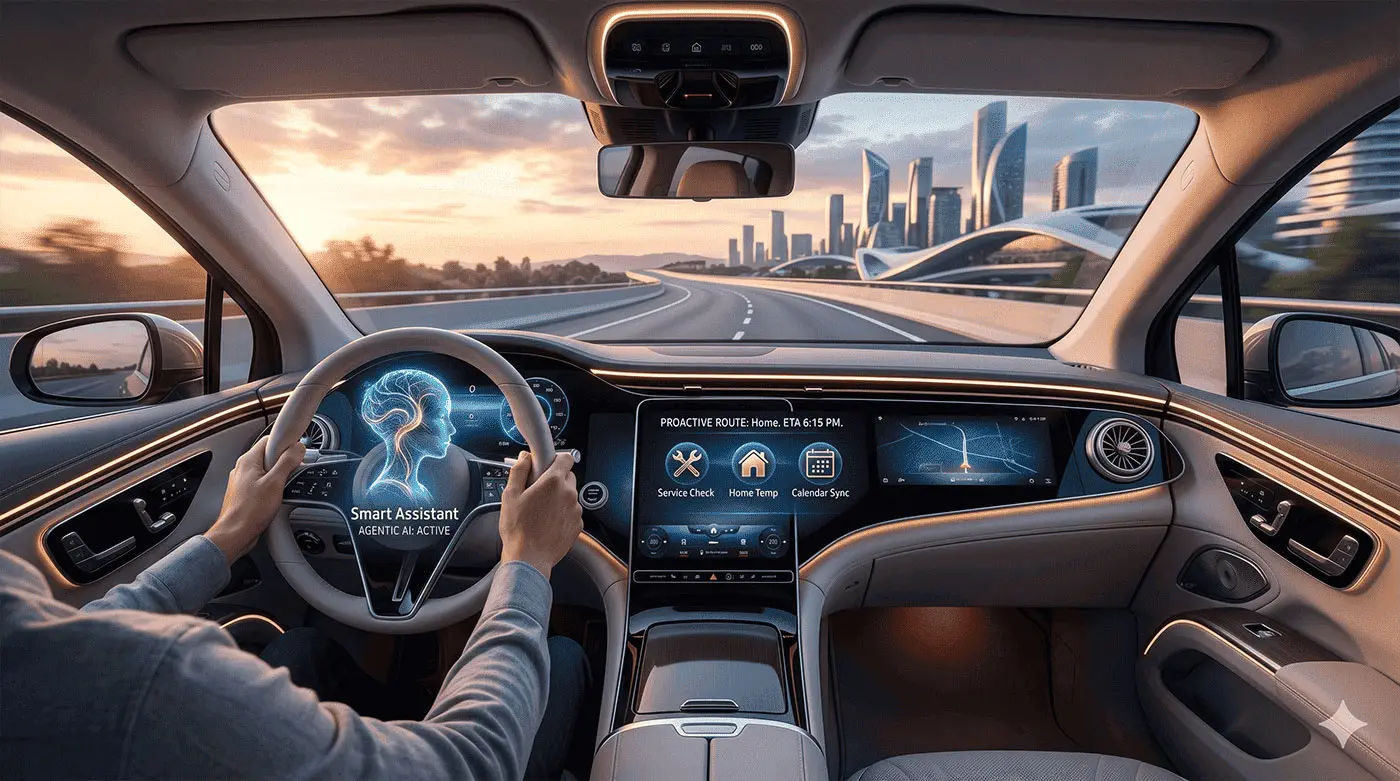
Not long ago, "talking" to your car felt like a choreographed dance of frustration. You’d press a button on the steering wheel, wait for a beep, and carefully enunciate, "Navigate to the nearest gas station," only to have the system reply with "Playing Jazz Radio." It was the era of the chatbot—a passive, reactive interface that was only as smart as the specific script it was programmed to follow. If you didn't say the magic words, nothing happened.
Fast forward to 2026, and the automotive world has undergone a quiet but radical transformation. The "chatbot" is dead. In its place, we have witnessed the rise of Agentic AI.
What makes 2026 the turning point? It’s the shift from interaction to agency. We are no longer just driving machines with better screens; we are moving within "Smart Assistants" on wheels. For the first time, your car doesn't just listen to what you say—it understands what you intend and has the permission to act on your behalf.
In this new landscape, the vehicle has evolved into a proactive partner. It monitors your schedule, anticipates your needs based on your biometrics, and interacts with the world outside the cabin—from your smart home to the service center—without you ever having to initiate a command. This isn't just a software update; it’s a fundamental rewriting of the relationship between human and machine.
As we peel back the layers of 2026's most advanced vehicles, we see a world where the car is no longer a tool, but a teammate. Whether it’s managing a complex calendar during a morning commute or navigating a sudden road closure using real-time spatial intelligence, Agentic AI is the invisible hand making the "software-defined vehicle" finally live up to its name.
What is Agentic AI? (The Brain vs. The Mouth)
In the automotive world of 2024 and 2025, we became obsessed with "Large Language Models" (LLMs). We loved that our cars could finally tell us a joke or summarize a Wikipedia entry about the landmark we just passed. But those systems were essentially just a "mouth"—a conversational interface that sat on top of the car's existing, rigid software. If you asked a 2024 chatbot to "fix the rattling sound in the door," it might give you a DIY guide. In 2026, Agentic AI actually schedules the service appointment.
The fundamental difference lies in Agency. While a chatbot is reactive (it waits for you to speak and then responds), an AI Agent is proactive and goal-oriented. It doesn't just process text; it processes intent.
The Architecture of Intelligence
This shift is powered by two major technological leaps:
-
Vision-Language-Action (VLA) Models: Unlike previous systems that handled sight and speech separately, VLA models unify them. Your car's cameras "see" a pothole, the language model "understands" the risk, and the action layer "adjusts" the suspension—all in one fluid cognitive loop.
-
Edge Computing: In 2026, the "brain" isn't just in the cloud. Critical agentic decisions happen locally on the vehicle's high-performance chips. This reduces latency to near-zero, which is vital when an AI agent needs to make a split-second safety decision.
From Commands to Workflows
Think of it this way: a chatbot is like a digital encyclopedia, while an Agentic AI is like a highly skilled executive assistant.
-
The Chatbot Experience: "Hey Car, I'm hungry." -> Result: Shows a list of 10 restaurants on a map.
-
The Agentic Experience: "Hey Car, I'm running late for the meeting, and I haven't eaten." -> Result: The car checks your calendar, sees the meeting is 15 minutes away, identifies a drive-thru on the route that has your favorite salad, places the order, and adjusts your ETA to include the 2-minute pickup stop.
By 2026, the car has evolved from a machine that follows instructions to a system that solves problems. It uses "Multi-Agent Orchestration," where different micro-agents (a Navigation Agent, a Diagnostic Agent, and a Personal Assistant Agent) work together to ensure your journey is seamless.
The Proactive Driver Experience
The most jarring change for drivers in 2026 isn't the speed of the car, but the fact that it finally feels like it has your back. We have moved past the era where a "smart" car just sent a notification to your phone. Today, the proactive driver experience is defined by contextual awareness—the car knows who you are, where you're going, and what you need before you even ask.
Predictive Maintenance: The "No-Stress" Service
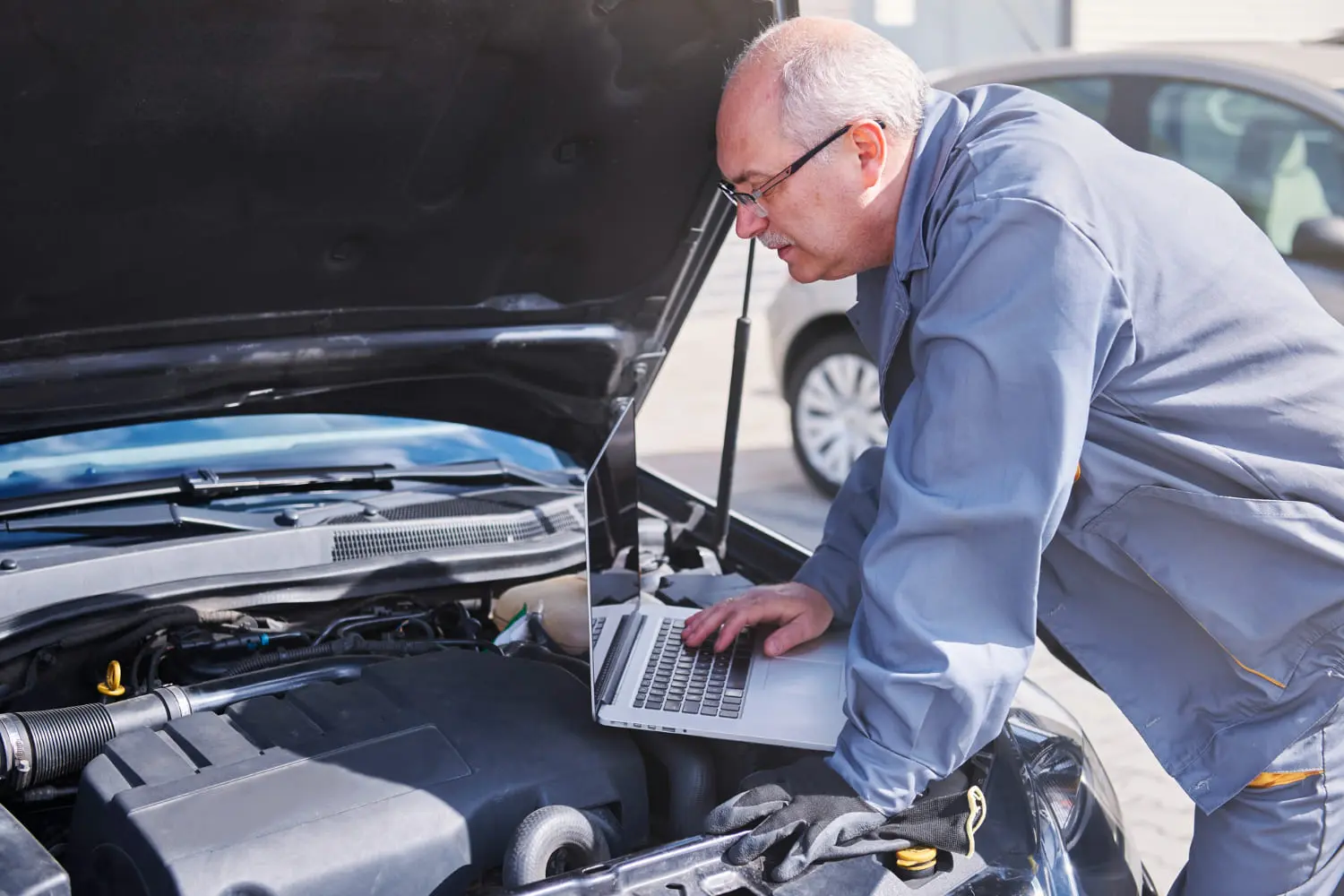
Imagine you're driving to work in your new 2026 Mercedes-Benz CLA. A small sensor in the suspension detects a micro-vibration that doesn't match the road profile. In 2024, you might have ignored a "Check Engine" light for weeks. In 2026, the MB.OS Virtual Assistant handles it entirely.
The Agentic AI analyzes the diagnostic data, checks your digital calendar, and finds a 45-minute gap on Thursday afternoon. It then pings your local service center, confirms they have the necessary part in stock, and asks you: "I’ve detected a minor suspension alignment issue. I’ve found a slot at your preferred dealer this Thursday at 2:00 PM while you're in your sync meeting. Should I book it and arrange a loaner car?" You say "Yes," and the task is done.
Lifestyle Integration: More Than Just a Map
In 2026, cars use Multi-Agent Orchestration to blend your digital life with your physical journey. This means the car isn't just a separate device; it’s a node in your personal ecosystem.
-
The Smart Home Handshake: As you drive home, the car’s AI Agent communicates with your home automation system. It doesn't just turn on the lights; it coordinates with your smart oven to start preheating because it knows you just ordered a "take-and-bake" pizza via the in-car commerce agent.
-
The Executive Workspace: For many professionals, the car has become a mobile office. Companies like Cerence have introduced "Mobile Work Agents" that connect directly to Microsoft 365 or Google Workspace. If a meeting is moved while you're behind the wheel, the car doesn't just notify you—it calculates the new route, summarizes the previous meeting notes via audio, and prepares a brief "talking points" memo for you to review as you arrive.
Emotional Intelligence and Biometrics
The proactive experience extends to your physical well-being. Using internal cameras and seat sensors, 2026 models track heart rate, stress levels, and eye fatigue. If the AI detects your stress levels rising during heavy traffic, it doesn't just offer a massage; it proactively switches the ambient lighting to a calming blue, suggests a shorter (if slightly slower) scenic route, and plays a curated "de-stress" playlist. It isn't just driving you; it’s looking after you.
Safety and Autonomy in 2026
Safety in 2026 is no longer just about crumple zones and airbags; it’s about the "digital shield" provided by Agentic AI. While the early 2020s focused on basic Lane Keep Assist and Adaptive Cruise Control, 2026 marks the era where the car acts as a true Co-Pilot. The distinction is critical: a co-pilot doesn't just follow a set path; it understands the environment and makes executive decisions to preserve life.
The Rise of Level 3 "Eyes-Off" Autonomy
We have finally reached the milestone where several flagship models, such as the 2026 Mercedes-Benz S-Class and the updated BMW 7 Series, allow for legal Level 3 autonomous driving at highway speeds. This means that under specific conditions—such as clear weather on mapped freeways—the car takes full legal responsibility for the drive.
The Agentic AI manages the "OODA Loop" (Observe, Orient, Decide, Act) faster than any human. While you catch up on emails or watch a movie on the hyper-screen, the AI agent is:
-
Scanning 360 degrees using a fusion of LiDAR, Radar, and high-res cameras.
- Predicting the "intent" of other drivers. If a car in the next lane is swerving slightly, the AI doesn't just wait for it to cross the line; it recognizes the pattern of a distracted driver and creates a "safety buffer" by slightly shifting your car's position in its own lane.
Vision-Based Intelligence: Tesla’s FSD v13
Tesla continues to push the boundaries with FSD v13, which has moved entirely to "End-to-End Neural Networks." In 2026, the system no longer relies on thousands of lines of code written by engineers to handle a four-way stop. Instead, the Agentic AI has "learned" how to drive by watching millions of hours of human video.
This results in a much more "human-like" driving style. The car "creeps" forward at intersections to get a better view, just like a person would, and it can negotiate complex urban scenarios—like avoiding a double-parked delivery truck—without getting "stuck" or requiring human intervention.
V2X (Vehicle-to-Everything) Communication
Perhaps the most "agentic" safety feature of 2026 is V2X Connectivity. Your car is now part of a hive mind. If a vehicle three cars ahead slams on its brakes due to a hidden hazard, your car receives a digital signal instantly. Even if you can't see the hazard, your car's AI Agent begins to decelerate, preemptively tightening your seatbelt and preparing the brakes.
Proactive Anti-Dooring and Pedestrian Defense
The safety agents extend to the very moment you park. 2026 models now feature Proactive Pedestrian Defense. If the car’s external sensors detect a cyclist approaching rapidly from behind, the Agentic AI will actually resist the door handle if you try to open it, preventing a "dooring" accident. This is the hallmark of 2026 tech: the car isn't just a machine you operate; it's a guardian that actively prevents you from making a mistake.
The Major Players (Mercedes, VW, and Tesla)
The race to the "AI-Defined Vehicle" has reached a fever pitch in 2026. While many manufacturers are still talking about "smart features," three giants have moved into the realm of Agentic AI, each taking a distinct path toward turning your car into a high-functioning assistant.
Volkswagen: "Agentic AI for All"
Perhaps the most surprising leader in 2026 is the Volkswagen Group. During the 2026 Auto China Media Night, CEO Oliver Blume announced their "Agentic AI for all" roadmap. VW has shifted its entire architecture—starting with the China Electronic Architecture (CEA)—to support onboard AI Agents.
- The VW Difference: Unlike basic voice assistants, VW’s new agents are designed for "multi-system actions." If you tell a 2026 VW ID.UNYX 09 that you're feeling tired, the agent doesn't just suggest a coffee shop; it coordinates between the cockpit (adjusting temperature), the seat (initiating a massage), and the navigation (finding a safe rest stop) simultaneously.
- Privacy First: Crucially, VW has localized these "Agentic brains" so that the Large Language Model (LLM) runs entirely onboard. This means your personal conversations and habits stay in the car, addressing the 2026 global demand for data sovereignty.
Mercedes-Benz: The Luxury Executive Assistant
Mercedes-Benz has doubled down on its MB.OS (Mercedes-Benz Operating System). In the 2026 C-Class Electric and CLA Sedan, the AI assistant has moved beyond "Hey Mercedes" to a 4th-generation MBUX system.
- Hyper-Personalization: Using facial recognition and biometric sensors, the car’s agent identifies the driver and automatically loads a custom "agent persona."
- The "Co-Pilot" Logic: Mercedes focuses on the "concierge" experience. Its agentic workflow can manage your smart home via the Model Context Protocol (MCP), allowing the car to act as a secure bridge to your home automation and office infrastructure. It can summarize complex emails and even draft responses using the car’s internal voice-to-text agent, allowing you to stay productive while maintaining Level 2+ or Level 3 "eyes-off" safety.
Tesla: The Neural Network Powerhouse
Tesla remains the outlier by shunning traditional "rule-based" AI in favor of end-to-end neural networks. With FSD v13 (Supervised), Tesla has moved away from simple lane-keeping.
-
Autonomous Intent: In 2026, Tesla’s AI isn't just following lines; it’s making social decisions. It understands "unspoken" road rules—like nudging forward to signal intent at a merge or identifying a delivery truck's hazard lights and proactively changing lanes to avoid a bottleneck.
- Actually Smart Summon: The 2026 "Actually Smart Summon" allows the car to act as a valet agent. It can navigate a complex, multi-story parking garage to pick you up at the entrance, using spatial intelligence that treats the car as an autonomous robot rather than just a vehicle with cruise control.
The Rise of Open Standards
Beyond these brands, 2026 has seen the emergence of open-source automotive agents. Platforms like Ansible Automation Platform 2.6 and various MCP (Model Context Protocol) servers are allowing smaller manufacturers to integrate sophisticated AI agents without building them from scratch. This means even entry-level vehicles are starting to offer "smart assistant" features that were exclusive to luxury brands just two years ago.
Ethics, Privacy, and the Human Element
As we hand over the "keys" to our digital lives to Agentic AI, 2026 has brought a new set of questions to the dinner table: If the car is making decisions, who is actually in control? The transition from a tool to an autonomous agent isn't just a technical challenge; it’s a psychological and ethical one.
The Data Sovereignty Debate
In 2026, your car knows more about you than perhaps any other device. It knows your morning mood, your favorite stops, your biometric health data, and even the tone of your private conversations. This has led to the rise of Sovereign AI in the automotive sector.
-
On-Device Processing: Most 2026 models from brands like Audi and Volvo now prioritize "Edge AI." Instead of sending your voice recordings to a distant server to be processed, the "brain" stays inside the vehicle's hardware. This ensures that even if a manufacturer’s cloud is breached, your personal "agentic" habits remain private.
-
Transparency Logs: Many new systems now include an "AI Decision Log." If your car makes an unexpected maneuver or schedules an appointment you didn't explicitly ask for, you can review the reasoning behind the action, ensuring the agent remains accountable to the owner.
The "Trolley Problem" in the Real World
While Level 3 autonomy has made roads safer, the ethical programming of Agentic AI remains a hot topic. In 2026, regulators have moved toward Standardized Ethical Frameworks. AI agents are no longer "black boxes"; they are programmed with clear priorities that favor the preservation of human life above all else, regardless of whether that person is inside or outside the vehicle.
Maintaining the Joy of Driving
One of the biggest hurdles for 2026 car manufacturers is ensuring that "smart" doesn't mean "boring." For many, driving is a form of therapy or a hobby.
-
Engagement vs. Automation: The best AI agents in 2026 know when to step back. They offer a "Manual Soul" mode where the AI becomes a silent observer, only intervening if a collision is imminent.
-
The Emotional Connection: Interestingly, studies in 2026 show that drivers are actually developing closer bonds with their cars. When a car proactively looks out for your safety or remembers that you like the cabin at exactly 21°C on rainy days, it starts to feel less like an appliance and more like a trusted companion.
Conclusion: Looking Toward 2030
As we stand in 2026, it is clear that the transition from passive chatbots to active Agentic AI has forever altered our relationship with the automobile. We have moved from a world where we "use" a car to a world where we "collaborate" with one. The vehicle is no longer just a depreciating asset sitting in a driveway; it is a mobile living space, a high-functioning executive assistant, and a vigilant guardian.
The Car as a Mobile Living Space
Looking toward 2030, the "Smart Assistant" will only become more integrated. As Level 4 autonomy begins to appear in urban "Robotaxi" fleets and high-end consumer EVs, the interior of the car will likely undergo a total redesign. With the AI Agent handling 99% of the driving, steering wheels may become optional, replaced by workstations, entertainment hubs, or even sleeping quarters for long-haul travel.
Final Thoughts on the AI Revolution
The revolution we’ve seen in 2026 isn't just about faster processors or better sensors. It’s about trust. For the first time, we are trusting machines to not only interpret our words but to anticipate our needs and act on our behalf.
Whether it's the 2026 Volkswagen ID.UNYX 09 managing your daily errands or a Tesla navigating a complex construction zone via pure neural networks, the message is the same: The "dumb" car is a thing of the past. We are now in the age of the Automotive Partner. As AI agents continue to evolve, the "joy of driving" might just be replaced by the "joy of being taken care of."

Written by Kousar Shabbir
Published Apr 29, 2026 in Auto Tech.