
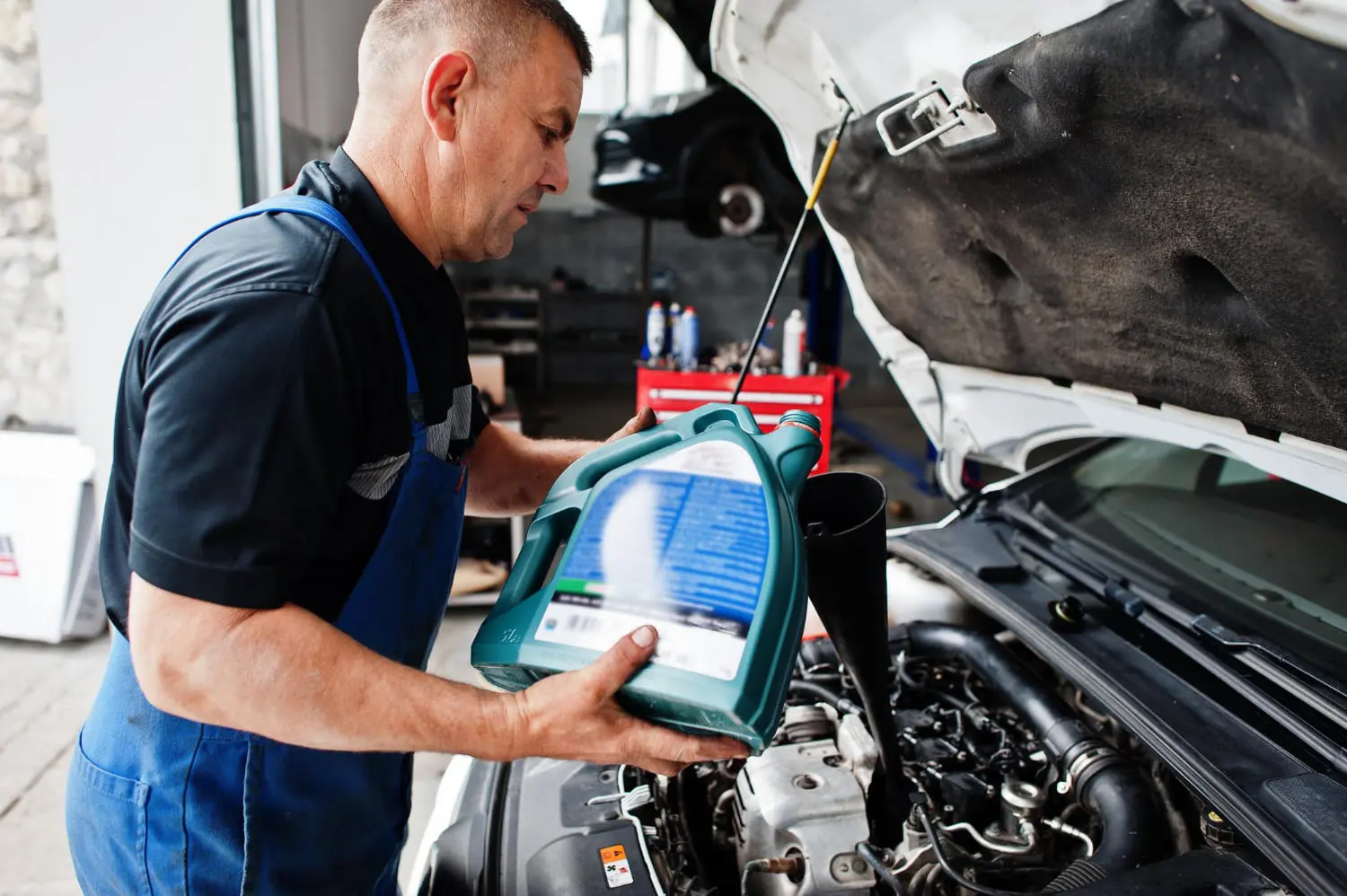
There is perhaps no topic in the automotive maintenance world more fiercely debated in driveways, dealership waiting rooms, and online car forums than engine oil intervals. If you grew up around cars or spent any time reading old service manuals, you likely had the "3,000-mile rule" permanently drilled into your head. For decades, the absolute gold standard of vehicle care was taking your car in for a conventional oil and filter change every 3,000 miles or three months, whichever came first. But as automotive engineering has rapidly advanced over the last twenty years, so too has the lifeblood that keeps our engines running. Today, the reality of synthetic oil has completely transformed how we maintain our vehicles, leaving many daily drivers and gearheads alike confused and asking one simple question: exactly how often do you really need to change your synthetic oil?
We love diving deep into the technical truths behind everyday car maintenance, cutting through the outdated myths to give you actionable, data-driven advice. The short and direct answer for modern vehicles running on full synthetic oil is generally between 7,500 and 15,000 miles, or at least once a year. However, treating that mileage range as a universal law can be just as risky as ignoring your maintenance schedule altogether.
The automotive industry has seen a massive, permanent shift from conventional crude-based oils to highly engineered synthetic lubricants. These modern synthetic oils are meticulously designed in laboratories to offer unparalleled thermal stability, superior friction reduction, and incredible resistance to sludge build-up. Because of this advanced, uniform molecular structure, changing your premium synthetic oil every 3,000 miles is no longer just unnecessary—it is effectively pouring your hard-earned money straight down the drain and needlessly increasing environmental waste.
Conversely, stretching your synthetic oil past its physical breaking point under the dangerous assumption that "synthetic lasts forever" is a fast track to catastrophic engine failure. Once the protective additive packages inside the oil break down due to extreme engine heat, microscopic metal shavings, and acidic combustion blow-by, your delicate internal engine components are left grinding against each other without a safety barrier. In this comprehensive guide, we are going to break down everything you need to know about synthetic oil lifespans, how your specific daily driving habits drastically alter that timeline, and exactly how to read the physical warning signs your vehicle is giving you before the damage is done.
Full Synthetic vs. Synthetic Blend vs. Conventional Oil
Walking into an auto parts store or a service center can feel overwhelming when you are staring at a massive wall of oil bottles. To understand exactly how long your oil will last, you first have to understand the fundamental differences between the three main categories on that shelf: conventional, synthetic blend, and full synthetic oil. This distinction is where the "synthetic blend vs full synthetic" debate usually starts, and it is the key to unlocking true engine longevity.
Conventional Oil: The Old School Standard
Conventional oil is refined directly from crude oil pulled out of the ground. Because it is a natural natural product, its molecular structure is highly inconsistent. Picture a jar filled with a random assortment of rocks, pebbles, and sand. When these uneven molecules are forced through the incredibly tight, high-pressure environments of a modern engine, they create more friction and break down relatively quickly. Conventional oil is highly susceptible to thermal breakdown—meaning it literally cooks and turns into sludge under high heat. This rapid degradation is exactly why the old 3,000-mile rule was so necessary in the past.
Synthetic Blend: The Middle Ground
A synthetic blend is exactly what it sounds like: a mixture of conventional crude oil and a synthetic base stock. This option exists to provide slightly better protection and cold-weather performance than standard conventional oil, but at a lower price point than a full synthetic. When comparing a synthetic blend vs full synthetic, the blend will give you a decent lifespan typically requiring an oil change around the 5,000 to 7,500-mile mark. However, it still contains those uneven, natural crude molecules that will eventually degrade, burn off, and leave behind harmful engine deposits.
Full Synthetic Oil: Laboratory Perfection
Full synthetic oil is heavily refined, distilled, and manufactured in a laboratory setting to create absolute uniformity. Instead of a jar of mixed rocks, full synthetic oil is like a jar filled with perfectly smooth, identically sized glass marbles. Because the molecules are completely uniform, they glide over each other and your internal engine parts with practically zero friction.
This engineering marvel provides incredible thermal breakdown resistance and high-heat tolerance. For example, if you are driving a high-revving turbocharged car or sitting in bumper-to-bumper traffic during a sweltering summer heatwave, full synthetic oil resists burning off and maintains its exact viscosity. Furthermore, premium synthetic oils are packed with advanced additive packages. These chemical additives actively clean the engine by preventing sludge build-up, neutralizing corrosive acids created during combustion, and preventing rust. Because it is engineered from the ground up to survive extreme environments, full synthetic oil is what allows modern drivers to safely push their oil change intervals to 10,000 or even 15,000 miles without risking catastrophic engine damage.
How Long Synthetic Oil Really Lasts: Mileage & Time Factors
Now that we understand why synthetic oil is structurally superior, let’s get straight to the numbers. The million-dollar question for every car owner is exactly how far you can push that odometer before booking an oil change. The truth is, the lifespan of synthetic oil is not a single, magic number. Instead, it depends on a combination of mileage, the specific type of synthetic formula you buy, and good old-fashioned time.
Standard Daily Driver Interval: 7,500 to 10,000 Miles
For the vast majority of modern vehicles and average drivers, a standard full synthetic oil will easily last between 7,500 and 10,000 miles. If you use your car for a standard daily commute let’s say a predictable mix of highway cruising and light city driving without extreme stop-and-go traffic this is your absolute sweet spot. Automakers like Honda, Toyota, and Ford frequently recommend this exact interval in their modern owner's manuals for newer models. Under normal driving conditions, changing premium synthetic oil any earlier than 7,500 miles is generally throwing away perfectly good lubricant.
Extended Performance Limits: Pushing 15,000 to 20,000 Miles
If you walk down the oil aisle, you will see "extended performance" synthetic oils making bold claims on the bottle, promising protection for up to 15,000 or even 20,000 miles. These ultra-premium formulas contain heavily fortified additive packages designed to fight off acid and sludge for much longer periods. However, there is a massive catch. These extreme mileage claims almost always apply to perfect driving conditions mostly long highway trips where the engine stays at a consistent, optimal operating temperature for hours. If you are doing stop-and-go delivery gigs or idling in traffic every single day, you should not push your oil to 20,000 miles, no matter what the marketing on the bottle says.
The 1-Year Rule: Why Time Beats Mileage
Here is the golden rule that catches many low-mileage drivers off guard: you must change your synthetic oil at least once a year, even if you only drove 2,000 miles in those 12 months. Why? Because oil degrades over time just by sitting in your engine's oil pan. As your engine heats up and cools down with the weather, condensation builds up inside the block. If you only take short, five-minute trips to the local grocery store, the engine never gets hot enough to fully evaporate that moisture. Over the course of a year, this water mixes with unburned fuel and combustion byproducts to form corrosive acids that silently eat away at your internal engine components. So, if 365 days have passed, it is time to drain it, regardless of what the odometer reads.
Severe Driving Conditions: When to Change Oil Earlier
Welcome back to the nitty-gritty of engine care. We just talked about standard mileage, but what if your daily commute is anything but standard? When automotive manufacturers outline their recommended maintenance schedules in the owner's manual, they usually provide two distinct categories: "normal" and "severe" driving conditions. Surprisingly, what many of us consider a completely average daily routine actually falls directly under the severe category in the eyes of a mechanical engineer. If you regularly subject your vehicle to these severe driving conditions, that golden 10,000-mile synthetic oil lifespan shrinks dramatically, and you will need to change your oil significantly earlier to protect your engine.
Stop-and-Go Traffic vs. Highway Cruising
Let’s paint a picture. You are stuck in bumper-to-bumper city traffic for an hour every single afternoon. Your engine is constantly idling, accelerating slightly, braking, and repeating the cycle. This relentless stop-and-go driving places an enormous amount of thermal stress and mechanical load on your engine oil. Unlike smooth highway cruising—where the engine operates at a steady, efficient RPM with constant airflow cooling the radiator—idling in gridlock essentially bakes the oil. If your daily commute looks more like a parking lot than an open road, your full synthetic oil is working overtime to prevent sludge. In this case, you should err on the side of caution and drop your oil change interval down to 5,000 or 7,500 miles.
Extreme Heat and Freezing Ambient Temperatures
The climate you live in plays a massive role in synthetic oil degradation. If you live in a blistering hot environment where summer temperatures regularly exceed 100 degrees Fahrenheit, your engine runs significantly hotter just trying to maintain baseline operations. Even premium synthetic oil will experience faster thermal breakdown under constant, extreme external heat. On the flip side, frigid, freezing winters are just as brutal. When you cold-start an engine in below-freezing temperatures, the oil is initially sluggish and takes longer to circulate, temporarily increasing metal-on-metal wear. Furthermore, freezing engines run "rich" (using more fuel), and unburned fuel can wash past the piston rings, contaminating the oil. Both climate extremes are textbook severe conditions.
Short Trips and Heavy Towing
Do you use your car primarily for quick five-minute trips down the street to drop the kids at school or grab groceries? As we touched on earlier, short trips actively prevent the engine block from reaching its optimal operating temperature, leading to harmful moisture and acid buildup inside the oil pan. Similarly, if you are towing a heavy boat, hauling a travel trailer, or regularly carrying heavy payloads in the bed of your truck, your engine is forced to work twice as hard. This heavy mechanical load generates immense internal heat and friction, rapidly depleting the synthetic oil's protective chemical additives. Whether it is constant quick trips or pulling a heavy camper on the weekends, these habits absolutely demand a shorter oil change interval to keep your engine safe from premature wear.
Key Indicators Your Synthetic Oil Needs Changing
Welcome to the section where we move from theory to practical application. Regardless of whether you drive a brand-new performance car or a high-mileage commuter, your engine will usually give you distinct warning signs when its lifeblood is reaching the end of its useful life. You do not have to be a certified master mechanic to recognize these indicators; you just need to know what to look for, listen to, and pay attention to on your dashboard. Let’s break down the physical signs that it is time to schedule that oil change immediately.
Visual Inspection: Translucent Amber vs. Gritty Sludge
One of the simplest and most effective ways to check your synthetic oil’s health is the classic dipstick test. When you pour fresh full synthetic oil out of the bottle, it has a beautiful, translucent amber color and a smooth, syrup-like consistency. Over thousands of miles, as the oil does its job of cleaning the engine and absorbing microscopic soot and combustion byproducts, it will naturally turn dark brown or black. It is crucial to note that dark synthetic oil doesn't automatically mean it is bad—it just means it is working. However, if you pull the dipstick and the oil feels gritty between your fingers, smells burnt, or has thickened into a thick, muddy sludge, the protective additives are completely shot. At this point, the oil is actively harming your engine, and a change is long overdue.
Engine Noise, Ticking Valves, and Sluggish Acceleration
Your engine should purr, not clatter. Synthetic oil provides a vital microscopic cushion between rapidly moving metal parts like the camshafts, lifters, and pistons. When synthetic oil degrades and loses its viscosity (thickness), that protective cushion disappears. One of the first audible signs of degraded oil is a ticking or tapping noise coming from the top of the engine, particularly the valvetrain, during a cold start. As the oil thins out too much or becomes too sludgy to pump efficiently, the metal components start making direct contact. You might also notice that the engine feels uncharacteristically sluggish, rough, or vibrating more than usual when you put your foot on the gas. If your car feels like it is struggling to accelerate smoothly and is making new metallic sounds, check your oil immediately.
Trusting Your Vehicle's Oil Life Monitoring System (OLMS)
Most modern cars produced in the last decade come equipped with an intelligent Oil Life Monitoring System (OLMS). This is not just a basic mileage counter that trips a light every 5,000 miles. A modern OLMS uses advanced algorithms to track your specific driving habits, engine temperatures, idle times, and cold starts to dynamically calculate the actual remaining life of your synthetic oil. If you do a lot of heavy towing or sit in stop-and-go traffic, the computer will aggressively shorten the oil life percentage. While you should always perform manual dipstick checks to ensure your oil level is correct, you can generally trust the OLMS to tell you when the oil's chemical health is depleted. When the dashboard says your oil life is at 15% or 10%, do not ignore it—book your service appointment right away.
The Unsung Hero: Why Your Oil Filter Lifespan Matters
When discussing oil change intervals, we often get completely fixated on the fluid itself. We debate the merits of full synthetic versus blends, argue about viscosity ratings, and obsess over mileage counters on our dashboards. But there is a massive, frequently overlooked component in this equation that can completely derail your engine maintenance strategy: the humble oil filter. The brutal reality is that your premium synthetic oil is only as good as the filter tasked with keeping it clean. Pushing your oil to 10,000 or 15,000 miles is utterly pointless if your oil filter maxes out and fails at 5,000 miles.
Why Cheap Filters Degrade Before High-Grade Synthetic Oil
If you walk into a quick-lube shop and opt for their standard service, or if you grab the cheapest budget oil filter off the shelf at your local auto parts store, you are likely getting a standard cellulose filter. These budget filters use a paper-like medium to catch dirt, metal shavings, and carbon soot. While they are perfectly fine for old-school 3,000-mile conventional oil changes, they are simply not designed to survive the extended intervals that modern synthetic oils are capable of.
Over thousands of miles, the intense heat and constant pressurized flow of oil will physically break down the cheap paper media inside the filter housing. Once the filter gets completely clogged with engine debris, a built-in safety mechanism called a bypass valve springs open to ensure oil keeps flowing to your engine (because dirty oil is better than no oil). The massive problem here is that the bypassed oil is now completely unfiltered. It carries all that abrasive dirt and microscopic metal shavings straight back into your engine's delicate internal components, exponentially accelerating wear and tear, even if the synthetic oil itself hasn't technically broken down chemically yet.
Synthetic Media vs. Standard Cellulose Filters
To get the true lifespan out of your full synthetic oil, you must pair it with a high-quality filter designed specifically for extended mileage. Premium extended-life filters ditch the cheap paper in favor of fully synthetic glass microfibers or highly engineered blended media. This synthetic filter material is significantly stronger, vastly more efficient at trapping microscopic particles, and possesses a much higher capacity for holding dirt before it clogs. When you see a high-end filter rated for 15,000 miles, it is because this synthetic webbing can withstand incredible engine heat and constant fluid pressure without tearing or collapsing over a long time period.
Should You Change the Filter Mid-Interval?
Some automotive enthusiasts and seasoned mechanics advocate for a hybrid approach if you are pushing your synthetic oil to the extreme 15,000-mile limit. They suggest changing only the oil filter halfway through the interval (around 7,500 miles) and topping off the engine with a fresh quart of oil to replace what was lost in the filter. While this does add a mid-cycle burst of fresh chemical additives and absolutely guarantees your filter won't clog, it is usually unnecessary if you invest in a top-tier extended-life filter from the very start. However, if you are forced to use a cheaper standard filter due to local availability, replacing it midway is an excellent, low-cost insurance policy against catastrophic engine wear.
How to Extend Your Synthetic Oil Lifespan & Protect Your Engine
By now, it is clear that full synthetic oil is an incredible feat of chemical engineering, capable of protecting your engine under immense stress for thousands of miles. But throwing the most expensive premium oil into your crankcase is only half the battle. If you want to safely extend your synthetic oil lifespan to that 10,000-mile mark and truly protect your internal engine components from premature wear, you have to adopt a few proactive maintenance habits. Extending your oil life is not about neglecting your car; it is about optimizing how it runs.
Correct Viscosity Ratings and OEM Specifications
The fastest way to ruin your synthetic oil—and potentially your engine—is using the wrong viscosity. Viscosity refers to the oil's thickness and its resistance to flow at specific temperatures (like 0W-20 or 5W-30). Modern engines are built with incredibly tight microscopic tolerances between moving parts. If your manual calls for a thin 0W-20 synthetic oil to lubricate a complex variable valve timing system, pouring in a thicker 10W-40 will restrict flow, increase internal operating temperatures, and cause the oil to degrade rapidly. Always stick to the exact viscosity rating and OEM (Original Equipment Manufacturer) specifications stamped on your oil cap. Automakers spend millions of dollars testing these engines; trust their chemistry over a random forum recommendation.
Routine Dipstick Checks for Oil Burning and Level Drops
One of the most dangerous assumptions modern drivers make is believing that a 10,000-mile oil change interval means they don't have to pop the hood for 10,000 miles. All engines, even brand-new ones directly off the dealership lot, burn a tiny amount of oil during the normal combustion process. If you push your synthetic oil to 10,000 miles but your engine naturally burns a half-quart every 3,000 miles, you will be dangerously low on oil long before your scheduled change. Running an engine on low oil concentrates the heat and contaminants into a smaller volume of fluid, drastically accelerating thermal breakdown. Get into the habit of pulling the dipstick once a month or every time you fill up your gas tank to ensure the physical level is perfectly sitting between the "Low" and "Full" indicator dots.
Debunking the Myth: Does Synthetic Oil Cause Leaks?
If you drive an older, high-mileage car and are considering making the switch to synthetic oil to extend its life, you have likely heard the persistent myth that synthetic oil will cause your engine to leak. This is a massive misunderstanding. Synthetic oil does not eat through seals or cause leaks. What actually happens is that premium synthetic oils contain heavy detergents that aggressively clean out years of crusty sludge left behind by cheap conventional oil. Sometimes, that old sludge was the only thing plugging a cracked, dried-out rubber seal. When the synthetic oil washes the sludge away, the pre-existing leak is finally revealed. If your engine is mechanically sound and your seals are healthy, switching to full synthetic will only protect it better and longer.
Conclusion & Practical Maintenance Summary
Wrapping up everything we have covered, understanding exactly how often you really need to change your synthetic oil comes down to knowing your specific vehicle and paying honest attention to your daily driving habits. The days of blindly following the 3,000-mile rule are long gone, replaced by incredible advancements in synthetic lubrication technology. For the vast majority of drivers on the road today, aiming for an oil change interval between 7,500 and 10,000 miles is the perfect sweet spot to ensure peak engine performance without wasting money on unnecessary maintenance. However, as we have explored, if your daily commute involves severe driving conditions like relentless stop-and-go city traffic, extreme climate temperatures, or heavy towing, you must proactively shorten that interval to protect your engine’s delicate internal components.
To keep your engine running smoothly for hundreds of thousands of miles, use this quick practical maintenance checklist: First, always use the exact oil viscosity and OEM certification standards outlined in your owner's manual. Second, invest in a premium, high-capacity synthetic oil filter—never cheap out on the filter, or your expensive extended-life synthetic oil will be rendered completely useless when the bypass valve opens. Third, physically check your oil level on the dipstick at least once a month to catch natural burning or fluid consumption before it becomes a catastrophic, engine-seizing problem. Finally, trust your modern dashboard’s Oil Life Monitoring System (OLMS) to calculate your thermal degradation, but never let your oil sit in the engine for more than 12 months, regardless of how few miles you have actually driven.
By balancing a sensible maintenance budget with proactive engine health monitoring, you can confidently push past the outdated garage myths. Equip your car with the right fluids, pay attention to how you drive, and you will get the absolute maximum performance and longevity out of every single drop of synthetic oil.
Continue reading
More from Maintenance & Tips




Written by Kousar Shabbir
Published Aug 11, 2026 in Maintenance & Tips.