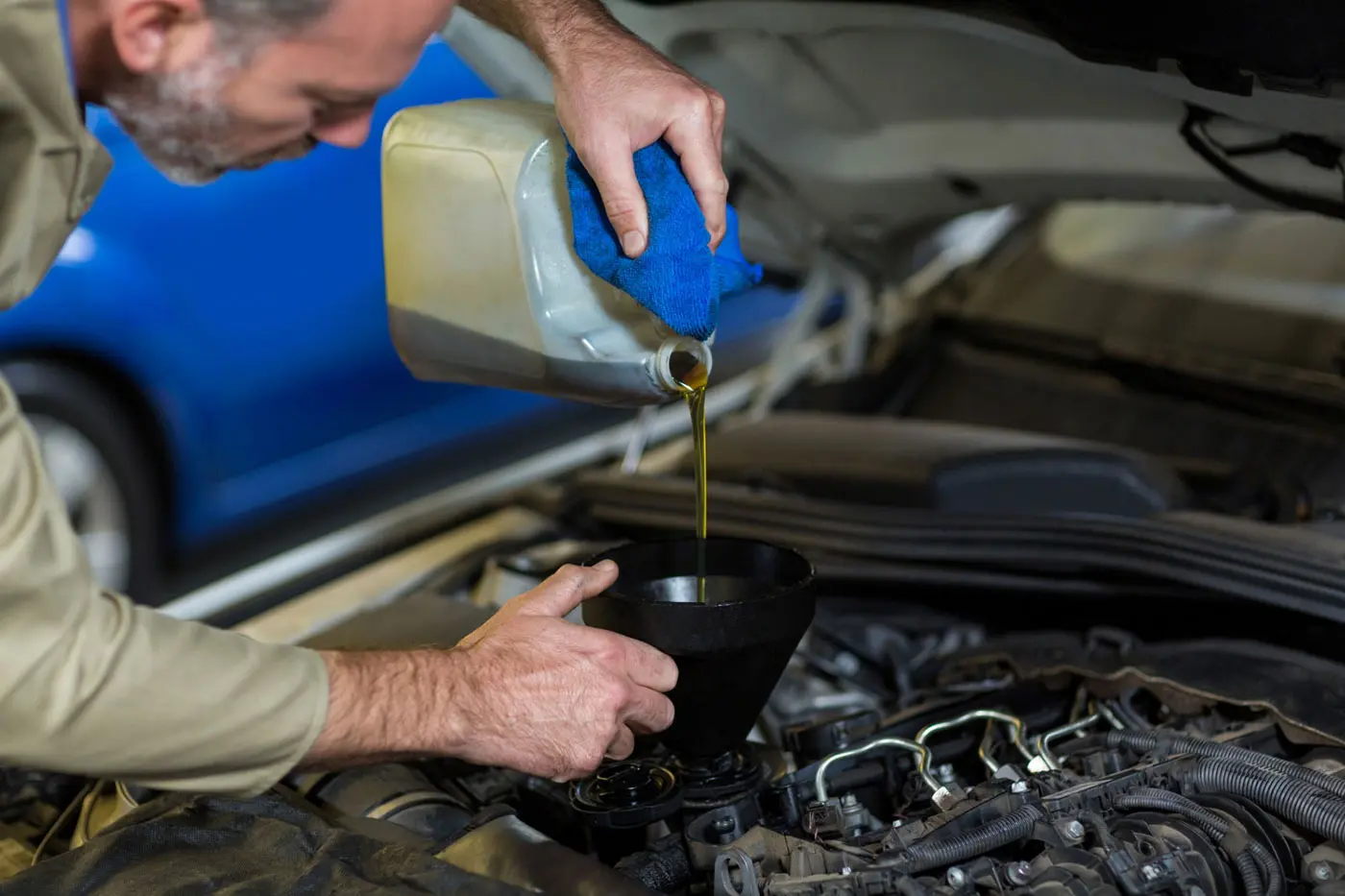
The automotive landscape of 2026 sits at a fascinating crossroads. While electrification dominates the headlines, internal combustion engine (ICE) technology has not simply plateaued—it has evolved into a high-precision, thermally stressed engineering system. Modern engines are smaller, more powerful, and significantly more heat-dense than their predecessors. With the widespread adoption of turbocharging, direct injection, and aggressive downsizing, today’s family SUVs often operate under thermal conditions that would have been considered extreme a decade ago. In this environment, engine oil is no longer just a lubricant; it is a critical cooling medium, a friction reducer, and a chemical stabilizer working under constant stress.
Extreme heat remains one of the primary catalysts for engine degradation. During prolonged high-load conditions—such as summer driving, stop-and-go traffic, or towing—traditional lubricants begin to break down. At a molecular level, heat accelerates oxidation, a chemical reaction that causes oil to thicken, degrade, and form sludge, varnish, and carbon deposits. At the same time, thermal stress reduces viscosity stability, increasing the risk of insufficient lubrication and potential metal-to-metal contact. This is why selecting the right synthetic oil in 2026 is no longer a routine maintenance decision, but a key factor in determining engine longevity.
Fortunately, lubricant technology has advanced alongside modern engine design. The best synthetic oils available in 2026 are not simply refined petroleum products—they are engineered fluids, often built using Gas-to-Liquid (GTL) base stocks or advanced ester formulations designed for exceptional thermal stability. Many are formulated to withstand temperatures well above 400°F under controlled conditions while maintaining protective viscosity. These oils are designed to meet stringent modern specifications such as API SP and newer-generation industry standards, which focus on preventing issues like low-speed pre-ignition (LSPI), timing chain wear, and oxidation under high heat.
As we explore the top synthetic oils of 2026, the focus will go beyond marketing claims. We will examine the real chemical resilience that allows these lubricants to protect modern engines under extreme thermal and mechanical stress.
The Science of Heat: Why Traditional Oils Fail
In the high-performance landscape of 2026, understanding why "standard" or conventional oils crumble under pressure is essential for any vehicle owner. To appreciate the superiority of modern synthetics, we must first look at the chemical warfare occurring inside your engine block. When your engine reaches its operating temperature—and subsequently exceeds it during a heatwave or a steep climb—traditional oil molecules begin to undergo a permanent transformation known as Thermal Degradation.
Conventional oils are refined from crude oil, meaning they contain a variety of molecular shapes and sizes, along with impurities like sulfur and wax. Under extreme heat, these smaller molecules evaporate (a phenomenon measured as NOACK Volatility), while the larger ones oxidize. This oxidation turns the oil into a thick, black "mayonnaise" known as sludge. Sludge is the silent killer of engines; it clogs narrow oil passages, starves critical components of lubrication, and acts as an insulator, trapping even more heat inside the metal components rather than carrying it away to the oil cooler.
Another critical failure point is Viscosity Shear. Your oil’s viscosity—its resistance to flow—is managed by additives called Viscosity Index Improvers (VIIs). In cheaper or older oil formulations, these polymer chains are physically "sheared" or chopped into pieces by the intense pressure and heat of the engine's moving parts. Once these chains break, a 5W-30 oil might effectively become a 5W-10. At that point, the protective film between your piston rings and cylinder walls becomes so thin that microscopic metal-on-metal welding occurs.
Key Failures of Traditional Oils in 2026 Environments:
-
Oxidative Thickening: The chemical reaction with oxygen that leads to "oil thickening," making it harder for the pump to circulate fluid during critical start-up moments.
-
Carbon Deposit Formation: Intense heat on the underside of the pistons can cause oil to "cook," leaving behind hard carbon deposits that cause ring sticking and loss of compression.
-
Low-Speed Pre-Ignition (LSPI): In modern Turbocharged Direct Injection (TGDI) engines, inferior oils can contribute to premature fuel ignition, which can literally shatter a piston in milliseconds.
The 2026 standards, specifically the ILSAC GF-7, were designed to combat these exact failures. Synthetic oils avoid these pitfalls because they are built from uniform molecules that don't evaporate easily and don't contain the impurities that trigger rapid oxidation.
Top 5 Synthetic Oils for Extreme Heat (2026 Edition) (500+ words)
Selecting the right oil in 2026 requires looking at independent lab data and real-world thermal stress tests. As engines run leaner and hotter to meet emissions standards, these five oils have emerged as the gold standard for high-temperature stability.
1. The Endurance King: Amsoil Signature Series 5W-30
Amsoil remains a titan in the synthetic world, specifically because of its remarkably low NOACK volatility score. In independent testing, this oil shows nearly zero boil-off even when subjected to sustained high-RPM driving in desert conditions. It utilizes a robust package of anti-wear additives that stay active long after lesser oils have oxidized.
-
Best for: High-performance sports cars and heavy-duty towing.
2. The Turbo Specialist: Mobil 1 Extended Performance High Tech
Turbochargers can spin at over 200,000 RPM, creating a localized "heat zone" that can cook oil instantly. Mobil 1’s 2026 formulation features a specialized "Turbo-Shield" additive that prevents oil from carbonizing inside the turbo bearings. It is specifically engineered to exceed API SP requirements, providing a massive safety margin against Low-Speed Pre-Ignition (LSPI).
-
Best for: Downsized turbocharged engines (eco-boost style) and European imports.
3. The Hybrid Hero: Pennzoil Ultra Platinum (GTL Technology)
Hybrids present a unique thermal challenge: the engine often kicks on at highway speeds while the block is still relatively cool, but then it must immediately handle high-load heat. Pennzoil’s Gas-to-Liquid (GTL) base oil, made from natural gas, is 99.5% pure. This purity allows for instant flow during those "cold-to-hot" hybrid transitions while maintaining a rock-solid viscosity film once the engine reaches peak temperature.
-
Best for: Modern Hybrids and Plug-in Hybrids (PHEVs).
4. The Value Performer: Castrol EDGE High Tech Full Synthetic
Castrol uses "Fluid Titanium Technology" which physically changes the way the oil behaves under extreme pressure. As heat increases and the oil film is squeezed, the titanium additives provide an extra layer of shock absorption. It offers premium-level protection at a price point that is accessible for daily commuters in hot climates like Arizona or the Middle East.
-
Best for: Daily drivers in high-ambient temperature regions.
5. The Eco-Synth: Motul 8100 Power (Ester-Based)
For those looking for the pinnacle of 2026 technology, Motul’s ester-based synthetic is the answer. Esters are polar molecules that naturally "stick" to metal surfaces. Even if the engine is shut off while blistering hot, a microscopic layer of oil remains on the components, preventing the "dry start" wear that often happens when heat causes standard oils to drain completely into the pan.
-
Best for: Track enthusiasts and luxury vehicles.
Key Features to Look For in a High-Heat Oil (400+ words)
When evaluating synthetic oils in 2026, you shouldn't just rely on the brand name. To truly protect an engine from extreme thermal stress, you need to understand the technical specifications listed on the back of the bottle or the product data sheet. These metrics provide a "stress test" profile of how the oil will behave when the temperature under the hood exceeds $220^\circ\text{F}$.
The Flash Point and Fire Point
The Flash Point is the temperature at which the oil gives off enough vapor to ignite if exposed to a flame. In 2026, high-quality full synthetics typically boast a flash point above $440^\circ\text{F}$ ($227^\circ\text{C}$). A higher flash point is a direct indicator of the oil's quality; the higher the number, the more resistant the oil is to "boiling off" and creating dangerous vapors that can lead to oil consumption and engine deposits.
NOACK Volatility: The Evaporation Factor
Perhaps the most critical metric for heat resistance is the NOACK Volatility test. This measures the percentage of oil weight lost through evaporation during high-temperature operation. In 2026, the industry standard for premium oil is a NOACK score below 10%. If your oil has a high volatility score, it will literally disappear out of your exhaust pipe as vapor, leaving behind thicker, heavier oil that doesn't lubricate as effectively.
High-Temperature High-Shear (HTHS) Viscosity
The HTHS measurement represents the oil’s ability to maintain a protective film in the narrowest parts of the engine—like the bearings—under extreme heat and high-pressure conditions. While the "30" in a 5W-30 tells you the general thickness, the HTHS value tells you if that thickness will hold up when you are floor-boarding it on a desert highway. You want an oil that maintains its structural integrity even when the molecules are being physically squeezed between metal surfaces.
The Role of Modern Additives
Beyond the base oil, the additive package acts as the "immune system" for your engine. Look for:
-
Detergents & Dispersants: High-heat environments create "varnish." Modern calcium and magnesium-based detergents keep these particles in suspension so they can be trapped by the filter rather than sticking to your engine walls.
-
Anti-Oxidants: These chemicals sacrifice themselves to stop the chain reaction of oxidation, significantly extending the life of the oil in hot climates.
Maintenance Tips for Hot Weather Driving (400+ words)
In 2026, the strategy for vehicle longevity in scorching climates has shifted from "reactionary" to "predictive." Even with the best synthetic oil in your crankcase, extreme heat places an immense burden on your engine's cooling and filtration systems. To truly protect your investment, you must treat hot weather driving as a "Severe Service" condition, regardless of what the standard owner’s manual might suggest for temperate climates.
Redefining the Oil Change Interval
The most common mistake drivers make is following the "Normal" maintenance schedule during a 100°F+ summer. High ambient temperatures accelerate the depletion of the additive package in your oil. If your vehicle’s Oil Life Monitor (OLM) suggests a 10,000-mile interval, consider shortening that to 6,000 or 7,500 miles if you are consistently driving in extreme heat. This ensures that the TBN (Total Base Number)—the oil's ability to neutralize acidic combustion byproducts—remains high enough to prevent internal corrosion.
The Critical Role of High-Efficiency Filtration
As oil thins out under heat, its ability to "suspend" microscopic contaminants changes. Furthermore, high-heat operation can cause standard cellulose (paper) oil filters to degrade or become brittle over time. In 2026, we recommend pairing your premium synthetic oil with a fully synthetic media oil filter. These filters offer higher "dirt-holding capacity" and utilize wire-backed mesh that won't collapse under the high-flow pressures required when the oil pump is working overtime to keep the engine cool.
Monitoring "Heat Soak"
One of the most dangerous moments for an engine isn't while it's running, but right after it's turned off—a phenomenon known as "heat soak." When you stop a hot engine, the coolant stops circulating, but the metal remains blistering hot. This is when oil "cokes" or turns into hard carbon in the turbocharger lines. In 2026, modern vehicles often have electric water pumps that run after shutdown, but if yours doesn't, it is wise to let the engine idle for 60 seconds after a long, hot haul to allow the oil to carry away the peak "soak" heat.
Ancillary Checks
-
Coolant Integrity: Your oil can only do so much if the cooling system is failing. Ensure your coolant is fresh; old coolant loses its anti-boil properties, forcing the oil to take on 100% of the cooling duty, which leads to rapid thermal breakdown.
-
Check for Leaks: Heat causes gaskets and seals to expand and contract. A tiny seep in the winter can become a major leak in the summer as the oil thins out and finds every possible exit point.
Conclusion
As we navigate through 2026, the demand placed on our internal combustion engines has never been higher. The combination of smaller, turbocharged powerplants and increasingly volatile global temperatures means that your choice of motor oil is the thin line between a vehicle that lasts 200,000 miles and one that suffers a catastrophic failure before the decade is out. The synthetic oils we have discussed—ranging from the gas-to-liquid purity of Pennzoil to the ester-based resilience of Motul—represent the pinnacle of current chemical engineering. They are designed not just to lubricate, but to endure, providing a level of thermal stability that was physically impossible just a few years ago.
However, even the most advanced "super-oil" is only one part of the equation. To truly protect your engine from extreme heat, you must adopt a holistic maintenance mindset. This means paying closer attention to your NOACK volatility scores, shortening your drain intervals during record-breaking summers, and ensuring your filtration and cooling systems are performing at their peak. By matching the right API SP or ILSAC GF-7 certified synthetic oil to your specific driving conditions, you are doing more than just maintaining a machine; you are preserving the mechanical integrity and resale value of your vehicle in an era where heat is the ultimate adversary. Choose wisely, monitor closely, and your engine will reward you with smooth, reliable performance, no matter how high the thermometer climbs.


Written by Kousar Shabbir
Published May 5, 2026 in Maintenance & Tips.