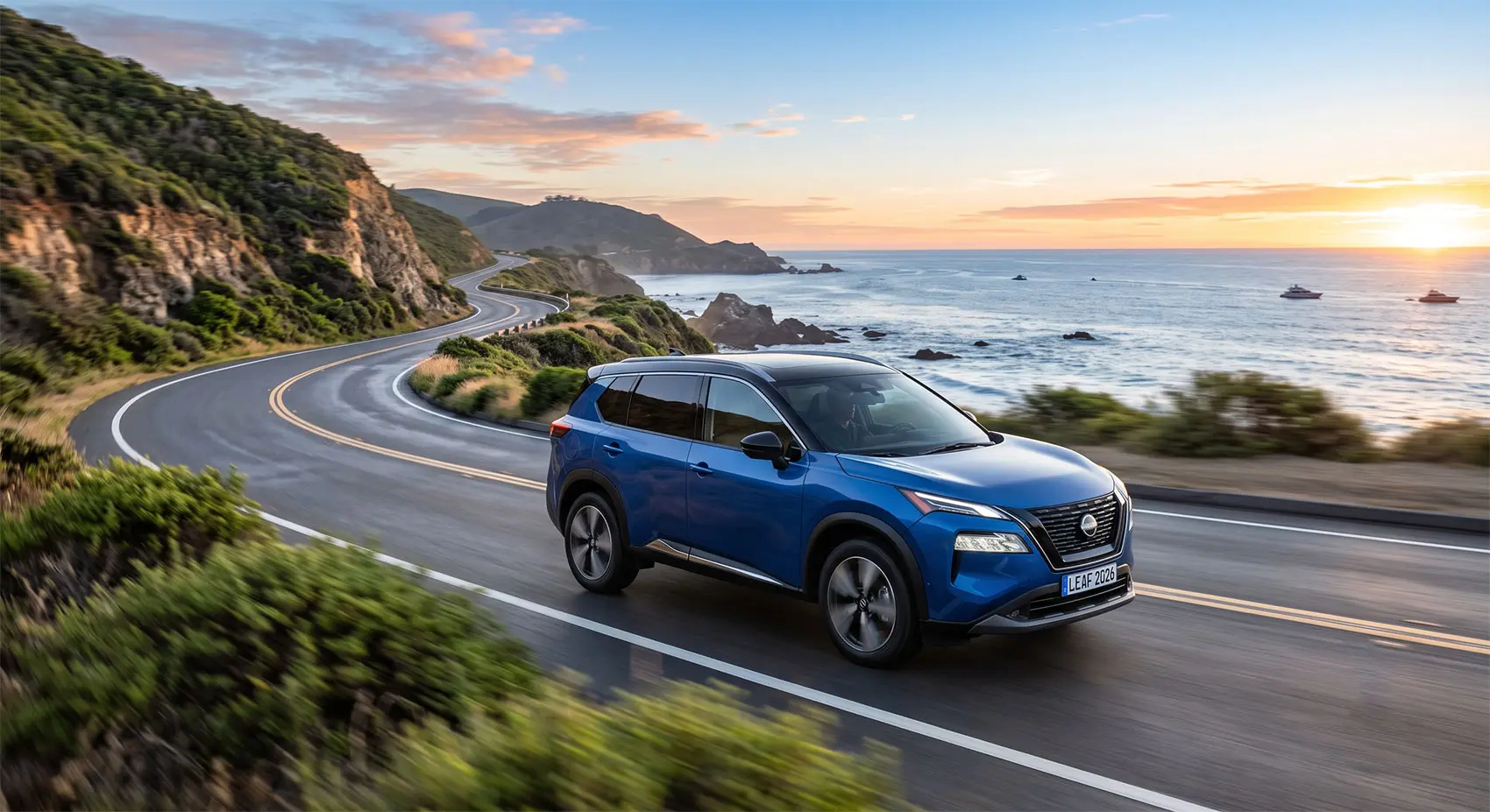
The electric vehicle (EV) market has seen a seismic shift over the last few years, and perhaps no vehicle captures this transition better than the 2026 Nissan Leaf. For over a decade, the original Leaf held the title of the world’s first mass-market electric hatchback. It was the sensible, affordable, and reliable gateway for millions of drivers into the world of zero-emission mobility. However, as the automotive industry pivoted toward utility, versatility, and the dominance of the crossover SUV body style, the classic hatchback design began to feel like a relic of a bygone era. Enter the 2026 Nissan Leaf SUV, a complete, ground-up reimagining that isn't just an update; it is a declaration of intent.
By shedding its humble hatchback roots and embracing a muscular, tech-forward crossover silhouette, Nissan is aiming to reclaim its spot at the top of the competitive subcompact EV segment. But this transformation raises a crucial question for prospective buyers: Is the 2026 model the perfect time to make the switch, or is it wiser to wait for further market maturation and potential mid-cycle refreshes? The 2026 Nissan Leaf arrives at a unique "tipping point" for consumers. With the integration of the North American Charging Standard (NACS), significant battery capacity upgrades, and a cabin experience that finally matches the premium aspirations of modern electric motoring, the stakes have never been higher.
In this review, we will peel back the layers of the 2026 Nissan Leaf. We’ll examine whether the jump to a 75-kWh battery and the new, dedicated EV platform deliver the real-world range and performance that today’s drivers demand. More importantly, we will weigh the current incentives, infrastructure improvements, and competitive landscape to help you determine if you should pull the trigger on this bold new SUV today, or if holding off for future developments is the smarter financial and technological move. Whether you are a long-time Leaf loyalist or a newcomer to the brand, this is the definitive guide to navigating the 2026 Nissan Leaf launch.
The 2026 Nissan Leaf Redesign: What’s Actually New?
The shift from the traditional hatchback to a crossover SUV is not merely a cosmetic choice; it is a fundamental re-engineering of the Leaf’s identity to align with current market demands. For the 2026 model, Nissan has moved the Leaf onto a new, dedicated EV platform, shedding the constraints of its previous architecture. This change is most evident in the exterior dimensions: the vehicle now boasts a higher ground clearance, a more robust stance, and a significantly larger greenhouse, which translates to a more imposing presence on the road. The design language has evolved into something sharper and more aerodynamic, mimicking the sleek, aggressive lines of the Ariya, but tailored specifically for the subcompact segment.
Beneath this new skin lies a transformative upgrade: the 75-kWh battery pack. This represents a substantial leap in energy density compared to the outgoing models, effectively pushing the Leaf into the upper echelon of range-per-dollar ratios for subcompact SUVs. For drivers who previously dismissed the Leaf due to range anxiety, this 75-kWh capacity provides a "freedom buffer," making long-distance commuting and occasional road trips a reality rather than a calculation.
Furthermore, the integration of the North American Charging Standard (NACS) is a massive convenience upgrade. By moving away from legacy charging standards, the 2026 Leaf now gains seamless access to the most extensive fast-charging network on the continent. This isn't just about a change in the plug shape; it signifies a complete overhaul of the onboard charging electronics, allowing for faster power intake curves. When you combine this improved thermal management with the larger battery, the vehicle spends less time tethered to a charger and more time on the move, addressing one of the most critical pain points of early-generation electric vehicle ownership. This platform shift isn't just an improvement; it’s the evolution the Leaf needed to remain relevant in a market that has moved aggressively toward SUV dominance.
Performance and Utility: A Modern Daily Driver
The transition to a dedicated EV platform has done more than just improve the aesthetics; it has fundamentally altered the living space inside the 2026 Nissan Leaf. By pushing the wheels to the corners and eliminating the transmission tunnel, the engineers have unlocked a level of cabin spaciousness that was previously impossible in a hatchback architecture. Passengers will immediately notice the increased legroom and the flat floor, which creates an airy, lounge-like environment. The seating position is now elevated, offering that coveted "commanding view" of the road that SUV buyers prioritize. This isn't just a gimmick; it enhances driver confidence and makes ingress and egress significantly more comfortable for passengers of all ages.
When it comes to driving dynamics, the 2026 model feels more planted and composed. The lower center of gravity, a result of placing the massive 75-kWh battery low in the chassis, allows the Leaf to corner with surprising agility for a vehicle in this class. It’s not a sports car, but it doesn't need to be. The instant torque characteristic of electric motors is managed through refined software that prioritizes smooth, linear acceleration, making it an ideal companion for the stop-and-go nature of urban commuting. The suspension tuning strikes a sophisticated balance; it is firm enough to handle the extra weight of the battery while remaining supple enough to absorb potholes and road imperfections, a critical requirement for a modern daily driver.
Technology is where the 2026 Leaf truly cements its status as a contemporary leader. The interior is dominated by a dual-screen digital cockpit that integrates seamlessly with a new, cloud-native infotainment system. This system is lightning-fast, supporting over-the-air (OTA) updates that ensure the vehicle’s software remains current long after it leaves the dealership. Beyond the screens, the driver-assist suite, Nissan’s updated ProPILOT, has been significantly refined. It now offers more natural lane-centering and smoother automated speed adjustments in highway traffic. Whether you are navigating dense city streets or cruising on the highway, the 2026 Nissan Leaf provides a cohesive, tech-forward experience that finally brings the model in line with the expectations of the mid-2020s automotive landscape.
Market Analysis: Should You Buy Now?
The question of whether to buy the 2026 Nissan Leaf SUV now or wait is largely a calculation of your personal risk tolerance versus your need for immediate utility. From a fiscal perspective, the 2026 model year is entering the market with strong promotional support. Because this is the "flagship" launch for Nissan’s new EV platform, many dealerships are incentivized to move units quickly to build road presence. If you are eligible for federal tax credits or state-level rebates, the timing is arguably optimal; market data indicates that these incentives are often more robust during the first 12 months of a new model’s release as manufacturers look to capture early adopters.
Furthermore, the integration of NACS charging is not just a future-proofing feature; it is an immediate game-changer for the ownership experience. If you live in an area with a high density of Supercharger-compatible infrastructure, buying the 2026 model now grants you instant access to the most reliable charging network in the country. Waiting, in this context, offers diminishing returns. While one could argue that waiting might lead to a price drop or a mid-cycle refresh, you would be forfeiting the daily convenience and the peace of mind that comes with current NACS capability. The "Buy Now" argument rests on the premise that the 2026 Leaf is a fully realized, stable product, not an experimental prototype.
On the other hand, the market is rapidly evolving. We are seeing a steady stream of new EV competitors hitting the scene, and there is always the potential for a price war as manufacturers battle for market share. However, waiting carries its own costs specifically the cost of driving an older, less efficient, or less capable vehicle while you wait for a hypothetical "better deal" that may not manifest for 18 to 24 months. For the average driver who needs a reliable, versatile, and modern SUV right now, the 2026 Nissan Leaf presents a high-value proposition that balances current technological benchmarks with the immediate practical benefits of a dedicated EV architecture.
The Case for Waiting: What’s on the Horizon?
While the 2026 Nissan Leaf is a significant leap forward, the automotive industry is currently in a state of high-velocity innovation, which makes the "wait vs. buy" debate particularly relevant. For value-conscious buyers, the primary concern is the rapid pace of battery chemistry evolution. Rumors and industry insider reports suggest that newer, more energy-dense, and cost-effective solid-state or high-silicon anode batteries are in the late stages of testing. If your primary goal is to maximize range-per-dollar or to ensure you are at the absolute bleeding edge of EV tech, waiting another 12 to 18 months could unlock options with significantly higher efficiency.
Furthermore, Nissan’s internal roadmap hints at an expansion of its electric SUV portfolio, including a potential "Juke-sized" subcompact EV and a higher-performance variant of the current platform. If you aren't in immediate need of a vehicle, you might find that next year’s release cycle offers more specialized trims that better fit your specific lifestyle. For instance, if you prioritize off-road capability or modular utility over the balanced approach of the standard 2026 Leaf, upcoming variants might cater more precisely to your needs.
There is also the cyclical nature of price adjustments. As more manufacturers flood the market with subcompact electric SUVs to compete with Tesla’s entry-level offerings, we may see downward pressure on pricing or more aggressive dealership markdowns. Holding off could allow you to capitalize on a more saturated market, where competition drives better finance rates or bundled charging incentives. However, this strategy is only sound if you have the luxury of time. If your current vehicle is nearing the end of its life or if your daily commute requires a reliable EV today, the opportunity cost of waiting, potentially paying for repairs on an aging gas car or enduring the stress of a less-than-ideal vehicle, often outweighs the potential savings of a future market shift.
Final Conclusion: Your Personalized Buying Strategy
Deciding whether to purchase the 2026 Nissan Leaf SUV boils down to evaluating your specific "mobility profile." If you are currently driving a vehicle with high maintenance costs, poor fuel efficiency, or aging technology, the 2026 Leaf offers a compelling, immediate upgrade. Its transition to a dedicated EV architecture ensures that you are investing in a platform that will remain relevant for the next several years, particularly with the standard inclusion of NACS charging and the significantly improved 75-kWh battery. For those who need a reliable, daily-driver crossover that balances interior space, modern tech integration, and real-world range, the 2026 model is a "buy-now" candidate. The peace of mind that comes with a full manufacturer warranty and the latest driver-assist safety suites is often worth the premium of being an early adopter.
Conversely, if you are a "value-maximizer" or a performance enthusiast, there is a legitimate case for patience. If your current vehicle is still dependable, waiting 12 months allows you to monitor the market as the initial launch hype subsides and real-world ownership data accumulates. By this time next year, we will have a clearer picture of how the NACS network scales for non-Tesla users and whether battery manufacturing improvements lead to more aggressive price points. Furthermore, if you are holding out for a specific performance variant or a more compact form factor, waiting ensures that your purchase aligns perfectly with your long-term needs rather than with the immediate availability of the launch trim.
Ultimately, the 2026 Nissan Leaf is a triumph of engineering that marks a clear departure from the experimental nature of the early Leaf models. It is a mature, capable, and highly competitive SUV that can comfortably serve as a primary family vehicle. Whether you buy now or wait, the most important takeaway is that the electric future is no longer a compromise; it is an upgrade. Assess your current financial situation, your daily driving requirements, and your tolerance for potential future market shifts, and choose the path that keeps you moving forward.


Written by Maarukh Shahbaz
Published Jul 16, 2026 in Car Reviews.