For decades, the battle under the hood was won with displacement. The golden rule of performance was simple: "There is no replacement for displacement." If you wanted reliable horsepower and effortless torque, you bought a larger naturally aspirated engine with six or eight cylinders. But as emissions regulations tightened and consumer demand for fuel efficiency skyrocketed, automakers shifted their engineering focus dramatically. Enter the era of forced induction specifically, the widespread adoption of downsized, turbocharged four-cylinder and three-cylinder engines across almost every vehicle class, from family sedans to heavy-duty pickup trucks.
Today, small-displacement turbocharged engines routinely produce horsepower and torque numbers that once required a brawny V6 or V8. On paper, it looks like a total win: exceptional low-end torque, responsive throttle delivery, and respectable highway miles per gallon. However, for drivers planning to keep their vehicles well past the 100,000-mile or 200,000-mile mark, a critical question emerges: Which car engine actually lasts longer a turbocharged engine or a naturally aspirated one?
Longevity in automotive engineering is never an accident; it is the direct result of physics, material science, and mechanical stress. Naturally aspirated engines operate on atmospheric pressure, pulling air in naturally through intake vacuum. Turbocharged engines, by contrast, rely on exhaust gas-driven turbines to force compressed air into combustion chambers, generating immense cylinder pressure and blistering thermal loads. While modern metallurgy, synthetic lubricants, and electronic engine management systems have made turbochargers significantly more durable than their predecessors, the laws of thermodynamics remain unyielding.
In this comprehensive guide, we will break down the structural differences, heat cycles, failure points, maintenance realities, and real-world mileage benchmarks between turbocharged and naturally aspirated engines. Whether you are shopping for a new vehicle or deciding how to protect your current investment, understanding these mechanical dynamics is key to maximizing your vehicle's lifespan.
How Mechanical Architecture Impacts Lifespan
To understand why an engine lasts for hundreds of thousands of miles or fails prematurely, you have to look directly at the baseline physics governing its internal architecture. At its core, an internal combustion engine is a controlled air pump and heat engine. How it introduces air and manages combustion pressure defines the level of mechanical fatigue experienced by every internal component from the piston crowns and connecting rods to the crankshaft journals and cylinder wall liners.
Cylinder Pressure and Mechanical Stress Dynamics In a naturally aspirated (NA) engine, air is drawn in solely through the vacuum created by the downward stroke of the pistons at standard atmospheric pressure (approximately 14.7 psi at sea level). Because the air charge is not artificially compressed prior to entering the cylinder, peak cylinder combustion pressures remain moderate and predictable across the entire RPM band.
Turbocharged engines operate under forced induction. An exhaust-driven turbine forces compressed ambient air into the combustion chambers at manifold pressures frequently ranging from 12 to over 25 psi above atmospheric pressure. This increased charge density allows significantly more fuel to be burned per combustion cycle, dramatically increasing torque. However, this also spikes peak cylinder pressures and mechanical load exponentially. Connecting rod bearings, wrist pins, and head gaskets in turbocharged applications operate under continuous, heavy cyclical stress compared to naturally aspirated equivalents of similar displacement.
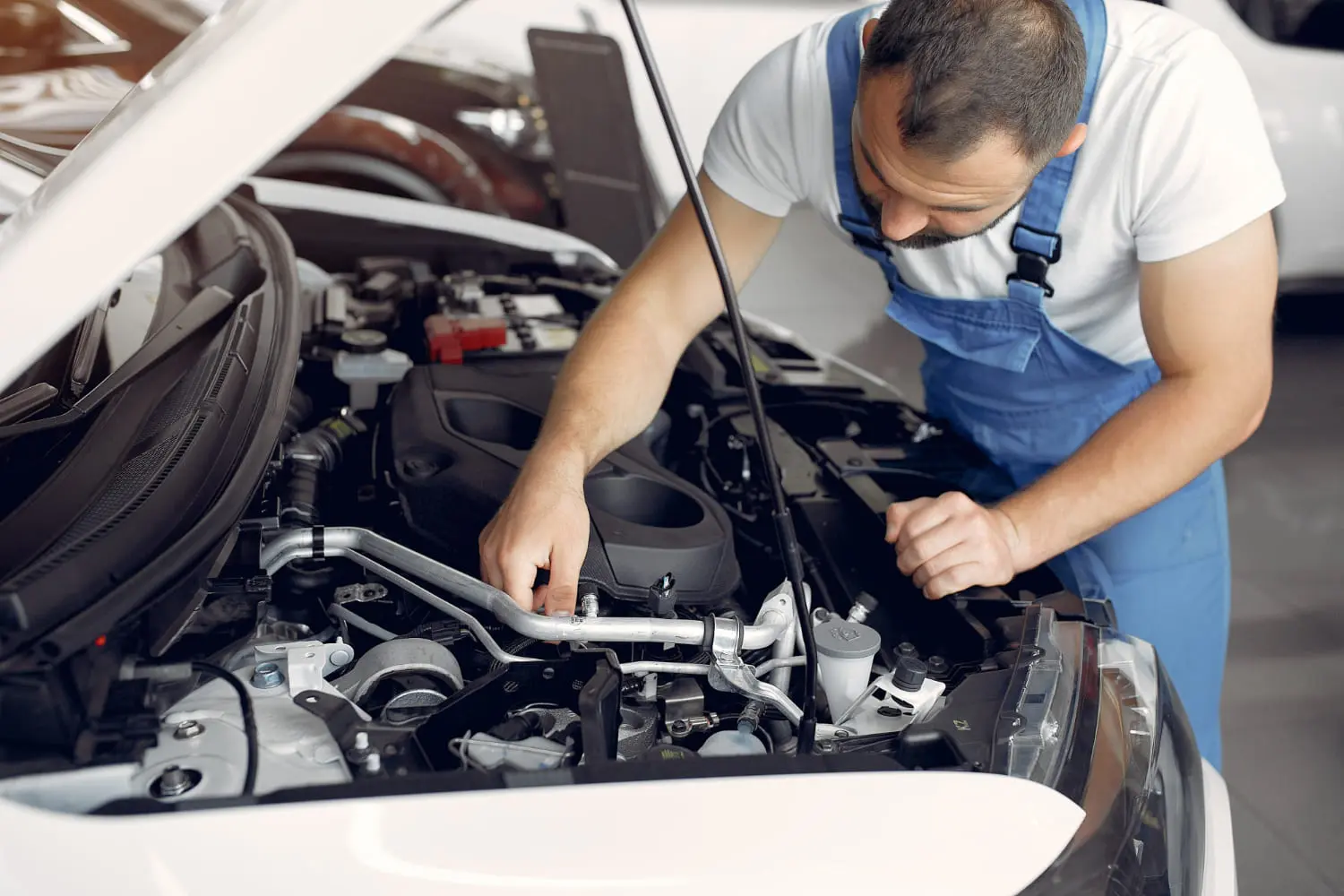
Component Simplicity vs. Auxiliary System Dependencies A naturally aspirated engine benefits fundamentally from mechanical simplicity. The intake path consists of an air filter, throttle body, and intake manifold leading straight into the cylinder head. There are fewer auxiliary systems under the hood, translating directly into fewer potential points of failure.
Turbocharged powertrains require a complex ecosystem of auxiliary components to survive:
-
The Turbocharger Assembly: Operating with turbine speeds often exceeding 150,000 to 250,000 RPM on precision journal or ball bearings.
-
Intercoolers and Charge Piping: Pressurized plumbing, silicone couplers, and heat exchangers required to cool the compressed intake air before it enters the engine.
-
Boost Control Hardware: Electronic or vacuum-actuated wastegates, bypass valves, and blow-off valves designed to regulate boost pressure and prevent catastrophic over-boost conditions.
Thermal Loads and Structural Fatigue Naturally aspirated engines disperse heat primarily through standard engine coolant jackets and engine oil flowing across predictable operating ranges (typically 190°F to 215°F). In contrast, a turbocharger relies on the engine's exhaust stream—reaching temperatures between 1,200°F and 1,700°F—to spin the turbine wheel. A massive amount of radiant and conductive heat is transferred directly into the engine oil and coolant circulating through the turbocharger center housing. Over extended mileage, this continuous thermal cycling accelerates the degradation of rubber seals, plastic vacuum lines, gaskets, and wiring harnesses surrounding the engine block.
The Achilles' Heel of Turbocharged Engines
While modern engineering has made massive strides, the fundamental vulnerabilities of forced induction remain rooted in extreme thermal energy, lubrication breakdown, and mechanical wear on auxiliary components. If a turbocharged engine fails prematurely, the root cause is rarely the engine block itself—it is almost always an issue originating within the turbocharging support network.
Extreme Thermal Cycling and Oil Coking A turbocharger's turbine wheel is spun directly by red-hot exhaust gases, routinely exposing the center bearing housing to operating temperatures between 1,200°F and 1,700°F. The engine's motor oil serves two vital roles here: lubricating the high-speed turbine shaft and carrying away intense thermal energy.
When a turbocharged engine is shut off immediately after high-load driving, the oil circulation stops abruptly while heat remains trapped inside the turbo housing—a phenomenon known as "heat soak." This causes residual oil trapped in the bearing passages to bake, oxidize, and form hard carbon deposits, a process known as oil coking. Over time, these abrasive deposits restrict oil passages, starve the precision journal or ball bearings of fresh lubrication, and lead to catastrophic bearing seizure or excessive shaft play.
High-Load Auxiliary Failure Points Naturally aspirated engines do not require auxiliary high-speed rotating equipment to produce power. In contrast, a turbocharged engine relies on multiple interconnected, high-stress mechanisms that face continuous wear:
-
Turbo Bearings & Oil Seals: Spinning at up to 250,000 RPM, any microscopic lubrication breakdown quickly degrades internal bronze or ceramic bearings, leading to oil blow-by into the exhaust or intake tract.
-
Wastegate Actuators & Linkages: The mechanical wastegate opens and closes thousands of times per drive to regulate boost. Over time, the internal pivot bushings and electronic actuators wear out due to continuous heat cycles, causing boost leaks or check-engine codes.
-
Charge Air Piping & Intercooler Degradation: Constant exposure to pressurized air cycles causes silicone couplers to dry out, crack, or blow off entirely under peak load, while intercooler end-tanks can develop microscopic pressure leaks.
Financial Impact and Replacement Benchmarks When an NA engine reaches high mileage, standard maintenance usually revolves around spark plugs, serpentine belts, and valve cover gaskets. When a turbocharged system requires overhaul at 120,000 to 180,000 miles, replacing an OEM turbocharger assembly, associated oil feed/return lines, and cooling lines often ranges from $1,800 to $4,500 in parts and labor, significantly increasing the vehicle's long-term total cost of ownership.
Modern Engineering: Have Modern Turbos Closed the Reliability Gap?
For drivers who remember the notoriously fragile turbocharged engines of the 1980s and 1990s, the perception that turbochargers are fragile time bombs is difficult to shake. However, modern automotive engineering has fundamentally transformed forced induction reliability. Advances in metallurgy, precision electronic control, and dedicated thermal management systems have closed a massive portion of the historical durability gap between naturally aspirated and turbocharged designs.
Advanced Cooling Circuits and Auxiliary Electric Water Pumps Historically, turbo failures were driven primarily by oil coking after the engine was shut off hot. In modern vehicles, automakers have largely engineered around this vulnerability using liquid-cooled center bearing housings integrated directly into the vehicle’s main cooling circuit.
More importantly, most modern turbocharged vehicles utilize computer-controlled auxiliary electric coolant pumps. Even after you switch off the ignition, lock the doors, and walk away, these electric pumps remain active. They circulate coolant through the turbocharger housing via thermosiphon effect or forced flow until temperatures normalize, preventing destructive heat soak and protecting both the bearings and the engine oil from premature oxidation.
Forged Internals, Direct Injection, and Precision Knock Control Modern turbocharged blocks are no longer standard naturally aspirated engines with a bolt-on blower. Today’s factory turbo engines are purpose-built to withstand severe cylinder pressures from the blueprint phase:
-
Strengthened Metallurgy: Blocks feature high-tensile cast iron liners or plasma-transferred wire arc coatings, forged steel crankshafts, reinforced connecting rods, and ceramic-coated piston crowns designed to dissipate combustion heat efficiently.
-
High-Pressure Direct Fuel Injection (GDI): Direct injection sprays atomized fuel straight into the combustion chamber at pressures exceeding 2,000 to 5,000 psi. The latent heat of fuel vaporization dramatically cools the internal air-fuel charge, mitigating pre-ignition (engine knock) and allowing higher compression ratios with elevated boost levels.
-
Sophisticated Engine Management: Multi-channel knock sensors and wideband oxygen sensors adjust ignition timing and wastegate positions in milliseconds, preventing catastrophic detonation before it can damage internal components.
The Downsizing Paradox: Small Turbo Engines vs. Large NA Blocks Despite these massive advancements, mechanical physics cannot be entirely erased. A tiny 1.5-liter turbocharged three- or four-cylinder engine pulling a 4,000-pound SUV operates under high load, high boost, and high continuous thermal stress for a much larger percentage of its operational life than an unstressed 3.5-liter naturally aspirated V6. While modern turbos are far more durable than ever, an under-stressed naturally aspirated engine will almost always endure fewer total stress cycles over a 15-year ownership timeline.
Maintenance Schedules & Driving Habits That Determine Longevity
Even the most robust engine design will fail prematurely if maintenance protocols and driving habits are neglected. When comparing naturally aspirated and turbocharged platforms, the tolerance for maintenance oversight differs drastically. Naturally aspirated engines are inherently forgiving of minor maintenance delays, while turbocharged engines operate with razor-thin margins for error.
Oil Quality, Viscosity, and Service Intervals Engine oil is the lifeblood of forced induction. In a naturally aspirated engine, oil primarily lubricates the valve train, cylinder walls, and crankshaft journals under relatively moderate thermal conditions. In a turbocharged engine, that exact same oil must also lubricate the ultra-high-speed turbo shaft bearings while acting as a liquid heat sponge against 1,500°F turbine housings.
-
Severe Service Intervals: While automakers often market extended 10,000-mile oil change intervals for consumer convenience, running a turbocharged engine past 5,000 to 6,000 miles between changes drastically accelerates oil shearing, viscosity breakdown, and sludge accumulation around the turbo oil return passages.
-
Full Synthetic Formulations: Turbocharged vehicles strictly require high-temp, high-shear (HTHS) rated full synthetic oils designed to resist thermal breakdown and vaporization under extreme heat cycles.
-
Spark Plug & Ignition Wear: Forced induction combustion environments run significantly higher cylinder pressures, eroding spark plug electrodes at roughly double the rate of naturally aspirated counterparts (requiring replacement every 30,000 to 50,000 miles vs. 80,000 to 100,000 miles for NA).
Driving Habits: Warm-Up and Cool-Down Discipline How a vehicle is operated directly governs component fatigue:
-
Cold Starts: Driving aggressively immediately after a cold start pushes thick, unheated oil through microscopic turbocharger bearing tolerances, causing micro-abrasions and accelerated shaft play before oil reaches optimal operating flow.
-
High-Load Shutdowns: After spirited driving, heavy highway pulling, or mountain climbing, turbocharged engines should be allowed to idle for 30 to 60 seconds before shutdown. This simple habit allows circulating coolant and oil to stabilize housing temperatures, preventing thermal shock.
Long-Term Cost Comparisons Over 150,000+ Miles Over a typical 10-year, 150,000-mile ownership cycle, maintenance for a naturally aspirated vehicle remains predictable—primarily fluid changes, brake pads, and occasional wear items. A turbocharged vehicle requires stricter, shorter fluid intervals, higher-octane fuel recommendations in many applications, and potential auxiliary maintenance (charge pipe seals, boost solenoids, and PCV catch-can maintenance) that add 25% to 40% to overall routine operating costs.
Direct Longevity Comparison: Real-World Mileage Benchmarks
When evaluating the maximum service life of an engine, empirical real-world data and mechanical endurance testing paint a clear picture. While anomalies exist in both directions—neglected engines that fail before 80,000 miles and meticulously maintained platforms that surpass 300,000 miles—the structural baseline life expectancies for naturally aspirated and turbocharged engines diverge predictably.
Real-World Lifespan & Overhaul Benchmarks
-
Naturally Aspirated Engines (200,000 to 300,000+ Miles): Due to lower continuous cylinder pressures and modest thermal profiles, quality naturally aspirated engines (such as Toyota’s 2.5L 4-cylinder or 3.5L V6, and Honda’s naturally aspirated K-series) routinely cross the 250,000-mile threshold with nothing more than routine fluid replacements, belt changes, and spark plugs. The core reciprocating assembly (pistons, crank, bearings) experiences significantly lower cyclical fatigue over its lifetime.
-
Turbocharged Engines (150,000 to 200,000 Miles): Modern factory turbocharged powertrains are exceptionally well-engineered, but the forced induction system itself has a finite mechanical life. Turbocharger center bearings, wastegate linkages, and high-pressure oil lines generally require major service, rebuilding, or complete unit replacement between 120,000 and 180,000 miles. While the engine block itself may remain intact, auxiliary turbo component wear frequently necessitates thousands of dollars in mechanical restoration to reach the 200,000-mile mark safely.
Impact of Real-World Duty Cycles The environment in which an engine operates dramatically accelerates or decelerates these lifespans:
-
Highway Cruising: Long, steady-state highway miles place very little boost demand on a turbocharged engine. Under light cruise conditions, the engine operates essentially off-boost with manageable thermal loads, allowing turbo engines to last considerably longer.
-
Severe City & Stop-and-Go Commuting: Constant acceleration from a dead stop repeatedly spools the turbocharger, generating frequent thermal spikes and high boost loads without continuous airflow through the front-mounted intercooler and radiator. Under heavy city driving conditions, turbocharged components degrade significantly faster than naturally aspirated engines.
Conclusion & Buyer's Verdict
When stripping away marketing hype and looking purely at mechanical durability, the verdict is definitive: naturally aspirated engines last longer, withstand neglect better, and cost less to maintain over extreme mileage intervals. The absence of forced induction hardware, moderate internal cylinder pressures, and dramatically lower baseline operating temperatures give naturally aspirated engines a fundamental thermodynamic and mechanical advantage. For vehicle owners prioritizing a 10-to-15-year ownership horizon or aiming to cross 250,000+ miles with minimal financial surprises, a proven naturally aspirated powertrain remains the undisputed benchmark for long-term reliability.
However, modern turbocharged engines are far from fragile time bombs. When engineered with robust forged internals, advanced direct injection, and computer-controlled auxiliary cooling loops, modern turbo platforms deliver a stellar combination of low-end torque, responsive passing power, and respectable fuel efficiency. If you choose a turbocharged vehicle, maximizing its lifespan requires a proactive maintenance mindset: adopting 5,000-mile synthetic oil changes, using premium high-viscosity lubricants, replacing spark plugs proactively, and practicing disciplined cold-start and cool-down routines.
The Final Recommendation:
-
Choose Naturally Aspirated If: Your primary goals are ultra-high-mileage longevity (200k–300k+ miles), rock-bottom maintenance overhead, simple DIY servicing, and forgiving long-term durability for heavy stop-and-go commuting.
-
Choose Turbocharged If: You prioritize effortless low-end passing torque, dynamic throttle response, high-altitude performance, and modern fuel economy benefits, and you are fully committed to strict, non-negotiable synthetic maintenance intervals.



Written by Kousar Shabbir
Published Aug 20, 2026 in Comparisons.