
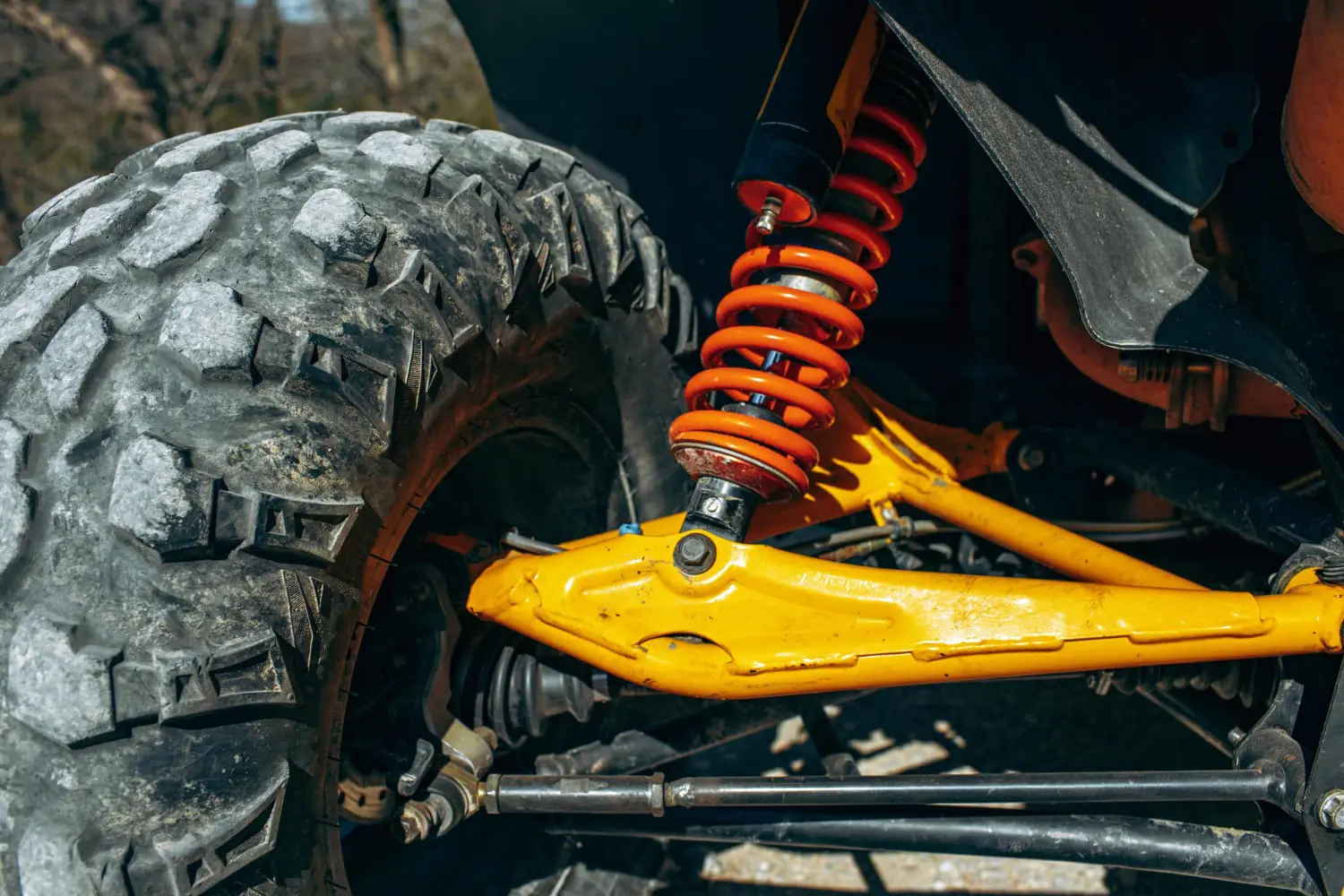
Suspension has a major effect on how a car feels from the driver’s seat. It determines how well the wheels stay in contact with the road, how much of a bump reaches the cabin, and how stable the car feels when turning. Two of the most common independent front suspension designs are Double Wishbone and MacPherson Strut. Both can provide good comfort and handling, but they do it in different ways. This is why two cars with similar weight and power can feel very different on the same road.
When comparing Double Wishbone vs MacPherson Strut suspensions, many people assume Double Wishbone always gives the better ride. The truth is more balanced. Double Wishbone gives engineers more control over wheel movement and alignment, while MacPherson Strut suspension is simpler, lighter, and easier to fit into many cars. Ride quality also depends on springs, dampers, tires, bushings, wheel size, and suspension tuning. Understanding these differences makes it much easier to see which design works best for comfort, handling, and everyday driving. It also helps buyers look beyond marketing terms and focus on how a complete vehicle actually behaves on the road.
How Double Wishbone and MacPherson Suspensions Work
Double Wishbone Suspension
A Double Wishbone suspension uses an upper control arm and a lower control arm to connect the wheel hub to the vehicle. These two arms are usually shaped like the letter A or like a wishbone. Because the wheel is controlled from two different points, engineers have more freedom to manage how the wheel moves when the suspension compresses or extends. This includes better control over camber, which is the angle of the wheel when viewed from the front of the car.
This extra control can help the tire keep a more useful contact area with the road as the body moves during a corner. It can also allow engineers to tune the suspension for both comfort and stability. Double Wishbone layouts are common in many performance cars, luxury vehicles, trucks, and some SUVs. The design is more complex because it has more arms, joints, and mounting points, but that complexity gives engineers more options when setting up the suspension.
MacPherson Strut Suspension
A MacPherson Strut suspension uses a lower control arm and a tall strut assembly. The strut contains the damper and normally works together with a coil spring. The upper part of the strut mounts directly to the vehicle body, while the lower part connects to the steering knuckle. This means the strut is not only controlling suspension movement. It also becomes an important structural part of the system.
The biggest strength of the MacPherson design is simplicity. It needs fewer components and usually takes up less horizontal space than a Double Wishbone layout. This makes it very useful in small cars and Front Wheel Drive vehicles where the engine, transmission, steering, and suspension all need to fit into a limited area. Its design can place more limits on wheel geometry during suspension movement, but modern engineering and careful tuning can still make a MacPherson Strut car comfortable and very capable.
Double Wishbone vs MacPherson Strut Ride Quality
Comfort on Smooth Roads
On a smooth city street or highway, the difference in ride quality between the two designs may be smaller than many drivers expect. A well-tuned MacPherson Strut can absorb small road changes very well. Because the system has fewer parts and can be relatively light, manufacturers can tune it for soft and predictable everyday comfort. This is one reason the design is widely used in family cars, compact cars, crossovers, and many other vehicles designed for daily use.
Double Wishbone suspension can also feel very smooth, but the design itself does not automatically make a car softer. A sports car with Double Wishbone suspension may use firm springs and aggressive dampers, so it can feel much harder over small bumps than a family car with MacPherson Struts. For this reason, ride comfort should not be judged only by the suspension name. The complete setup matters more, including tire sidewall height, wheel size, seat design, bushings, spring rate, and damper tuning.
Comfort on Rough and Uneven Roads
The differences can become easier to notice when the road is rough, broken, or uneven. Double Wishbone suspension gives engineers greater control over the path of the wheel as it moves upward and downward. This can help the tire follow the road while keeping the body more settled. When the geometry and damping are tuned for comfort, the car can feel controlled without needing to become too stiff.
A MacPherson Strut can still work very well on bad roads, especially when the vehicle has enough suspension travel and sensible tire sizes. However, the strut layout gives engineers fewer geometry choices than a Double Wishbone arrangement. On some vehicles, rough surfaces combined with cornering or heavy braking may produce more noticeable changes in wheel angle and steering feel. Even then, good tuning can reduce these effects greatly. A carefully designed MacPherson setup can be more comfortable than a poorly tuned Double Wishbone setup.
What Really Decides Ride Comfort
The suspension layout is only one part of ride quality. Spring stiffness decides how easily the wheel can move when it hits a bump, while the damper controls how quickly that movement settles. Rubber bushings can reduce vibration before it reaches the cabin, and tires with taller sidewalls can absorb small impacts that large wheels with thin tires may send more directly into the car. Vehicle weight and seat design also change what passengers feel.
This is why comparing two cars only by suspension type can be misleading. A comfort-focused sedan with MacPherson Struts may ride more smoothly than a track-focused car with double-wishbone suspension. The same is true in the opposite direction when a luxury vehicle uses Double Wishbone suspension with soft bushings and carefully tuned dampers. The suspension design gives engineers a starting point, but the final ride depends on how every part works together.
Handling, Steering, and Cornering Differences
Camber Control and Tire Contact
Camber control is one of the most important differences between these suspension types. When a car turns, its body leans toward the outside of the corner. The outside tire carries more load, so keeping that tire properly positioned on the road becomes important for grip. Double Wishbone suspension gives engineers more freedom to control how camber changes as the wheel travels. This can help the tire maintain a stronger contact area during hard cornering.
MacPherson Strut suspension has less freedom in this area because the strut itself helps locate the wheel. As the suspension moves, the designer has fewer points available to shape the wheel path. This does not mean a MacPherson car cannot corner well. Many respected performance cars use strut-based front suspension and achieve excellent grip. Tires, alignment, steering geometry, body stiffness, dampers, and electronic systems all affect the final result. Double Wishbone simply gives engineers more geometric options to work with.
Steering Feel and Body Control
Double Wishbone suspension can provide a stable and predictable feel when a car changes direction quickly. Better control of wheel movement may help the driver feel that the front tires stay planted as the car enters a corner. It can also give engineers more freedom to separate steering behavior from suspension movement. In performance-focused vehicles, this flexibility is valuable because small changes in geometry can affect how quickly and naturally the car responds.
MacPherson Strut systems can also offer sharp steering, and suspension type alone cannot tell you whether a car will feel good to drive. Steering ratio, power assistance, tires, caster, scrub radius, bushings, chassis stiffness, and alignment all change what the driver feels through the wheel. A lighter MacPherson arrangement may also help reduce weight at the front of the vehicle. In normal daily driving, most drivers will notice the manufacturer’s overall tuning more than the basic suspension layout.
Braking Stability and Road Control
Suspension behavior also matters when the driver brakes hard. Weight moves toward the front of the car, which compresses the front suspension and changes the load on the tires. A Double Wishbone system can give engineers more freedom to control wheel angles during this movement. That can help keep steering and tire behavior more consistent, especially when braking while the road is uneven or the car is also turning.
A MacPherson Strut system may have less freedom in its geometry, but modern vehicles can still remain stable under strong braking. Good dampers, carefully selected bushings, electronic stability control, quality tires, and a stiff body structure can make a large difference. For normal road use, both designs can provide safe and predictable behavior. The biggest differences become more important when the vehicle is pushed harder or when engineers are trying to achieve very specific handling goals.
Cost, Maintenance and Everyday Practicality
Space, Weight and Manufacturing Cost
MacPherson Strut suspension became popular partly because it solves several practical problems at the same time. It uses fewer major components, can be lighter, and normally costs less to manufacture. It also leaves more horizontal room around the engine bay. This is especially useful in Front Wheel Drive cars, where the engine and transmission are often mounted across the vehicle. Saving space can allow manufacturers to create a smaller exterior while keeping useful cabin room.
Double Wishbone suspension needs an upper arm as well as a lower arm, so it requires more mounting points and more horizontal space. It can also add weight and manufacturing cost. On the positive side, it often needs less vertical space above the wheel than a tall MacPherson Strut. That can be useful in low sports cars. Manufacturers therefore choose between these designs based on the whole vehicle package, not just ride quality. Cost, engine position, cabin space, performance goals, and vehicle height all influence the decision.
Maintenance and Long-Term Ownership
A MacPherson Strut suspension is generally easier to understand and has fewer major links than a Double Wishbone system. Fewer components can mean fewer bushings and joints that may wear over time. When repairs are needed, the simpler layout can also make parts and labor less complicated on many common vehicles. Actual repair cost still depends heavily on the specific car, the quality of replacement parts, and local labor prices.
Double Wishbone suspension has more control arms, bushings, ball joints, and mounting points. With more moving parts, there are more components that may eventually require inspection or replacement. This does not mean Double Wishbone suspension is unreliable. A well-built system can last for many years. However, when wear develops, there may be more parts to check. For owners who mainly want simple and affordable transportation, MacPherson often makes practical sense. For vehicles where suspension control and tuning freedom are important, the added complexity of Double Wishbone may be worthwhile.
Conclusion
The Double Wishbone vs MacPherson Strut suspension comparison does not have one simple answer for ride quality. Double Wishbone gives engineers greater control over camber and wheel movement, which can help a vehicle stay composed on uneven roads and during hard cornering. It also provides more freedom when tuning a suspension for performance. The tradeoff is a more complex design that usually needs more parts, more space, and more money to manufacture and maintain.
MacPherson Strut suspension is simpler, compact, and cost-effective, which is why it is found in so many modern cars. A properly tuned MacPherson system can provide excellent comfort for daily driving and can even deliver impressive performance. If maximum geometry control and cornering precision are priorities, Double Wishbone has clear engineering advantages. If space, weight, cost, and everyday comfort matter more, MacPherson Strut is often the smarter design choice. In the end, the best ride comes from the complete suspension setup, not only from the name of the suspension layout. Test driving the actual car on smooth roads, rough streets, and corners is still the best way to judge whether its suspension feels right for you.


Written by Maarukh Shahbaz
Published Sep 30, 2026 in Comparisons.



