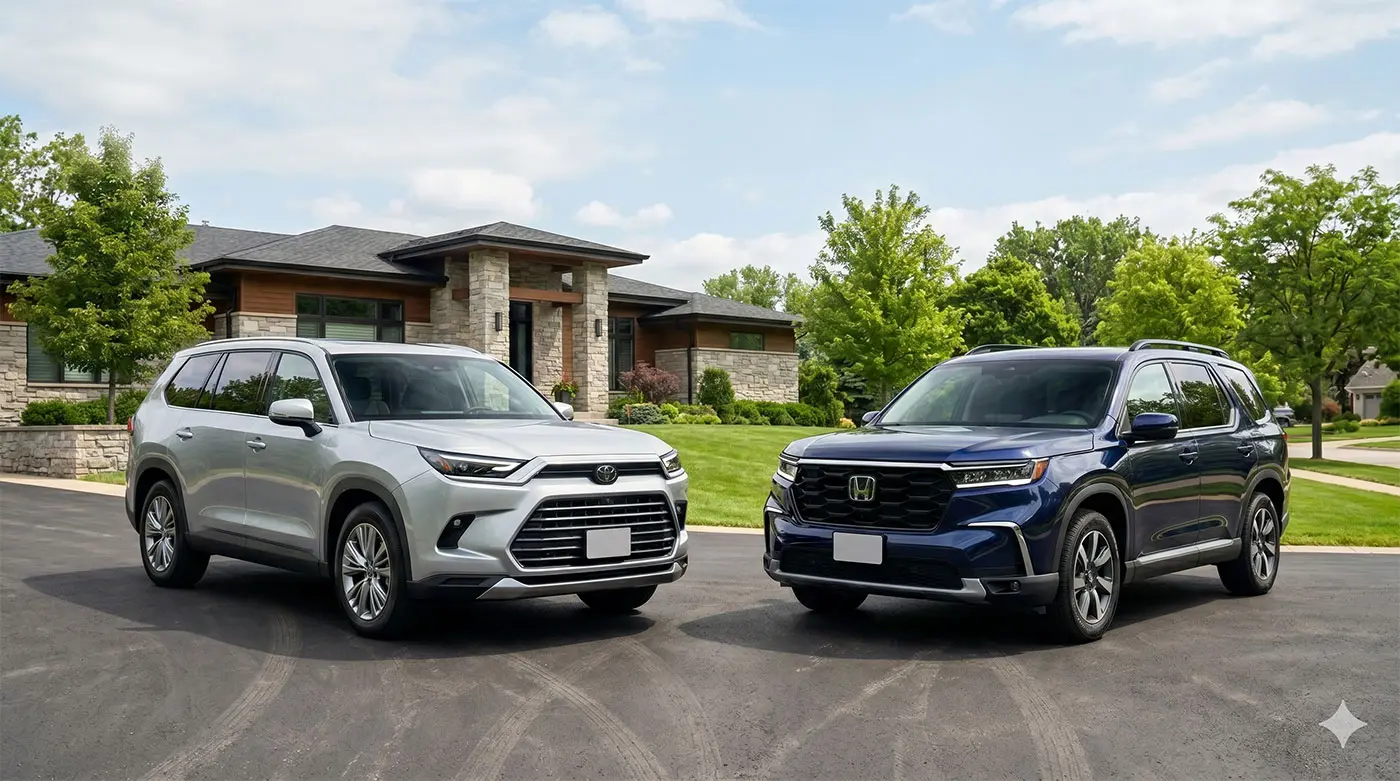
The family SUV landscape in 2026 has reached a boiling point. Gone are the days when a “three-row SUV” was simply a cramped alternative to a minivan with a lifted suspension. Today, competition revolves around maximum interior space, hybrid efficiency, and segment-leading practicality. At the center of this battle are two heavyweights: the 2026 Toyota Grand Highlander and the 2026 Honda Pilot. While both carry legendary nameplates known for reliability and strong resale value, they represent two distinct philosophies of what a modern family SUV should be.
For years, the standard Highlander was criticized for its tight third row, prompting Toyota to introduce the “Grand” variant—a model specifically engineered to compete with more spacious rivals like the Kia Telluride and the Honda Pilot. Moving into the 2026 model year, the Grand Highlander has solidified its position as a tech-forward, efficiency-focused contender, largely due to its advanced Hybrid MAX powertrain. It appeals to modern, eco-conscious families who don’t want to compromise on performance or fuel economy.
On the other side stands the 2026 Honda Pilot. Honda has embraced a more rugged and refined design language, shifting away from its previous “family-first” styling toward a bolder, more adventurous look. Powered by a naturally aspirated 3.5L V6 engine and offering the off-road-oriented TrailSport trim, the Pilot positions itself as a dependable, go-anywhere option for families who value versatility and simplicity over electrification.
Choosing between these two SUVs isn’t just about comparing specifications—it’s about finding the vehicle that aligns with your lifestyle. Do you prioritize hybrid efficiency and cutting-edge technology, or do you prefer proven engineering and off-road capability? In this detailed 2026 comparison, we’ll break down everything from third-row comfort and car seat usability to real-world fuel economy, helping you decide which SUV truly deserves a place in your driveway.
Powertrain & Performance: The Hybrid Revolution vs. V6 Tradition
In 2026, the mechanical divide between the Toyota Grand Highlander and the Honda Pilot has never been more apparent. Toyota has embraced a multi-pathway electrification strategy, offering three distinct powertrains, while Honda continues to refine its naturally aspirated V6. This isn’t just a difference in fuel type—it reflects two fundamentally different approaches to delivering power, whether during a daily school run or a steep mountain climb.
The Toyota Powerhouse: Choice and Efficiency
The 2026 Toyota Grand Highlander stands out for families who prioritize either efficiency or performance. The standard 2.4L turbocharged engine delivers a strong 310 lb-ft of torque, but the real highlight is the Hybrid MAX system. By pairing the turbo engine with two electric motors, it produces an impressive 362 hp. In real-world testing, this enables the SUV to accelerate from 0–60 mph in just 6.3 seconds—performance that would have been considered sports-car territory a decade ago.
For buyers focused on fuel economy, the standard hybrid powertrain offers an EPA-estimated 36 mpg combined, an exceptional figure for a three-row SUV capable of seating up to eight passengers.
The Honda Pilot: The Smooth, Reliable Workhorse
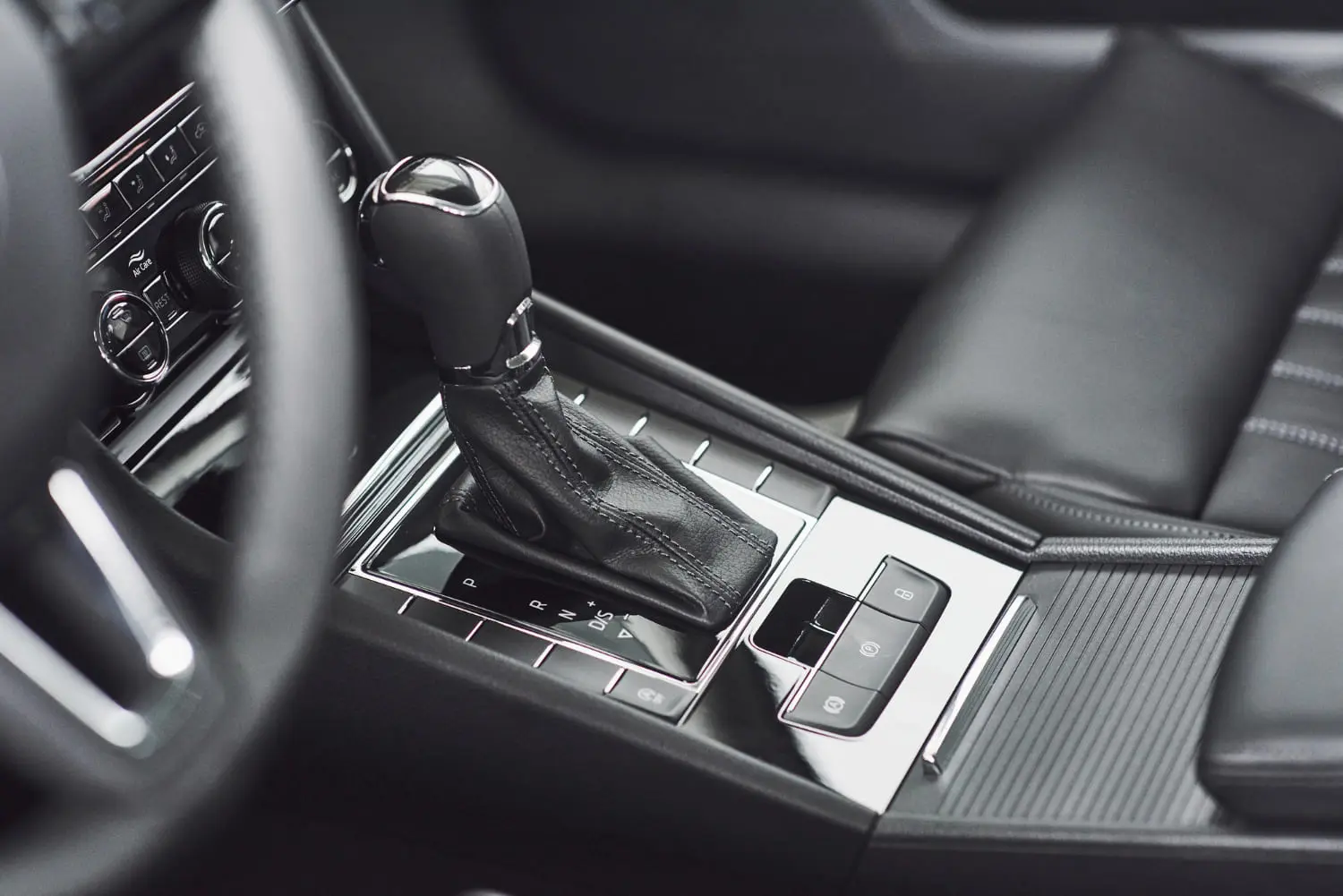
Honda takes a more traditional approach with a 3.5L V6 engine across all trims. Producing 285 hp and 262 lb-ft of torque, it lacks the immediate low-end punch of Toyota’s turbocharged and hybrid setups. However, it excels in refinement. Power delivery is smooth and linear, paired with a well-tuned 10-speed automatic transmission that shifts confidently and avoids excessive gear hunting compared to Toyota’s 8-speed automatic or eCVT.
The result is a familiar, predictable driving experience that many long-time SUV owners prefer, particularly for long-term reliability and ease of ownership.
Performance Verdict
If your priority is maximizing fuel savings or achieving quick highway acceleration, the Toyota Grand Highlander Hybrid MAX is the clear winner. However, if you value smoothness, simplicity, and a more traditional driving feel, the Honda Pilot remains a benchmark for proven engineering.
Real-World Scenarios
The Toyota Advantage: Imagine merging onto a busy 50 mph road from a crowded shopping area. The Grand Highlander’s instant electric torque delivers quick, effortless acceleration without excessive engine noise.
The Honda Advantage: On a long highway journey, the Pilot’s V6 operates quietly and consistently, offering a relaxed and composed driving experience at cruising speeds.
Interior Comfort & The "Third-Row" Litmus Test
For a family SUV, the interior isn't just about luxury; it’s about survival. The "Ultimate 2026 Battle" is won or lost based on how many teenagers can fit in the back without a civil war breaking out. Both the Toyota Grand Highlander and the Honda Pilot have significantly expanded their footprints to solve the "cramped third row" problem that plagued previous generations.
Toyota Grand Highlander: The "Adult-Sized" Third Row The "Grand" prefix in the Toyota isn't just marketing—it refers specifically to the wheelbase extension that grants the third row an incredible 33.5 inches of legroom. This is the metric that changes everything. In the 2026 model, an average-sized adult can sit in the very back comfortably for more than a twenty-minute trip. The seating position is higher, meaning your knees aren't pushed into your chest, a common flaw in the standard Highlander. Furthermore, the Grand Highlander offers a more "premium" feel in its top-tier trims, with Ultrasuede-trimmed seats and a massive 12.3-inch Toyota Audio Multimedia system that dominates the dashboard with crisp, tablet-like responsiveness.
Honda Pilot: The King of Ergonomics and Flexibility While the Grand Highlander wins on pure legroom numbers, the Honda Pilot wins on usability. Honda’s interior designers are masters of the "hidden trick." The standout feature for 2026 is the removable second-row middle seat. On 8-passenger models, you can literally pull the middle seat out and store it in a hidden compartment under the rear cargo floor. This allows you to switch from a bench seat to captain’s chairs in a parking lot without leaving parts in your garage. While the Pilot's third-row legroom is slightly less at 32.5 inches, it feels wider and offers better shoulder room for three kids sitting abreast.
Technology & Daily Drivers:
-
Toyota's Tech: The 2026 Grand Highlander is a digital powerhouse. With up to seven USB-C ports and a wireless charging pad that actually stays connected, it is a mobile office. The 12.3-inch screen is standard on most trims, making the interior feel cutting-edge.
-
Honda's Practicality: Honda sticks to a "physical button" philosophy. While its screen is smaller (9 inches on most trims), the volume knobs and climate switches are physical, making them much easier to use while driving without taking your eyes off the road.
Example Scenario:
-
The Toyota Advantage: You are carpooling four adults to a dinner party. The two adults in the third row have enough space to sit naturally without feeling like they are in "the cheap seats."
-
The Honda Advantage: You’re at the hardware store and realize you need to carry a 10-foot PVC pipe. You pop out the removable middle seat in seconds, creating a pass-through that keeps the rest of the seats functional for your kids.
Interior Comfort & the Third-Row Litmus Test
For a family SUV, the interior isn’t just about luxury—it’s about everyday usability. In many cases, the real test comes down to the third row: how comfortable it is and how usable it remains on longer journeys. Both the Toyota Grand Highlander and the Honda Pilot have significantly expanded their dimensions to address the cramped third-row issue that affected earlier models.
Toyota Grand Highlander: A Truly Adult-Friendly Third Row
The “Grand” designation isn’t just a marketing term—it reflects a longer wheelbase that directly benefits rear passenger space. The third row offers approximately 33.5 inches of legroom, which makes a noticeable difference. In the 2026 model, an average-sized adult can sit comfortably in the third row for extended trips, not just short drives.
The seating position is also more natural, with better thigh support, avoiding the “knees-up” posture common in smaller SUVs. Higher trims enhance the experience further with premium materials such as Ultrasuede upholstery and a large 12.3-inch Toyota Audio Multimedia display that delivers a modern, responsive interface.
Honda Pilot: The Benchmark for Flexibility and Ergonomics
While the Grand Highlander leads in pure legroom, the Honda Pilot excels in clever interior design. One of its most practical features is the removable second-row middle seat. In 8-passenger configurations, this seat can be easily removed and stored in a dedicated compartment under the cargo floor, allowing a quick transition between a bench seat and captain’s chairs.
Although the Pilot’s third-row legroom is slightly lower at around 32.5 inches, it compensates with better width and shoulder room, making it more comfortable for three children or smaller passengers seated side by side.
Technology & Daily Usability
Toyota’s Tech Focus:
The 2026 Grand Highlander offers a highly digital experience, with multiple USB-C ports, a reliable wireless charging pad, and a standard (or widely available) 12.3-inch touchscreen. The interface is fast and modern, giving the cabin a more high-tech feel.
Honda’s Practical Approach:
Honda prioritizes ease of use with physical controls. While its infotainment screen is smaller (typically 9 inches), features like physical volume knobs and climate buttons make it more intuitive to operate while driving, reducing distraction.
Real-World Scenarios
The Toyota Advantage:
When carrying multiple adults, the Grand Highlander’s third row provides enough space for passengers to sit comfortably without feeling confined.
The Honda Advantage:
During a quick trip to a hardware store, the Pilot’s removable middle seat allows you to create a practical pass-through for longer items while still keeping most seating positions usable.
Cargo Capacity & Family Versatility
In the world of three-row SUVs, the real test isn’t maximum cargo space with all seats folded—it’s how much usable space remains when every seat is occupied. The 2026 Toyota Grand Highlander and Honda Pilot are built for families who travel with more than just passengers. From strollers and sports equipment to weekly groceries, cargo management plays a major role in everyday usability.
Toyota Grand Highlander: Leading in Raw Volume
The Grand Highlander is designed with space as a priority, and that focus is reflected in its cargo numbers. Behind the third row, it offers approximately 20.6 cubic feet of space—enough for several carry-on suitcases without folding any seats. With both the second and third rows folded, total capacity expands to around 97.5 cubic feet.
The cargo floor is wide and nearly flat, making it easier to load bulky items such as furniture or large boxes. Inside the cabin, thoughtful touches like multiple cupholders and rear-seat storage solutions help keep passengers organized even when cargo space is fully utilized.
Honda Pilot: Smart Storage and Everyday Practicality
The Honda Pilot offers slightly less cargo space behind the third row, at about 18.6 cubic feet, but compensates with clever storage solutions. One of its standout features is the deep underfloor storage compartment, which is significantly more usable than typical shallow bins. It can accommodate items like backpacks, tools, or sports gear, keeping them hidden and the main cargo area uncluttered.
The Pilot’s interior is also designed with durability in mind, using materials that are better suited to handle everyday wear, such as muddy shoes or heavy equipment.
The Versatility Comparison
The Toyota Advantage:
For long family trips, the Grand Highlander’s additional cargo space behind the third row can make a noticeable difference, reducing the need to stack items higher or compromise rear visibility.
The Honda Advantage:
The Pilot’s removable second-row middle seat (as mentioned earlier) adds a level of flexibility that enhances its practicality. The ability to quickly reconfigure seating without tools is particularly useful for growing families with changing needs.
Real-World Scenarios
The Toyota Advantage:
When transporting larger items like flat-pack furniture, the Grand Highlander’s slightly greater maximum cargo space and flatter load floor make loading and fitting bulky objects easier.
The Honda Advantage:
After outdoor activities, the Pilot’s underfloor storage allows you to separate wet or dirty items from the main cargo area, helping maintain a cleaner interior.
Safety Suites & Driver Assistance
In 2026, safety has evolved beyond basic crash prevention to advanced driver assistance and situational awareness. Both Toyota and Honda have enhanced their safety systems with updated hardware and software designed to reduce driver fatigue and improve overall awareness during long journeys. While both the Grand Highlander and the Pilot perform well in safety evaluations, their approaches differ in execution and feature availability.
Toyota Safety Sense (TSS) 3.0: A More Proactive Approach
The 2026 Toyota Grand Highlander comes equipped with Toyota Safety Sense 3.0 as standard. This suite uses upgraded cameras and radar sensors with an improved field of view. One of its key features is Proactive Driving Assist (PDA), which can provide gentle braking in curves or subtle steering inputs to help maintain safe distances from other vehicles, cyclists, or pedestrians.
Toyota’s Lane Tracing Assist has also been refined to better detect road edges, even when lane markings are unclear—useful in conditions like poor weather or rural driving environments.
Honda Sensing 360: Expanded Awareness
Honda introduces its Sensing 360 system on higher trims such as the Elite and Black Edition. This system incorporates additional radar sensors around the vehicle, improving detection of surrounding traffic, particularly at intersections.
Features like Traffic Jam Assist help manage low-speed driving by assisting with steering, braking, and acceleration in congested conditions. Compared to Toyota’s system, Honda’s driver aids are often tuned to feel less intrusive, with smoother alerts and more gradual interventions.
Standard vs. Advanced Safety Features
The Toyota Advantage:
Toyota makes its full Safety Sense 3.0 suite standard across all Grand Highlander trims, ensuring that core driver assistance features are widely accessible without requiring higher trim levels.
The Honda Advantage:
Honda emphasizes structural safety alongside driver assistance. Its Advanced Compatibility Engineering (ACE™) body structure is designed to improve occupant protection in collisions involving vehicles of different sizes. In addition, Honda’s expanded sensor coverage enhances awareness in complex traffic situations.
Real-World Scenarios
The Toyota Advantage:
During low-visibility conditions, such as rain or fog, Toyota’s Pre-Collision System can detect potential hazards early and assist with braking, helping reduce reaction time.
The Honda Advantage:
When pulling out from a tight or obstructed space, Honda’s cross-traffic monitoring systems can alert the driver to approaching vehicles from the side, improving safety in areas with limited visibility.
Off-Road & Towing: TrailSport vs. Adventure-Focused Setups
For many families, an SUV isn’t just a daily commuter—it’s a gateway to weekend travel and outdoor activities. While neither the Toyota Grand Highlander nor the Honda Pilot is designed for extreme rock crawling, both offer configurations suited for light off-road use, such as gravel roads, snow, and uneven terrain. For 2026, however, the difference between styling-focused ruggedness and genuine capability is quite noticeable.
Honda Pilot TrailSport: Purpose-Built Capability
The 2026 Honda Pilot TrailSport stands out as one of the more capable options in this segment. It includes a factory lift, off-road-tuned suspension, and protective skid plates designed to shield key components like the oil pan and transmission.
Honda’s i-VTM4® all-wheel-drive system is another highlight, capable of sending a significant portion of torque to the rear axle and distributing it between the rear wheels for improved traction. The updated TrailWatch camera system also enhances visibility by providing multiple exterior views, helping drivers navigate obstacles more confidently on rough terrain.
Toyota Grand Highlander: Stability and Towing Strength
Toyota approaches capability with a focus on on-road stability and towing performance. While it doesn’t offer a dedicated off-road trim equivalent to the TrailSport, its available all-wheel-drive systems provide dependable traction in slippery conditions like rain or light snow.
Where the Grand Highlander stands out is towing performance. With a maximum capacity of up to 5,000 lbs (depending on configuration), it matches the Pilot on paper. However, the Hybrid MAX powertrain delivers strong low-end torque, which can make towing feel smoother and less strained, particularly when accelerating or climbing inclines.
Capability Comparison
The Honda Advantage:
For unpaved roads, muddy trails, or uneven terrain, the Pilot TrailSport offers more confidence thanks to its suspension tuning, added ground clearance, and underbody protection.
The Toyota Advantage:
For highway towing and long-distance hauling, the Grand Highlander provides a more stable and relaxed experience, supported by its torque delivery and longer wheelbase.
Real-World Scenarios
The Honda Advantage:
On a muddy or uneven access road after rainfall, the TrailSport’s ground clearance and traction-focused AWD system help maintain control and reduce the risk of underbody contact.
The Toyota Advantage:
When towing a mid-size camper through hilly terrain, the Grand Highlander’s hybrid-assisted torque allows for smoother acceleration and less engine strain, contributing to a quieter and more comfortable drive.
Maintenance & Long-Term Value
When purchasing a vehicle in this segment, the initial price is only part of the equation. Long-term ownership costs—including maintenance, fuel, and depreciation—play a major role in overall value. For 2026, both Toyota and Honda offer complimentary maintenance programs, but their long-term cost profiles differ due to hybrid complexity versus traditional engine simplicity.
The Toyota Advantage: ToyotaCare and Hybrid Efficiency
The 2026 Toyota Grand Highlander comes standard with ToyotaCare, which covers factory-scheduled maintenance for 2 years or 25,000 miles, whichever comes first. This typically includes oil changes, tire rotations, and inspections.
Toyota also offers strong hybrid component warranties, with coverage for the hybrid battery extending up to 10 years or 150,000 miles (depending on market and terms). In addition to warranty support, hybrid models can deliver significant fuel savings over time, particularly for families with high annual mileage.
Toyota hybrids have historically demonstrated strong resale value, and while exact figures will vary, hybrid variants are generally expected to retain value well compared to traditional gasoline models.
The Honda Advantage: Simplicity and Long-Term Ownership
Honda offers a similar complimentary maintenance program through Honda Service Pass, covering select maintenance for 2 years or 24,000 miles.
The Honda Pilot’s naturally aspirated 3.5L V6 appeals to buyers who prioritize mechanical simplicity. Without hybrid components, long-term maintenance and repairs may be more straightforward, particularly at independent service centers. This can be an advantage for owners planning to keep their vehicle well beyond the warranty period.
Honda vehicles also maintain strong resale value, with the Pilot typically performing competitively in its segment depending on condition, mileage, and market demand.
Ownership Cost Comparison
The Toyota Perspective:
Lower fuel consumption can lead to meaningful savings over time, especially for frequent drivers. Additionally, warranty coverage on hybrid components helps reduce short-term ownership risk.
The Honda Perspective:
A simpler powertrain may result in more predictable long-term maintenance costs, particularly as the vehicle ages and moves outside warranty coverage.
Real-World Scenarios
The Toyota Advantage:
After several years of ownership, a fuel-efficient hybrid model may remain attractive in the used market, particularly if fuel prices are high, helping support resale value.
The Honda Advantage:
Over long-term ownership, maintenance and repairs may be easier to manage through a wider range of service providers, potentially reducing costs and complexity.
Conclusion
Choosing between the 2026 Toyota Grand Highlander and the 2026 Honda Pilot is no longer a matter of reliability—both models have built strong reputations over decades. Instead, the decision comes down to your family’s specific needs and lifestyle. After comparing everything from hybrid performance to interior flexibility, it’s clear that each SUV excels in different areas.
The Toyota Grand Highlander stands out for its efficiency, advanced technology, and refined driving experience. It is particularly well-suited for long commutes, urban driving, and households that value modern features and hybrid performance. With its upscale interior and fuel-saving powertrains, it offers a forward-looking approach that aligns with the shift toward electrification.
The Honda Pilot, on the other hand, focuses on practicality, durability, and versatility. It’s a strong choice for families who regularly use their SUV for road trips, outdoor activities, or cargo-heavy tasks. Features like the TrailSport trim and flexible seating configurations make it especially adaptable to changing needs.
Ultimately, the right choice depends on how you plan to use your vehicle. If efficiency, technology, and a more modern driving feel are your priorities, the Grand Highlander is an excellent option. If you prefer simplicity, flexibility, and a more traditional SUV experience, the Pilot remains a dependable alternative.
Whichever you choose, both vehicles rank among the most well-rounded options in the three-row SUV segment for 2026.

Written by Kousar Shabbir
Published May 6, 2026 in Comparisons.