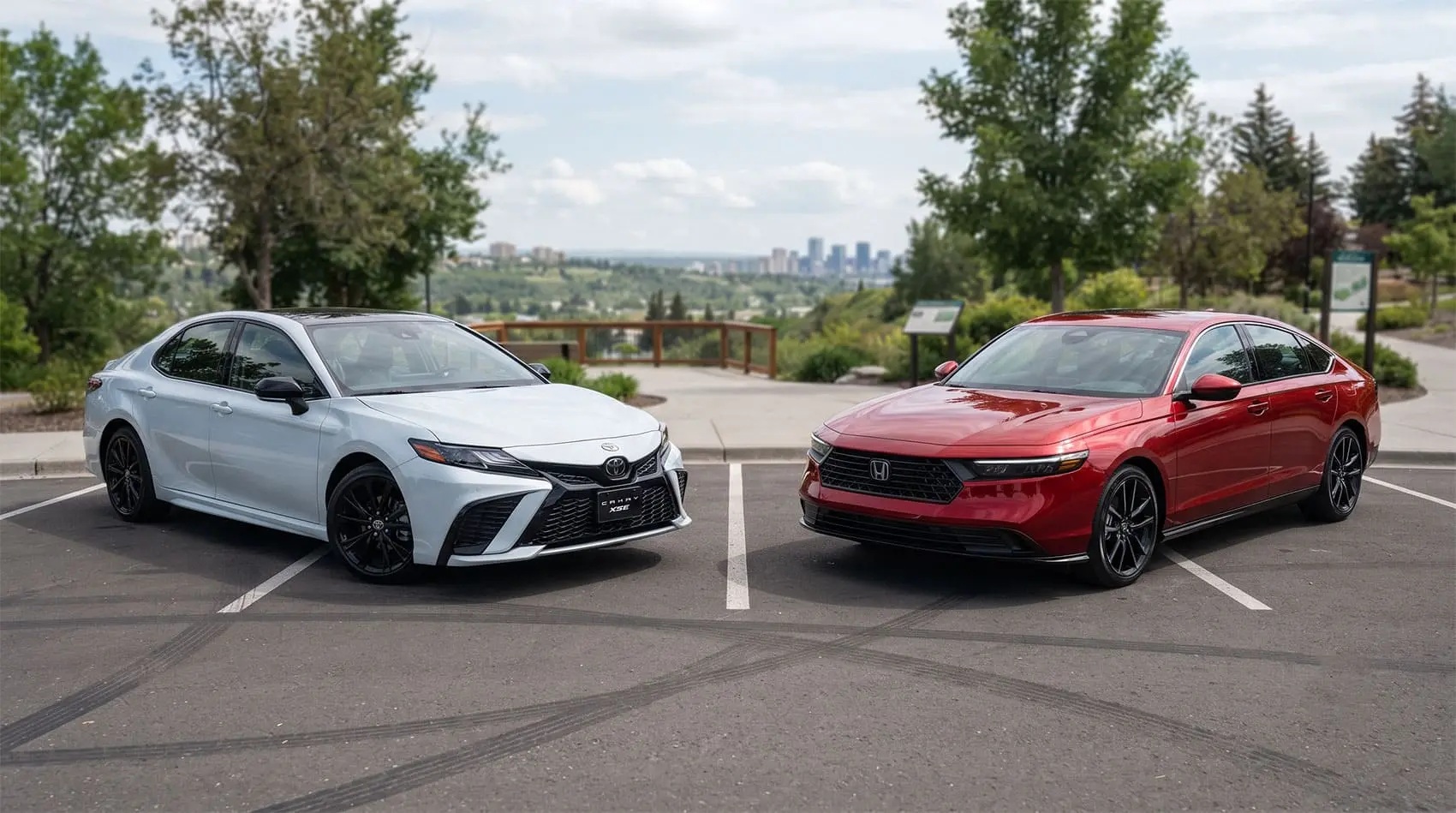
The midsize sedan segment has long been defined by a fierce, decades-long battle for dominance between two titans: the Toyota Camry and the Honda Accord. For years, buyers have weighed the reliability of the Camry against the refined driving dynamics of the Accord. However, in the 2026 model year, the conversation has shifted. With fuel prices fluctuating and environmental consciousness at an all-time high, fuel efficiency has emerged as the ultimate tie-breaker. It is no longer just about which car is "better" in a vacuum; it is about which vehicle provides the most value, range, and operational efficiency in the real world.
When we discuss "real-world" fuel efficiency, we are moving beyond the controlled, laboratory-based environments of EPA testing cycles. While EPA estimates are crucial for standardized comparisons, they often fail to capture the nuances of individual driving habits: the heavy foot during a morning commute, the stop-and-go congestion of an urban grid, or the aerodynamic drag experienced during high-speed highway cruising. For the average consumer, the gap between the sticker rating and the actual gallons pumped at the gas station can be significant.
In this analysis, we peel back the layers of marketing claims to look at how these two legendary sedans actually perform under pressure. We will explore how Toyota’s transition to an exclusively hybrid lineup featuring the advanced 5th Generation Hybrid System and the option for All-Wheel Drive (AWD) stacks up against Honda’s sophisticated 4th Generation Two-Motor Hybrid System. By examining the mechanics of their respective powertrains, we hope to provide you with the clarity needed to make an informed decision for your garage. Whether you are an urban commuter looking to maximize city MPG or a road warrior seeking range and comfort, understanding the true efficiency of these vehicles is your first step toward smarter ownership.
The Powertrain Breakdown
The heart of the fuel efficiency debate lies in how Toyota and Honda engineer their respective electrified powertrains. Toyota has leaned into its legacy of hybrid dominance with the 5th Generation Hybrid System, a masterpiece of efficiency that balances electric-only operation with a highly optimized combustion engine. The standout feature here is the integration of a dedicated electric motor on the rear axle for the All-Wheel Drive (AWD) models. Unlike traditional mechanical AWD systems that sap power through a heavy driveshaft, Toyota’s "Electronic On-Demand AWD" engages only when necessary, minimizing parasitic loss while providing superior traction in slick conditions. This allows the Camry to maintain remarkable fuel economy figures even when equipped with all-weather capability, a feat that often forces other manufacturers to sacrifice several MPG.
In the other corner, Honda’s 4th Generation Two-Motor Hybrid System takes a different, equally impressive approach. Honda prioritizes a more "connected" driving feel by using its primary traction motor to handle the bulk of the acceleration, while the gas engine acts largely as a generator. This creates a linear power delivery that mimics the smoothness of a pure electric vehicle. While the Accord is currently focused on a front-wheel-drive (FWD) architecture, this simplicity pays dividends in weight reduction and packaging. By shedding the complexity of an extra rear motor, the Accord often achieves a slightly more consistent efficiency curve in temperate, dry climates where AWD is not a necessity.
Ultimately, your driving style dictates the "real-world" victory here. If your daily route involves stop-and-go urban traffic, both systems excel by capturing kinetic energy through regenerative braking. However, the Toyota system’s ability to rely more heavily on the electric motors at lower speeds gives it a slight edge in pure city congestion. On the flip side, the Accord’s lighter chassis and aerodynamic tuning make it a formidable highway performer. The real-world difference often comes down to whether you prioritize the "set-and-forget" security of Toyota’s AWD or the punchy, refined torque delivery of Honda’s FWD hybrid setup.
Real-World MPG: City vs. Highway vs. Combined
To truly grasp the efficiency of these sedans, we must look beyond the glossy marketing brochures and dive into the mechanics of how they handle different driving environments. The "real-world" fuel economy is rarely a static number; it is a dynamic result of your local geography, your driving habits, and the specific traffic patterns you encounter daily.
The "Stop-and-Go" Analysis: Urban Efficiency. In city driving, where constant acceleration and braking are the norm, hybrids truly shine. The Toyota Camry’s 5th Gen system is designed to prioritize electric propulsion at lower speeds. When you pull away from a traffic light or creep through downtown congestion, the Camry often operates in pure EV mode, drawing power from the battery rather than burning fuel. Because the electric motors handle the heavy lifting of initial acceleration, the gasoline engine stays dormant or operates at its most efficient thermal point. The result is a seamless urban experience that frequently meets or exceeds EPA estimates.
The Honda Accord, meanwhile, utilizes a similarly sophisticated strategy but with a different "feel." Honda’s system is tuned for a more linear response, making the transition between the electric drive and the generator mode feel incredibly natural to the driver. While both vehicles are masters of the city grid, the Camry’s aggressive reliance on its electric-only threshold often grants it a marginal advantage in stop-and-go heavy traffic. However, the Accord’s lighter curb weight allows it to regain momentum with less energy draw, meaning that in moderate city traffic, the two are often neck-and-neck.
Highway Cruising: Aerodynamics at Speed. Once you hit the open highway, the dynamics change. Fuel efficiency at speeds above 60 mph is determined less by the hybrid system's stop-start capability and more by aerodynamics and engine load. Both the 2026 Camry and the 2025 Accord feature highly aerodynamic silhouettes designed to slice through the air with minimal drag. The Accord, with its sleek profile, is particularly adept at highway cruising, where it maintains an impressively high MPG by keeping the combustion engine in a high-efficiency power band.
The "AWD Penalty." The most significant differentiator remains the Camry’s available All-Wheel Drive. In many vehicles, adding a driveshaft and rear differential significantly hampers fuel economy. Toyota’s "Electronic On-Demand AWD," however, uses an independent electric motor to power the rear wheels. This eliminates the mechanical drag of a traditional AWD system. While there is a slight, negligible impact on MPG compared to the FWD-only Accord, the real-world efficiency gain of having superior traction, meaning less wheel spin and more controlled acceleration in rain or light snow, often offsets the minor cost. For drivers in climates with frequent wet weather, the Camry’s AWD efficiency is a "hidden" benefit that standard FWD models simply cannot replicate.
Ownership Economics: Beyond the Sticker
When evaluating the Toyota Camry and Honda Accord, the decision often transcends the initial purchase price or the fuel efficiency rating. To truly understand the value proposition, we must look at the total cost of ownership (TCO) over the vehicle's lifespan. For most owners, this means projecting expenses over a standard 5-year, 75,000-mile ownership cycle.
Fuel costs are, of course, the most volatile component. While both sedans offer exceptional efficiency, the "real-world" savings depend heavily on your local gasoline prices and your specific driving mix. However, the true economic delta often appears in maintenance. Toyota’s hybrid systems have arguably the longest track record of reliability in the automotive industry. The 5th Generation system in the Camry benefits from decades of iterative improvements, often resulting in lower long-term maintenance costs and fewer visits to the shop for non-routine repairs. Honda, conversely, utilizes a more performance-oriented hybrid architecture. While this provides a more engaging driving experience, it can occasionally necessitate more specialized service intervals to maintain peak efficiency.
Residual value is the final, and often overlooked, piece of the ownership puzzle. Historically, both the Camry and Accord are the gold standards for midsize sedan depreciation. They hold their value better than almost any other vehicle in their class. However, because Toyota has moved to an "all-hybrid" lineup for the Camry, these models are becoming increasingly sought after on the secondary market. Buyers looking for fuel-sipping, reliable transportation are gravitating toward the Camry’s proven hybrid heritage. This high demand is expected to keep resale values exceptionally strong.
When you factor in fuel savings, projected maintenance, and future resale value, the economic gap between these two models narrows to a razor-thin margin. The "winner" here is not necessarily the one that saves the absolute most at the pump, but the one that aligns with your specific financial goals. If you prioritize bulletproof reliability and the highest possible resale value, the Camry remains the benchmark. If you value a more modern, spirited driving experience that still manages to sip fuel, the Accord’s long-term value is just as compelling.
Buyer’s Guide: Which One Fits Your Commute?
Choosing between the 2026 Toyota Camry and the 2025 Honda Accord isn't just about the numbers on a spec sheet it is about how those numbers translate to your specific lifestyle. Both vehicles have transcended the "appliance" status of midsize sedans, but they cater to different personality types and driving needs.
The Urban Commuter If your daily life involves navigating dense city centers, stop-and-go gridlock, and constant traffic light queues, the Toyota Camry is engineered for your environment. Because the 5th Generation Hybrid system is tuned to maximize electric-only bursts at low speeds, you will find that the Camry feels more "at home" in the city. The ability to creep forward in traffic without firing up the internal combustion engine is not just an efficiency hack; it is a stress-reducer. For city dwellers, the extra traction of the available All-Wheel Drive also provides a confidence-inspiring layer of security, especially in older urban areas where drainage might be poor and slick conditions frequent.
The Long-Haul Road Warrior For those whose commutes involve long stretches of highway, winding mountain roads, or consistent high-speed cruising, the Honda Accord offers a compelling case. Honda’s chassis tuning has always prioritized driver engagement, and the current iteration is no different. The 4th Generation Two-Motor Hybrid system provides a more responsive, "punchy" torque delivery that makes highway merging and passing maneuvers feel effortless. When you are sitting at 70 mph for an hour, the Accord’s cabin serenity, coupled with its aerodynamic efficiency, creates a quiet, stable environment that feels less fatiguing over long distances. It is a driver's car that just happens to be incredibly fuel-efficient.
Climate Considerations. Finally, geography plays a decisive role. If you live in a region that experiences harsh winters, frequent rain, or dramatic elevation changes, the decision matrix simplifies: the Camry’s Electronic On-Demand AWD is a game-changer. It is not just about fuel economy; it is about the "cost" of missing work or feeling unsafe during a storm. If your region is largely arid or temperate, you may find the Accord’s FWD platform more than sufficient. The lack of an AWD system means less weight, simpler mechanicals, and a slightly more "natural" steering feel that many enthusiasts prefer.
Ultimately, neither car is a "wrong" choice. The Camry is the supreme city-utility and all-weather performer, while the Accord is the refined, spirited highway cruiser. Your choice should come down to where you spend the most time behind the wheel and which weather conditions you fear most.
Conclusion
As the automotive landscape continues to evolve toward electrification, the classic rivalry between the Toyota Camry and the Honda Accord has taken on a new, more refined dimension. Our deep dive into the real-world fuel efficiency of these midsize titans reveals that while both offer exceptional engineering, they cater to distinctly different priorities. The 2026 Toyota Camry, with its 5th-generation hybrid system and innovative electronic AWD, has solidified its position as the ultimate all-weather, urban-friendly workhorse. Its ability to maximize efficiency in stop-and-go traffic while providing the added security of AWD makes it a compelling choice for the practical, safety-conscious commuter who values long-term reliability and high resale potential.
Conversely, the 2025 Honda Accord remains the standard-bearer for those who view driving as an experience rather than a chore. Its 4th Generation Two-Motor Hybrid system delivers a level of linear, torque-rich performance that is difficult to match, making it an ideal companion for highway cruising and long-distance travel. By prioritizing a lighter FWD architecture, Honda has achieved a balanced, refined vehicle that sips fuel while maintaining the sharp handling dynamics that have defined the Accord for decades.
Ultimately, the choice between the Camry and the Accord is not about finding the "better" car, but about finding the better partner for your daily life. If your routine is dominated by urban congestion and unpredictable weather, the Camry’s technological edge in AWD and low-speed efficiency will pay dividends in peace of mind. If you find yourself frequently on the open road, seeking a blend of athletic responsiveness and fuel-sipping efficiency, the Accord offers an unrivaled harmony of driver engagement and economy. Both vehicles represent the pinnacle of modern midsize sedan engineering, ensuring that regardless of which you choose, you are investing in a future where efficiency no longer comes at the cost of capability.

Written by Maarukh Shahbaz
Published Jul 20, 2026 in Comparisons.