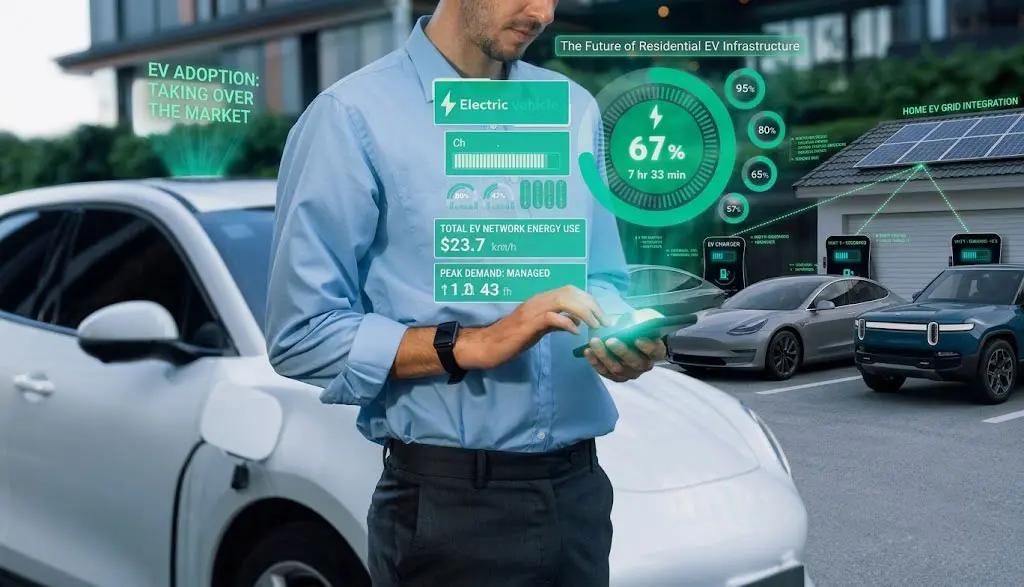
Remember when buying an electric vehicle felt like choosing between a high-priced luxury experiment or a compromised commuter pod with severe range limitations? That era is officially behind us. As we move deeper into late 2026, the electric vehicle market is undergoing its most radical transformation since the rollout of modern highway charging networks. We have officially moved past the phase of early adoption and theoretical marketing hype. Today, the global automotive ecosystem is defined by tough engineering milestones, massive factory scaling, and a sharp focus on consumer affordability.
If you look closely at what is hitting the showroom floors and assembly lines right now, the entire narrative around EVs has flipped. Consumers are no longer asking if an electric car can handle a cross-country road trip; instead, they are looking at how these vehicles are seamlessly integrating into smart home energy grids, upgrading their features over-the-air like smartphones, and hitting price points that directly compete with old internal combustion engines.
This deep market shift is driven by a massive surge in manufacturing capacity and structural cost-cutting breakthroughs. According to recent data from the International Energy Agency (IEA), electric vehicles are rapidly moving toward capturing nearly a third of all global new-vehicle sales. This momentum is no longer sustained merely by government tax incentives or early tech enthusiasts. Instead, it is being accelerated by raw engineering efficiency, a dramatic drop in per-kilowatt-hour battery costs, and fierce global competition.
In this comprehensive market breakdown, we will bypass the old concepts and look directly at the five definitive EV trends taking over the market in late 2026. From the commercial debut of semi-solid-state cells to the rise of massive structural megacasts, these are the technological shifts changing what you drive, how you pay for it, and how it charges.
Trend 1: The Commercial Reality of Next-Gen Battery Architectures
For years, the promise of solid-state batteries felt like a perpetual tech-industry mirage always promised as a revolutionary breakthrough, but forever stuck exactly five years away in a cleanroom laboratory. In late 2026, pilot production and early commercial demonstrations are moving solid-state batteries closer to reality. While industry giants like CATL caution that absolute, mass-market saturation of all-solid-state chemistry at a million-vehicle scale won't normalize before 2030, a profound intermediary phase has taken over the market.
Beyond the Marketing Hype
The current vehicle landscape features production-ready designs that replace standard liquid electrolytes with solid or gel-polymer mediums. For example, state-owned Dongfeng Motor has successfully advanced its production integration of an oxide-polymer composite cell design. Rather than waiting for complex manufacturing environments to fully mature, these composite approaches are already being deployed on public roads, bridging the gap between high costs and consumer expectations.
Energy Density Leaps & Winter Engineering
What does this mean for real-world metrics? The newest architectures are achieving cell-level energy densities between 350 Wh/kg and 500 Wh/kg. This translates to full-size production sedans reliably surpassing a driving range of 1,000 kilometers (roughly 620 miles) on a single charge.
Furthermore, this structural transition addresses a historic pain point for EV owners: cold weather performance degradation. Recent winter calibration testing conducted under extreme conditions down to -22°F (-30°C) demonstrated that these next-generation composite setups retain over 74% of their nominal capacity.
The Rise of Sodium-Ion Alternatives
At the entry-level tier of the market, a parallel revolution is unfolding. While premium vehicles leverage dense solid-state matrices, budget-friendly commuter fleets are turning to mass-produced sodium-ion battery platforms. Spearheaded by rapid manufacturing scaling throughout 2026, these sodium cells achieve an energy density of approximately 175 Wh/kg. They completely bypass the geopolitical and material constraints of lithium extraction, paving a realistic path toward ultra-affordable, low-maintenance urban electric cars.
Trend 2: Software-Defined Vehicles & Over-the-Air Monetization
The mechanical complexity of internal combustion engines used to be the crown jewel of automotive engineering. Today, the core value of an electric vehicle has moved from its physical drivetrain directly to its lines of code. In late 2026, we are witnessing the absolute dominance of the Software-Defined Vehicle (SDV). EVs are no longer static machines that begin aging the moment they leave the dealership; they are dynamic, cloud-connected computer nodes wrapped in steel and aluminum.
The Car as an Extensible Ecosystem
Legacy automotive engineering relied on fragmented systems dozens of isolated Electronic Control Units (ECUs) provided by separate third-party vendors, each running independent code for the brakes, climate control, or windows. Modern EV platforms have completely consolidated this mess into a single, high-performance central computing core.
This unified architecture allows the vehicle's operating system to communicate across all systems simultaneously. The immediate consumer benefit is the democratization of sophisticated Over-the-Air (OTA) software updates. Manufacturers can now patch security flaws, optimize battery management algorithms to extract an extra 15 miles of range, or recalibrate regenerative braking curves overnight while the vehicle sits in your garage.
Feature-on-Demand & Post-Purchase Monetization
For car brands, this shift has opened up an entirely new revenue stream. While highly controversial among consumers, "Feature-on-Demand" mechanics are officially mainstream in late 2026 models.
Instead of forcing buyers into expensive upfront trim tiers, brands are shipping vehicles with fully loaded hardware configurations pre-installed. Want heated rear seats during a sudden winter cold snap? A temporary software upgrade can adjust the thermal parameters of the electric motors to increase torque limits on demand.
Level 3 Autonomous Integration
This software centralization is also the key foundation enabling true Level 3 autonomous driving systems to move into mass production. Unlike older Level 2 systems that require drivers to keep their hands on the wheel at all times, late 2026 commuter models are increasingly shipping with highway pilot systems that take full legal and operational control of the vehicle under specific conditions.
Trend 3: Structural Megacasting & Next-Gen Manufacturing Efficiencies
The most impactful EV revolution of late 2026 isn't visible on a dashboard or written into software code it is quietly unfolding deep within the structural architecture of the vehicle assembly plant. For generations, building a car chassis required stamping, aligning, and welding together hundreds of individual steel and aluminum brackets, panels, and sheets. Today, the global automotive manufacturing landscape is completely dominated by structural megacasting (often called gigacasting).
The Industrial Reality of Megacasting
By utilizing massive, multi-thousand-ton hydraulic casting presses, manufacturers are now injecting molten aluminum alloy into precise molds to create entire front and rear underbody sections in a single operation. What used to require over 70 separate structural parts, hundreds of precision weld points, and extensive robot-arm coordination is now popped out of a casting machine as one solid piece of metal in under 90 seconds.
This manufacturing paradigm shift drastically simplifies the factory floor. It eliminates thousands of square feet of warehouse space previously dedicated to storing stamping dies and individual components, while completely cutting out the tolerance stack-up errors that occur when robots attempt to weld dozens of minor pieces together. The result is an incredibly rigid vehicle chassis built with a fraction of the traditional labor costs.
Cell-to-Chassis Structural Packs
Closely coupled with megacasting is the universal adoption of cell-to-pack (CTP) and cell-to-chassis structural battery configurations. In older electric vehicle generations, individual battery cells were bundled into modules, modules were placed into a heavy protective battery tray, and that tray was bolted to the car frame.
Late 2026 models have entirely stripped out the middle layers. Battery cells are now packed tightly directly into the vehicle's structural floorpan. The top and bottom plates of the battery housing act as the literal cabin floor and lower aerodynamic shielding of the car.
The Downstream Insurance and Repair Dilemma
While megacasting is an absolute victory for manufacturer profit margins and vehicle weight reduction, it has introduced complex, real-world friction to the automotive repair and insurance ecosystems.
Because the entire rear or front subframe of a vehicle is now cast as a single, unified piece of aluminum, minor low-speed fender benders can become incredibly expensive logistical challenges. If a rear collision cracks or warps a mounting point on a megacast structure, body shops cannot simply unbolt and replace a single brackets.
This structural rigidity has forced the insurance industry to re-evaluate structural write-off limits. To counter skyrocketing premiums, late 2026 EV builders are rapidly designing specialized, bolt-on sacrificial crush zones onto the outer edges of their megacasts. These localized steel crash elements absorb low-speed impacts, keeping damage far away from the expensive single-piece cast core and protecting consumers from early vehicle totals.
Trend 4: Mainstream 800V Infrastructures & Grid Integration
If there is one thing that has historically driven anxiety among potential EV buyers, it is the charging experience. For the first half of the decade, pulling up to a public charging station felt like a roll of the dice—slow charging speeds, broken screens, and long wait times. In late 2026, the industry is resolving this bottleneck through a massive, industry-wide migration to 800-volt high-voltage electrical architectures and intelligent vehicle-to-grid integration.
The 800V Migration Moving Downmarket
Until recently, 800V architecture was a premium feature reserved strictly for elite, high-end luxury flagships. The rest of the market relied on older, slower 400V systems. Today, 800V components have scaled aggressively across manufacturing lines, rapidly migrating down into mainstream, budget-friendly family SUVs and commuter hatchbacks.
The real-world impact for everyday drivers is staggering. Moving from 400V to 800V effectively cuts the required electrical current in half to deliver the exact same amount of power. This means cars can pull massive amounts of energy without generating destructive heat. On a late 2026 public highway fast-charger, a standard commuter vehicle can now juice up its battery from 15% to 90% capacity in under 18 minutes. The charging stop has officially been reduced to the length of a quick bathroom break and a cup of coffee.
Vehicle-to-Grid (V2G) and Decentralized Power
At the same time, the EV is transforming from an energy drain on society into an active asset for local power networks. Bidirectional charging has transitioned from an experimental pilot program into a standard factory feature packaged with new vehicle deliveries.
Modern EVs are equipped with advanced onboard inverters that allow them to push electricity back out through their charging ports. During peak energy hours such as hot summer afternoons when air conditioners stress the electrical grid your parked EV can automatically feed stored power back into your home or the municipal grid, flattening demand spikes.
Liquid-Cooled Megawatt Networks
To keep up with these high-voltage vehicles, public charging networks have undergone a massive physical facelift. The old, thick, unyielding charging cables of the past are being replaced by slim, highly flexible, liquid-cooled charging cords.
These stations are capable of outputting sustained charging rates up to 350 kW for passenger cars, and up to a megawatt for heavy-duty commercial trucks. Backed by intensive infrastructure funding and simplified plug-and-charge software protocols, the act of refueling an EV in late 2026 has finally matched—and in many ways surpassed—the convenience of the traditional gas station pump.
Trend 5: The Sub-$25,000 Mass Adoption Wave & Market Consolidation
High-Spec, Ultra-Affordable Urban EVs
The EV market has shifted from premium early adopters to a fierce battle for mainstream buyers, forcing automakers below the critical $25,000 threshold. Driven by Chinese OEMs leveraging vertical supply chains and cheaper Lithium Iron Phosphate (LFP) batteries, "cheap" no longer means low quality. Consumers now demand—and receive—high-spec utility for under $25k: real-world ranges over 200 miles, fast-charging that adds 100 miles in minutes, and advanced software suites. Automakers are accepting razor-thin margins and deploying highly efficient, compact platforms just to stay in the game.
Legacy Auto vs. Pure-Play EV Survival
This intense price compression is triggering massive market consolidation. Legacy giants are navigating a painful transition, leveraging profitable internal combustion and hybrid sales to subsidize heavy EV capital expenditures. Pure-play EV startups, lacking this safety net, face a severe cash crunch as capital markets tighten. To survive, the industry is seeing a wave of joint ventures, platform-sharing, and M&A activity. Companies must scale instantly by pooling resources or face liquidation and acquisition by legacy brands hungry for established EV technology.
Shifting Policy & Incentive Realities
Environmental mandates still drive the industry, but consumer incentives have fundamentally changed. As broad tax credits wrap up or tighten, major markets are pivoting to localized production incentives and aggressive tariffs to shield domestic builders from cheaper imports. Because building localized battery supply chains takes time and capital, policymakers are walking a tightrope: protecting local industries without making EVs too expensive to hit climate goals. Today's incentives are baked directly into localized manufacturing subsidies, making geopolitical strategy the true driver of current EV economics.
Conclusion
The late 2026 automotive landscape makes one thing perfectly clear: the electrification of global transport is no longer an idealistic future projection—it is an absolute, market-driven reality. Over the course of this single year, the industry has systematically dismantled the most stubborn barriers to mainstream adoption. The commercial emergence of high-density solid-state and semi-solid chemistries is fundamentally redefining range expectations, while the widespread standardization of 800V architectures and 350kW+ rapid-charging networks has successfully reduced refueling times down to a simple, ten-minute break.
At the same time, the aggressive arrival of highly capable, dedicated sub-$25,000 mass-market platforms has democratized ownership, making electric mobility financially accessible to millions of middle-class households worldwide. Beyond simple transportation, these vehicles are evolving into active, financial and infrastructural assets. Through bidirectional Vehicle-to-Grid technology, the parked cars of late 2026 serve as decentralized, virtual power plants that stabilize municipal energy grids and actively put money back into their owners' pockets. As production volumes continue to scale and fossil-fuel economics face ongoing structural pressures, the choices made by consumers this year will echo across the next decade, signaling a permanent, unyielding shift toward a fully electrified, software-driven world.


Written by Maarukh Shahbaz
Published Jun 18, 2026 in Auto News.