The relationship between a driver and their vehicle has undergone a radical transformation over the last decade. Gone are the days when car care simply meant a Sunday morning bucket-and-sponge wash or a quick coat of paste wax every six months. As we move through 2026, the automotive world has embraced a "Total Shield" philosophy—a comprehensive, technology-driven approach to preservation that treats the vehicle not just as a mode of transport, but as a high-value asset requiring advanced scientific protection. This evolution is driven by a convergence of materials science and consumer demand for longevity, leading to the rise of two dominant technologies: 9D car mats and next-generation ceramic coatings.
For the modern car enthusiast or the daily commuter, the "Total Shield" concept represents a shift from reactive cleaning to proactive preservation. We are no longer just fighting off dirt; we are utilizing nano-composite structures and multi-layered barriers to repel environmental contaminants before they ever make contact with the car’s original surfaces. This shift is psychological as much as it is technical. In an era where vehicle prices have climbed and the secondary market prizes "mint condition" aesthetics, car protection has transitioned from a hobbyist's chore into a strategic financial investment.
9D car mats and ceramic coatings serve as the dual pillars of this 2026 protection standard. While one guards the interior cabin against the relentless friction of daily use, spills, and debris, the other creates an impenetrable, glass-like exterior barrier against UV rays, chemical etching, and oxidation. Together, they create a symbiotic defense system. By integrating these technologies, owners are finding that their vehicles stay cleaner for longer, require significantly less maintenance, and retain a showroom-quality finish that was once impossible to maintain outside of a climate-controlled museum. In this blog, we will explore why this tech has become the 2026 benchmark for automotive excellence.
The Anatomy of “9D” Car Mats: Beyond the 7D Era
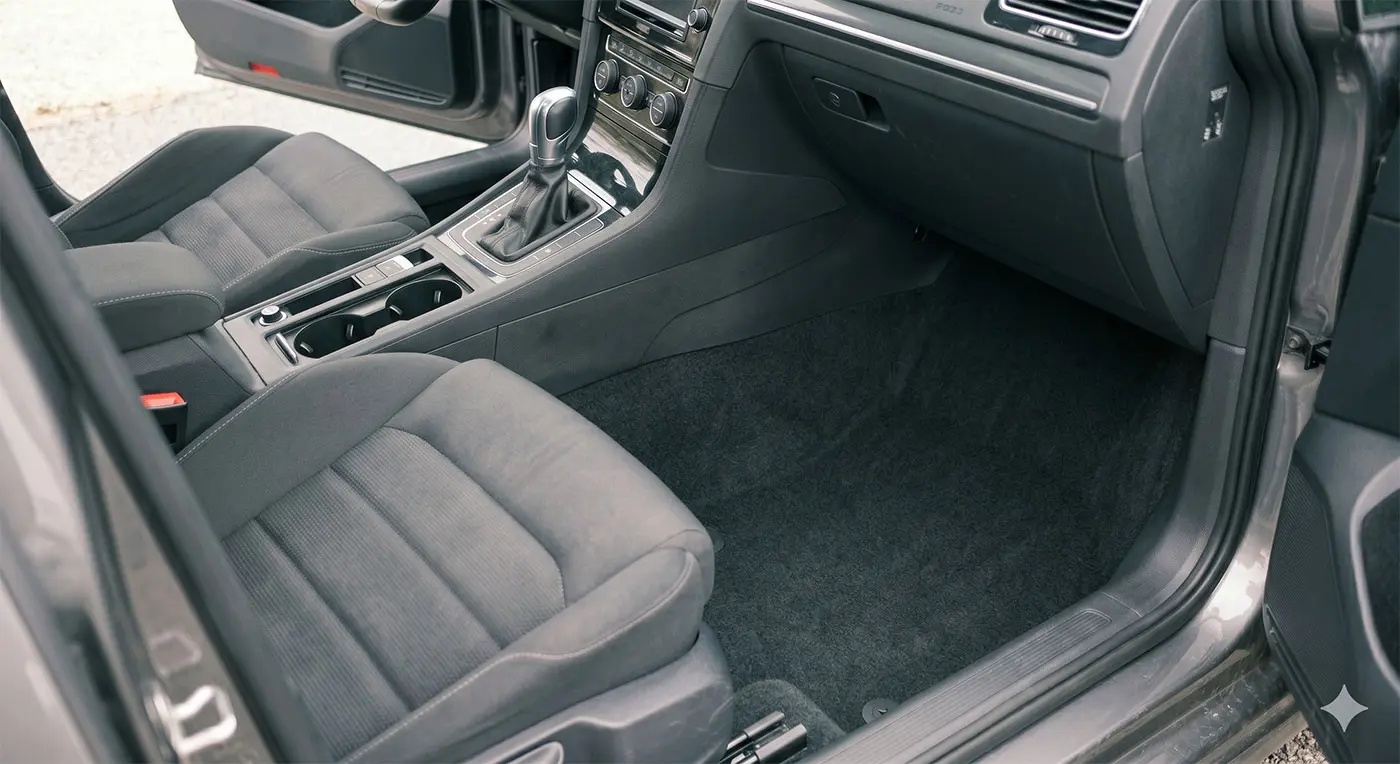
As we move through 2026, the term “9D” has become widely used in the aftermarket automotive space to describe a new generation of premium car mats. While not an official engineering standard, it generally refers to products that emphasize enhanced coverage, durability, and interior protection compared to traditional rubber mats or earlier “5D/7D” designs. Rather than a literal nine-layer system, these mats typically feature a multi-layer composite construction, combining materials such as high-density EVA or XPE foam with a textured synthetic top surface engineered to trap dirt and liquids effectively.
The core strength of these mats lies in their structural design. A dense, resilient base layer helps the mat retain its shape over time, preventing curling or deformation under regular use. Above this, cushioning and insulating layers contribute to improved comfort and reduced cabin noise, while the top layer often features a deep-channel pattern—such as honeycomb or diamond stitching—that helps contain spills and debris within the mat’s surface, minimizing the risk of seepage onto the original carpet.
Modern “9D” mats are also designed using vehicle-specific 3D scanning data, ensuring a precise fit that extends to the edges, side walls, and transmission hump. This tailored coverage eliminates the gaps commonly found in universal mats, offering more complete protection against dust, moisture, and daily wear.
In addition to protection, these mats often incorporate anti-slip backing systems that help keep them securely in place, contributing to safer driving conditions. Many are also produced using low-odor, non-toxic materials, making them suitable for long-term use even in high-temperature environments.
For drivers in wet or dusty conditions, this level of design translates into practical benefits: debris and moisture remain contained within the mat, and cleaning typically requires nothing more than a quick rinse—helping preserve the vehicle’s interior in a clean and well-maintained state over time.
Ceramic Coating 2.0: The 2026 Innovation Wave
While premium floor protection preserves a vehicle’s interior, the exterior remains constantly exposed to UV radiation, environmental contaminants, road debris, and chemical fallout. In 2026, paint protection technology continues to evolve, with modern ceramic coatings building upon traditional Silicon Dioxide (SiO₂) formulations while incorporating advanced additives such as graphene and enhanced polymer resins. These developments have improved durability, chemical resistance, and ease of maintenance, making ceramic coatings an increasingly popular option for both luxury vehicles and daily drivers.
At its core, ceramic coating technology works by forming a semi-permanent chemical bond with a vehicle’s clear coat. This creates a protective layer that enhances surface hardness, improves resistance to environmental contamination, and provides the high-gloss finish associated with professionally detailed vehicles. Unlike traditional waxes or sealants, which degrade relatively quickly, modern ceramic coatings are designed for long-term performance when properly maintained.
One of the most notable advancements in recent years is the refinement of ultra-hydrophobic surface behavior. By increasing water contact angles, these coatings cause water to bead and roll off more effectively, carrying loose dust and debris with it. While ceramic coatings do not make vehicles completely self-cleaning, they significantly reduce the effort required during regular maintenance washes.
Some premium formulations now incorporate graphene-enhanced chemistry, which manufacturers claim can improve heat dissipation, reduce water spotting, and offer enhanced slickness. Although the long-term advantages of graphene over traditional ceramic coatings are still being evaluated, these products represent an important area of innovation in surface protection technology.
Modern ceramic coatings also offer strong resistance against UV exposure, oxidation, chemical staining, and environmental fallout such as bird droppings, tree sap, and road salts. Professional-grade applications can typically provide protection ranging from three to seven years depending on formulation, climate conditions, and maintenance practices.
As ceramic coating technology becomes more accessible through dealership packages and professional detailing services, it is no longer reserved for exotic or high-performance vehicles. For many drivers in 2026, it has become a practical investment in preserving appearance, reducing maintenance effort, and maintaining long-term resale value.
Synergy of Interior & Exterior Protection
In the automotive landscape of 2026, effective vehicle preservation is increasingly approached as a comprehensive system rather than a set of isolated upgrades. While products like premium multi-layer floor mats and modern ceramic coatings serve different purposes, together they contribute to a more consistent and long-term approach to maintaining a vehicle’s condition—both inside and out.
High-quality interior mats are designed to protect vulnerable areas such as carpets and floor panels from moisture, dirt, and daily wear. At the same time, ceramic coatings provide an added layer of protection for exterior paint, helping to resist environmental contaminants, UV exposure, and chemical staining. When used together, these solutions help reduce overall wear and simplify maintenance, even though they function independently rather than as a unified protective system.
One practical benefit of this combined approach is improved ease of upkeep. Interior spills and debris remain contained and easy to clean, while exterior surfaces treated with ceramic coatings are more resistant to dirt adhesion and easier to wash. Although these technologies do not significantly impact cabin temperature or HVAC efficiency, they do contribute to a cleaner, more controlled driving environment over time.
This level of care can also play a role in preserving resale value. A well-maintained interior—free from stains, odors, and excessive wear—combined with an exterior that retains its gloss and clarity, makes a strong impression on potential buyers. While protection products alone do not guarantee a major price premium, they can help a vehicle maintain its condition and avoid the depreciation associated with neglect.
The Sustainability Perspective
From an environmental standpoint, these products can also support more efficient maintenance practices. Hydrophobic exterior surfaces often require less effort to clean, and durable interior mats reduce the need for deep cleaning or replacement. While the exact reductions in water or chemical usage vary depending on habits, many owners find that routine upkeep becomes simpler and less resource-intensive.
Installation & Maintenance: DIY vs. Professional Excellence
As vehicle protection products continue to evolve, the question for most owners is no longer whether to protect their car, but how best to apply and maintain that protection. While premium interior mats are generally DIY-friendly, professional-grade ceramic coatings often require a higher level of preparation, controlled conditions, and technical expertise.
Interior Mats: Precision Fit and Simple Installation
Modern multi-layer car mats are typically designed using vehicle-specific 3D scan data, allowing for a close and consistent fit across the floor area. Installation is straightforward, but attention to detail is important.
Most mats are secured using factory retention clips or anti-slip backing systems. Ensuring that these are properly engaged is essential for safety, particularly to prevent any movement near the pedals.
For maintenance, it is best to avoid silicone-based dressings, as these can leave surfaces slippery. Instead, cleaning with a mild, pH-neutral soap and a soft brush helps preserve the mat’s texture and grip while keeping it looking clean and uniform.
Ceramic Coating: Where Professional Application Matters
While consumer-grade ceramic sprays are widely available, true long-term ceramic coatings are typically best applied by trained professionals. The effectiveness of these coatings depends heavily on surface preparation and application conditions.
Proper preparation involves thorough decontamination of the paint, including iron removal, clay bar treatment, and, in many cases, machine polishing. This step ensures that the coating bonds evenly to a clean and defect-free surface. Any imperfections left untreated will remain visible beneath the coating.
Professional installers may also use controlled lighting and, in some cases, infrared curing lamps to help accelerate the initial curing process. However, full curing and maximum hardness still develop over time, even after application.
Maintenance After Application
Once protective products are in place, proper maintenance becomes key to preserving their performance.
A pre-wash using a pH-neutral foam can help loosen dirt before contact washing, reducing the risk of swirl marks. The two-bucket method—with separate containers for clean and rinse water—remains a widely recommended practice for minimizing surface contamination during washing.
For drying, microfiber towels or air blowers are preferred to avoid introducing scratches. Automated brush-based car washes are generally not recommended, as repeated abrasion can gradually degrade both coatings and paint surfaces over time.
By following these practices, vehicle owners can maximize the lifespan and effectiveness of both interior and exterior protection systems, ensuring consistent appearance and easier maintenance over the long term.
Conclusion
The automotive landscape of 2026 has officially moved past the era of temporary fixes. We are now living in the age of permanent, high-tech preservation. By integrating 9D car mats and Ceramic Coating 2.0, drivers are essentially future-proofing their vehicles against the inevitable wear and tear of both the environment and daily life. This "Total Shield" philosophy isn't just about maintaining a shiny exterior or a clean carpet; it’s about mechanical and aesthetic integrity.
As we have seen, the benefits extend far beyond the surface. From the improved thermal efficiency and battery range in EVs to the massive jump in resale value and the reduction in environmental impact through decreased water and chemical usage, the data is clear. Protecting your car with 2026 tech is a strategic financial decision that pays for itself over the lifetime of the vehicle.
Whether you are a luxury car collector or a daily commuter looking to keep your vehicle in factory-fresh condition, the combination of 9D precision and Graphene-infused ceramic shields offers peace of mind that was once unattainable. As technology continues to evolve, the gap between protected and unprotected vehicles will only widen. Choosing to adopt these standards today ensures that your vehicle remains a pristine, high-value asset well into the 2030s and beyond. The future of car care is here—it is invisible, it is resilient, and it is total.


Written by Kousar Shabbir
Published May 6, 2026 in Auto Tech.