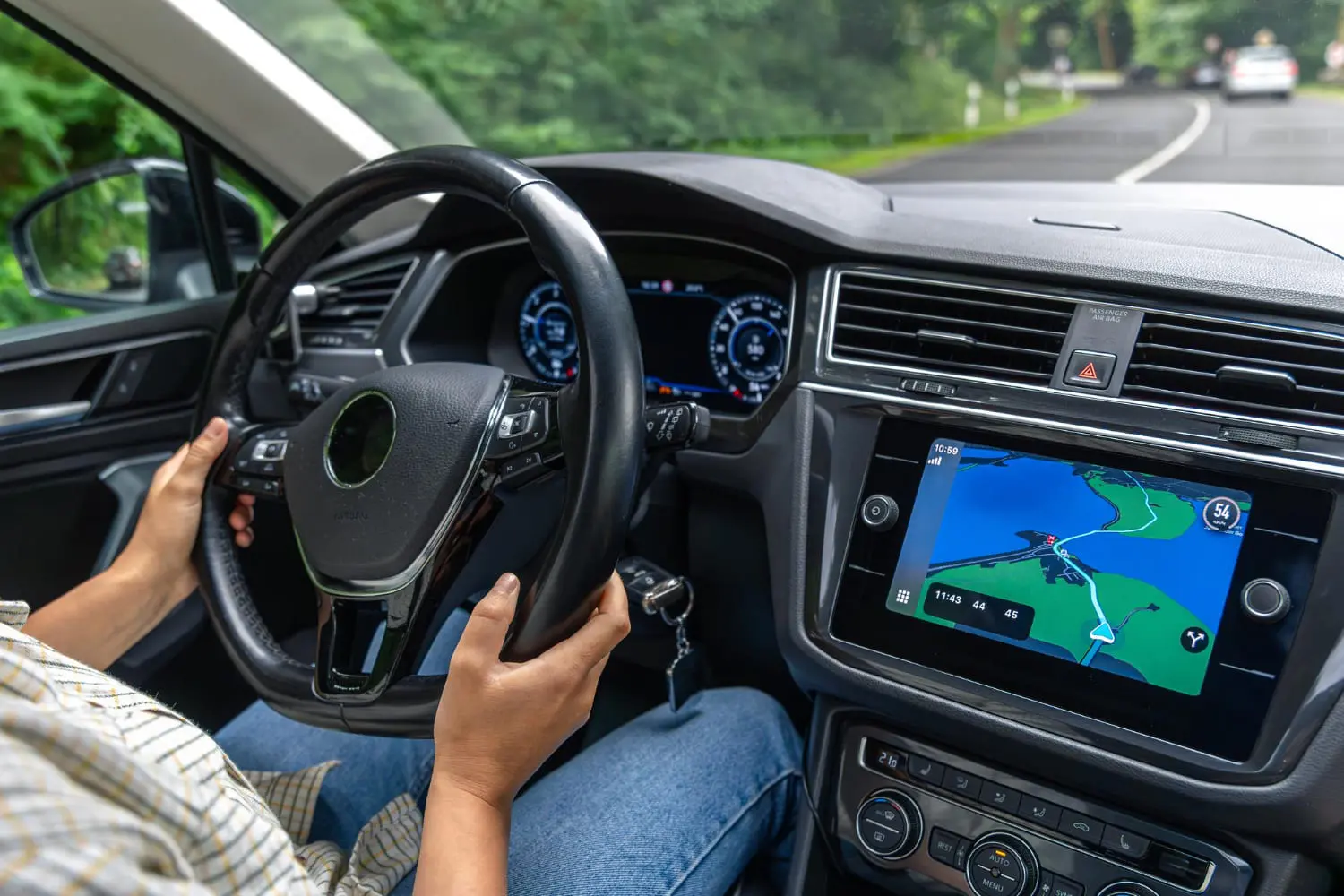
The automotive industry is currently standing at the precipice of its most significant transformation since the invention of the assembly line. As we look toward the 2026 model year, the conversation is shifting rapidly from basic safety warnings to true vehicle intelligence. Advanced Driver Assistance Systems (ADAS) are no longer just luxury add-ons; they are becoming the sophisticated central nervous system of the modern vehicle. For years, we have lived in the era of "Level 2" automation—systems that require constant human supervision and hands on the wheel. However, 2026 marks the year when "Level 3" autonomy and highly integrated sensor suites move from the testing tracks of Silicon Valley to the driveways of average consumers.
This evolution is driven by a convergence of three massive technological breakthroughs: the perfection of solid-state LiDAR, the rollout of high-speed V2X (Vehicle-to-Everything) communication, and the arrival of "Software-Defined Vehicles" (SDV). These aren't just incremental updates; they represent a fundamental change in how a car perceives its environment. In 2026, your car will not just "see" the car in front of it; it will communicate with the traffic light two blocks away, predict the movement of a pedestrian behind a parked van using thermal imaging, and update its own safety algorithms overnight via the cloud.
For manufacturers, the goal has shifted toward "Vision Zero"—a world with zero traffic fatalities. To achieve this, the 2026 fleet will introduce predictive safety features that can intervene long before a human driver even recognizes a hazard. From biometric sensors that monitor your heart rate and eyelid movement to 4D imaging radar that pierces through heavy Pakistani monsoons or thick fog, the tech arriving in 2026 is designed to create a safety cocoon around the occupants. This blog will dive deep into these specific advancements, exploring how the hardware, software, and global infrastructure are aligning to redefine the future of the road.
Level 3 Autonomy: From “Hands-On” to Conditional Eyes-Off
As we move into the 2026 model year, the automotive industry is entering a clearer phase of autonomy maturity: the transition from Level 2 driver assistance to Level 3 conditional automation. While Level 2 systems such as Tesla’s Full Self-Driving (Supervised) and Ford BlueCruise still require continuous driver attention and supervision, Level 3 systems allow the driver to disengage from the driving task under specific, predefined conditions.
However, this is not full autonomy. Level 3 remains a conditional “eyes-off-the-task” state, where the driver can temporarily shift attention away from the road but must remain available to retake control when requested by the system.
The Traffic Jam Pilot Use Case
The most practical deployment of Level 3 systems in 2026 is still the Traffic Jam Pilot function. Designed for slow-moving highway congestion, these systems manage steering, acceleration, and braking within tightly defined operational boundaries.
In commercially approved systems such as Mercedes-Benz DRIVE PILOT, the technology is currently enabled in limited traffic scenarios at low speeds (around urban congestion ranges), primarily on mapped and approved highway sections. In these conditions, drivers may engage in secondary activities such as interacting with infotainment systems or checking messages, as long as they remain ready to respond to a takeover request.
Operational Design Domain and Safety Logic
Level 3 systems operate strictly within an Operational Design Domain (ODD), meaning they are only active under specific conditions such as:
- Controlled-access highways
- Moderate to heavy traffic congestion
- Clear weather and well-marked road infrastructure
If the system encounters a situation outside its capabilities—such as construction zones or ambiguous road instructions—it issues a Request to Intervene (RTI), giving the driver a limited window to regain control.
If the driver does not respond, the vehicle executes a Minimum Risk Maneuver, such as safely decelerating to a stop while activating hazard lights.
Legal and Liability Framework
The shift to Level 3 automation is not only technological but also legal. In markets such as Germany and select U.S. states including Nevada and California, regulations aligned with UNECE frameworks allow conditional transfer of dynamic driving responsibility to the system when it is active within its approved ODD.
This means that during active Level 3 operation, liability for system-related performance may shift toward the manufacturer. However, this responsibility is strictly conditional—drivers remain legally responsible if they fail to respond to takeover requests or use the system outside its intended conditions.
Who Is Leading Level 3 in 2026?
While most manufacturers remain in advanced Level 2 or “Level 2+” systems, a few key players are shaping early Level 3 deployment:
- Mercedes-Benz – The current leader in certified Level 3 systems with DRIVE PILOT, expanding availability across select regions and improving operational scope.
- Genesis – Developing its own Level 3 architecture for flagship models such as the G90, focusing on integrated autonomous driving control systems.
- BMW and Honda – Continuing limited, region-specific Level 3 implementations in flagship vehicles under strict regulatory conditions.
The Sensor Revolution: Solid-State LiDAR and 4D Imaging Radar
In 2026, the “eyes” of the automobile are undergoing a major generational shift. Early autonomous prototypes relied on bulky mechanical sensors and roof-mounted spinning LiDAR units, but modern systems are becoming increasingly compact, integrated, and software-driven.
The Shift Toward Solid-State LiDAR
LiDAR (Light Detection and Ranging) has long been central to high-level perception systems, but early designs were constrained by cost and mechanical complexity due to spinning components.
In recent years, solid-state LiDAR has emerged as a rapidly advancing alternative. Instead of mechanical rotation, these systems use technologies such as Optical Phased Arrays (OPA) or Micro-Electro-Mechanical Systems (MEMS) to steer laser beams electronically with minimal or no moving parts.
Key advantages include:
- Improved durability: Fewer mechanical components reduce wear and increase long-term reliability.
- Lower cost trends: Prices have dropped significantly over the past decade, enabling broader adoption across premium and select mid-range vehicles.
- Improved performance: Advanced systems from companies such as Luminar Technologies and Hesai Technology offer long-range detection capabilities that can exceed 200 meters under optimal conditions.
While adoption is expanding, LiDAR is still not universal across all vehicle segments in 2026, with many manufacturers continuing to rely heavily on camera- and radar-first perception stacks.
4D Imaging Radar: Adding the Missing Dimension
Traditional automotive radar systems could measure distance and relative speed, but they struggled with vertical positioning—making it difficult to distinguish objects such as overpasses from vehicles or debris on the road.
4D imaging radar addresses this limitation by adding elevation data alongside range, azimuth, and velocity. The result is a much denser and more structured “point cloud” representation of the environment.
Key strengths include:
- All-weather performance: Radar remains highly effective in rain, fog, dust, and low-visibility conditions where cameras and LiDAR may degrade.
- Improved object tracking: Enhanced resolution helps detect both moving and stationary objects more reliably across long distances.
- Better spatial awareness: The added elevation dimension significantly improves scene understanding in complex driving environments.
Sensor Fusion: The AI Perception Layer
The real breakthrough in 2026 is not any single sensor, but the integration of multiple sensing modalities through sensor fusion.
Modern AI perception systems combine:
- Camera vision for semantic understanding
- LiDAR for precise depth mapping
- 4D radar for robust motion and all-weather detection
This multi-layered approach allows the vehicle to build a unified 3D representation of its surroundings.
For example, in conditions such as direct sunlight glare or low-visibility weather, camera performance may degrade, but radar and LiDAR continue to provide spatial and motion data. The AI system fuses these inputs to maintain consistent environmental awareness and decision-making support.
V2X (Vehicle-to-Everything): Expanding the Limits of Perception
While earlier generations of driver assistance systems relied entirely on onboard sensors such as cameras, radar, and LiDAR, 2026 marks a growing shift toward connected awareness. V2X (Vehicle-to-Everything) communication enables vehicles to exchange real-time data with other vehicles, infrastructure, and—gradually—road users, extending perception beyond line of sight.
Rather than replacing traditional sensing, V2X acts as a digital extension of it, helping reduce uncertainty in complex traffic environments.
1. V2V: The Connected Safety Layer
Vehicle-to-Vehicle (V2V) communication allows equipped vehicles to exchange key motion data such as speed, position, and braking status at high frequency.
This enables early warning functions such as:
- Electronic Emergency Brake Light (EEBL): If a vehicle several cars ahead performs hard braking, following vehicles can receive an early warning before visual confirmation, allowing pre-emptive braking or driver alerts.
- Intersection Movement Assist (IMA): Vehicles can warn drivers of potential collisions at blind intersections when another connected vehicle is predicted to run a red light.
These systems significantly enhance reaction time in dense traffic scenarios.
2. V2I: Interaction with Smart Infrastructure
Vehicle-to-Infrastructure (V2I) connects vehicles to road systems such as traffic signals, sensors, and digital road signage in smart city environments.
Key applications include:
- Green Light Optimized Speed Advisory (GLOSA): Provides recommended speeds to help drivers pass through synchronized traffic signals more efficiently.
- Work Zone Communication: In equipped areas, roadwork zones can transmit lane closure and hazard information directly to vehicle systems, improving early awareness and routing decisions.
However, deployment remains uneven and is currently concentrated in select smart infrastructure corridors rather than universal coverage.
3. Communication Technology: C-V2X and 5G Evolution
The V2X ecosystem in 2026 is increasingly centered around Cellular V2X (C-V2X), supported by evolving 5G networks.
Compared to earlier Wi-Fi-based approaches, cellular communication offers:
- Lower latency potential
- Broader coverage through telecom networks
- Better scalability for urban environments
However, global deployment is still transitional, with some regions continuing to operate legacy or hybrid systems depending on infrastructure maturity.
4. Vulnerable Road Users (VRU): Early-Stage Protection Systems
Vehicle-to-Pedestrian (V2P) systems represent an emerging area of development aimed at improving safety for cyclists and pedestrians.
In pilot implementations, smartphones or wearable devices may broadcast limited positional signals to nearby vehicles. When combined with onboard sensor data, this can enhance awareness of vulnerable road users in blind spots or occluded environments.
However, current safety systems do not rely solely on external devices. Instead, V2P functions as an additional layer supporting camera- and radar-based detection, rather than replacing it.
AI-Powered Predictive Safety and Biometrics
In 2026, the vehicle is evolving from a reactive machine into a more proactive, software-defined safety system. Instead of responding only after a hazard is detected, modern AI-driven vehicles increasingly aim to anticipate risk earlier by interpreting complex driving contexts in real time.
1. Predictive Collision Avoidance: Toward Context-Aware Safety
The latest generation of advanced driver assistance systems uses deep learning–based perception models to evaluate not only distance and speed, but also contextual driving behavior.
Rather than relying solely on rigid rules, these systems analyze:
- Surrounding traffic flow
- Lane position stability
- Sudden or irregular motion patterns
This allows the system to detect potentially unsafe situations earlier than traditional collision warnings in certain scenarios, giving drivers or automation systems additional time to respond in a smoother, less abrupt manner.
Some advanced perception stacks also incorporate multi-sensor fusion—combining camera, radar, and LiDAR data—to improve hazard detection in complex environments such as poor visibility or dense urban traffic.
In addition, thermal imaging in select premium systems can assist with detecting obstacles such as animals or pedestrians in low-light conditions, particularly in rural or high-risk zones.
2. Biometric Monitoring: Occupant-Aware Vehicles
A growing focus in 2026 is interior sensing, where vehicles monitor the driver’s condition to enhance safety and readiness.
Using cabin-facing cameras and seat-integrated sensors, systems can track indicators such as:
- Eye movement and blink rate
- Head posture and attention levels
- Heart rate and respiratory patterns (in select models)
These signals help estimate driver alertness and potential impairment, supporting features such as fatigue detection and driver-inactivity alerts.
If a driver becomes unresponsive while assisted driving is active, the system may initiate a Minimum Risk Maneuver, such as gradually slowing down and pulling over where safe, while simultaneously alerting emergency services.
Rather than diagnosing medical conditions, these systems focus on detecting loss of driver responsiveness or abnormal physiological patterns that may indicate risk.
3. Software-Defined Vehicles and Continuous Safety Updates
In 2026, many vehicles are increasingly defined by software rather than static hardware configurations. As Software-Defined Vehicles (SDVs), safety systems are continuously improved through Over-the-Air (OTA) updates.
This enables:
- Ongoing improvements to perception models (e.g., pedestrian detection in challenging weather conditions)
- Refinements to driver assistance logic without requiring hardware changes
- Rapid deployment of safety patches across global fleets
Additionally, predictive maintenance systems analyze real-world driving behavior and component wear to estimate service needs more dynamically than traditional mileage-based schedules.
Democratizing Safety: ADAS in Mid-Range and Budget Models
Historically, advanced driver assistance systems were primarily associated with premium and luxury vehicles. However, by 2026, automotive safety technology is increasingly diffusing into mid-range and even entry-level segments. What was once optional technology in higher trims is now becoming widely available due to economies of scale, platform standardization, and regulatory pressure.
1. The Standardization of Safety Hardware
Major manufacturers such as Toyota, Volkswagen Group, and Stellantis have increasingly adopted standardized safety architectures across their vehicle lineups.
Instead of developing entirely separate systems for each model tier, OEMs now integrate shared sensor and software platforms across multiple segments, reducing cost and improving consistency.
Typical 2026 mainstream configurations include:
- Multi-camera systems with improved resolution for lane detection and object recognition
- Radar-based adaptive cruise control for low-speed and highway traffic
- Integrated AI processing units capable of running driver assistance functions efficiently within central vehicle computing platforms
These developments have significantly reduced the cost barrier for advanced safety features.
2. Regulatory Influence and Safety Ratings
Global safety organizations continue to play a major role in accelerating adoption. Euro NCAP, in particular, has strengthened its assessment protocols, placing greater emphasis on active safety performance, including pedestrian and cyclist protection.
While not legally mandating specific technologies, its rating system strongly influences manufacturer design decisions, making advanced driver assistance systems increasingly essential for achieving top safety ratings in many markets.
In parallel, regulatory frameworks in regions such as the European Union require features like Intelligent Speed Assistance (ISA) in newly approved vehicles. These systems typically provide speed limit warnings and, in some cases, gentle speed intervention depending on configuration.
3. What a “Base Model” Looks Like in 2026
Even without optional technology packages, many 2026 mid-range vehicles now include a baseline suite of driver assistance features such as:
- Lane centering assistance and adaptive cruise control, often functional in stop-and-go traffic
- Rear cross-traffic alerts or braking support to reduce reversing collisions
- Connected navigation systems with real-time traffic, hazard, and speed limit updates
These systems are increasingly becoming standard expectations rather than premium add-ons in many global markets.
Conclusion: A New Safety Baseline
The 2026 model year reflects a broader shift in automotive design philosophy: safety is no longer a luxury feature but a foundational requirement. Through a combination of standardized platforms, regulatory pressure, and advances in embedded AI, vehicles are steadily becoming more capable of assisting drivers in preventing accidents before they occur.
While full autonomy remains limited to specific use cases, the broader ecosystem of driver assistance systems is closing the gap between human perception and machine-supported awareness. The result is a gradual but meaningful reduction in driver workload and an increase in baseline road safety across all vehicle segments.



Written by Kousar Shabbir
Published May 5, 2026 in Auto Tech.