The modern cockpit looks vastly different from what it did just a decade ago. Gone are the days when interacting with your vehicle's infotainment system meant frantically tapping through multi-tiered menus while dangerously taking your eyes off the highway, or screaming rigid, robotic commands at a stubborn digital receiver that stubbornly misheard "Call Home" as "Play Doom." For decades, in-car voice control was more of a frustrating gimmick than a useful utility, a technological proof of concept plagued by high error rates, tiny local contact libraries, and an utter inability to understand conversational human cadence.
Today, that narrative is undergoing a seismic shift. The evolution of automotive speech technology has finally crossed the threshold from clunky command-line execution to fluid, human-like conversation. Driven by breakthroughs in Natural Language Processing (NLP), cloud infrastructure, and the recent integration of advanced Large Language Models (LLMs), cars are no longer just mechanical transport pods; they are becoming deeply contextual, intelligent co-pilots. Whether you are adjusting the dual-zone climate control, looking for an espresso bar with outdoor seating along your precise route, or diagnosing an unusual engine warning light, modern voice assistants handle complex requests seamlessly. This transformation is not merely a convenience upgrade; it is a fundamental reinvention of the human-machine interface (HMI) behind the wheel, prioritizing safety, accessibility, and an entirely personalized driving experience.
The Dark Ages of Automotive Voice Control (Early Systems)
When automakers first introduced voice recognition to the dashboard in the late 1990s and 2000s, the promise of hands-free driving felt like science fiction. Unfortunately, the reality was closer to a frustrating exercise in communication breakdown. These early systems operated on rigid, hard-coded syntax structures. Drivers could not simply speak naturally; instead, they had to memorize specific command strings and speak them in a precise, robotic monotone. Uttering a phrase like "I want to call John Doe" would often result in a blank stare or a completely erroneous dial to a local radio station, simply because the phrase did not match the strict internal dictionary of the firmware.
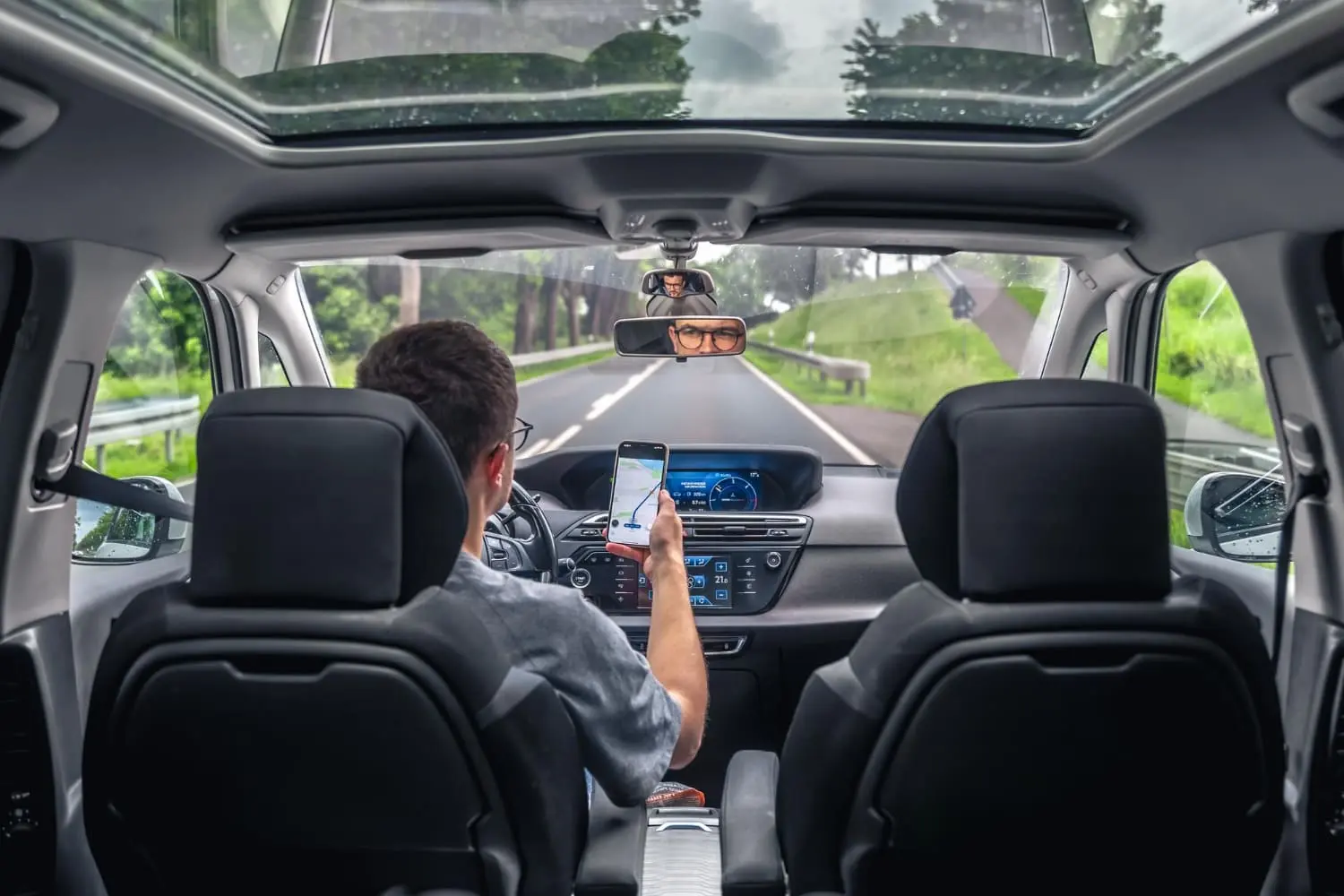
The user experience during this era was defined by painfully high error rates and severe vulnerability to ambient noise. Wind noise, tire rumble on the highway, and even the hum of the air conditioning unit routinely confounded early microphones and speech engines. Drivers were forced to repeat themselves multiple times, defeating the entire purpose of a hands-free safety feature and dramatically increasing cognitive distraction behind the wheel. Furthermore, the utility of these systems was strictly bottlenecked by onboard hardware limitations. They could only perform basic local functions, such as dialing a pre-saved phone contact or tuning to a specific FM radio frequency, leaving drivers yearning for actual intelligence inside the cabin.
The Smartphone Era: CarPlay, Android Auto, and Cloud Connectivity
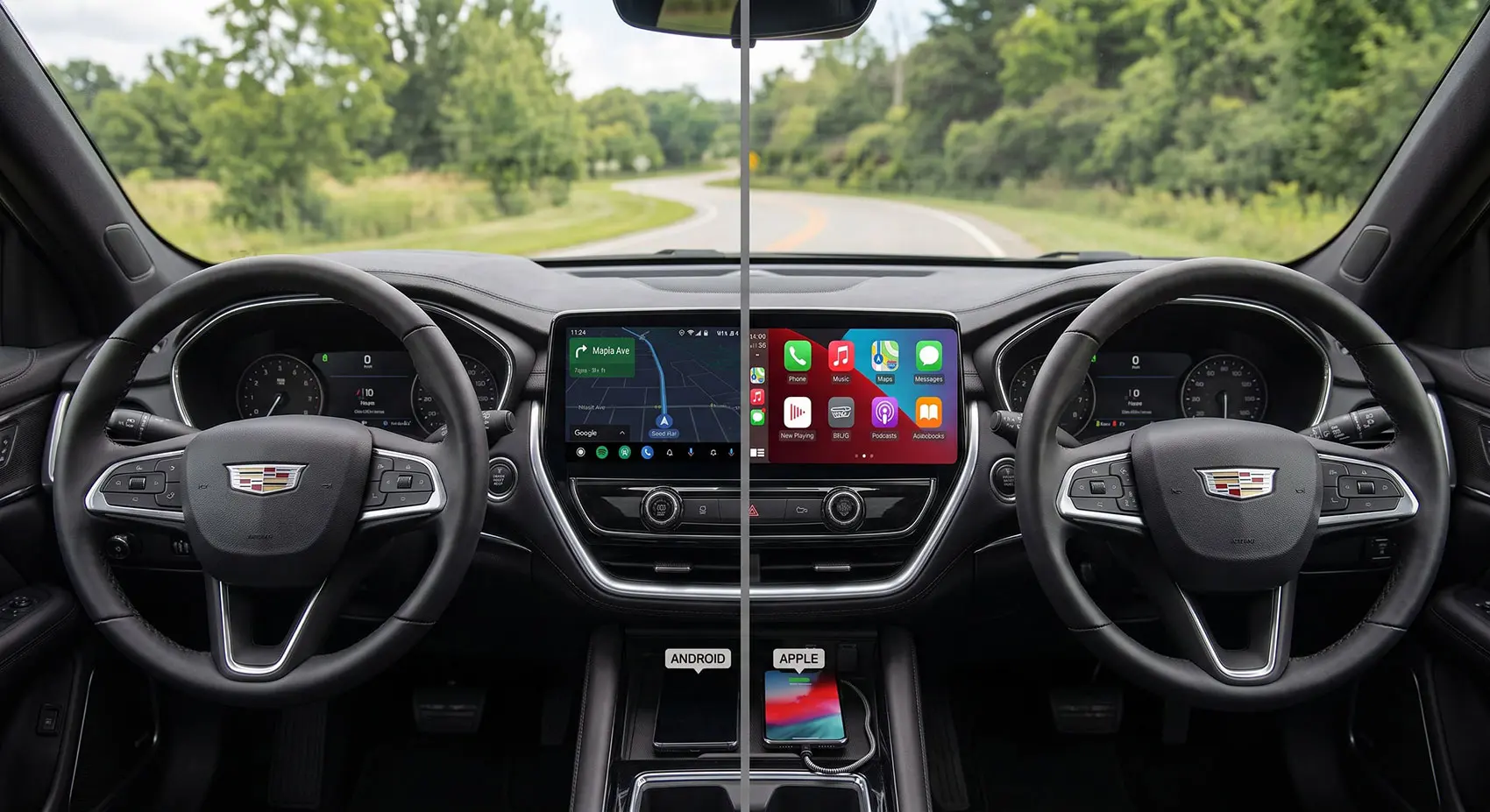
The introduction of smartphone-integrated interfaces like Apple CarPlay and Android Auto marked a monumental turning point for in-car connectivity, fundamentally changing how drivers interacted with audio, messaging, and navigation systems. Instead of relying on clunky, proprietary hardware embedded in the dashboard, which often became outdated within a couple of years, drivers could suddenly mirror their familiar mobile devices directly onto the car’s infotainment screen. This shift brought cloud-based speech recognition engines, such as Siri and Google Assistant, into the vehicle environment. These systems leveraged massive cloud computing infrastructure, vastly outperforming legacy onboard microprocessors and enabling a much broader understanding of natural language patterns, real-time traffic data, and dynamic web queries.
The expansion of capabilities during this era unlocked a new tier of convenience and driving safety. Drivers could dictate and send text messages via voice, stream millions of tracks on-demand through Spotify or Apple Music, and receive turn-by-turn navigation routed around live traffic bottlenecks without ever taking their hands off the steering wheel. However, despite these major leaps forward, significant limitations remained. Because CarPlay and Android Auto acted primarily as external software extensions running from a smartphone, they suffered from a structural disconnect with the vehicle's actual mechanical controls. Siri or Google Assistant could manage your playlist or look up a restaurant, but they could not roll down the windows, adjust the dual-zone climate control, switch drive modes, or diagnose a flashing check-engine light. The digital assistant lived in your phone, not in your car.
The Modern Leap: Conversational AI and Native LLM Integration
The current era of automotive technology represents a massive quantum leap forward, moving away from rigid keyword-matching logic and entering the realm of true Natural Language Processing (NLP) and native Large Language Model integration. Instead of commanding the vehicle like a reluctant computer, modern drivers converse with their cars as they would with a knowledgeable front-seat passenger. This transition relies on advanced neural networks capable of understanding intent, context, and nuance. If you tell a modern system, "I'm freezing," it won't just look up the definition of the word; it will automatically raise the cabin temperature by a few degrees or activate the seat heaters.
Contextual awareness is the crown jewel of this modern generation. Voice assistants can now maintain multi-turn conversational threads, handling complex, multi-layered queries without losing the plot. For example, a driver can say, "Find a quiet coffee shop near my next stop that has outdoor seating and free Wi-Fi," and the system parses multiple constraints simultaneously, cross-referencing real-time maps, business reviews, and calendar destinations. Furthermore, this intelligence is deeply baked into the vehicle's architecture. Rather than being confined to entertainment and navigation, modern voice layers have direct permissioned access to the CAN bus and vehicle control modules, allowing passengers to modify drive modes, adjust ambient lighting, roll down specific windows, or diagnose dashboard warning lights entirely hands-free.
Manufacturer Spotlights: How Top Brands Are Winning
As the technology behind in-car voice integration has matured, major automotive brands have moved past basic software implementations to craft proprietary, highly integrated voice ecosystems. Leading manufacturers are no longer relying solely on generic smartphone mirrors; instead, they are baking deeply customized conversational AI directly into the vehicle's central computing architecture. This shift allows brands to differentiate their driving experience, blending utility with brand identity to create a seamless human-machine bond on the open road.
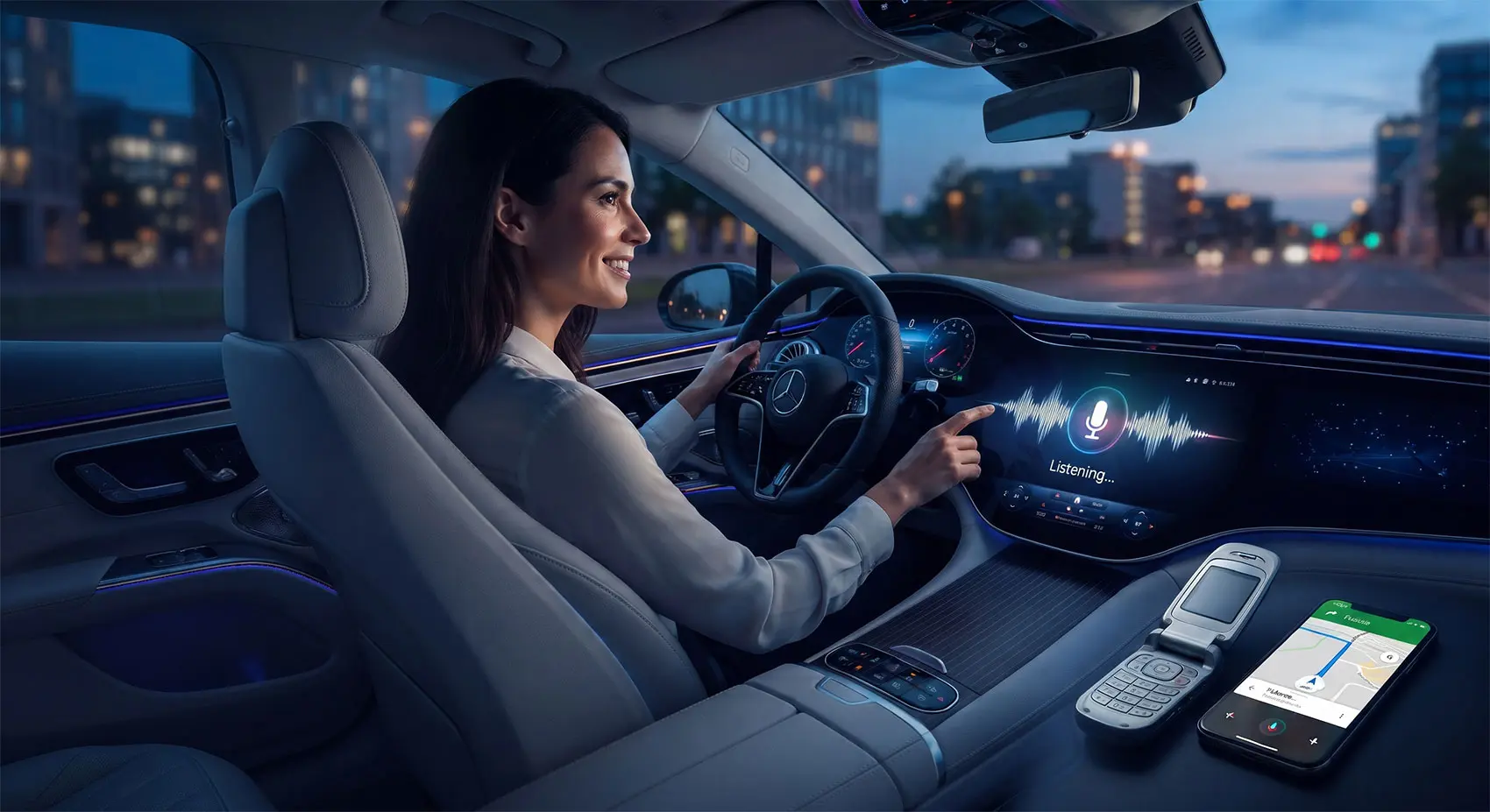
Mercedes-Benz has long been a pioneer in this space with its MBUX (Mercedes-Benz User Experience) system, famously activated by the prompt "Hey Mercedes." Beyond standard vehicle controls, MBUX leverages sophisticated natural language processing and cloud connectivity to deliver conversational engagement that feels remarkably organic. Drivers can chat naturally about secondary topics, ask the vehicle to tell a joke, or query complex travel logistics while the system continuously learns driver preferences over time. Similarly, BMW’s latest iDrive iterations feature an upgraded Intelligent Personal Assistant represented by glowing visual indicators on the dashboard. BMW has focused heavily on streamlining complex, multi-layered touch menus into intuitive voice commands, enabling occupants to control everything from window shades and ambient lighting configurations to performance driving modes simply by describing what they want.
Meanwhile, the broader automotive industry is aggressively welcoming partnerships with tech giants and generative AI leaders. Integrations featuring advanced language models, such as the integration of ChatGPT into various automotive lineups, are transforming the car into an interactive encyclopedia and travel consultant. Whether a family on a road trip wants to quiz the vehicle on historical landmarks along their route, or a commuter needs a quick summary of incoming professional emails read aloud in a secure format, modern voice assistants are redefining what is possible inside the cabin.
Challenges and Future Horizons
While the integration of advanced conversational AI and native Large Language Models has catapulted in-car voice assistants into a new era of utility, this technological leap brings significant challenges and complex questions that the automotive industry must navigate. Chief among these concerns is driver and passenger privacy. Modern voice assistants rely on continuous listening or rapid cloud data transmission to catch contextual cues and wake words. This raises legitimate anxieties regarding data harvesting, cabin telemetry, and how voice recordings are stored, processed, and secured by both automakers and third-party tech providers. Ensuring transparent data-privacy frameworks and robust local encryption will be critical to maintaining consumer trust as the cockpit becomes increasingly digitized.
Technical reliability and infrastructure limitations also present hurdles on the road ahead. Voice assistants that depend heavily on cloud connectivity can experience frustrating latency or complete functionality failure when driving through remote rural areas, mountain passes, or underground tunnels with poor cellular coverage. To solve this, the next horizon of automotive AI relies heavily on hybrid edge-computing architectures, running compact, highly optimized local models directly on the car’s onboard processing units for instant offline commands, while leveraging massive cloud models when a robust internet connection is available. Looking further into the future, the horizon points toward proactive intelligence: vehicles that anticipate your needs before you ask, coordinate personalized passenger profiles seamlessly across different cars, and work in tandem with fully autonomous driving systems to transform the daily commute into a genuinely effortless, conversational journey.
Conclusion
As we look across the modern automotive landscape, the transformation of in-car voice assistants is nothing short of revolutionary. We have officially closed the chapter on the frustrating era of rigid, single-word commands, mechanical misfires, and dashboard layouts that demanded dangerous moments of driver distraction. Today’s vehicles are no longer passive boxes of metal and glass; through the power of advanced Natural Language Processing, edge computing, and native Large Language Models, they have blossomed into intelligent, responsive co-pilots that understand context, nuance, and human intent. Whether managing complex cabin environments, seamlessly routing around traffic, or serving as a knowledgeable travel companion on a cross-country journey, conversational AI has fundamentally redefined the human-machine interface behind the wheel.
Furthermore, this rapid evolution has completely altered consumer expectations. Drivers now expect their vehicles to sync seamlessly with their digital lives, treating the cockpit as an extension of their smart home and office environments. Looking ahead, the road promises even deeper integration, blending intuitive proactive intelligence, stringent privacy safeguards, and seamless cross-device synchronization. As the steering wheel and central dashboard progressively yield to smooth, voice-driven interaction, the daily commute is shifting from a stressful chore into an effortless, personalized experience. The future of driving isn't just about getting from point A to point B—it's about having a continuous, natural dialogue with the machine that takes you there, ensuring every journey is safer, smarter, and infinitely more enjoyable.

Written by Kousar Shabbir
Published Oct 14, 2026 in Auto Tech.