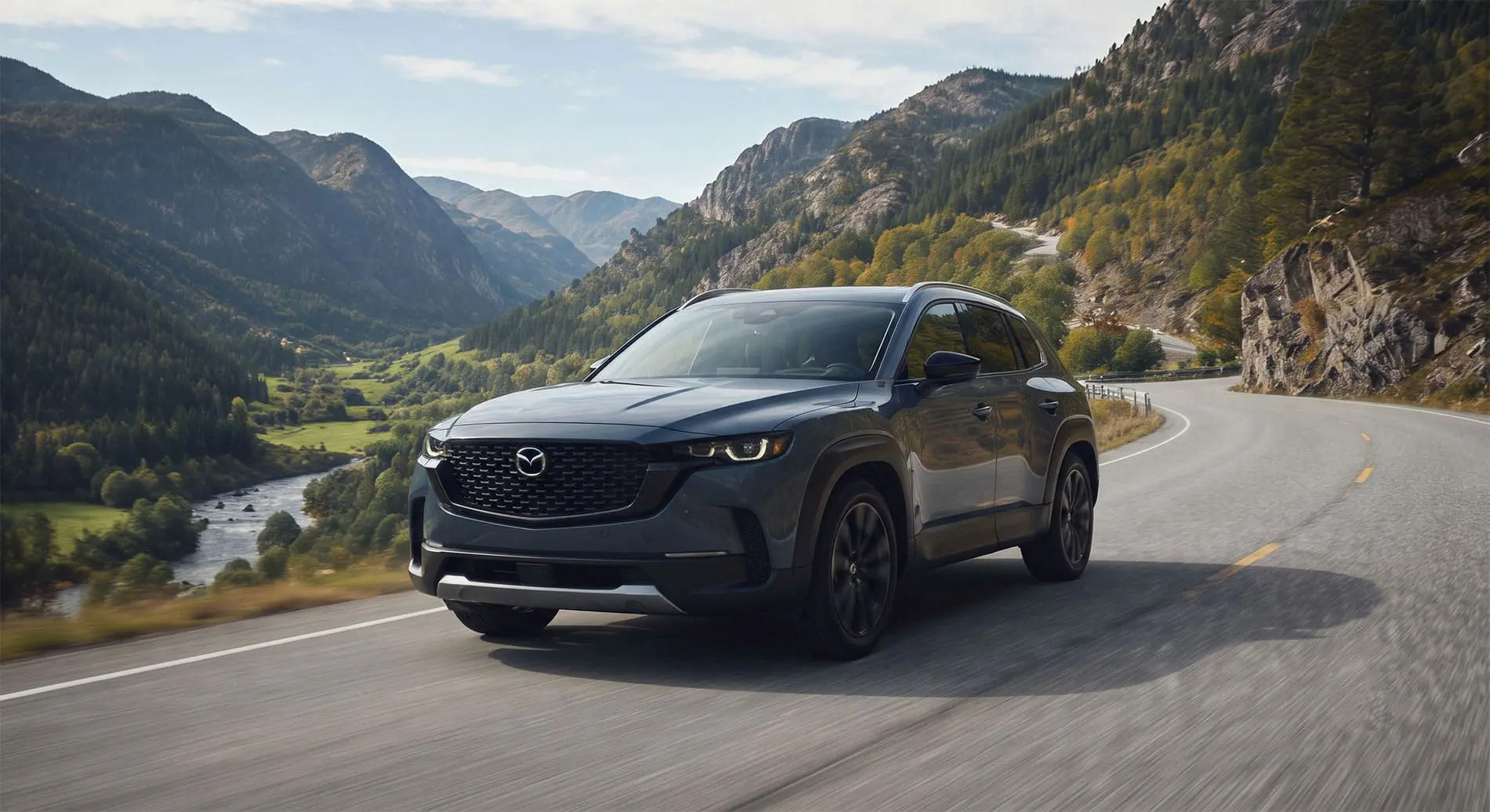
The compact SUV segment has become a battlefield of compromise. For years, drivers looking for a versatile adventurer faced a difficult choice: sacrifice fuel economy for off-road capability, or trade away handling precision for the sake of a hybrid badge. Then came the 2026 Mazda CX-50 Hybrid. With its rugged, "go-anywhere" aesthetic and the promise of a Toyota-sourced hybrid powertrain, it arrived with a clear mission: to prove that you don’t need to choose between the pump and the trail.
Mazda has long been the brand for those who actually enjoy the act of driving. Their vehicles from the iconic Miata to the sleek CX-5 are defined by what they call Jinba Ittai, or "horse and rider as one." Bringing that philosophy to a fuel-efficient hybrid SUV is a bold ambition. By integrating a 2.5-liter engine with three electric motors, Mazda isn't just chasing the numbers; they are attempting to redefine what an "eco-friendly" crossover feels like behind the wheel.
But does the reality match the brochure? In this review, we’re going beyond the EPA ratings and the polished marketing shots. We’ll dive into how the electronic All-Wheel Drive (electronically controlled AWD system.) system holds up on gravel and rain-slicked pavement, whether the efficiency gains are truly worth the CVT-driven driving experience, and if the 2026 CX-50 Hybrid is the "do-it-all" vehicle the modern adventurer has been waiting for. Whether you’re a city commuter looking to stretch your gas dollars or a weekend warrior eyeing the next forest road, read on because the truth about the CX-50 Hybrid is as nuanced as the terrain it was built to conquer.
The Toyota-Mazda Partnership: What Lies Under the Hood?
If you’ve spent any time researching the 2026 Mazda CX-50 Hybrid, you’ve likely come across the "elephant in the room": the powertrain. It’s no secret that Mazda and Toyota have been deepening their collaborative efforts, and the CX-50 Hybrid is perhaps the most prominent fruit of that labor. Under the hood lies a 2.5-liter four-cylinder engine paired with a planetary-gear hybrid system that utilizes three electric motors. For the uninitiated, this is essentially the same "DNA" that has made the Toyota RAV4 Hybrid a best-seller for nearly a decade.
But here is where the story gets interesting: Mazda didn't just drop in a Toyota powertrain and call it a day. While the hardware is familiar, the "soul" is unmistakably Mazda. Engineers have recalibrated the engine management and throttle mapping to provide the sharper, more immediate power delivery that brand loyalists expect.
The e-CVT: Fact vs. Fiction
One of the biggest concerns for driving enthusiasts when moving to a hybrid is the dreaded Electronic Continuously Variable Transmission (e-CVT). If you’ve driven older hybrids, you’re probably familiar with the "rubber-band" sensation—the sound of the engine droning at a high, constant pitch while the vehicle takes its sweet time catching up. In the CX-50 Hybrid, Mazda has done an admirable job of mitigating this. By prioritizing a more natural connection between pedal input and acceleration, they’ve managed to curb that annoying whine. It isn’t the sharp, mechanical "snick-snick" of a traditional manual, but for an e-CVT, it’s remarkably well-behaved, feeling less like an appliance and more like a driver’s tool.
The Hybrid Transition
The transition between pure electric power which the car favors at lower, city-bound speeds and the internal combustion engine is handled with a level of refinement that feels genuinely premium. There is no jarring vibration when the engine kicks in; rather, it’s a subtle shift that you’ll mostly notice through the dash display rather than through the seat of your pants. It’s a sophisticated, "set it and forget it" system that allows you to enjoy the benefits of electrification without having to learn a new way to drive.
Decoding the i-Activ electronically controlled AWD System
The primary hesitation for many buyers looking at hybrid crossovers is the fear of losing that "planted" feeling during bad weather. Traditional mechanical AWD systems use a physical driveshaft to send power to the rear wheels, but the 2026 Mazda CX-50 Hybrid takes a modern approach. It utilizes an electronic All-Wheel Drive (electronically controlled AWD) system, which leverages electric power to drive the rear axle independently of the front-mounted engine.
How Electric Torque Transforms Traction
Because the rear wheels are powered by an electric motor, the system can react with near-instantaneous speed. In conditions where a traditional mechanical system might have a slight delay while a central clutch engages, the CX-50’s electronically controlled AWD system. can detect slip and redistribute torque in milliseconds. On rain-slicked pavement or loose gravel, this creates a sense of confidence that’s rare for a hybrid in this class. You aren’t just driving; you’re being actively managed by a computer that’s constantly monitoring traction at all four corners.
Mi-Drive: From the Commute to the Trail
Mazda’s Intelligent Drive Select (Mi-Drive) is the interface that puts you in control of this system. While most drivers will stick to the default mode for daily errand-running, toggling into "Trail Mode" changes the vehicle's personality. In this setting, the e-AWD system becomes more aggressive, prioritizing low-end torque to help the vehicle crawl over uneven surfaces. While nobody is suggesting the CX-50 Hybrid is a dedicated rock crawler, "Trail Mode" provides the extra grip you need to handle muddy forest tracks, steep boat ramps, or snow-covered driveways without the usual drama of wheel spin. It’s a subtle but significant distinction: it doesn't try to make the car an off-roader, but it ensures that "getting there" is never a concern, no matter how the weather behaves.
The Efficiency Reality Check: 38 MPG vs. Real-World Driving
The most anticipated spec for any hybrid owner is, of course, the fuel economy. The 2026 Mazda CX-50 Hybrid carries an EPA-estimated rating of 38 MPG combined. On paper, this is a massive leap over the standard 2.5 S model, placing it firmly in the same arena as heavy hitters like the Toyota RAV4 Hybrid and the Honda CR-V Hybrid. But as any veteran driver knows, EPA estimates are generated in controlled lab conditions, not on your daily morning commute through stop-and-go traffic or during a spirited weekend blast up a mountain pass.
City vs. Highway: The Hybrid Sweet Spot
In the real world, the CX-50 Hybrid behaves exactly as you’d expect a sophisticated hybrid to it shines brightest when the pace is variable. In city driving, where the regenerative braking system can frequently capture energy to keep the battery charged, hitting that 38 MPG mark is not just possible; it’s consistent. You’ll find yourself relying heavily on the electric motors, and the silence of the cabin during these low-speed moments is genuinely relaxing.
However, once you hit the highway, the physics of a boxy crossover begin to take hold. At sustained speeds above 70 mph, the fuel economy naturally tapers off, as the combustion engine must work harder to push the vehicle's frame through the air. You might see closer to 34–35 MPG in these scenarios. Still, that isn't a failure—it's a massive improvement over the standard gas-only CX-50.
The 551-Mile Advantage
What matters more than the raw MPG number is the total range. Mazda has equipped the Hybrid with a fuel tank capacity that, combined with its high efficiency, unlocks a range of up to 551 miles. For the weekend warrior, this is a game-changer. It means you can leave the city, drive deep into the backcountry, and return home without the constant anxiety of scouting for a gas station in a remote area. The CX-50 Hybrid doesn't just promise lower gas bills; it offers the kind of freedom that makes long-distance road tripping feel like a luxury rather than a chore. Whether you are commuting or adventuring, the efficiency of this powertrain is less about the pennies saved at the pump and more about the hours saved not standing in line at a gas station.
Inside the Cabin: Luxury or Utility?
When you step into the 2026 Mazda CX-50 Hybrid, the first thing you notice is the "hiking boot" aesthetic. Mazda has clearly aimed for a clientele that appreciates both form and function—the interior feels rugged and durable, yet it retains the premium, driver-centric cockpit feel that the brand is famous for. Unlike some competitors that lean heavily into plastics to emphasize their "adventure" branding, the CX-50 uses a rich palette of materials that feel substantial to the touch. The tactile feedback from the knobs, the stitching on the dashboard, and the supportive nature of the seats all suggest that Mazda intended this vehicle to be a companion for long-haul journeys, not just a grocery getter.
Tech and Connectivity: Modern but Accessible
In terms of technology, the 2026 model brings a refined infotainment experience. The screen size is generous, and the integration of wireless Apple CarPlay and Android Auto is seamless. Mazda has resisted the industry-wide trend of burying every single control deep inside a touchscreen menu. Instead, you get a thoughtful balance of physical buttons for primary climate and volume controls, which is a massive win for ergonomics. This makes adjusting the settings while driving over bumpy, unpaved roads much safer and more intuitive than fiddling with a laggy, touch-sensitive glass surface. Higher trims may include Amazon Alexa Built-in where available.
The Cargo Compromise
One of the most frequently asked questions regarding the hybrid version of any crossover is: "Does the battery eat up my storage space?" In the case of the CX-50, Mazda has done an impressive job of packaging the hybrid components. While there is a slight, almost imperceptible reduction in the total floor depth compared to the pure-gasoline CX-50, the impact on daily usability is negligible. The cargo area remains wide, flat, and highly functional. Whether you are loading up camping gear, a pair of mountain bikes, or simply a week’s worth of groceries, the space is more than adequate. Mazda managed to keep the low load floor intact, making it easy to slide heavier items in and out. It’s a classic example of clever engineering—where the benefits of the hybrid powertrain don't force you to sacrifice the lifestyle features that likely drew you to the CX-50 in the first place.
The Competitive Landscape: CX-50 Hybrid vs. RAV4 and CR-V
In the crowded landscape of hybrid crossovers, the 2026 Mazda CX-50 Hybrid finds itself squaring off against the two undisputed heavyweights: the Toyota RAV4 Hybrid and the Honda CR-V Hybrid. If you are shopping in this segment, you’ve likely spent time inside all three, and the differences in philosophy are stark. The RAV4 and CR-V are often treated as appliances—vehicles designed to be as invisible as possible while delivering stellar fuel economy and bulletproof reliability. They are exceptional at what they do, but they rarely stir the soul.
The Mazda Differentiator
The CX-50 Hybrid enters the ring with a different set of priorities. While it matches its Japanese counterparts in efficiency, it beats them in the "feel" department. Mazda’s interior design is more upscale, favoring a cockpit layout that makes the driver feel like a participant in the journey rather than a passenger in a mobile lounge. If you care about how a steering wheel feels in your hands, the feedback from the chassis, and the aesthetic cohesion of the cabin, the CX-50 is the clear winner.
Who Should Skip the Hybrid?
However, it is important to be honest about the trade-offs. If your primary goal is absolute maximum cargo volume and the most "appliance-like" ease of ownership, the Honda CR-V might still edge out the Mazda. Furthermore, if you are a driving enthusiast who refuses to accept even the mildest drone of an e-CVT, you might find yourself gravitating back to the standard, gasoline-only CX-50 with the traditional 6-speed automatic transmission. That model offers a more "analog" driving experience that the hybrid powertrain, no matter how well-tuned, simply cannot replicate.
The Target Audience
The 2026 CX-50 Hybrid is tailor-made for the buyer who wants the fuel efficiency of a modern hybrid but isn't ready to drive a vehicle that feels like an appliance. It is for the person who chooses their hiking gear as carefully as they choose their vehicle someone who values design, personality, and AWD capability. If you want a crossover that looks as good parked at a trailhead as it does in a downtown office park, the CX-50 Hybrid is currently the most compelling "lifestyle" choice in the segment.
Conclusion
The 2026 Mazda CX-50 Hybrid represents a fascinating pivot in Mazda’s identity. By integrating Toyota’s proven hybrid architecture into a platform that remains fundamentally committed to driving dynamics and premium design, Mazda has effectively bridged the gap between the utilitarian hybrid segment and the enthusiast-oriented crossover market.
We’ve explored how this vehicle manages to balance the efficiency-first mindset of a hybrid with the road-going confidence of an i-Activ e-AWD system. While it faces stiff competition from established players like the RAV4 and CR-V, the CX-50 distinguishes itself through its "hiking boot" aesthetic, its driver-focused cockpit, and a commitment to tactile, mechanical engagement that its rivals often overlook. The 38 MPG combined rating proves that you don't have to sacrifice your fuel budget to have a vehicle that looks and feels at home on a trail, and the 551-mile range provides a genuine sense of freedom for those who view a vehicle as a tool for exploration rather than just a way to get from A to B.
Is the upgrade to the Hybrid trim worth the investment? For the driver who values the experience of the commute as much as the destination, the answer is a resounding yes. It provides the best of both worlds: the guilt-free efficiency of electric assistance and the personality of a vehicle built by a brand that still prioritizes the "soul of motion." Ultimately, the 2026 Mazda CX-50 Hybrid is more than just a collection of specs or a comparison point against the competition it is a sophisticated, versatile, and highly capable companion for the modern driver.


Written by Maarukh Shahbaz
Published Jul 3, 2026 in Car Reviews.