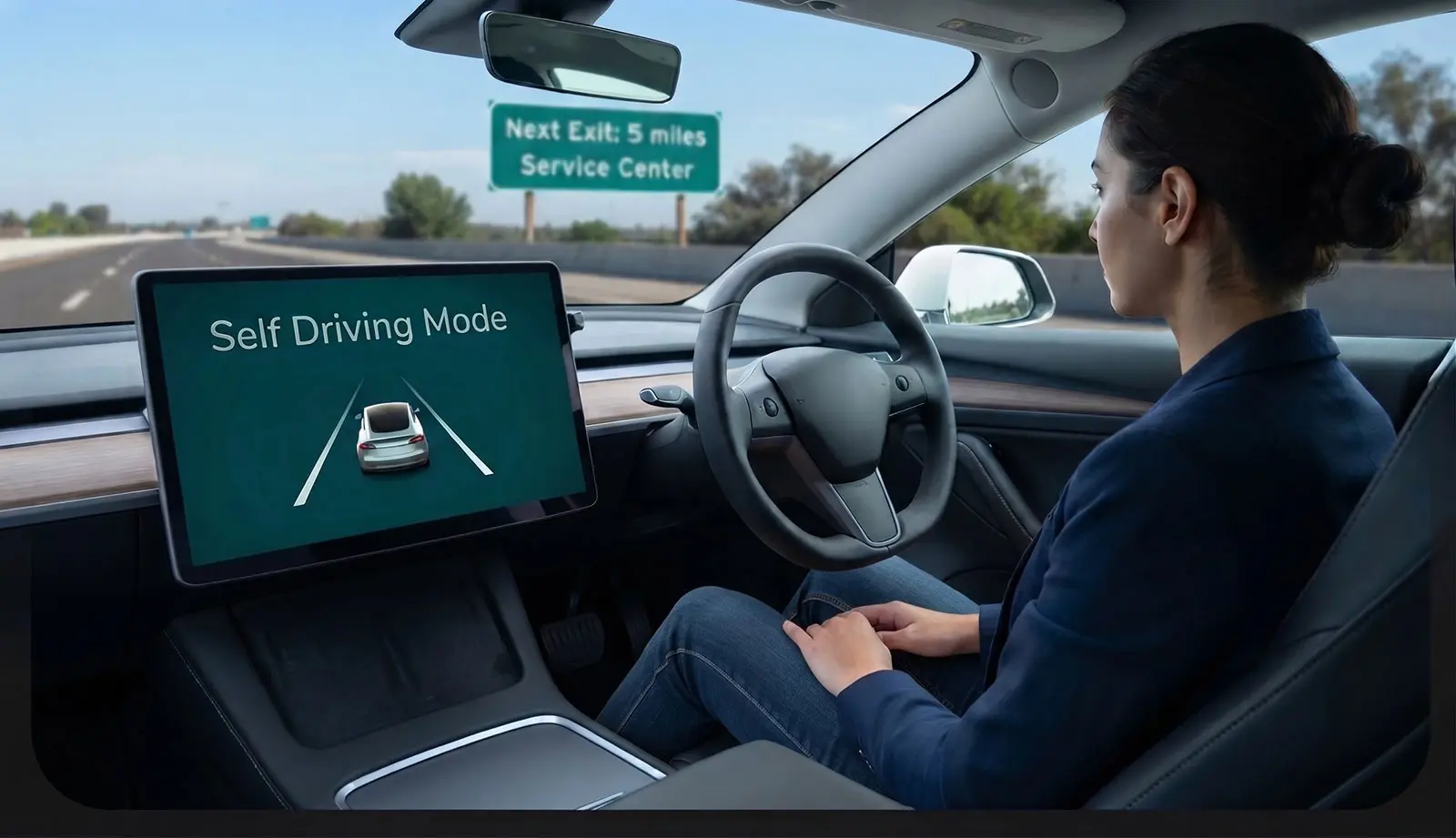
The intersection of software engineering and public safety has entered a high-stakes arena where lines of code carry life-or-death consequences. As autonomous driving systems transition from experimental tech trials to mainstream deployment, a surge of high-profile legal battles is reshaping how society views technological accountability. When an autonomous vehicle fails to navigate an unexpected urban hazard, the resulting litigation goes far beyond a standard insurance claim; it targets the core architecture of artificial intelligence liability, manufacturer duty of care, and consumer trust.
At the heart of this legal evolution lies a fundamental public debate: Are current self-driving features genuinely safe enough for shared public roadways, or are technology companies scaling faster than their algorithmic safety margins allow? While autonomous advocates tout millions of logged test miles as proof of exponential safety gains, accident investigators and tort lawyers point to persistent edge-case failures, confusing marketing terminology, and ambiguous driver oversight requirements. This tension between innovation velocity and consumer safety has turned federal courts and regulatory agencies into battlegrounds over what constitutes an acceptable risk on public streets. Understanding this landscape requires examining how legal frameworks are adapting to a world where the driver behind the wheel is no longer human, but a digital neural network making split-second decisions on behalf of unsuspecting passengers and pedestrians.
Understanding SAE Automation Levels and Legal Liability
The legal framework governing autonomous vehicles relies heavily on the Society of Automotive Engineers (SAE) classification system, which divides driving automation into six distinct tiers ranging from Level 0 (no automation) to Level 5 (full automation). In the context of current litigation, the battlelines are drawn primarily between Level 2 systems such as Tesla’s Autopilot and Full Self-Driving (FSD) suites, which require constant human driver supervision despite misleading marketing monikers and higher-tier systems like Level 3 and Level 4 deployment seen in controlled robotaxi fleets operated by companies like Waymo and Cruise. This technological distinction is critical in a court of law because it dictates where legal liability ultimately falls. Under Level 2 operation, the human behind the steering wheel remains the legally designated driver, fully responsible for any crashes or traffic violations regardless of what the software is doing. However, as manufacturers push into Level 3 and Level 4 territory, where the vehicle temporarily or permanently assumes dynamic driving tasks, liability shifts dramatically from the end consumer to the software developer, sensor manufacturer, and automotive OEM.
This shift has created a complex web of tort law, product liability, and software negligence claims. Traditional automotive accident litigation historically centered on driver error, mechanical component failure, or roadway design flaws. Today, plaintiffs' attorneys are navigating uncharted legal territory by targeting algorithmic decision-making, neural network training data biases, and software update oversights. When an autonomous system misclassifies a white truck trailer against a bright sky or fails to anticipate erratic pedestrian behavior, victims' lawyers argue that these are not unforeseeable acts of God, but rather predictable engineering choices and design defects. Furthermore, federal oversight bodies like the National Highway Traffic Safety Administration (NHTSA) are under intense pressure to establish clearer safety baselines, moving away from voluntary manufacturer self-certification toward mandatory compliance audits. As courts grapple with these novel theories of liability, automotive companies find themselves defending not just physical metal and rubber, but the proprietary code and sensor fusion arrays that dictate how their machines interact with the physical world.
Major Autonomous Driving Lawsuits and Incidents
The legal battlegrounds surrounding autonomous technology are no longer theoretical; they are mapped directly onto a growing docket of high-profile lawsuits, regulatory inquiries, and civil trials. At the center of this scrutiny is Tesla and its Driver-Assistance suites, where numerous lawsuits have been filed by families of drivers involved in fatal crashes while using Autopilot or Full Self-Driving. Plaintiffs in these cases frequently argue that Tesla's marketing practices create a dangerous illusion of full autonomy, leading drivers to over-rely on a system that still requires active human supervision. Legal teams have centered arguments around strict product liability and deceptive trade practices, asserting that designing a Level 2 system that encourages driver inattention without adequate fail-safes constitutes an inherent design defect. These cases are forcing courts to evaluate whether software developers can be held liable when consumers misuse features marketed as assistive rather than fully autonomous.
Beyond consumer vehicles, robotaxi developers like Waymo and Cruise have faced acute legal and public fallout following urban collision incidents, unexpected traffic blockages, and collisions with emergency response vehicles. While robotaxis operate at higher automation levels (Level 4), where the operator assumes legal responsibility for dynamic driving tasks, liability manifests through municipal fines, tort claims from injured pedestrians or cyclists, and emergency intervention investigations. In city environments dense with unpredictable human behavior, pedestrian movements, and complex street furniture, sudden system disengagements or algorithmic hesitation can trigger multi-vehicle pileups or block vital transit lanes. Plaintiffs' attorneys in these commercial fleet lawsuits often target sensor fusion failure rates, mapping errors, and emergency fallback responsiveness. As these cases move through state and federal courts, they are establishing a crucial legal precedent: software bugs and sensor occlusions in autonomous systems are viewed through the lens of negligence and product liability, holding technology conglomerates to the same, if not higher, safety standards as traditional automotive manufacturers.
Regulatory Investigations and 2026 Policy Updates
Federal oversight and state-level policy frameworks surrounding autonomous driving have intensified dramatically, transforming passive safety recommendations into strict regulatory mandates. Regulatory bodies such as the National Highway Traffic Safety Administration (NHTSA) have escalated active investigations into autonomous driving systems, focusing heavily on how vehicles respond to emergency vehicles, low-visibility conditions, and sudden driver disengagements. In 2026, compliance audits for automated driving system (ADS) developers have shifted from voluntary reporting models to rigorous, mandatory data-sharing protocols. Manufacturers are now required to submit comprehensive safety validation metrics and real-time incident logs before expanding commercial fleet operations into new metropolitan jurisdictions.
Simultaneously, a patchwork of state-level legislation continues to divide the national landscape. While some states have rolled out welcoming regulatory sandboxes to attract mobility tech companies, others have enacted stringent liability laws that hold parent corporations criminally and civilly accountable for algorithmic failures resulting in traffic disruptions or collisions. This evolving legislative pressure has forced automakers and software developers to invest heavily in robust fallback systems, continuous over-the-air validation testing, and transparent safety documentation. As federal agencies tighten the loop on autonomous deployment, the legal distinction between driver error and software liability is becoming permanently codified into modern transportation law.
Safety Verification Metrics vs. Real-World Edge Cases
Evaluating the safety of autonomous driving systems remains one of the most contentious debates in modern transportation engineering, pitting statistical milestones against the unpredictable chaos of real-world driving environments. Autonomous developers traditionally measure safety through cumulative miles driven, accumulating billions of test miles in simulation environments and millions more on public streets. However, safety advocates, regulators, and tort lawyers increasingly argue that raw mileage metrics are a misleading indicator of actual system competence. A vehicle can drive tens of millions of highway miles smoothly under clear weather conditions without ever proving its ability to navigate a chaotic, congested urban intersection populated by distracted pedestrians, construction zones, and erratic cyclists. The true measure of safety is not how many miles a system can log on predictable interstates, but how effectively it handles rare, high-risk edge cases—those anomalous, split-second scenarios where human intuition and rapid improvisation are all that prevent a catastrophic collision.
The friction between algorithmic predictability and real-world unpredictability sits directly at the center of ongoing liability lawsuits. When an autonomous vehicle encounters a completely novel obstacle such as debris flying off a truck, a person dressed in a costume, or hand signals from a traffic officer overriding a broken stoplight, sensor fusion arrays and machine learning models can experience classification failure or processing latency. Human drivers rely on contextual awareness, social cues, and generalized common sense to interpret these edge cases; autonomous systems rely on historical training data that may never have captured that specific anomaly. Plaintiffs' attorneys leverage these technical vulnerabilities to challenge manufacturer claims of superior safety, arguing that deploying semi-autonomous or autonomous features before they can reliably manage open-world edge cases constitutes a breach of basic product safety standards. As this technological divide narrows through deeper neural network training and advanced hardware redundancy, the legal framework continues to demand rigorous, verifiable proof that autonomous vehicles are not just statistically comparable to human drivers, but fundamentally superior in mitigating preventable risks.
Conclusion
The legal and ethical reckonings facing the autonomous vehicle industry highlight a profound transition in modern engineering: innovation can no longer outpace accountability. As courts, federal regulators, and engineering teams grapple with the complexities of self-driving software, the fundamental question of whether these features are "safe enough" remains deeply contentious. While automakers argue that incremental algorithmic refinement and massive fleet data collection will eventually reduce human-error-related fatalities to near zero, victims of system failures and regulatory watchdogs demand immediate, transparent proof of reliability before public roadways become testing grounds for incomplete technology. The proliferation of high-profile lawsuits, strict product liability claims, and mandatory compliance audits demonstrates that software code is no longer shielded by the experimental novelty once granted to tech pioneers.
Looking ahead, the path toward widespread commercial acceptance requires a fundamental recalibration of how software safety is validated and regulated. The traditional tech industry ethos of "moving fast and breaking things" is entirely incompatible with heavy machinery operating at high speeds on shared public infrastructure. Manufacturers must embrace open-source safety data sharing, rigorous third-party auditing, and transparent public communication regarding the absolute limits of their driver-assistance systems. Furthermore, legislative bodies must establish unified national standards that eliminate regulatory loopholes and ensure victims of algorithmic failures have clear, unambiguous paths to legal restitution. Moving forward, the true metric of success for autonomous driving will not be found solely in miles logged on predictable highways, but in the legal, ethical, and technical robustness required to protect human lives when unexpected edge cases inevitably arise.


Written by Kousar Shabbir
Published Aug 31, 2026 in Auto News.