
Open any auto industry headline in 2026, and you'll likely spot the same word buried somewhere in it: consolidation. Automakers are combining forces, parts suppliers are swallowing each other whole, and dealership groups are buying out the last independent lots in town. It isn't a passing trend; it's a structural response to some of the toughest conditions the industry has faced in decades. Tariffs are reshaping where cars get built. Profit margins are being squeezed from every direction. And the race to build software-defined, AI-equipped vehicles is so expensive that even century-old car companies can't always afford to go it alone.
For drivers, this wave of mergers and acquisitions can feel abstract something that happens in boardrooms in Tokyo, Detroit, or Stuttgart, far removed from the driveway. But automotive mergers touch nearly everything about car ownership: what models are available, how much they cost, where you get them serviced, how quickly parts show up when something breaks, and even what your car is worth when you go to sell it. Understanding why this consolidation is happening and what it actually changes for the person behind the wheel is the difference between reacting to the next big industry headline and actually planning around it.
Why Automakers Are Merging in 2026
Margin Pressure, Tariffs, and the EV Slowdown
The single biggest force behind today's deal-making is money, or rather, the lack of it. Automakers rode a wave of unusually strong profits right after the pandemic thanks to supply shortages that let them charge more for fewer cars. That cushion has eroded steadily since, worn down by pricing pressure, rising costs, tougher foreign competition, and broader geopolitical uncertainty. On top of that, tariff-driven restructuring has become one of the top reasons companies are choosing to buy competitors rather than compete with them, since a well-capitalized acquirer can absorb tariff shocks that a smaller, thinly capitalized supplier simply cannot.
Layer an uneven electric vehicle transition on top of that, and you get an industry trying to fund three different powertrain strategies gas, hybrid, and EV, at once. Analysts have pointed out that automotive buyers today are balancing exposure across ICE, hybrid, and EV models simultaneously, while prioritizing businesses with dependable earnings rather than speculative growth stories. Consolidation is how many companies are choosing to spread that financial risk instead of shouldering it alone.
The Software-Defined Vehicle Arms Race
Modern cars are increasingly rolling computers, over-the-air updates, driver-assistance systems, in-car AI, and connected services all cost enormous sums to develop. Industry analysts at Bain have identified software, AI, and advanced driver-assistance systems as one of the three central themes driving auto M&A activity in 2026, alongside plain consolidation for scale and new tie-ups between automotive and defense companies. Building this technology from scratch is so expensive that many manufacturers are choosing to buy their way into capability rather than build it internally, which is part of why deals like Infineon's roughly $2.5 billion acquisition of a Marvell Technology automotive business unit aimed squarely at accelerating software-defined vehicle development have become common.
Competing With China's BYD and Geely
A third pressure is coming from outside the traditional Western and Japanese auto giants entirely. Chinese manufacturers like BYD and Geely have expanded aggressively, both at home and abroad. BYD alone sold 1.81 million new-energy vehicles in the first half of 2026, with exports making up roughly 44% of that total, while Geely's exports surged 126% year-over-year in the same period. China's own government has pushed its domestic automakers toward consolidation too, with regulators explicitly calling for mergers and cross-regional integration to strengthen weaker state-owned players. For legacy automakers elsewhere, that kind of scale is difficult to match without joining forces of their own.
The Different Types of Automotive Consolidation
Not all "automotive mergers" look the same, and the type of deal matters a lot for how it eventually touches drivers.
OEM-to-OEM Mergers
This is the type that makes the biggest headlines: two full automakers combining into one company. The clearest recent example remains Stellantis, formed from the 2021 merger of Fiat Chrysler and PSA Group in a deal worth roughly $52 billion, still considered the benchmark for how dramatically a merger can reshape an automaker's brand portfolio. More recently, Honda and Nissan (with Mitsubishi also weighing whether to join) attempted a similar tie-up that would have created the world's third-largest automaker by volume. That deal collapsed in February 2025 after the two sides couldn't agree on structure: Honda wanted Nissan to become a subsidiary rather than an equal partner, and Nissan's board balked. The two companies still cooperate on EV development, but the full merger is off the table for now, a reminder that even a well-publicized mega-merger can fall apart at the negotiating table.
Supplier and Parts Consolidation
Less visible to drivers but arguably more consequential day-to-day is what's happening one level down the supply chain. Major Tier 1 and Tier 2 parts suppliers, the companies that actually build the components inside your car, have been merging and acquiring each other at a rapid pace. Recent examples include American Axle & Manufacturing's roughly $1.44 billion acquisition of the UK-listed Dowlais Group, Apollo-owned ABC Technologies completing a £1.8 billion takeover of TI Fluid Systems, and Nemak acquiring GF Casting Solutions' automotive business to strengthen its position in lightweight vehicle components. This kind of consolidation is happening largely because smaller suppliers operating on thin margins often lack the capital to absorb tariff costs or relocate production themselves, so bigger, better-funded players are stepping in.
Dealership Network Roll-Ups
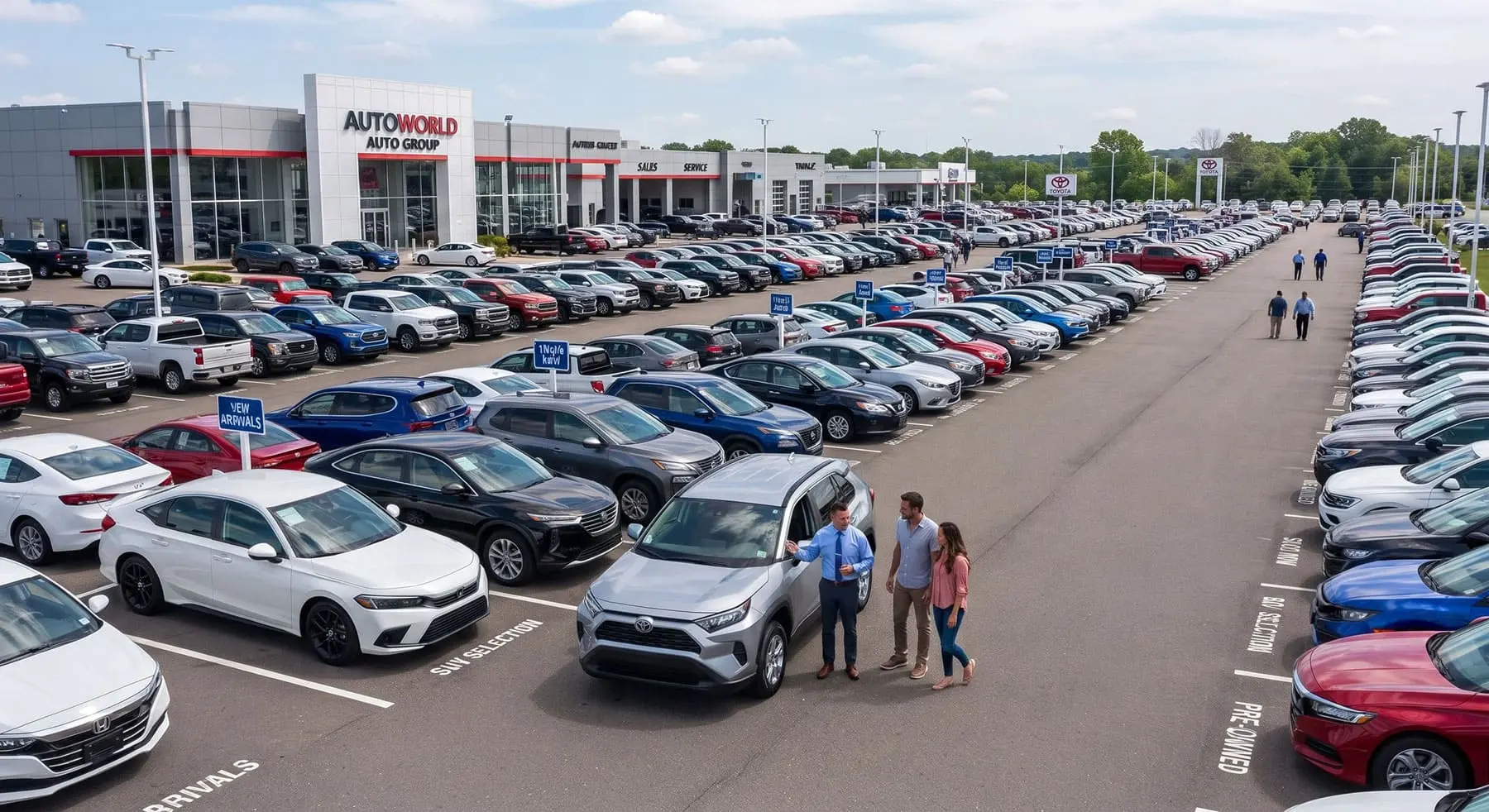
The third major front is the retail side: the actual dealership you walk into. Large publicly traded dealer groups such as Lithia Motors, AutoNation, Group 1 Automotive, Penske Automotive, Asbury, and Sonic have spent years buying up smaller, independently owned dealerships across the country. PwC's research has flagged an upsurge in U.S. auto dealer network mergers as smaller operators, squeezed by tight margins and rising prices, choose to sell to larger groups rather than continue competing alone. Even dealer-facing technology is consolidating. Cox Automotive's 2026 acquisition of AI-powered customer data platform Fullpath is one example of software tools behind the sales counter getting folded into bigger operators too.
What Corporate Consolidation Means for Car Prices
The Economies-of-Scale Argument
The optimistic case for consolidation is straightforward: bigger companies can negotiate better deals with suppliers, spread fixed R&D costs across more vehicles, and eliminate duplicate spending on overlapping models or platforms. In theory, some of those savings should filter down to buyers in the form of steadier pricing, more competitive financing, or incentives that a smaller, cash-strapped competitor couldn't afford to offer. Shared vehicle platforms where two brands under one parent company build different models on the same underlying architecture are a real-world example of exactly this kind of savings already happening across brands like those under Stellantis and the Volkswagen Group.
The Reduced-Competition Risk
The less optimistic case deserves equal attention. Every merger that removes an independent competitor from the market also removes one more company that had an incentive to undercut its rivals on price. Regulators clearly take this risk seriously: antitrust authorities including the FTC, the European Commission, and China's SAMR have all scrutinized or blocked automotive deals in recent years specifically over concerns about reduced competition, and the current FTC has been described as more skeptical of vertical and horizontal auto industry consolidation than at any point since the 1980s. For drivers, this is the tension worth watching: genuine efficiency gains can lower costs, but a shrinking number of independent automakers and suppliers can also mean fewer competitive forces keeping prices and quality in check over the long run.
How Mergers Affect Vehicle Choice, Service, and Ownership
Fewer Models, Shared Platforms
One of the most visible effects of a merger for everyday drivers is a slow trimming of overlapping vehicle lineups. When two automakers combine, they often carry redundant models competing in the exact same segment two midsize sedans, two compact crossovers, and so on. Rationalizing that lineup usually means some nameplates get discontinued while others get consolidated onto shared platforms, which is part of why buyers should pay attention to which models get de-emphasized after a merger closes, especially if a favorite trim or configuration is one of the ones getting phased out.
Warranty, Parts Availability, and Dealer Service
If you already own a vehicle from a brand that gets acquired or merged, ownership basics like warranty coverage typically continue as promised, since those obligations are contractual and generally transfer with the company. Where things can get murkier is parts availability and dealer service standards. Legal experts working on automotive deals have flagged that a target company's open recall obligations and consent decrees also transfer along with its other assets in a merger, meaning safety and service commitments don't just disappear, but the company managing them may look very different a year or two down the line. If your local dealership is absorbed into a large public group like Lithia or AutoNation, expect a more standardized (and sometimes less personal) service experience, along with potentially wider access to loaner cars and service bays across a larger network.
Resale Value Considerations
Mergers can also ripple into resale value in ways that are easy to overlook when a deal is first announced. A brand that gets fully absorbed, rebranded, or quietly wound down can see buyer confidence and therefore resale value soften, simply because owners worry about long-term parts and support. On the other hand, brands that emerge from a merger with a clearer strategy, stronger balance sheet, and continued investment in EV and software development can see the opposite effect. If you're shopping for a car right now, it's worth checking whether the brand you're considering is part of an active merger conversation, and reading up on how the deal is likely to affect that specific model line rather than assuming the whole company's fate applies equally to every nameplate it sells.
Conclusion
Automotive consolidation in 2026 isn't a single story; it's three overlapping ones: automakers merging to share the enormous cost of EVs and software, suppliers combining to survive tariff pressure and thin margins, and dealership networks rolling up into a handful of dominant public groups. Some of this is happening loudly, like the on-again, off-again Honda-Nissan talks. Much more of it is happening quietly, in supplier deals and dealership buyouts that never make national news but still shape the car-buying experience in very real ways.
For drivers, the smartest approach isn't panic or blind optimism; it's informed attention. Keep an eye on whether your automaker or dealership is part of an active merger, ask direct questions about warranty and parts support when buying from a brand mid-consolidation, and remember that "bigger" doesn't automatically mean "better" or "cheaper"; it depends heavily on how much genuine competition survives the process. The auto industry is being reshaped from the inside out, and the drivers who stay informed about these deals will be the ones best positioned to make confident decisions, whether they're buying a new car this year or holding onto one for the next decade.


Written by Maarukh Shahbaz
Published Sep 18, 2026 in Auto News.