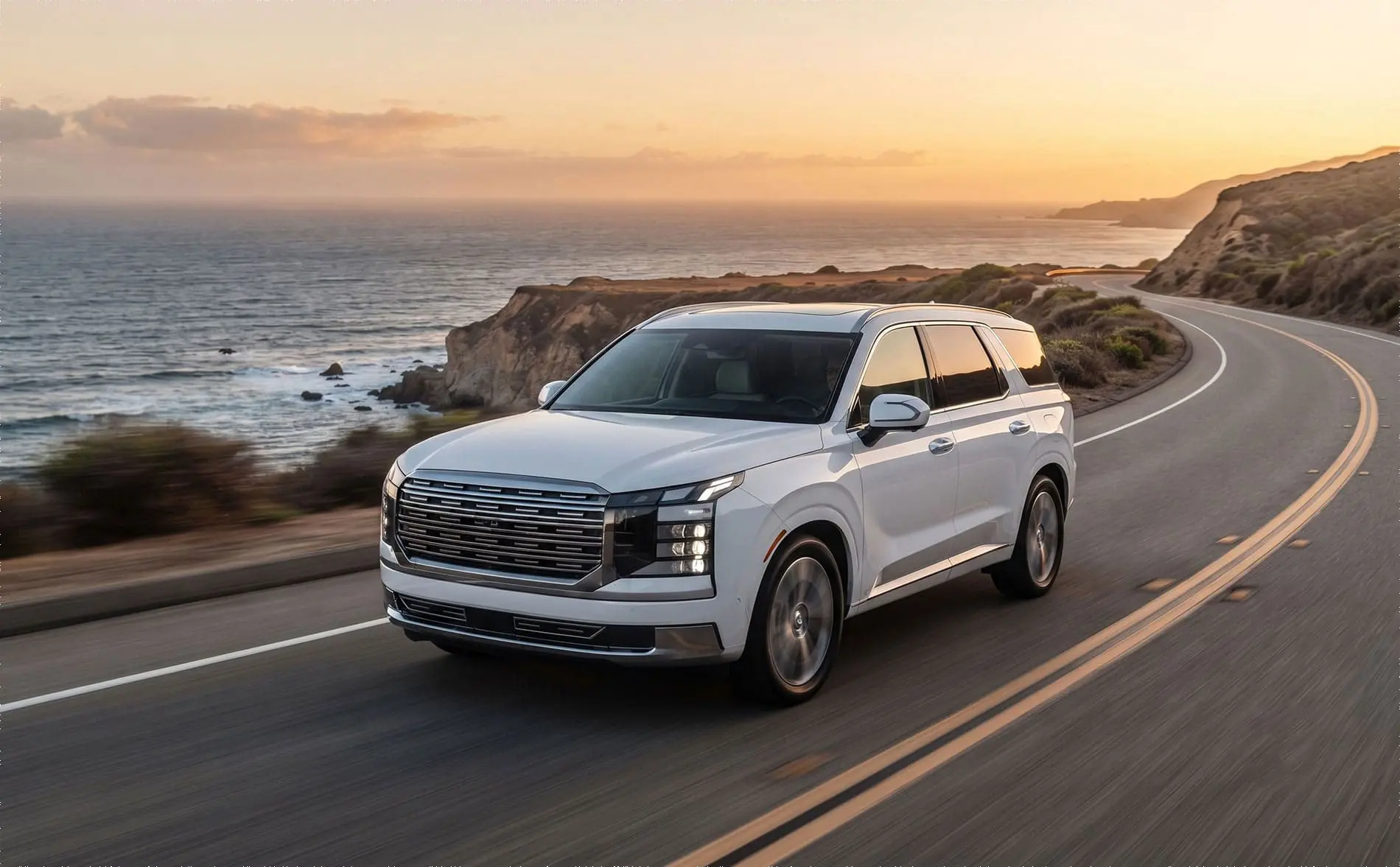
For years, the Hyundai Palisade has reigned as the gold standard for three-row family SUVs, balancing premium aesthetics with accessible pricing. But in an automotive landscape increasingly defined by electrification and fuel efficiency, the question for 2026 isn't just whether the Palisade is still comfortable it’s whether it can evolve. Enter the all-new 2026 Hyundai Palisade Hybrid. With its bold, blocky redesign and the introduction of a sophisticated 2.5-liter turbocharged hybrid powertrain, Hyundai is making a massive play for the hearts of tech-savvy families who refuse to compromise on power or efficiency.
The "hype" surrounding this model is palpable. Boasting a combined 329 horsepower and an impressive estimated driving range of over 600 miles, the Hybrid isn't just an "eco-friendly" badge; it’s a performance-oriented powerhouse designed to make long road trips feel like a breeze. But does the shift to a four-cylinder hybrid architecture actually deliver the smooth, effortless acceleration families have come to love in the outgoing V6? And is the interior, now packed with futuristic tech like a panoramic curved display and relaxation seating, truly the "tech-parent’s haven" that the marketing suggests?
In this review, we’re cutting through the noise. We’ve spent time analyzing the specs, the real-world efficiency, and the daily usability of this new hybrid SUV. We’ll break down whether the driving dynamics hold up, if the new interior design justifies the price jump, and ultimately, whether the 2026 Hyundai Palisade Hybrid is the right investment for your driveway or if you’re better off sticking with the traditional gasoline-powered model. Buckle up it’s time to see if the 2026 Palisade Hybrid truly earns its spot at the top of the three-row hierarchy.
The Heart of the Beast: Performance & Powertrain
The 2026 Hyundai Palisade Hybrid represents a seismic shift for the brand’s flagship three-row SUV. For years, the naturally aspirated 3.8-liter V6 was the undisputed heart of the Palisade, praised for its reliable, smooth delivery of power. However, as emissions standards tighten and consumer demand for fuel efficiency grows, Hyundai has made a bold, strategic pivot to a sophisticated 2.5-liter turbocharged hybrid powertrain. But does this swap moving from a larger displacement V6 to a forced-induction hybrid four-cylinder—result in a compromise? The short answer is a resounding no.
In fact, the numbers suggest a significant upgrade. By integrating an electric motor with the 2.5-liter turbo engine, the 2026 Palisade Hybrid generates a combined 329 horsepower. This figure comfortably eclipses the output of the outgoing V6, providing a punchier acceleration that makes merging onto busy highways or navigating steep inclines with a full load of passengers feel effortless. The electric motor provides an instantaneous burst of torque, eliminating the slight "lag" often associated with turbochargers and creating a linear, refined power delivery that feels more premium than ever before.
Beyond raw output, the engineering team at Hyundai has meticulously optimized the battery placement. By housing the high-voltage battery pack low within the chassis, the center of gravity has been lowered significantly compared to the standard internal combustion model. While many purists initially scoffed at the departure from the V6, the 2026 Palisade Hybrid proves that "downsizing" can actually mean "upsizing" in terms of capability. It isn't just about efficiency—it’s about enhancing the driver’s connection to the road. Whether you are navigating city streets or cruising on a cross-country family road trip, the powertrain behaves with a refined, quiet authority that sets a new benchmark for the segment.
Interior Sophistication: A Tech-Parent’s Haven
Moving inside the 2026 Hyundai Palisade Hybrid, the cabin experience is no longer just about comfort; it is a carefully orchestrated environment designed to mitigate the stresses of modern parenthood. Hyundai has completely abandoned the "tried and true" aesthetic of the previous generation, opting instead for a bold, futuristic cabin design that feels significantly more upscale than the price tag suggests.
The centerpiece is undoubtedly the stunning, curved panoramic display. Unlike the dual-screen setups found in older models, this seamless interface merges the instrument cluster and the infotainment system into one continuous, high-definition piece of glass. For the busy parent, this isn't just a aesthetic upgrade—it’s a massive functional improvement. We found the UI to be incredibly intuitive, significantly reducing the "menu diving" that typically plagues competitors. Whether you are adjusting navigation on the fly, managing the tri-zone climate control for sleeping children in the back, or setting up wireless smartphone integration, the system responds with tablet-like fluidity. The voice recognition software has also been upgraded; it now understands natural, conversational commands, meaning you don't have to memorize specific prompts to change your destination or adjust the cabin temperature.
Beyond the screen, Hyundai has doubled down on sustainable luxury. The materials throughout the cabin—ranging from soft-touch eco-leathers to reclaimed interior accents—provide a tactile experience that genuinely rivals entry-level European luxury SUVs. The seating architecture is designed for the long haul, featuring "Relaxation" seats in the front and second rows.
The cargo area and seating flexibility have seen significant enhancements. Despite the addition of the hybrid battery pack, which is cleverly housed under the floor, the cargo floor remains remarkably flat. This ensures that when the power-folding third row is lowered, you have a massive, cavernous space for sports equipment, camping gear, or DIY project supplies.
We also have to discuss the acoustics. The cabin is noticeably quieter than the previous model. Through the use of acoustic-laminated glass on all side windows and improved sound-deadening materials in the wheel wells, the engine note is reduced to a whisper, even during hard acceleration. This acoustic isolation isn't just about luxury; it’s about creating a serene environment that allows for easy conversation between the first and third rows, finally putting an end to the "shouting matches" often necessary in larger vehicles. By prioritizing comfort, connectivity, and cleanability, the 2026 Palisade interior doesn’t just store your family it hosts them in a space specifically engineered for the complexities of modern life.
The Hybrid Advantage: Fuel Economy & Cost of Ownership
Transitioning from a traditional V6 engine to a hybrid system is, for many buyers, primarily a calculation of economics. When you look at the 2026 Hyundai Palisade Hybrid, the fuel economy improvements are not just marginal—they are substantial. In a three-row SUV segment where fuel consumption often feels like a "necessary evil," the Palisade Hybrid flips the script. By utilizing an advanced regenerative braking system and a high-efficiency electric motor, the vehicle captures energy that is typically lost during deceleration and uses it to assist the engine under load.
For the average family, this translates to fewer stops at the gas station and significantly lower annual fuel expenditures. While the official EPA ratings are impressive, the real-world benefit shines brightest in city driving and stop-and-go traffic, where the electric motor handles the bulk of the acceleration duties. This is where you’ll see the most dramatic difference compared to the thirstier V6 models of the past.
However, we must address the "price premium" question. Yes, hybrid technology typically comes with a higher initial MSRP. But when calculating the total cost of ownership, it is vital to factor in several long-term variables. First, there is the projected depreciation; as the automotive market shifts rapidly toward electrification, hybrid models are holding their value significantly better than their gas-only counterparts. Second, maintenance costs are often lower than anticipated. Because the electric motor assists the gasoline engine, there is less strain on components like the transmission and brake pads, which undergo less wear and tear over time. Furthermore, Hyundai’s industry-leading warranty coverage which extends to hybrid components provides peace of mind for the long-haul buyer. When you balance the reduced fuel spend against the slower depreciation and minimized maintenance intervals, the 2026 Palisade Hybrid isn't just an "eco-conscious" choice; it is a savvy financial decision for a family vehicle meant to last for years.
The Competition: Palisade vs. The Field
When shopping for a three-row hybrid SUV, the 2026 Hyundai Palisade doesn't exist in a vacuum. It faces stiff competition from established titans like the Toyota Grand Highlander Hybrid and the Honda Pilot. However, the Palisade manages to carve out a distinct identity by focusing on a "best-of-all-worlds" approach. Where the Toyota Grand Highlander excels in pure brand-reputation reliability and fuel economy, the Palisade responds with a significantly more advanced interior tech suite and a superior sense of "lifestyle luxury."
Many buyers find the Grand Highlander’s interior to be utilitarian and somewhat sterile. In contrast, the Palisade’s cabin feels like a sanctuary. From the haptic-feedback climate controls to the intelligent ambient lighting, the Palisade offers a "boutique hotel" vibe that Toyota’s mainstream aesthetic struggles to replicate. Furthermore, while the Honda Pilot offers excellent mechanical refinement and a tried-and-true V6, it lacks the punchy, low-end torque provided by the Palisade’s new 2.5-liter turbo-hybrid setup. The Palisade’s ability to combine the fuel-sipping nature of a hybrid with the aggressive, "get-up-and-go" torque of a turbocharged engine gives it a unique performance advantage that makes it feel less like a "mom-van" and more like an engaging, premium driver’s vehicle.
Another major differentiator is how Hyundai handles the human-machine interface. While competitors are still wrestling with clunky menu systems and laggy touchscreens, the Palisade’s infotainment is snappy, intuitive, and visually cohesive with the digital instrument cluster. It is clear that Hyundai has invested heavily in software integration, recognizing that for modern families, the ability to effortlessly sync devices and navigate complex menus is just as important as horsepower. By focusing on these high-touch points, Hyundai has successfully positioned the 2026 Palisade Hybrid as the "thinking family’s" choice an SUV that doesn't force you to choose between the practicality of a three-row hauler and the desirability of a premium tech-forward experience. It isn't just trying to beat the competition; it’s trying to rewrite the rules of what a family SUV should feel like in 2026.
Final Verdict: Is It Worth the Hype?
After weighing the performance metrics, the interior overhaul, and the long-term value proposition, the verdict on the 2026 Hyundai Palisade Hybrid is clear: it is not just worth the hype—it is arguably the new benchmark for the segment.
For years, the three-row SUV market has been a game of trade-offs. You either opted for the raw power of a V6 with mediocre fuel economy, or you settled for the efficiency of a hybrid at the expense of driving engagement and interior refinement. With the 2026 Palisade, Hyundai has successfully bridged that divide. By pairing the punchy 2.5-liter turbocharged engine with a sophisticated hybrid architecture, they have delivered a vehicle that feels genuinely quick and responsive while simultaneously cutting your monthly fuel bill.
But the true genius of the 2026 model lies in how it treats its passengers. Hyundai understands that for the modern family, the car is an extension of the living room a space for homework, conversation, and stress-free commuting. The move to a tech-forward cabin with a seamless panoramic display, coupled with thoughtful touches like the UV-C sanitizing tray and class-leading sound insulation, proves that Hyundai is listening to the actual pain points of parents and road-trippers.
If you are a driver who prioritizes cutting-edge technology, a premium feel that doesn't scream "utility vehicle," and the peace of mind that comes with a robust, efficient powertrain, the 2026 Hyundai Palisade Hybrid is an easy recommendation. It manages to feel futuristic without being complicated, and premium without being pretentious. While the competition is fierce, the Palisade’s blend of style, substance, and sustainability makes it the vehicle to beat in 2026. If you’ve been waiting for a sign to make the switch to a hybrid family hauler, this is it. The Palisade isn't just keeping up with the competition it’s setting the pace.

Written by Maarukh Shahbaz
Published Jul 3, 2026 in Car Reviews.