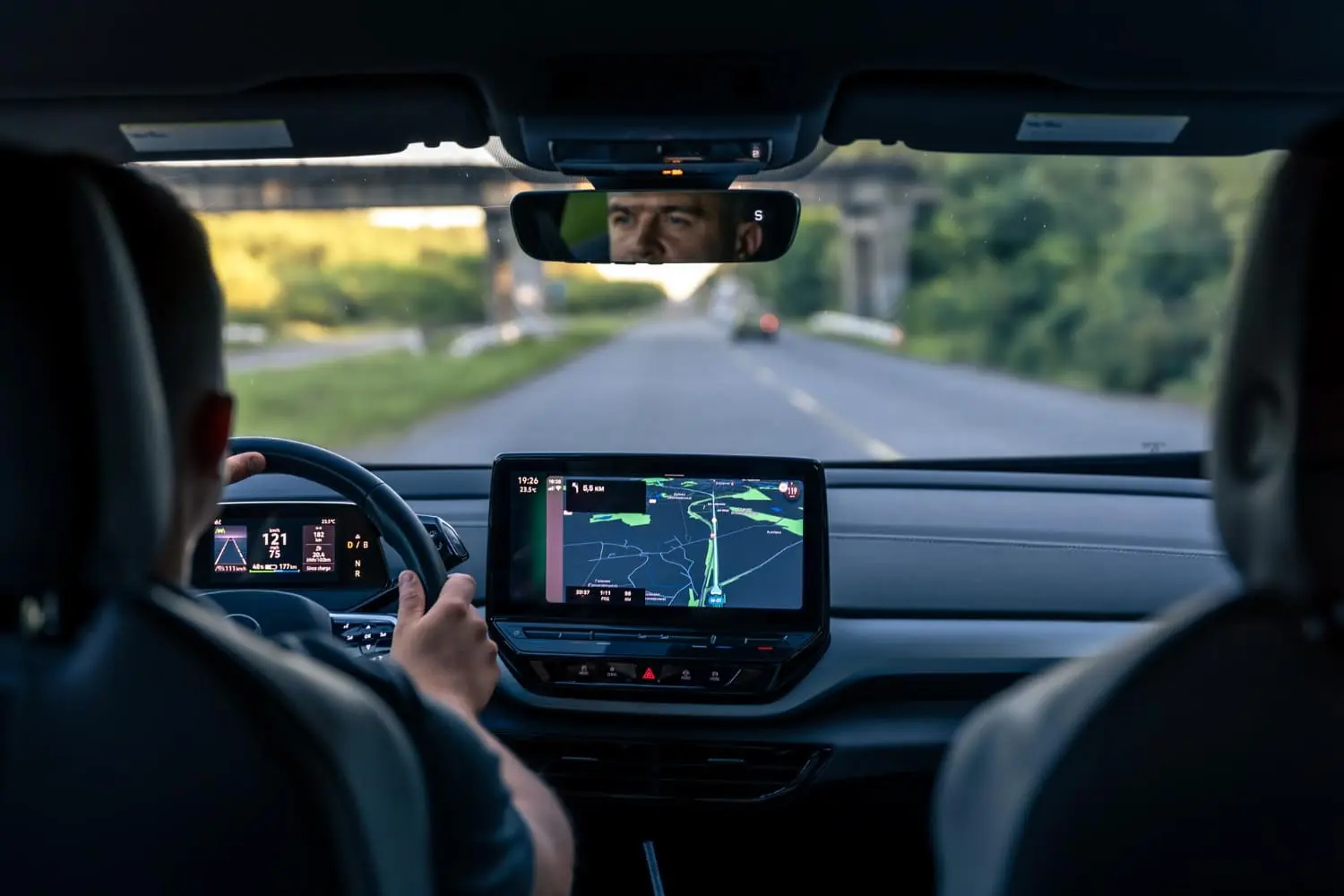
The daily morning and evening commute has long been accepted as an inevitable tax on modern life, a monotonous stretch of bumper-to-bumper gridlock, white-knuckle steering, and wasted hours staring at taillights. For decades, the automobile promised personal freedom, yet driving in congested urban centers quickly degraded into a high-stress chore. However, a seismic shift is underway across global transportation networks. Autonomous driving technology has crossed the threshold from science fiction and isolated pilot programs into large-scale commercial reality.
As self-driving fleets scale across metropolitan landscapes, accumulating hundreds of millions of public road miles and integrating advanced artificial intelligence, they are fundamentally rewriting the physics and psychology of urban mobility. No longer confined to closed testing tracks or specialized innovation hubs, autonomous vehicles (AVs) are changing how we view travel time. What was once dead time spent managing pedals and steering wheels is rapidly transforming into a flexible extension of the office, living room, or rest space.
At the same time, this transition goes far beyond individual convenience. The integration of self-driving tech is reshaping city planning, altering real estate dynamics, and redefining public transportation frameworks. By shifting the paradigm from human-controlled chaos to coordinated, machine-managed traffic flows, autonomous mobility promises to slash accident rates, reduce urban parking footprints, and optimize downtown infrastructure. This article explores how autonomous driving technology is reshaping every facet of our daily commute, examining the cutting-edge tech stacks powering the movement, the lifestyle shifts of becoming a passive passenger, and the evolving roadmap of smart city integration.
The Tech Stack Powering Modern Commutes
The transition from a vehicle that merely transports its occupants to one that actively thinks, perceives, and navigates requires a monumental leap in technological sophistication. Yesterday's driving assistance features such as basic lane-keep assist and cruise control relied on deterministic, rules-based programming that frequently buckled under the chaotic, unpredictable nature of real-world traffic. Today, the modern autonomous vehicle relies on a multi-layered, AI-driven tech stack that mimics, and in many ways exceeds, human sensory processing and cognitive reaction speeds.
At the core of this revolution are Vision-Language Models (VLMs) and deep neural networks. Rather than coding every possible traffic scenario by hand, modern autonomous systems ingest petabytes of visual data gathered from high-definition cameras, radar, and LiDAR arrays. These models allow vehicles to understand semantic context, recognizing not just that an object is a pedestrian, but interpreting subtle human cues, such as a pedestrian making eye contact before stepping off a curb or a construction worker waving traffic through. This integration of spatial data with expansive language and reasoning models enables the car to make nuanced, split-second decisions in complex urban grids.
Equally critical is the evolution of sensor fusion and hardware cost reductions. For years, the prohibitive cost of mechanical LiDAR systems bottlenecked commercial scaling. Today, solid-state LiDAR units, paired with ultra-wide-angle camera grids and high-frequency radar, provide a redundant 360-degree safety cocoon around the vehicle. If heavy rain or snow obscures a camera lens, the LiDAR and radar seamlessly pick up the slack, ensuring continuous operational safety.
Beyond onboard processing, the commute of 2026 is heavily shaped by Vehicle-to-Everything (V2X) communication. Autonomous cars do not operate in isolation; they continuously converse with smart traffic infrastructure, pedestrian smartphones, and neighboring vehicles. Imagine approaching a downtown intersection where traffic lights dynamically adjust their timing based on real-time autonomous fleet densities, effectively eliminating unnecessary idling. By connecting the car directly to the broader urban grid, V2X transforms stop-and-go gridlock into synchronized, fluid corridors.
Reclaiming the Daily Grind: Productivity and Lifestyle Shifts
For over a century, the driver's seat has demanded absolute, unwavering attention. Every minute spent commuting has been a transactional tax paid in focus, energy, and lost time. Autonomous driving technology shatters this paradigm, fundamentally altering how humanity experiences time and space during transit. When the vehicle takes over the mechanical burden of driving, the cabin ceases to be a cockpit and transforms into a personalized, mobile environment tailored to the occupant's desires.
The most immediate lifestyle shift is the conversion of dead travel time into productive, creative, or restorative hours. Instead of clutching a steering wheel in bumper-to-bumper traffic, commuters are reclaiming up to an hour or more each day. For the modern professional, the autonomous commute becomes a rolling private office equipped with high-speed satellite internet, secure video conferencing setups, and ergonomic seating. Emails are answered, quarterly reports are reviewed, and strategic meetings are conducted before ever stepping foot into an office building.
Beyond corporate productivity, the cabin is rapidly evolving into a space for personal wellness and leisure. Commuters can use the journey to catch up on reading, stream immersive entertainment, meditate, or simply catch up on sleep. This shift has profound psychological benefits. Chronic commuting stress, traditionally linked to elevated cortisol levels, road rage, and systemic fatigue, drops dramatically when the mental burden of navigation is handed over to artificial intelligence. Passengers arrive at their destinations refreshed rather than drained, setting a healthier tone for both the workday and the evening transition back home.
Economically, this transformation is forcing a massive rethink of personal asset ownership versus Mobility-as-a-Service (MaaS). As autonomous fleets offer seamless, on-demand transportation that picks you up at your doorstep and drops you off at your exact destination, the traditional financial burden of car ownership depreciation, insurance, maintenance, and parking begins to look obsolete. Why own a depreciating asset that sits idle 95% of the time when a smart, autonomous subscription service can manage your daily commute more efficiently? This shift is empowering urban dwellers to reclaim valuable garage and driveway spaces for housing, community gardens, or green areas, altering the physical landscape of modern neighborhoods.
Transforming Urban Ecosystems and Public Transit
The ripple effects of autonomous driving technology extend far beyond individual vehicles and highway efficiency; they are fundamentally reshaping the blueprint of modern urban ecosystems and public transit networks. For decades, urban planning has been dictated by the spatial demands of private automobiles. Multi-lane highways, sprawling parking lots, and wide street shoulders have claimed vast swathes of downtown land. As autonomous vehicle fleets scale, cities are presented with a historic opportunity to reclaim this real estate for human-centric infrastructure, green spaces, and affordable housing.
At the heart of this urban transformation is the expansion of Mobility-as-a-Service (MaaS) ecosystems, anchored by autonomous robotaxis and micro-shuttles. Rather than relying solely on fixed-route, rigid public transit schedules, cities are integrating on-demand autonomous loops that serve as efficient first-mile and last-mile connectors. Imagine stepping out of your residential building and hopping into a shared autonomous shuttle that seamlessly syncs with high-speed commuter rail lines. This dynamic integration bridges the gap between suburban sprawl and downtown centers, making car-free or car-lite urban living viable for a much larger segment of the population.
Furthermore, autonomous driving technology is revolutionizing downtown parking dynamics. Traditional vehicles spend an estimated 95% of their lifecycle parked, requiring massive downtown parking structures that drain municipal economic productivity. Autonomous robotaxis, however, operate continuously throughout the day, drastically reducing the demand for central city parking infrastructure. Forward-thinking municipalities are already converting empty parking garages into residential spaces, urban farms, or cultural hubs, while curb spaces are being redesigned away from long-term street parking and toward dynamic, temporary loading zones for passenger drop-offs and deliveries.
By optimizing traffic flow and eliminating the bottlenecks caused by human hesitation, erratic lane changes, and parking searches, autonomous networks dramatically alleviate urban congestion. Traffic lights connected via V2X protocols coordinate with oncoming AV platoons to create continuous green waves. The result is a quieter, cleaner, and vastly more efficient urban landscape where public transit and private autonomous fleets operate as a singular, harmonious mobility engine.
Regulatory Milestones, Safety Roadmaps, and Remaining Hurdles
While the technological framework and lifestyle benefits of autonomous driving are rapidly falling into place, scaling these systems nationwide requires navigating a complex labyrinth of regulatory frameworks, safety validation, and public trust. The transition from controlled pilot programs in select cities to an omnipresent commercial utility is not merely an engineering challenge; it is a diplomatic, legal, and cultural undertaking.
On the regulatory front, harmonization remains a critical bottleneck. Autonomous vehicle development has long outpaced legacy legal frameworks, which were originally written under the assumption that a human driver would always be behind the wheel. Today, international bodies like the United Nations Economic Commission for Europe (UNECE) alongside regional transit authorities are racing to update policy rollouts. These updated frameworks govern everything from automated lane-change dynamics and remote assistance safety backups to data-sharing mandates with municipal authorities. For autonomous fleets to operate seamlessly across state and national borders, standardization of safety certifications and liability laws is imperative.
Building public trust is another pivotal hurdle. Despite mountains of safety telemetry showing that autonomous vehicles eliminate the primary cause of traffic accidents human error, distraction, and fatigue public perception remains sensitive to isolated incidents. To counteract skepticism, leading autonomous operators have adopted a radical safety transparency approach, publishing comprehensive safety performance data, real-time tracking logs, and detailed forensic breakdowns of disengagements. By replacing fear of the unknown with verifiable statistical proof, the industry is gradually reassuring commuters that machines are not just competing with human drivers, but vastly outperforming them in situational awareness.
Finally, technical and environmental edge cases continue to test development teams. While artificial intelligence excels in structured environments, extreme weather events such as torrential downpours, blinding blizzard conditions, or unmapped rural roads lacking lane markings still require occasional remote human intervention or fallback operational designs. Furthermore, local operational management requires close collaboration with municipal governments to ensure that fleet deployment adapts to ongoing construction, emergency vehicle corridors, and local traffic nuances. Overcoming these final hurdles will cement autonomous tech as the undisputed backbone of tomorrow's transportation network.
Conclusion
As autonomous driving technology transitions from experimental novelty to the beating heart of our daily transit systems, the very nature of the commute is experiencing a historic rebirth. What was once universally dreaded as a grueling block of lost hours and high-stress gridlock is evolving into a seamless, highly productive, and restorative experience. Through the integration of advanced Vision-Language Models, resilient sensor fusion, and hyper-connected V2X infrastructure, autonomous vehicles have proven that they can navigate complex urban environments with a level of safety and precision that far exceeds human capabilities.
Beyond the personal luxury of reclaiming travel time for work, wellness, or leisure, this technological leap is triggering a massive spatial and economic realignment. Urban centers are finally beginning to shed the concrete shackles of sprawling parking structures and wide multi-lane highways, repurposing valuable downtown land into thriving green spaces, affordable housing, and pedestrian-friendly corridors. Mobility-as-a-Service networks are bridging the historical gap between suburban neighborhoods and urban cores, paving the way for a cleaner, quieter, and infinitely more efficient future.
Ultimately, autonomous driving technology represents more than just an engineering milestone; it is a liberation of human time and space. As we look toward the fully integrated smart cities of tomorrow, the daily commute will no longer stand as a daily chore, but rather as an effortless, integrated utility that moves us forward with grace, safety, and purpose.

Written by Kousar Shabbir
Published Jul 28, 2026 in Auto Tech.