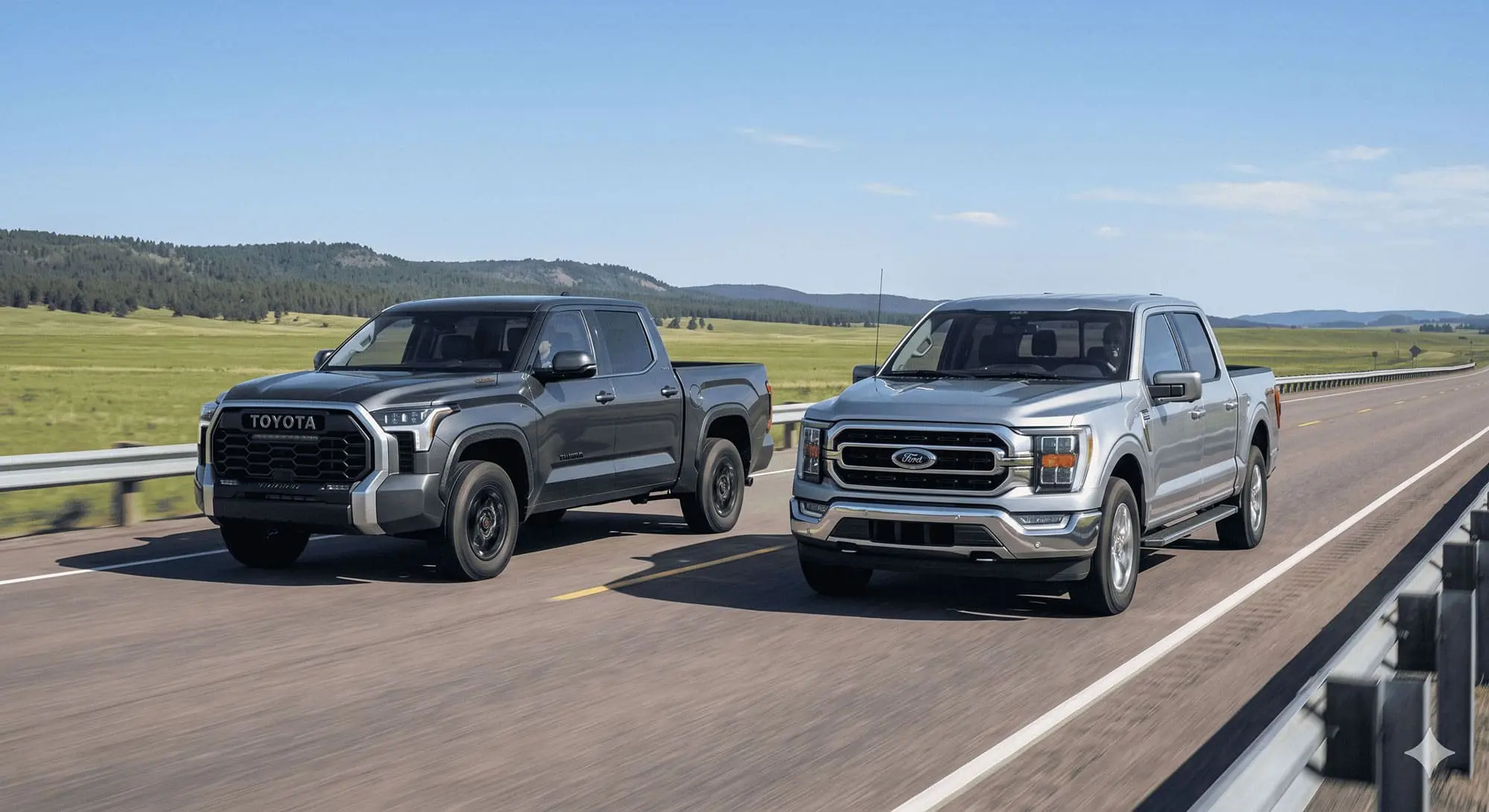
The American automotive landscape has long been defined by the roar of a V8 engine and the silhouette of a full-size pickup truck. However, as we move through 2026, that landscape is undergoing its most significant transformation in decades. The "Big Two" of the modern pickup world the Ford F-150 and the Toyota Tundra are no longer just competing on raw towing numbers or bed length. They are now the standard-bearers for a new era of automotive technology, where hybrid efficiency, semi-autonomous driving, and mobile power generation are just as important as torque.
For decades, the Ford F-150 has held the crown as the best-selling vehicle in America, a title it maintains through relentless innovation and a "work-first" mentality. But the Toyota Tundra, once the underdog, has completely reinvented itself. By ditching the traditional V8 in favor of a standard twin-turbo V6 and a high-output hybrid system, Toyota has signaled that the future of the full-size truck is lean, mean, and incredibly smart.
In 2026, the choice between these two titans is harder than ever. On one side, you have the F-150, which continues to dominate the "job site" niche with features like Pro Power Onboard and the newly refined BlueCruise hands-free driving system. On the other, the Tundra offers a level of build quality and mechanical refinement that has earned it a cult-like following among long-term owners who value resale value and reliability above all else.
Whether you are a weekend warrior hauling a boat to the lake, a contractor needing a mobile office, or a family looking for a safe and spacious daily driver, the F-150 and Tundra represent the pinnacle of what a 2026 vehicle can be. This comparison dives deep into the specs, the real-world utility, and the long-term ownership costs to help you decide which truck deserves the space in your driveway. As we look at the mid-year updates for 2026, including Ford’s street-inspired "Lobo" and Toyota's refined Capstone interior, it's clear that the "Truck Wars" are just getting started.
Powertrains and Performance: The Hybrid Showdown
In 2026, the battle for full-size truck supremacy is being fought under the hood, but not in the way traditionalists might expect. The roar of the naturally aspirated V8 has largely been replaced by the sophisticated whistle of twin-turbochargers and the silent, instantaneous torque of electric motors. When comparing the Ford F-150 PowerBoost and the Toyota Tundra i-FORCE MAX, we are looking at two very different philosophies regarding hybrid integration.
Ford’s PowerBoost: The Versatile Workhorse
Ford’s 3.5L PowerBoost Full Hybrid V6 remains a marvel of engineering. It doesn't just use electricity for fuel economy; it uses it for brute force. Delivering a massive 430 horsepower and 570 lb-ft of torque, the F-150 feels incredibly snappy in city driving. The transition between electric and gas power has been further smoothed out for the 2026 model year, correcting earlier criticisms of "clunky" shifts.
-
The "Lobo" Factor: New for 2026, Ford introduced the Lobo trim, inspired by lowered street trucks. It utilizes a performance-tuned version of the powertrain with a lowered ride height and specialized suspension, proving that the F-150 platform can pivot from a muddy job site to a performance-oriented street machine instantly.
Toyota’s i-FORCE MAX: Reliability Meets Muscle
Toyota takes a slightly different approach. The i-FORCE MAX powertrain—standard on higher trims like the TRD Pro and Capstone—focuses on "power-on-demand." It produces 437 horsepower and 583 lb-ft of torque. While the numbers are nearly identical to Ford’s, the delivery is smoother. Toyota places the electric motor between the engine and the 10-speed transmission, providing a linear power band that feels more like a traditional big-block V8 than a high-strung turbo engine.
-
Suspension Superiority: One of the biggest performance differentiators in 2026 is the Tundra’s multi-link rear suspension with coil springs. While Ford sticks with a refined leaf-spring setup (ideal for the heaviest loads), the Toyota offers a ride quality that mimics a luxury SUV. For the driver who spends 90% of their time unladen, the Tundra is significantly more composed over highway expansion joints and potholed city streets.
The Efficiency Reality
In real-world 2026 testing, both trucks hover around the 22–24 MPG mark depending on the drive cycle. However, Ford tends to edge out the Toyota in pure city stop-and-go driving due to a slightly more aggressive regenerative braking map. Conversely, the Tundra feels more planted when cruising at 75 MPH, making it the preferred choice for long-distance interstate hauling.
Towing, Payload, and Worksite Utility
In the world of full-size pickups, capability isn't just a marketing buzzword; it’s the primary reason for purchase. For 2026, the Ford F-150 and Toyota Tundra have pushed the boundaries of what a "half-ton" truck can reasonably do. While the numbers on the spec sheet favor Ford, the real-world execution on the job site tells a more nuanced story.
Crunching the Numbers: Towing and Payload
When it comes to maximum output, the 2026 Ford F-150 continues to lead the segment. When properly equipped with the Max Trailer Tow Package, the F-150 boasts a maximum towing capacity of 13,500 lbs. Its payload capacity is equally impressive, topping out near 2,450 lbs. This makes the Ford the undisputed king for those who actually use their trucks for heavy-duty hauling, such as pulling large horse trailers or carrying pallets of masonry.
The Toyota Tundra, while immensely capable, takes a more conservative approach. Its maximum towing capacity for 2026 sits at 12,000 lbs, with a payload capacity of approximately 1,940 lbs. While these numbers are lower than Ford's, Toyota engineers argue that their focus is on "sustained capability"—ensuring the truck can handle these loads repeatedly over a decade without mechanical fatigue.
Pro Power Onboard: The Ford Advantage
The true "killer feature" for the F-150 in 2026 remains Pro Power Onboard. The hybrid PowerBoost model offers up to 7.2kW of exportable power. This turns the truck into a mobile generator capable of running an entire construction crew’s power tools or even providing backup power to a home during an outage. In 2026, Ford has integrated this system even more deeply into the infotainment screen, allowing users to monitor wattage draw from their smartphones.
Toyota’s Bed Innovation
Toyota counters Ford’s electrical dominance with superior bed durability. The Tundra uses a Sheet-Molded Composite (SMC) bed. Unlike the Ford’s aluminum bed, the Tundra’s composite material is virtually immune to rust, dents, and dings. You can throw heavy river rocks or scrap metal into a Tundra bed without a liner, and it won't show the same "battle scars" as a metal bed. Additionally, the 2026 Tundra features a unique "bump-switch" near the taillight that allows you to open the tailgate with your elbow when your hands are full—a small but significant ergonomic win.
Trailering Tech
Both trucks have mastered the art of making towing easy for beginners. Ford’s Pro Trailer Backup Assist (the knob that steers the trailer for you) remains the most intuitive system on the market. However, Toyota’s 2026 update to its Panoramic View Monitor provides a "see-through" trailer view that is exceptionally clear, making merging on busy highways with a 30-foot camper much less stressful.
Interior Tech, Comfort, and Hands-Free Driving
In 2026, the interior of a full-size truck is no longer just a place to sit; it is a command center. As these vehicles increasingly serve as primary family haulers, the level of digital integration and material quality has reached luxury-sedan levels. Both Ford and Toyota have invested heavily in software-defined features, yet they offer distinct user experiences.
Hands-Free Autonomy: BlueCruise vs. Toyota Safety Sense
Ford’s BlueCruise 1.4 is arguably the gold standard for highway towing and commuting in 2026. It allows for true hands-free driving on over 130,000 miles of North American highways. The 2026 update includes "In-Lane Repositioning," which subtly shifts the truck away from large semi-trucks in adjacent lanes—a feature that provides immense peace of mind when piloting a vehicle as wide as the F-150.
Toyota counters with Toyota Safety Sense 2.5/3.0. While it is one of the most robust safety suites—offering exceptional lane-tracing assist and adaptive cruise control—it remains a "hands-on" system. Toyota’s philosophy prioritizes driver engagement over full autonomy. However, the Tundra’s system feels more natural in its braking and acceleration inputs, avoiding the "robotic" jerky movements sometimes found in competitors.
Infotainment and Connectivity
The 2026 F-150 features a massive 12-inch or optional 15-inch landscape touchscreen running SYNC 4. It is snappy, supports wireless Apple CarPlay/Android Auto, and features a clever split-screen mode for monitoring navigation and towing data simultaneously.
The Toyota Tundra, however, may have the edge in pure visual appeal. Its 14-inch Toyota Audio Multimedia system was designed in North America and feels like using a high-end tablet. The glass is crisp, the bonded screen reduces glare significantly, and the "Hey Toyota" voice command is remarkably accurate, allowing you to adjust climate control or find a charging station for your hybrid battery without taking your eyes off the road.
Cabin Luxury and Ergonomics
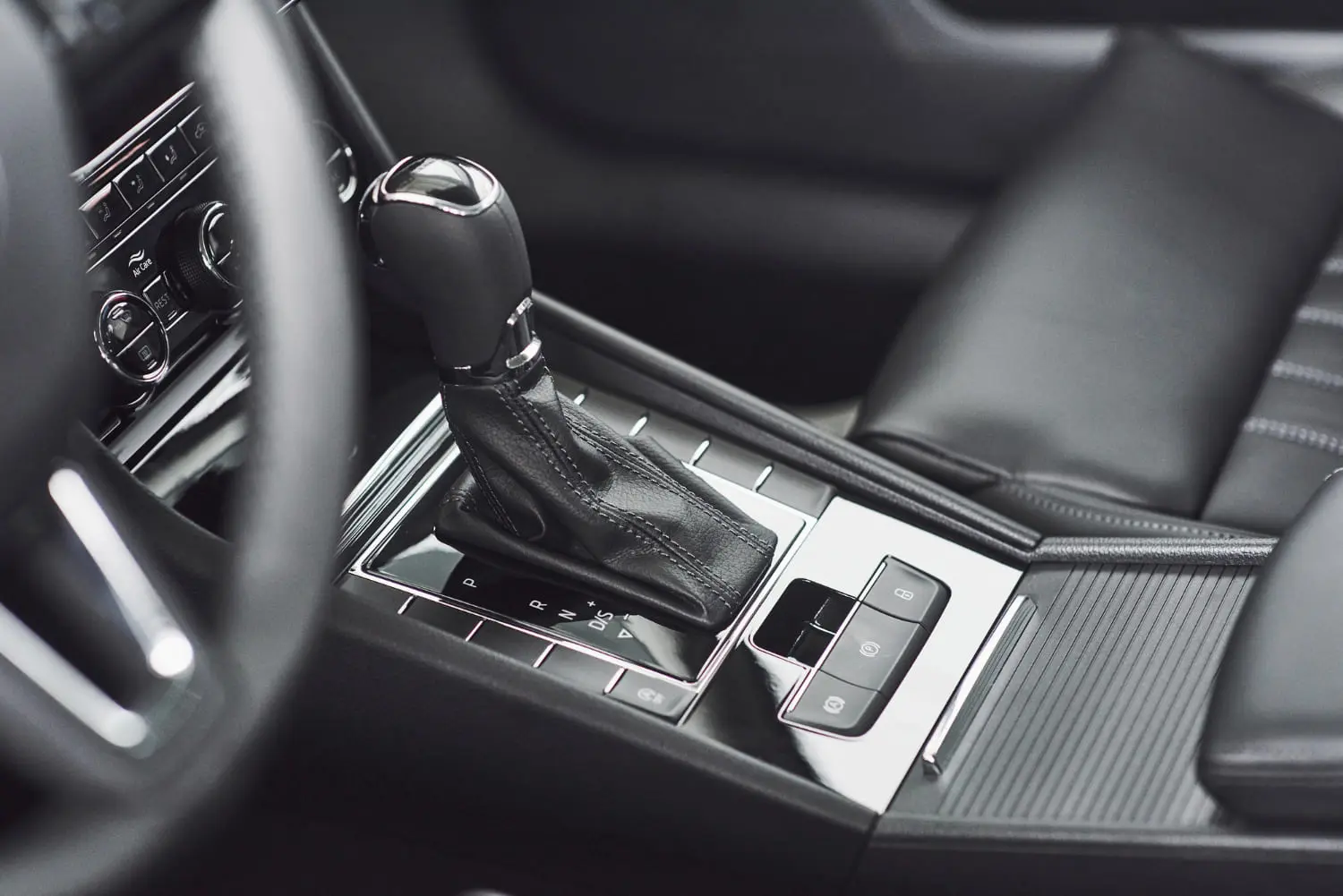
If you step into the F-150 Platinum or Limited, you are greeted by "Max Recline Seats" that fold nearly flat—perfect for a quick nap between job sites. Ford also offers the "Interior Work Surface," where the gear shifter folds into the console to create a flat table for a laptop or a meal.
The Tundra Capstone focuses on "Craftsmanship." With semi-aniline leather seats in a striking black-and-white motif and real American Walnut trim, it feels more like a Lexus than a pickup. The Tundra also features a unique vertical power-sliding rear window—a fan favorite that allows for massive airflow and easy access to the bed from the cabin.
Long-Term Value and Reliability
In 2026, the savvy truck buyer looks far beyond the initial MSRP. With average vehicle prices remaining high, the true cost of ownership—defined by depreciation, maintenance, and long-term mechanical stamina—is where the Ford F-150 and Toyota Tundra diverge most sharply. While Ford offers a high-tech, high-output experience, Toyota’s value proposition is built on the foundation of "Quality, Durability, and Reliability" (QDR).
The Resale Value Heavyweight
Historically, and continuing into 2026, the Toyota Tundra commands some of the highest resale values in the entire automotive industry. Because Toyota produces the Tundra in lower volumes compared to Ford’s massive fleet production, and because the brand has a decades-long reputation for 200,000-mile-plus longevity, a used Tundra typically retains 60-65% of its value after five years.
The Ford F-150, while holding its value better than most luxury sedans, faces steeper depreciation. This is partly due to the sheer number of F-150s on the used market and the complexity of its high-tech features (like the PowerBoost hybrid and BlueCruise hardware), which some second-hand buyers fear may be costly to repair out of warranty.
Maintenance and Complexity
As we assess these trucks in mid-2026, the mechanical complexity of both vehicles is at an all-time high.
-
The Ford Ecosystem: The F-150’s PowerBoost system is a sophisticated piece of machinery. While Ford’s 3.5L EcoBoost engine is a proven entity, the addition of the hybrid battery and integrated electric motor adds layers of potential maintenance. However, Ford’s massive dealership network means that parts are ubiquitous and service is generally convenient, even in rural areas.
-
The Toyota Philosophy: Toyota’s 2026 i-FORCE MAX also uses twin-turbocharging and hybridization, but their engineering team has focused on "under-stressing" components. By prioritizing thermal management and using a more traditional transmission-mounted motor, Toyota aims to minimize wear. For the 2026 model, Toyota has also refined the turbo-wastegate issues that plagued earlier versions of this generation, significantly boosting its reliability scores.
Warranty and Peace of Mind
Both manufacturers have stepped up their warranty games for 2026 to compete with rising consumer expectations. Ford offers a robust 8-year/100,000-mile warranty on its hybrid components. Toyota counters with its standard ToyotaCare, which covers factory-scheduled maintenance for the first two years or 25,000 miles, along with a similar long-term hybrid battery warranty.
The Verdict on Longevity
If your goal is to trade the truck in every three years for the latest tech, the Ford F-150’s rapid innovation cycle is hard to beat. However, if you are the type of owner who intends to keep a truck for 10 years or 150,000 miles, the 2026 Tundra remains the more logical financial investment. It is built with a level of structural over-engineering—from the fully boxed frame to the composite bed—that is designed to withstand the test of time and the elements.
Conclusion
As we stand in the mid-point of 2026, the rivalry between the Ford F-150 and the Toyota Tundra has reached a fascinating equilibrium. No longer is the choice simply about brand loyalty; it is about choosing a tool that aligns with your specific lifestyle. The Ford F-150 remains the undisputed champion of the modern job site. With its massive 13,500 lbs towing capacity and the indispensable Pro Power Onboard system, it is a vehicle designed for those who view their truck as a mobile headquarters and a high-output powerhouse. Its rapid innovation in hands-free driving with BlueCruise 1.4 makes it the premier choice for the tech-forward commuter.
However, the Toyota Tundra has successfully carved out a dominant position by focusing on the "Total Cost of Ownership" and passenger refinement. By utilizing a sophisticated multi-link rear suspension and a highly durable composite bed, Toyota has created a truck that excels in the "work-life balance" category. It offers a ride quality and interior luxury in the Capstone trim that rivals many European SUVs, all while maintaining the legendary resale value that makes it the smartest financial decision for long-term owners.
In 2026, the winner depends on your horizon. If you want the most capable, feature-rich truck available today and plan to trade it in when the next big innovation arrives, the Ford F-150 is your vehicle. If you want a refined, muscular, and incredibly reliable partner that will likely be worth more than its competitors five years from now, the Toyota Tundra is the king of the road. Both trucks represent the pinnacle of 2026 engineering, proving that the full-size pickup is more versatile and advanced than ever before.

Written by Kousar Shabbir
Published May 15, 2026 in Comparisons.