Brakes are the most important safety system on any car. Every time you press the pedal, they turn the motion of your car into heat and bring you to a stop. Most drivers never think about what kind of brakes they have until a mechanic hands them a repair bill. Yet the type of brake on each wheel affects how your car stops, how often it needs service, and how much you pay.
Today, almost every car has disc brakes at the front. Many budget cars, small SUVs, pickups, and even some electric vehicles still use drum brakes at the rear. In this guide, we compare drum brakes vs. disc brakes in simple terms. You will learn how each one works, which performs better, how long each lasts, and what replacement really costs.
How Drum Brakes and Disc Brakes Work
Both systems do the same job. They use friction to slow the wheel, and that friction creates heat. Both are also powered by hydraulic brake fluid. When you press the pedal, fluid pressure travels through the brake lines and pushes the friction parts against a spinning metal surface. The big difference is the shape of that surface and where the friction happens.
Drum brakes were the standard on most cars until the 1970s. Disc brakes then took over, first on race cars and later on everyday vehicles. A famous turning point came in 1953, when Jaguar won the Le Mans race with disc brakes, largely because its cars stopped better than rivals using drums. Since then, discs have slowly become the normal choice for most vehicles.
How Drum Brakes Work
A drum brake has a round metal drum that spins with the wheel. Inside it sit two curved brake shoes covered with friction material. When you brake, a small part called the wheel cylinder pushes the shoes outward against the inside of the drum. This rubbing slows the drum and the wheel. Springs pull the shoes back into place when you release the pedal.
Because everything is closed inside the drum, the parts are protected from dirt, road salt, and water. Drum brakes also have a natural self-applying effect, which means the spinning drum helps pull the shoes tighter. This gives good stopping force with less pressure. The design also makes it simple and cheap to build a parking brake into the system.
How Disc Brakes Work
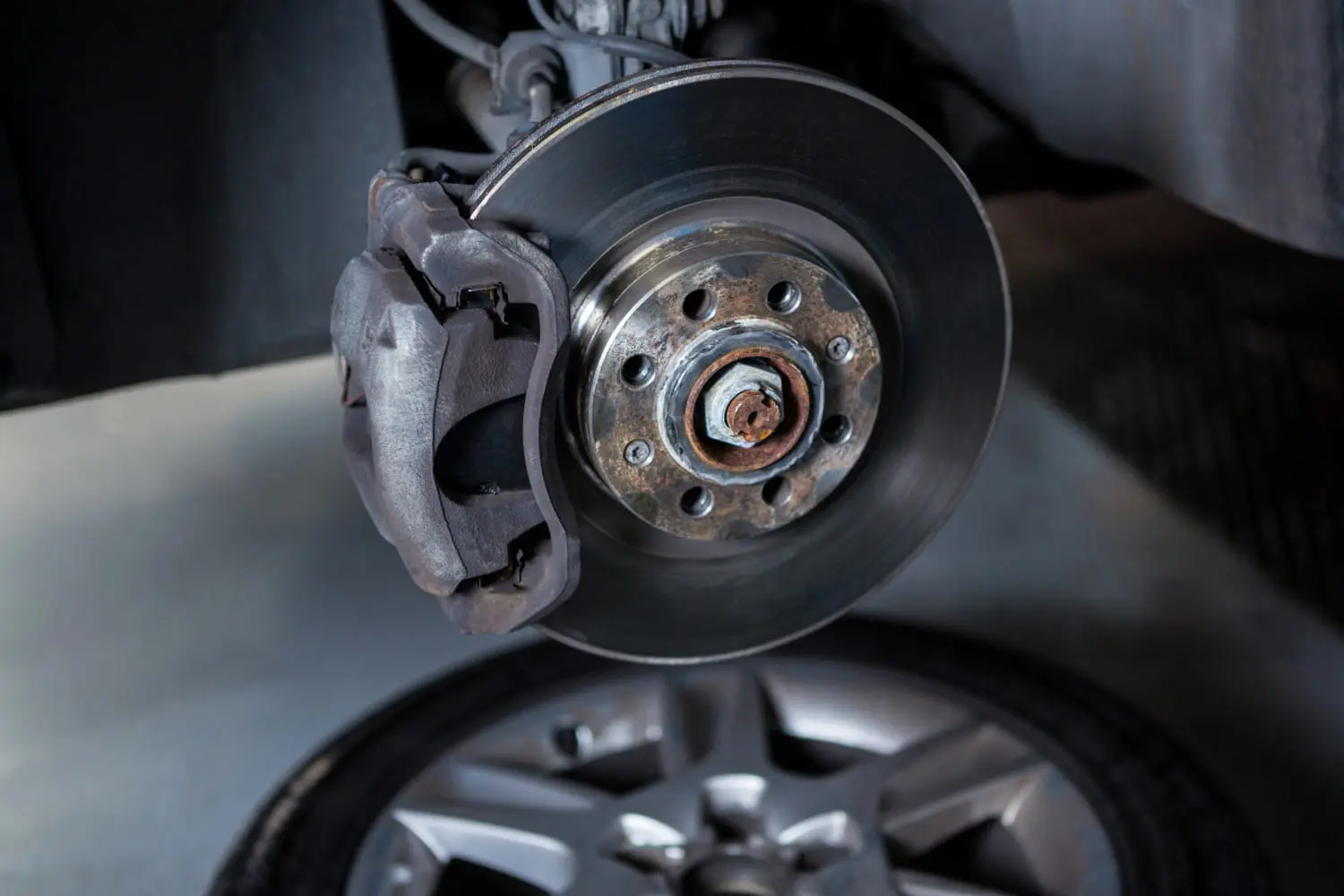
A disc brake uses a flat metal disc, also called a rotor, that turns with the wheel. A clamp called a caliper sits over the edge of the rotor. Inside the caliper are two brake pads. When you press the pedal, the caliper squeezes the pads against both sides of the rotor, much like pinching a spinning coin between your fingers to stop it.
The rotor is open to the air, so it cools down quickly and throws off water and dust as it spins. Many rotors also have vents inside them to move even more air. Disc brakes are lighter and smaller than drums with the same power. They are also easier to inspect, since you can often see the pads and rotor through the wheel without removing anything.
Performance Comparison: Which Brake Stops Better?
When it comes to pure stopping power, disc brakes are the clear winner. They give stronger and more consistent braking with less effort from the driver, especially at high speeds. This is why sports cars, performance cars, and most mid-range and luxury vehicles use discs on all four wheels. Discs also give a firmer pedal feel, so the driver can control braking more precisely.
That does not mean drum brakes are unsafe. The front brakes do most of the work, usually around 60 to 70 percent, because the car's weight moves forward when you slow down. So the rear brakes have an easier job. For normal city driving and daily commuting, rear drum brakes can stop a small car safely and reliably when they are kept in good condition.
Heat and Brake Fade
Heat is the biggest weakness of drum brakes. Since the friction happens inside a closed drum, the heat has very little room to escape. During long downhill drives, heavy towing, or repeated hard stops, the drum gets very hot. It can even expand away from the shoes. This causes brake fade, where the pedal feels soft, and the car takes longer to stop.
Disc brakes handle heat much better. The open rotor lets air flow over it, so heat leaves quickly, and the brakes recover fast between stops. This is why discs are almost always used on the front wheels, which take the most heat. If you often drive in hilly areas, carry heavy loads, or pull a trailer, a car with four-wheel disc brakes is the safer choice.
Wet Weather and Daily Driving
In rain, disc brakes again have the advantage. Water on the rotor is thrown off quickly as it spins, and the pads wipe the surface clean, so braking returns to normal almost right away. Drum brakes can trap water inside the drum after you drive through a deep puddle or a flooded road. Until the water dries out, braking power can drop for a short time.
On the other hand, the closed design of drums keeps out mud, dust, and salt in normal use, which helps on rough or dusty roads. Drums are also less likely to rust when they are not used often. That is one reason some electric cars use rear drums. These cars rely mostly on regenerative braking, so their rear friction brakes do very little work.
Wear and Lifespan: How Long Each Brake Lasts
This is where drum brakes win. Drum brake shoes usually wear more slowly than disc brake pads. The shoes have a larger friction area, and rear brakes do less work overall, so they last longer. In many cars, rear brake shoes can go 50,000 to 80,000 miles or more before they need replacing. The drums themselves often last even longer if they are not damaged.
Disc brake pads wear faster, especially on the front wheels, which do most of the stopping. Front pads often last between 30,000 and 70,000 miles, depending on your driving style, the pad material, and the roads you use. Rotors usually last through one or two pad changes before they need resurfacing or replacing. Heavy city traffic and hard braking will shorten the life of both.
Brake Shoes vs. Brake Pads
Brake shoes and brake pads do the same basic job, but they are built differently. Shoes are curved and press outward inside the drum. Pads are flat and squeeze inward on the rotor. Pads come in different types, such as organic, semi-metallic, and ceramic. Ceramic pads are quieter and make less dust, while semi-metallic pads handle heat well and suit heavier vehicles.
Maintenance is also different. Disc brakes are mostly self-cleaning and easy to check. Drum brakes collect brake dust inside the drum, so they need cleaning during service. Older drum systems may also need manual adjustment as the shoes wear, although most modern ones adjust themselves. New shoes also need a longer bedding-in period than new pads before they reach full strength.
Signs Your Brakes Need Attention
For disc brakes, the most common warning is a high-pitched squeal when you brake. Many pads have a small metal tab that makes this noise when the pad is getting thin. A grinding sound means the pad may be completely worn and metal is rubbing on metal. You might also feel shaking in the steering wheel or brake pedal, which often points to an uneven rotor.
For drum brakes, look out for a scraping or grinding noise from the rear, a brake pedal that feels low or soft, a pulsing pedal, or a parking brake that feels loose or needs to be pulled higher than before. If your car pulls to one side when braking, or a brake warning light comes on, have the system checked as soon as possible. Never delay brake repairs.
Replacement Costs: What You Will Pay
Cost is the main reason drum brakes are still around. They have fewer and simpler parts, so they are cheaper for carmakers to build and often cheaper for you to repair. A car with disc brakes on all four wheels usually costs a little more to buy than the same model with rear drums. Carmakers save money on every vehicle, and that matters a lot on budget models.
The prices below are typical United States ranges per axle, including parts and labor. Your final cost depends on your vehicle, whether you choose original or aftermarket parts, and the labor rates where you live. Prices in other countries can be much lower or higher, so always ask your mechanic for a written quote before any work begins.
Drum Brake Replacement Cost
A basic rear drum brake job, where only the shoes are replaced, is usually the cheapest brake service you can get. If the drums need to be machined or replaced, or the springs, hardware, or wheel cylinders are worn, the bill goes up. Repair estimate sites report that a full rear drum service often costs around $350 to $850 per axle.
The total can climb higher on large trucks or when extra work is needed. Rusted drums that are hard to remove, leaking wheel cylinders, stretched parking brake cables, or shoes soaked in oil from a leaking axle seal can all add to the price. Even so, rear drum service often costs less than front disc service on the same type of vehicle.
Disc Brake Replacement Cost
For disc brakes, the cheapest job is replacing the pads only, which often costs about $150 to $300 per axle. However, most shops will also suggest new rotors or resurfacing if the old ones are worn, uneven, or below the minimum thickness. Replacing pads and rotors together usually costs around $300 to $750 per axle for a normal car.
Prices rise for SUVs, trucks, and performance cars with larger rotors or bigger calipers. If a caliper sticks or leaks, you will also pay for a new caliper. Some owners of older cars think about converting rear drums to discs. Conversion kits and labor can cost from a few hundred dollars to well over $1,500, so it mainly makes sense for performance or heavy-duty use.
Conclusion
So, which side wins the drum brakes vs. disc brakes debate? For performance, heat control, and wet weather safety, disc brakes are clearly ahead, which is why every modern car uses them at the front. Drum brakes, however, are cheaper to make, often last longer, and cost less to service. That makes them a smart choice for the rear wheels of everyday cars.
The best brake is the one that matches how you drive. If you tow, drive in hills, or enjoy spirited driving, choose a car with four-wheel disc brakes. If you mostly drive in the city and want low running costs, front discs with rear drums will serve you well. Whatever you drive, regular inspections and quick repairs will keep you safe on the road.


Written by Maarukh Shahbaz
Published Oct 23, 2026 in Comparisons.