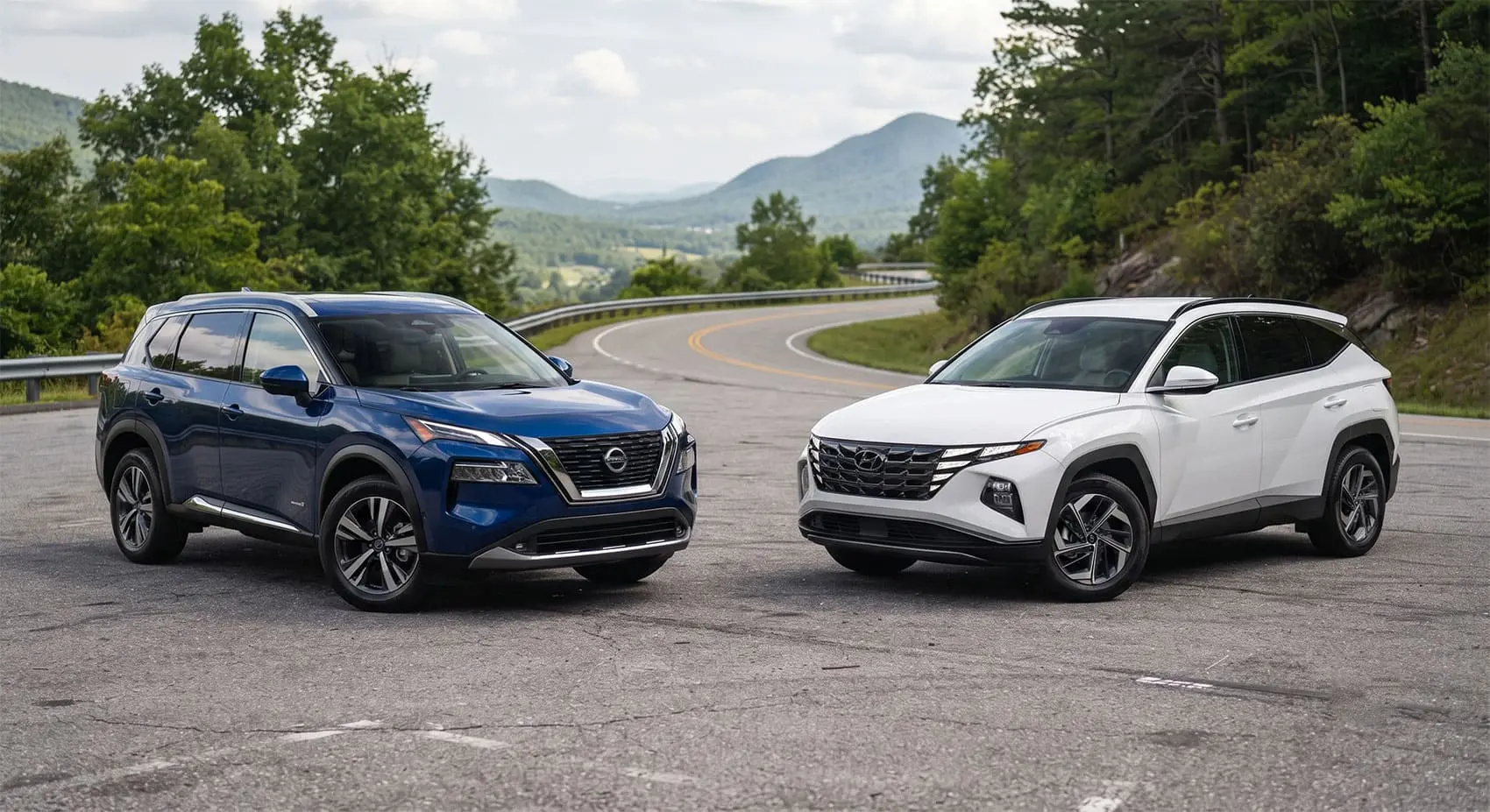
In the fiercely competitive landscape of the modern automotive market, few segments are as hotly contested as the compact SUV class. For millions of families and commuters, this category represents the "Goldilocks" zone offering the perfect blend of ride height, cargo flexibility, and daily fuel efficiency. Two titans currently dominate this space: the Nissan Rogue and the Hyundai Tucson. Choosing between them has become a rite of passage for new-vehicle shoppers, yet the decision is often muddied by glossy marketing and conflicting advice from dealerships.
The Nissan Rogue, long a favorite for its interior ergonomics and "family-first" design, continues to push the envelope with its innovative VC-Turbo engine technology. It promises a sophisticated, near-luxury experience for those who prioritize comfort and advanced cabin technology. On the other side of the aisle, the Hyundai Tucson has undergone a radical transformation, shedding its former image to become a trendsetter in design and powertrain versatility. By offering a comprehensive lineup that includes traditional gas, hybrid, and plug-in hybrid (PHEV) models, the Tucson aims to capture every slice of the demographic pie.
However, the question isn’t just which car has more cup holders or a brighter infotainment screen; it’s about long-term ownership, daily drivability, and value. Is the Rogue’s focus on high-tech internal combustion the right path for you, or does the Tucson’s electrified future offer a better return on your investment? This comparison is designed to cut through the noise. We aren't just looking at spec sheets; we are evaluating how these vehicles integrate into your life. Before you put your hard-earned money down, take a moment to look past the showroom shine. Whether you prioritize the road's immediate responsiveness or the peace of mind offered by an industry-leading warranty, one of these vehicles is better suited to your specific needs. Let’s break down the details to ensure you make the right choice the first time.
Performance & Powertrain Dynamics
The core of the Nissan Rogue versus Hyundai Tucson debate lies in how they deliver power to the wheels. Nissan has taken a bold, engineering-heavy approach with its 1.5-liter VC-Turbo (Variable Compression Turbo) engine. This powerplant is a marvel of modern efficiency, capable of adjusting its compression ratio on the fly to favor either raw power when you’re merging onto a highway or maximum fuel economy during a steady cruise. Paired with a continuously variable transmission (CVT), the Rogue offers a seamless, linear power delivery that excels in city stop-and-go traffic. It feels punchy and responsive, designed specifically for the driver who wants a hassle-free, smooth experience without the "gear-hunting" sensation sometimes found in traditional automatic transmissions.
Hyundai, conversely, has opted for a "one size fits all" strategy by offering the Tucson with a diverse range of powertrains. While the standard 2.5-liter four-cylinder engine provides solid, reliable performance for the average commuter, the real stars of the show are the Hybrid and Plug-in Hybrid (PHEV) models. By integrating electric motors, these versions provide an immediate surge of torque that the Rogue’s pure combustion setup simply cannot match. If your daily route involves steep climbs or you enjoy a more spirited, athletic driving feel, the electric assist in the Tucson models provides a refined kick that makes the vehicle feel lighter and more agile.
The difference here really comes down to philosophy. Nissan is refining the traditional internal combustion engine to its absolute limit, squeezing out every drop of efficiency through mechanical innovation. Hyundai, on the other hand, is leaning heavily into electrification to bridge the gap between efficiency and performance. If you are a driver who appreciates technical ingenuity and a quiet, predictable ride, the Rogue is hard to beat. However, if you want the flexibility to choose among gas, hybrid, or plug-in options and you prefer the punchy, instant torque of electric motors, the Tucson’s lineup offers a versatility the Rogue simply doesn't match. Both vehicles are excellent at what they do, but they achieve their performance goals through fundamentally different technical paths.
Interior Comfort & Cargo Versatility
When you step inside, the divergence in philosophy between these two manufacturers becomes even more pronounced. The Nissan Rogue has leaned heavily into a "near-luxury" aesthetic, focusing on ergonomics, premium-feeling materials, and an intuitive layout. Nissan’s "Divide-N-Hide" cargo system remains one of the most practical features in the segment, offering a versatile floor setup that can be configured to secure groceries, hide valuables, or accommodate taller items. The infotainment system, particularly the models equipped with Google Built-in, feels incredibly modern. The interface is crisp, responsive, and familiar to anyone who uses Android-based services, making it feel less like a car’s proprietary system and more like an extension of your smartphone.
Hyundai, meanwhile, has taken a different route with the Tucson. The cabin design is a masterclass in modern, minimalist aesthetics. The buttonless, touch-sensitive center stack creates a sleek, clean look that many tech-savvy buyers find refreshing. While some traditionalists might miss physical knobs for volume or climate control, the overall user experience is polished and visually striking. The Tucson also holds a slight edge in raw interior volume. If your priority is maximum cargo space for road trips, sports equipment, or bulky family gear, the Tucson’s boxier dimensions often translate to more usable square footage. The seats in both vehicles are comfortable for long hauls, but the Tucson’s slightly more upright seating position often provides a better "command" view of the road, which many SUV buyers prefer.
Ultimately, the choice here depends on what you value more during your daily commute. Do you want the seamless integration and "luxury-adjacent" feel of the Rogue’s cabin, with its clever storage solutions and tech-forward infotainment? Or does the Tucson’s ultra-modern, minimalist design and superior raw storage capacity better align with your lifestyle? The Rogue feels like a cozy, high-tech lounge, while the Tucson feels like a functional, futuristic command center. Both successfully elevate the compact SUV experience, ensuring that whether you are stuck in traffic or heading out for a weekend getaway, you are surrounded by thoughtful design and modern convenience.
Safety, Reliability & Warranty
When it comes to safety and long-term peace of mind, the contrast between these two manufacturers becomes a decisive factor for many buyers. Nissan’s ProPILOT Assist technology is a standout in the compact SUV segment, offering a sophisticated suite of driver-assistance features that excel in highway environments. It is designed to reduce driver fatigue by handling steering, acceleration, and braking inputs during long commutes, making the Rogue feel like a high-tech partner on the road. The system is intuitive, transparent, and generally considered one of the best-calibrated setups in the class. It’s a testament to Nissan’s focus on the "everyday driver" who values stress reduction above all else.
However, Hyundai plays an incredibly strong hand when it comes to the "total cost of ownership" equation. Hyundai SmartSense provides a comparable level of safety technology, including blind-spot monitoring, rear cross-traffic collision-avoidance, and highway driving assist. But the real trump card is Hyundai’s industry-leading warranty coverage. With a 10-year/100,000-mile powertrain limited warranty, Hyundai effectively removes much of the financial anxiety associated with long-term vehicle ownership. For a buyer planning to keep their SUV for the better part of a decade, this coverage acts as a form of financial insurance that Nissan’s standard three-year/36,000-mile comprehensive warranty simply cannot match.
Reliability is the final piece of this puzzle. Historically, the Rogue has been praised for its comfortable ride and cabin ergonomics, though some owners have expressed a preference for traditional automatic transmissions over the CVT in older models. The modern VC-Turbo is a significant improvement, but it remains a more complex piece of machinery compared to the naturally aspirated engines found in the base Tucson. Hyundai has worked tirelessly to shed its historical reputation for reliability issues, and the current crop of Tucsons consistently ranks well in long-term durability studies. Ultimately, if you prioritize cutting-edge driver-assist tech, the Rogue is a compelling choice. If you prioritize the long-term financial safety net and a more traditional, simplified mechanical experience, the Tucson’s value proposition, backed by that massive warranty, is exceptionally hard to ignore.
Final Verdict: Which One Should You Buy?
Choosing between the Nissan Rogue and the Hyundai Tucson ultimately comes down to your personal definition of value and your daily driving priorities. If your lifestyle is centered around the need for a comfortable, near-luxury daily driver that excels in city traffic and highway cruising, the Nissan Rogue is a compelling choice. Its VC-Turbo engine delivers a seamless, sophisticated power delivery that feels more refined than traditional setups, and the interior ergonomics—coupled with the highly practical Divide-N-Hide cargo system make it an incredibly user-friendly family vehicle. If you are a fan of advanced, intuitive driver-assist technology and appreciate a car that feels like an extension of your digital life, the Rogue’s implementation of Google Built-in and ProPILOT Assist will likely seal the deal for you.
On the other hand, the Hyundai Tucson is the clear winner for the buyer who values versatility, long-term financial security, and cutting-edge design. By offering a wide array of powertrains, including highly efficient hybrid and plug-in hybrid options, Hyundai provides a level of choice that Nissan simply cannot match. If you want the capability to drive on electric power alone for short commutes or you prefer the punchy, instant torque of an electrified powertrain, the Tucson is in a league of its own. Moreover, the 10-year/100,000-mile powertrain warranty acts as a powerful safety net, providing peace of mind that significantly lowers the total cost of ownership over the long term.
Ultimately, the best way to resolve this tie is to get behind the wheel of both. A test drive will reveal nuances that a spec sheet cannot capture: the responsiveness of the Rogue’s CVT versus the engagement of the Tucson’s hybrid electric motors, the comfort of the seats during a 20-minute drive, and the ease of interacting with their respective infotainment interfaces. Do you value the "near-luxury" comfort and clever storage of the Rogue, or the future-proof versatility and financial assurance of the Tucson? Whichever path you choose, you are looking at two of the most capable and well-rounded vehicles currently on the road.
Conclusion
In the end, the choice between the 2026 Nissan Rogue and the 2026 Hyundai Tucson comes down to which brand’s philosophy aligns more closely with your daily life and long-term goals. The Nissan Rogue presents itself as a refined, near-luxury experience for the driver who prioritizes cabin comfort, intuitive ergonomics, and the mechanical precision of a highly developed turbocharged engine. It is a vehicle that feels custom-built for the modern professional and the busy family who value tech integration, such as the seamless Google Built-in experience, and the stress-reducing capabilities of ProPILOT Assist. Nissan has leaned into a specific vision of comfort, making the Rogue a sanctuary from the hectic pace of the road.
Conversely, the Hyundai Tucson stands as a testament to the power of choice and the future of the automotive industry. By offering a diverse range of powertrains from standard internal combustion to high-efficiency hybrids and plug-in hybrids, Hyundai ensures that there is a version of this SUV for every type of buyer. If you are looking for a vehicle that evolves with the changing landscape of fuel economy and provides the distinct, punchy performance of electric-assisted torque, the Tucson is hard to surpass. When you pair this versatility with the segment-leading 10-year/100,000-mile powertrain warranty, it becomes clear that Hyundai is aggressively targeting the value-conscious buyer who wants a decade of worry-free ownership.
Ultimately, both vehicles have earned their spots at the top of the compact SUV heap for a reason. Neither is a "bad" choice; rather, they are optimized for different priorities. We strongly recommend scheduling a back-to-back test drive at your local dealership. Take the time to experience the difference in seating position, the responsiveness of the infotainment displays, and the way each vehicle handles your local road conditions. Once you’ve felt the difference in the driver's seat, the path forward will become clear. Whether you find yourself choosing the sophisticated comfort of the Rogue or the versatile, future-proof reliability of the Tucson, you are securing a capable partner for all the miles ahead.

Written by Maarukh Shahbaz
Published Jul 20, 2026 in Comparisons.