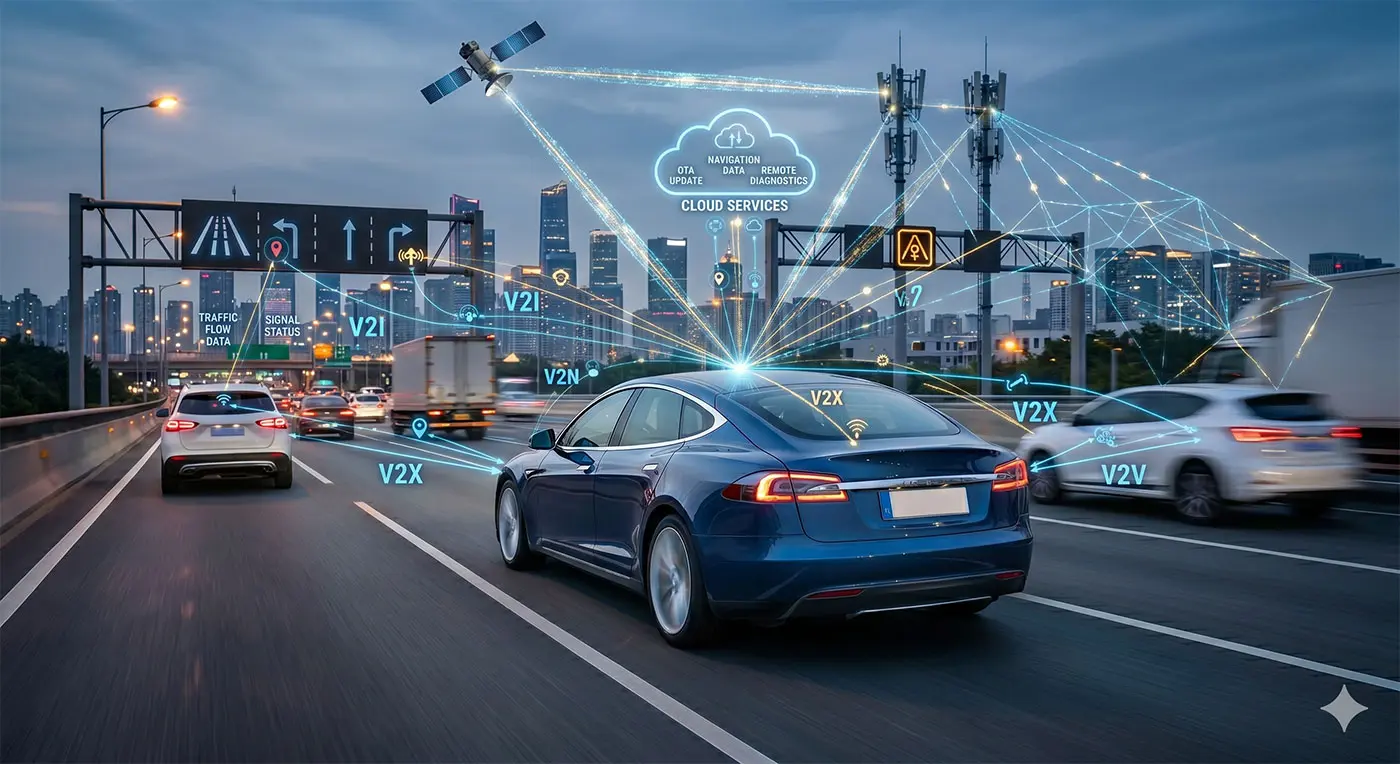
In the automotive world, the year 2026 marks a definitive crossing of the Rubicon. We have moved beyond the era where a vehicle was merely a collection of mechanical parts designed to transport us from point A to point B. Today, your car is a sophisticated, high-speed data center on wheels, a living node within a global digital ecosystem. This transformation is driven by "Connected Car Data," a term that encompasses the massive streams of information generated, processed, and transmitted by modern vehicles every second they are in operation. As we navigate 2026, the way your vehicle communicates with the world has become as critical as the engine under the hood or the battery in the chassis.
This connectivity isn't just about having a faster Wi-Fi hotspot or a prettier navigation screen. It is about a fundamental shift in how mobility functions within society. Your 2026 vehicle is in a constant state of "conversation." It talks to the cars surrounding it, the traffic lights it approaches, the satellites orbiting above, and even the smartphones of pedestrians nearby. This seamless flow of data is the backbone of the "Software-Defined Vehicle" (SDV), where the driving experience is no longer static but evolves through continuous updates.
The implications are profound. For the driver, it means a car that anticipates hazards before they are visible and optimizes routes based on real-time city-wide logic. For the manufacturer, it offers a goldmine of insights into vehicle performance and user behavior. However, this hyper-connectivity also brings forward pressing questions about digital sovereignty: Who truly owns the gigabytes of data your daily commute generates? How secure is this "moving computer" from cyber threats? In this deep dive, we will explore the intricate web of V2X communication, the 5G-Advanced protocols making it possible, and the ethical landscape of automotive data in 2026.
The Nervous System: Understanding V2X (Vehicle-to-Everything)
The technological marvel of the 2026 connected car lies in its ability to perceive the world far beyond the reach of its own onboard sensors (cameras, LiDAR, and radar). This is achieved through V2X (Vehicle-to-Everything) communication, a high-speed data exchange protocol that transforms a car from an isolated entity into an active participant in a giant, synchronized network. Think of V2X as a digital "sixth sense." While traditional sensors are limited by line-of-sight—unable to see a car speeding through a red light around a blind corner—V2X data flows through obstacles, providing a 360-degree awareness that is virtually instantaneous.
V2V (Vehicle-to-Vehicle): Collective Intelligence
V2V communication allows vehicles within a specific radius to broadcast their speed, position, heading, and braking status to one another up to 10 times per second. In 2026, this isn't just a safety feature; it’s the foundation of "platooning" and collective braking.
-
Example: If a car three vehicles ahead of you slams on its brakes to avoid a stray dog, your car receives that data pulse milliseconds before your own eyes see the brake lights. Your vehicle can pre-charge the brakes or alert you instantly, effectively eliminating the human "reaction time" gap that causes most highway pile-ups.
V2I (Vehicle-to-Infrastructure): The Pulse of the Smart City
Beyond talking to other cars, your 2026 vehicle is in a constant dialogue with the road itself. V2I connects your car to smart traffic lights, toll booths, and digital road signs.
-
Optimizing the Flow: Instead of guessing when a light will turn green, your car receives a countdown from the intersection's controller. This allows for "Green Light Optimal Speed Advisory" (GLOSA), where your car suggests a specific speed to ensure you hit every green light on your route, drastically reducing fuel consumption and brake wear.
-
Infrastructure Alerts: If there is a patch of black ice detected by a road sensor or a construction zone two miles ahead, the infrastructure pushes this data directly to your dashboard, allowing for proactive rerouting.
V2P (Vehicle-to-Pedestrian): Protecting the Vulnerable
One of the most significant 2026 advancements is the integration of V2P. By utilizing the 5G signals from smartphones and wearables, vehicles can now "see" pedestrians and cyclists even when they are hidden behind parked trucks or buildings.
-
Safety Pings: If a pedestrian steps into a crosswalk while looking at their phone, their device can send a high-priority "here I am" ping to approaching vehicles. The car's AI processes this data and can automatically apply the brakes if a collision is imminent, creating a safety net for the most vulnerable road users.
The 5G-Advanced & Satellite Synergy
While 4G LTE was sufficient for checking emails or streaming music in your car, the 2026 data ecosystem demands a much more robust backbone. Enter 5G-Advanced (often called 5.5G) and Low-Earth Orbit (LEO) satellite constellations. These aren't just incremental speed boosts; they are the literal oxygen for the connected car's nervous system. To handle the massive throughput required for real-time V2X communication, the latency—the delay between sending and receiving data—must be virtually zero. In 2026, we have reached the sub-10 millisecond threshold, which is faster than the human brain can process a physical sensation.
Why 5G-Advanced is the Catalyst
The "Advanced" iteration of 5G introduced in the mid-2020s brought two critical features to the automotive world: Sidelink and Network Slicing.
-
Sidelink: This allows cars to communicate directly with one another without the data ever needing to travel up to a cell tower and back down. This is crucial for safety-critical maneuvers where every microsecond counts.
-
Network Slicing: Your car’s connection isn't competing with a teenager streaming 8K video in the backseat. The network "slices" a dedicated, high-priority lane specifically for autonomous driving and safety data, ensuring that critical vehicle communications are never throttled or delayed by congestion.
Bridging the "Dead Zone" with LEO Satellites
One of the biggest hurdles for connected cars was the "cell tower gap"—remote highways, mountain passes, or rural areas where 5G signals fade. In 2026, the integration of satellite-to-vehicle (S2V) technology has solved this.
-
Seamless Handoff: Through partnerships with companies like Starlink and Kuiper, 2026 vehicles feature integrated satellite antennas. When you drive out of 5G range, your vehicle’s data stream seamlessly hands off to an LEO satellite constellation. This ensures that features like SOS calling, real-time mapping, and remote diagnostics are truly global.
-
High-Speed Handoffs: Special AI algorithms in the car's modem manage these handoffs at highway speeds, ensuring that as you move at 120 km/h, your connection to a satellite moving at 27,000 km/h remains rock-solid. This synergy turns the entire planet into a connected driving zone.
The Rise of the Software-Defined Vehicle (SDV)
In 2026, the automotive industry has undergone a radical shift in its manufacturing philosophy, moving toward the Software-Defined Vehicle (SDV). Historically, a car’s capabilities were fixed the moment it rolled off the assembly line; if you wanted a faster engine or a better interface, you had to buy a new model. Today, the hardware—the motors, batteries, and sensors—is designed to be "future-proof," while the software acts as the brain that can be rewired and upgraded instantly. This means your 2026 vehicle is essentially a living product that evolves over time, much like your smartphone.
Hardware as a Service & Over-the-Air (OTA) Updates
The backbone of the SDV is the Over-the-Air (OTA) update. In 2026, these updates go far beyond simple navigation map refreshes.
-
Performance Tuning: Manufacturers can send firmware updates that optimize battery chemistry management or recalibrate motor torque. A "Performance Patch" can literally make your car faster or more range-efficient overnight while it sits in your garage.
-
Feature on Demand: Want semi-autonomous highway piloting for a summer road trip? You can subscribe to that feature for a month. The hardware is already in the car; the data connection simply "unlocks" the capability via a secure software key.
The Centralized Computing Architecture
To make SDVs a reality, the industry moved away from having dozens of tiny, disconnected computers (ECUs) for every small function. Instead, 2026 vehicles use a Centralized Zonal Architecture.
-
High-Power Compute: A central "brain" processes all incoming data from V2X, LiDAR, and internal sensors. This centralization allows for much more complex AI operations, such as predictive cabin climate control that learns your temperature preferences based on the biometric data sent from your smartwatch.
-
Seamless Integration: This architecture ensures that the infotainment system, the safety sensors, and the drivetrain are all "speaking the same language," allowing for a cohesive user experience where your car can, for example, dim the interior lights and play calming music if the data suggests you are becoming stressed in heavy traffic.
Data Privacy and Cyber Security in 2026
As vehicles become increasingly reliant on data, the cabin of your 2026 car has become a frontline for digital privacy and cybersecurity. When every turn, brake application, and even your heart rate (monitored by seat sensors) is logged as data, the stakes for security are no longer just about protecting "files"—they are about protecting physical safety. In 2026, a "hacked" car isn't just a data breach; it’s a potential mechanical threat. Consequently, the industry has shifted toward a "Security by Design" philosophy, implementing protocols that were once reserved for military-grade communications.
The Ownership Dilemma: Manufacturer vs. Driver
The most debated topic in 2026 is the "Sovereignty of Data." Your vehicle generates roughly 25 gigabytes of data every hour it is in motion.
-
The Conflict: Manufacturers argue they need this data to improve safety and provide OTA updates. Consumers and privacy advocates argue that the driver should own their "Digital Twin."
-
The 2026 Solution: New "Data Vault" regulations allow users to toggle "Privacy Modes." Much like an "Incognito" window on a browser, you can choose to mask your precise location data from third-party apps while still allowing essential safety pings to reach the V2X network.
Cybersecurity Protocols and the "Digital Twin"
To protect the Software-Defined Vehicle, 2026 models utilize End-to-End Encryption (E2EE) for all outgoing V2X signals.
-
Encrypted Identities: Every vehicle is assigned a rolling digital certificate. This means that while a traffic light knows "a car" is approaching, it doesn't necessarily know it is your specific car, preventing unauthorized tracking by third parties.
-
The Digital Twin Security: Every car has a cloud-based "Digital Twin" that monitors the physical car's behavior. If the physical car starts acting outside of normal parameters—such as an unauthorized steering command—the AI in the cloud can flag it as a cyber-attack and trigger a safe "Limphome" mode, bringing the car to a controlled stop.
The "Right to Repair" in a Digital World
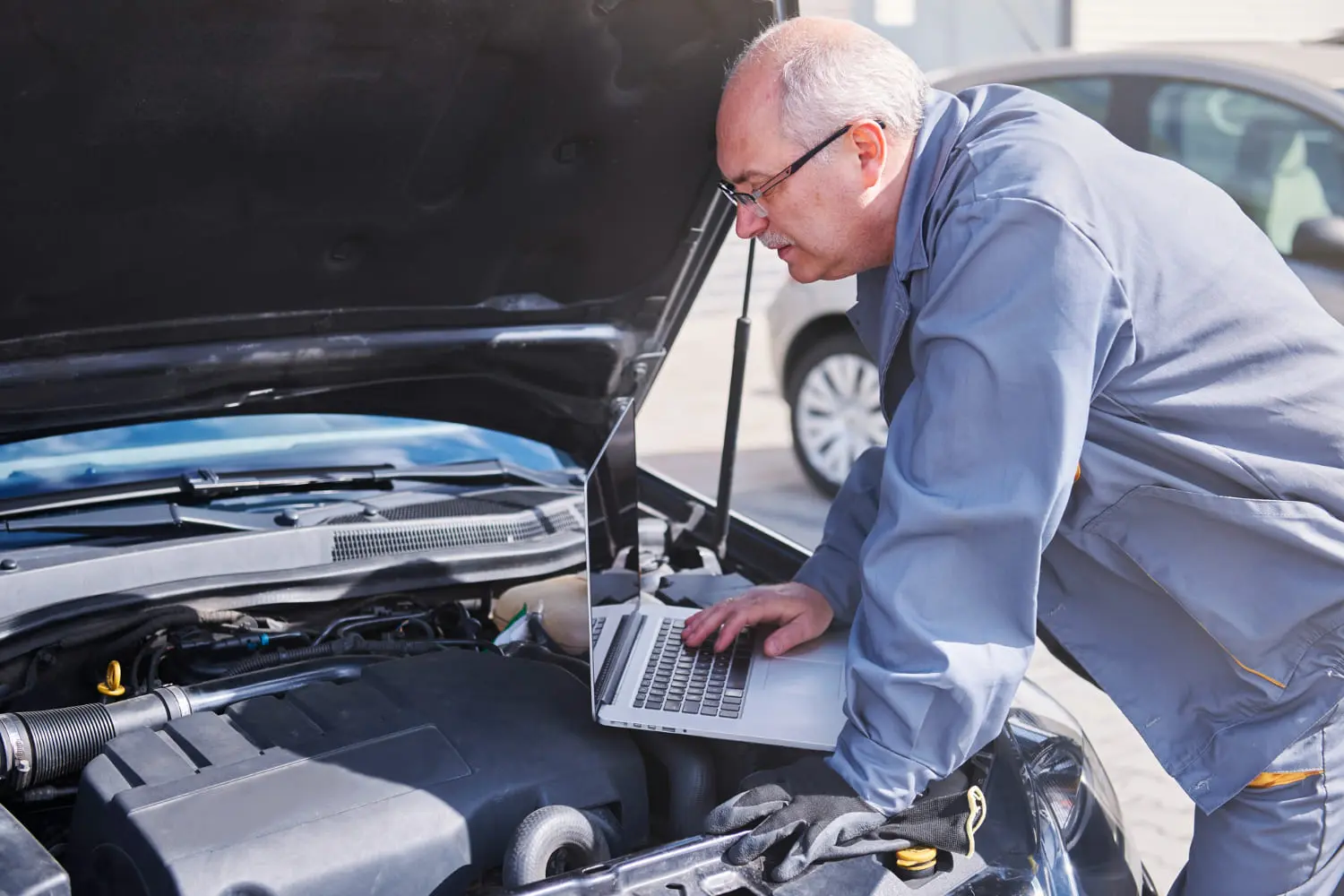
As data becomes more encrypted, the battle for the "Right to Repair" has moved from the toolbox to the laptop.
-
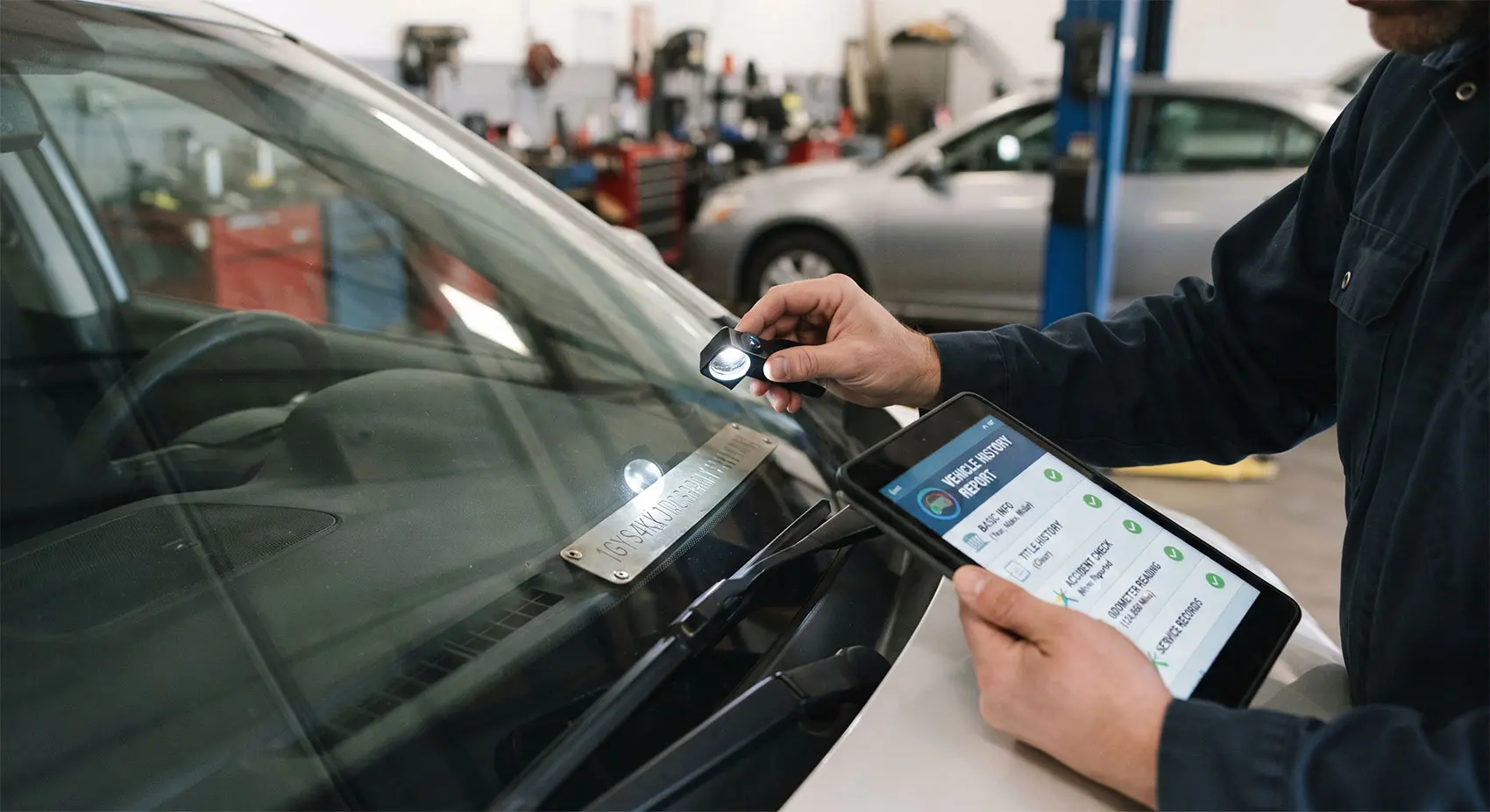
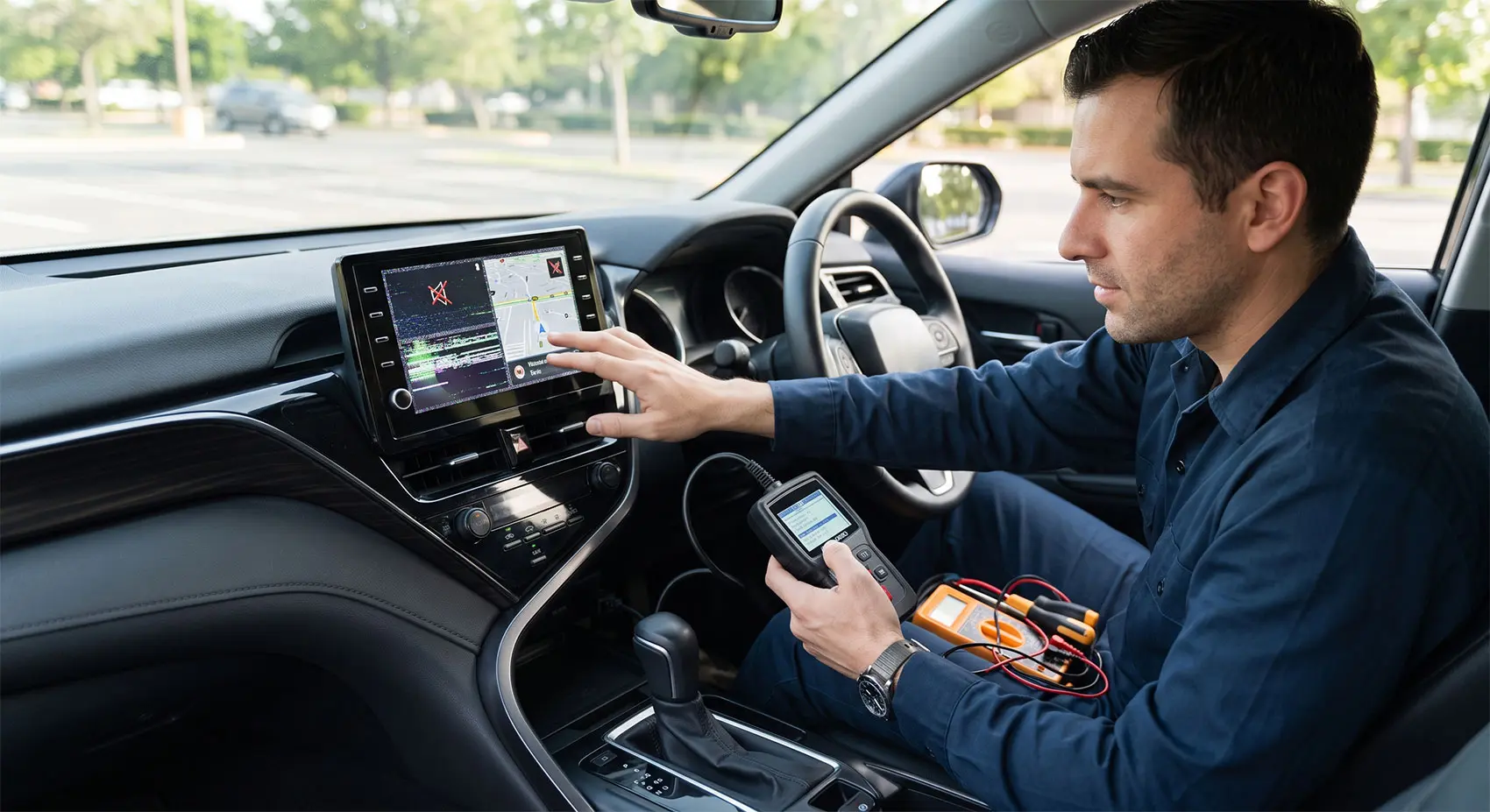
Access to Diagnostics: 2026 legislation in many regions now mandates that manufacturers provide independent repair shops with the "digital keys" required to read vehicle data. This ensures that even though your car is a complex computer, you aren't forced to go only to the dealership for a simple sensor replacement, maintaining a competitive and fair maintenance market.
Monetizing the Drive: In-Car Commerce & Insurance
The sheer volume of data being transmitted by vehicles in 2026 has birthed an entirely new economic layer within the automotive industry. No longer is the "sale" of the car the end of the transaction; rather, it is the beginning of a continuous data-driven relationship. By analyzing how, where, and when you drive, the connected car ecosystem can offer hyper-personalized financial and commercial services that were once the stuff of science fiction. This shift is most visible in the evolution of "Usage-Based Insurance" (UBI) and the rise of the in-car marketplace.
Usage-Based Insurance (UBI): The End of the "Average" Driver
In 2026, insurance companies have moved away from broad demographic buckets. Instead of paying a premium based on your age or zip code, you pay based on your Telematics Profile.
-
Precision Pricing: Your car’s data—such as your average braking force, speed relative to traffic flow, and even the time of day you typically drive—is used to calculate a real-time risk score.
-
The Reward System: Safe drivers are rewarded with "dynamic premiums" that drop instantly after a week of cautious driving. Conversely, data indicating frequent aggressive lane changes or distracted driving alerts (detected by cabin cameras) may result in a temporary premium spike, encouraging safer road habits through direct financial incentives.
In-Car Commerce and Predictive Maintenance
Your car is now a transactional hub. With integrated digital wallets, your 2026 vehicle communicates with merchants to streamline your daily chores without you ever needing to reach for a phone.
-
Seamless Transactions: As you pull into a smart charging station or a drive-thru, the car’s V2I data handles the handshake and payment automatically. The car "knows" its state of charge and can pre-order a coffee based on your routine, timing the preparation to the exact second you arrive at the window.
-
Predictive Maintenance as a Cost Saver: Data sensors monitor the molecular degradation of oil or the wear of brake pads. Instead of a "Check Engine" light, you receive a notification: "Your front-left bearing is showing 15% abnormal vibration; a replacement part has been held at your local shop for $40 off if you visit this Tuesday." This data-driven approach prevents catastrophic failures and keeps resale values high.
Sustainability & The Grid (V2G)
In 2026, the connected car is no longer just a consumer of energy; it has become a critical component of the global energy infrastructure. This is made possible through Vehicle-to-Grid (V2G) technology, a bidirectional data and power exchange that allows electric vehicles (EVs) to communicate with the smart grid. As millions of vehicles sit idle for 90% of the day, their batteries represent a massive, untapped reservoir of energy. Through sophisticated data synchronization, your car now acts as a mobile power bank that helps stabilize the grid during peak demand.
The Data Handshake: Balancing the Load
For V2G to work, the "data handshake" between the car and the utility provider must be flawless. Your 2026 vehicle shares its state of charge (SoC), your predicted departure time, and your minimum required range with the grid controller.
-
Peak Shaving: During a heatwave when air conditioning usage spikes across the city, the grid sends a data signal to connected EVs. Your car can "sell" a small percentage of its battery power back to the grid to prevent blackouts.
-
Smart Charging: Conversely, when wind or solar production is at its peak and energy prices are low (or even negative), the grid signals your car to begin charging. This data-driven orchestration ensures that EVs are charged with the cleanest, cheapest energy available, turning "mobility data" into "sustainability data."
Incentivized Participation and Energy Sovereignty
The 2026 connected car ecosystem has turned energy management into a passive income stream for owners.
-
Automated Earnings: Through the car's integrated blockchain or digital wallet, you receive micro-payments for the energy you contribute to the grid. The data logs every kilowatt-hour exchanged, providing a transparent ledger of your vehicle's contribution to urban sustainability.
-
Emergency Backup: In the event of a localized power outage, your car’s data system can switch to "Home Mode," where it communicates with your smart home to provide backup power, keeping essential appliances running until the grid is restored. This level of communication effectively integrates the vehicle into the domestic ecosystem.
Conclusion
As we have explored, the year 2026 represents a watershed moment for the automotive industry. The "Connected Car" has successfully transitioned from a futuristic concept into a functional, data-driven reality that touches every aspect of our daily lives. By weaving together the high-speed capabilities of 5G-Advanced, the global reach of LEO satellites, and the flexible intelligence of Software-Defined Vehicles, we have created a mobility ecosystem that is safer, more efficient, and more integrated than ever before. The vehicle is no longer a passive tool but an active, communicating partner that anticipates our needs and protects our surroundings.
However, this rapid evolution brings with it a significant responsibility. As vehicles generate and transmit unprecedented amounts of data, the industry must remain vigilant in protecting user privacy and ensuring robust cybersecurity. The move toward data transparency, "Right to Repair" access, and ethical data ownership will be just as important as the horsepower or battery range of the vehicles themselves. We are not just building faster or smarter cars; we are building a new digital infrastructure for society.
Looking ahead, the roadmap for connected car data is one of convergence. We are seeing the lines blur between energy, telecommunications, and transportation. Whether it is an EV stabilizing the power grid through V2G communication or a car saving a life through a V2P alert, the "conversation" your 2026 vehicle is having with the world is a vital one. As we move forward, the focus will shift from what the technology can do to how it can best serve the human element of the drive. The journey into this connected future is just beginning, and the data is the fuel that will carry us there.

Written by Kousar Shabbir
Published May 6, 2026 in Auto Tech.