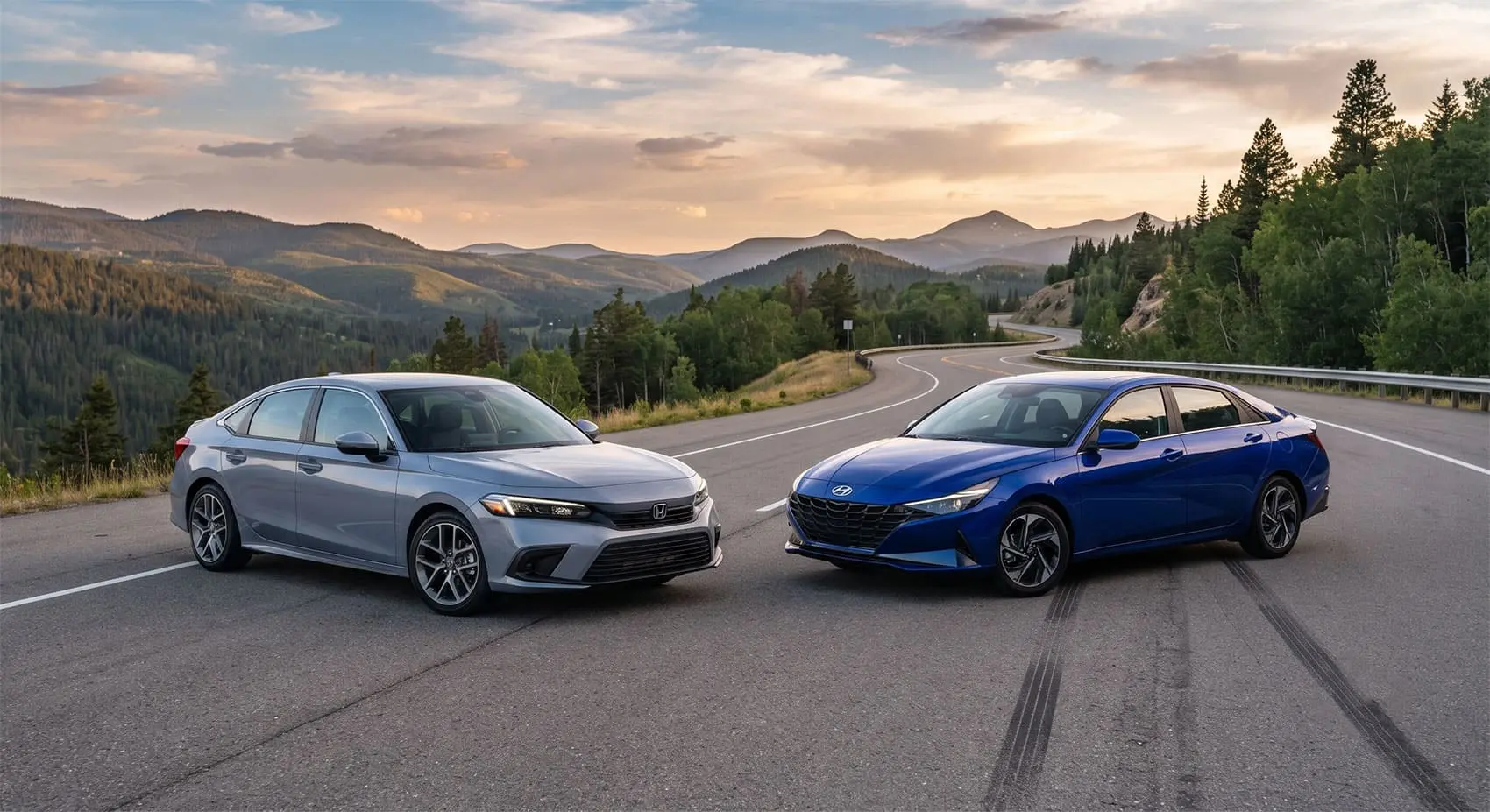
When shopping for a reliable compact sedan on a budget, two names consistently dominate the conversation: the Honda Civic and the Hyundai Elantra. For decades, these vehicles have served as the benchmark for daily commuters, first-time car buyers, and cost-conscious drivers looking for efficiency without sacrificing modern comforts. Yet, as automotive engineering has evolved, the debate between choosing a Civic or an Elantra has shifted far beyond simple fuel economy or upfront sticker prices. Today, buyers are looking deeper into long-term mechanical durability, day-to-day maintenance expectations, total cost of ownership, and how well these sedans hold their value over hundreds of thousands of miles.
The Honda Civic carries a legendary reputation for bulletproof reliability and engineering longevity, often viewed as an automotive investment that requires minimal fuss outside of routine fluid changes. On the other hand, the Hyundai Elantra has aggressively closed the gap, offering remarkable modern styling, cutting-edge technology, and an industry-leading warranty that gives budget-conscious buyers immense peace of mind. Balancing these two heavyweights requires a close look at how they perform over time, what common mechanical quirks you might encounter, and which car ultimately delivers the best value for your hard-earned money.
Honda Civic Reliability: Engineering Legacy & Common Realities
When evaluating the long-term mechanical endurance and reliability of the Honda Civic, automotive data and industry experts consistently highlight its position as a gold standard in the compact sedan market. Across multiple generations, J.D. Power and NHTSA reliability ratings for the Civic frequently land in the above-average to excellent brackets, typically scoring between 82 and 85 out of 100. This stellar reputation is built upon decades of highly refined engineering, particularly regarding its dependable powertrain options. Whether buyers opt for the traditional naturally aspirated 2.0-liter four-cylinder engine or the punchier, highly efficient 1.5-liter turbocharged VTEC engine, both powerplants are engineered from the factory to easily cross the 200,000-mile mark with relative ease, provided they receive regular, scheduled maintenance such as oil changes, fluid flushes, and filter replacements. Furthermore, the structural rigidity and high-grade materials used throughout the Civic's chassis and engine bay ensure that it resists premature wear even under harsh driving conditions, daily bumper-to-bumper traffic commutes, and extreme weather climates.
However, mechanical resilience does not mean the Civic is entirely immune to growing pains or minor operational quirks. Modern iterations equipped with Continuously Variable Transmissions (CVTs) require strict adherence to fluid change intervals—typically every 30,000 to 40,000 miles—to prevent premature belt wear, transmission slip, hesitation, or whining noises during acceleration. Furthermore, early models of the 1.5-liter turbo era occasionally encountered consumer complaints regarding minor fuel dilution in engine oil during extreme cold-weather short-trip conditions, an issue Honda proactively mitigated through targeted software updates and revised dealership service bulletins. Inside the cabin, drivers occasionally report minor electronic quirks relating to the infotainment touchscreen system freezing up or intermittent sensor calibration warnings for the Honda Sensing safety suite. Despite these minor electronic hurdles and transmission upkeep requirements, the core mechanical architecture of the Honda Civic remains robust and resilient, ensuring that independent repair shops and dealerships alike rarely see catastrophic engine or transmission failures outside of extreme owner neglect.
Hyundai Elantra Reliability: Modern Upgrades & Value Proposition
While Honda has long held the crown for traditional mechanical longevity, Hyundai has undergone a dramatic corporate renaissance over the past decade, transforming the Elantra from a budget alternative into a serious contender for long-term ownership. Modern iterations of the Hyundai Elantra routinely secure competitive scores in reliability studies, frequently tracking closely behind established Japanese rivals with J.D. Power scores in the low-to-mid 80s. A primary driver of this improved reliability is Hyundai's heavy investment in powertrain modernization, featuring smart stream engines—such as the 2.0-liter multi-port injection engine and the fuel-efficient hybrid variants coupled with refined Intelligent Variable Transmissions (IVTs) designed to handle daily commuting stress efficiently without the sluggishness of older generation setups.
Beyond mechanical endurance, the Elantra’s strongest reliability and value proposition lies in its unprecedented factory backing. Hyundai provides an industry-defining 10-year/100,000-mile powertrain limited warranty alongside a 5-year/60,000-mile comprehensive warranty, giving budget-conscious car buyers an unmatched safety net against unexpected mechanical failures. However, long-term owners should still remain mindful of historical pain points that have affected past model years, such as early electronic immobilizer vulnerabilities on specific key-start trims (which have since been heavily addressed via nationwide anti-theft software campaigns) and occasional consumer reports regarding oil consumption on older direct-injection engines if maintenance intervals are neglected. When maintained according to factory specifications, the current generation Elantra offers impressive structural resilience, low day-to-day running costs, and structural electronics that hold up exceptionally well to the demands of modern driving.
Head-to-Head Maintenance & Repair Cost Comparison
When analyzing long-term ownership, the debate between the Honda Civic and the Hyundai Elantra quickly shifts from initial purchase price to day-to-day upkeep and repair liabilities. Industry data compiled by independent automotive maintenance trackers indicates that the Honda Civic edges out a slight advantage in projected average annual repair expenses, typically costing around $368 to $400 per year, whereas the Hyundai Elantra hovers closer to $450 to $480 annually. Honda’s widespread market saturation, highly standardized mechanical components, and massive aftermarket support mean that routine service parts such as brake pads, filters, alternators, and suspension components are exceptionally affordable and readily accessible at almost any independent service shop.
However, maintenance costs tell only half the story without factoring in warranty protection and component replacement economics. This is where the Hyundai Elantra aggressively claws back ground through its formidable factory warranty framework. While the Honda Civic provides a standard 3-year/36,000-mile basic warranty and a 5-year/60,000-mile powertrain warranty, Hyundai counters with a 5-year/60,000-mile comprehensive plan and an industry-leading 10-year/100,000-mile powertrain limited warranty. For buyers purchasing a brand-new vehicle or a certified pre-owned (CPO) model, Hyundai’s extended coverage acts as a financial shield against major unforeseen mechanical failures during the mid-to-late stages of ownership. On the flip side, used car buyers looking at vehicles past 100,000 miles will find that Honda’s superior material durability and lower baseline failure frequency often result in fewer total trips to the mechanic, balancing out the warranty advantage that Hyundai holds during the early years.
Used vs. New: Which Model Holds Up Better Over Time?
When shopping on a budget, distinguishing between buying brand-new and investing in a used vehicle alters the entire long-term ownership math. The Honda Civic has historically enjoyed some of the strongest depreciation resistance in the compact sedan market. Because of its stellar reputation for longevity, a three-to-five-year-old Civic retains its resale value remarkably well, often commanding a higher relative price on the pre-owned market than many of its segment competitors. When a Civic crosses the significant milestone of 100,000 miles, its core mechanical architecture, particularly its engine block and chassis framework, typically remains exceptionally tight, requiring minimal structural intervention outside of routine suspension bushing replacements, alternator servicing, and regular fluid changes.
On the other end of the spectrum, the Hyundai Elantra faces slightly steeper initial depreciation curves during its first few years on the road, which can actually be a massive advantage for used-car shoppers looking for high value at a lower entry price. However, when evaluating Elantras that have surpassed 100,000 miles, prospective buyers need to exercise a bit more scrutiny regarding previous maintenance logs. While modern Elantras hold up remarkably well, neglecting oil changes or spark plug service on older direct-injection powerplants can lead to accelerated wear compared to Honda's more forgiving tolerances. Furthermore, for buyers purchasing Certified Pre-Owned (CPO) models, Hyundai's ability to transfer portions of its legendary 10-year/100,000-mile powertrain warranty to subsequent owners provides a safety net that easily neutralizes concerns about high-mileage repairs, making a slightly used Elantra an incredible budget-friendly safe bet.
Final Verdict: Which One Should You Buy?
Choosing between the Honda Civic and the Hyundai Elantra ultimately boils down to what you value most during your years behind the wheel. If your primary goal is maximum long-term peace of mind, bulletproof mechanical resilience, and the absolute highest resale value when it’s time to upgrade, the Honda Civic stands out as the ultimate winner. Its legendary engineering legacy ensures that it handles high mileage gracefully, keeping unexpected maintenance visits to a minimum even past the 100,000-mile mark. It is a smart, stable investment for drivers who want a reliable commuter that holds its worth exceptionally well on the pre-owned market.
On the other hand, if you are working with a strict upfront budget, want modern tech features packed into an aggressive design, and crave the ultimate financial security net of a factory warranty, the Hyundai Elantra makes a compelling case. Its stunning industry-leading 10-year/100,000-mile powertrain coverage shields you from expensive repair liabilities right when older vehicles typically start costing money. For buyers shopping for a brand-new or certified pre-owned sedan who want maximum features per dollar without sacrificing reliability, the Elantra is an unbeatable value proposition.
Conclusion
The rigorous, data-driven comparison between the Honda Civic and the Hyundai Elantra clearly demonstrates how profoundly the compact sedan class has evolved over recent years. Far from being mere utilitarian boxes designed solely for basic daily transportation, both of these modern vehicles now serve up remarkable fuel efficiency, sharp handling dynamics, and advanced safety architectures that rival entry-level luxury cars. While the Honda Civic continues to rely heavily on its time-tested engineering pedigree, legendary engine durability, and superior depreciation resistance, the Hyundai Elantra aggressively counters with striking futuristic styling, comprehensive warranty protection, and high-tech cabin features that appeal directly to tech-savvy drivers. By carefully weighing your personal timeline whether you are hunting for a permanent automotive investment that will hold its high resale value or a modern, feature-packed commuter protected by a decade-long factory warranty you can confidently select the sedan that perfectly harmonizes with your lifestyle, financial roadmap, and driving expectations. Furthermore, understanding the long-term nuances of maintenance costs, insurance rates, and component replacement frequencies ensures that your investment remains economical and stress-free throughout your entire period of ownership, solidifying your choice as a genuinely smart financial decision on the open road.
Meta Title: Honda Civic vs Hyundai Elantra Reliability: Ultimate Budget Showdown Meta Description: Compare long-term reliability, maintenance costs, warranties, and resale values for the Honda Civic and Hyundai Elantra to find the best budget sedan. Meta Keywords: Honda Civic vs Hyundai Elantra reliability, Civic vs Elantra maintenance costs, used compact sedan reliability, Honda Civic long-term durability, Hyundai Elantra warranty coverage

Written by Maarukh Shahbaz
Published Jul 23, 2026 in Comparisons.