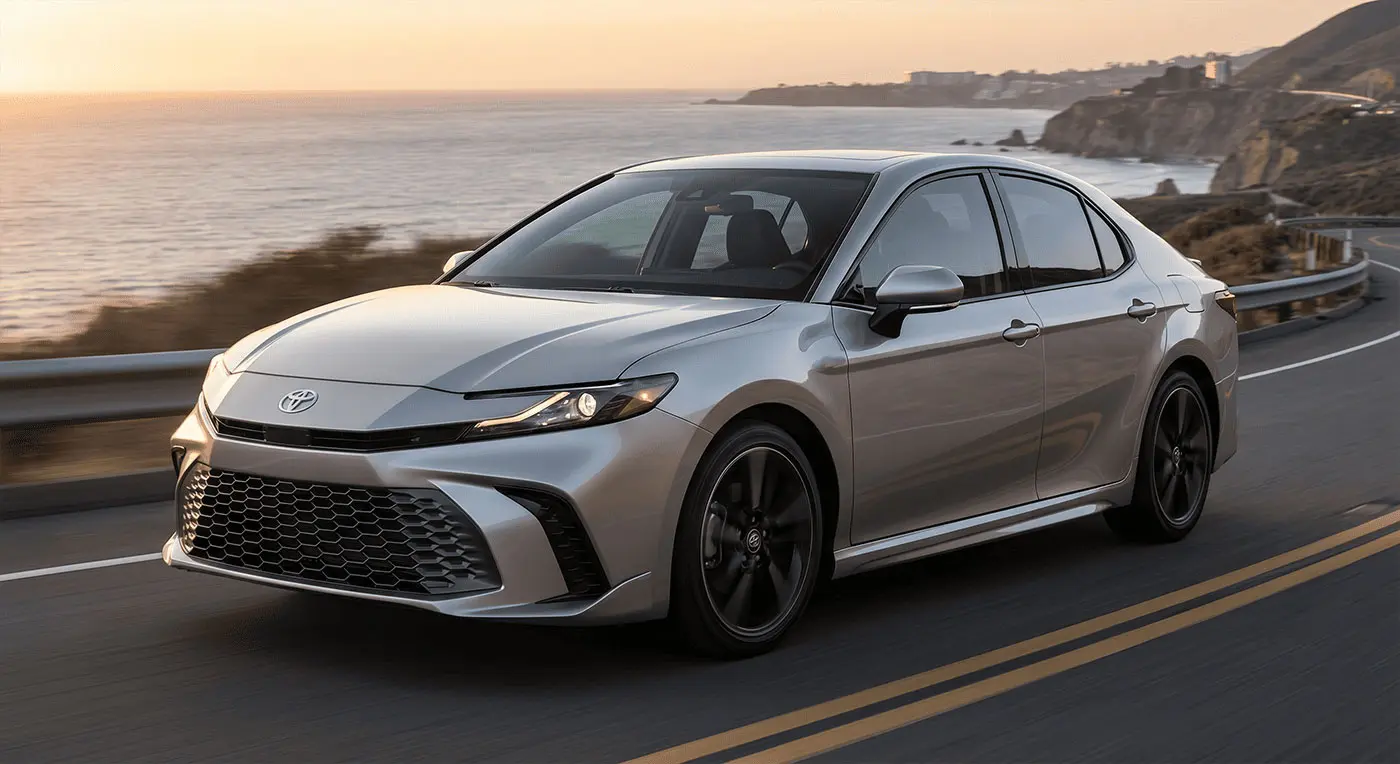
In the fast-moving world of automotive trends, it’s rare to see a nameplate hold its ground for over forty years, yet here we are in 2026, and the Toyota Camry isn’t just surviving—it’s thriving. For a long time, the Camry was labeled as the "sensible" choice, the car you bought with your head rather than your heart. But as we look at the landscape of the 2026 hybrid market, something fascinating has happened: "sensible" has become the ultimate luxury. With the complete phase-out of purely gasoline engines for this model, Toyota has gone "all-in" on hybrid technology, and the gamble has paid off.
The automotive industry in 2026 is at a bit of a crossroads. While the initial rush toward full electrification was loud and flashy, many global drivers are experiencing what experts call "EV fatigue." Concerns over charging infrastructure, fluctuating electricity costs, and the high entry price of battery-electric vehicles (BEVs) have led people back to the reliable, self-charging hybrid. In this space, the 2026 Toyota Camry stands as a titan. It represents the pinnacle of decades of refinement, offering a driving experience that requires zero lifestyle changes while delivering fuel economy figures that were once reserved for tiny, cramped economy cars.
So, why do we still call the Camry "King" in a year where every manufacturer from Honda to Hyundai has a competing hybrid? It’s because Toyota didn’t just add a battery to a car; they built a car around a perfected hybrid system. The 2026 model year marks a turning point where the Camry is no longer just a "hybrid version" of a sedan—it is the definitive hybrid sedan. Whether you are navigating the tight streets of London, the sprawling highways of Texas, or the coastal roads of Sydney, the Camry’s global appeal lies in its refusal to compromise. It offers more power than previous generations, standard safety tech that rivals luxury brands, and a price point that remains accessible to the average family. In this deep dive, we’ll explore the engineering mastery, the competitive edge, and the financial logic that keeps the 2026 Toyota Camry on its throne.
The Heart of the King: 5th Gen Toyota Hybrid System (THS-5)
For years, the "hybrid" badge on the back of a car was often shorthand for "slow but efficient." In 2026, the Toyota Camry has officially killed that stereotype. At the core of every 2026 Camry is the Fifth-Generation Toyota Hybrid System (THS-5), a marvel of modern engineering that proves you don't have to sacrifice punch for pennies at the pump. By pairing a refined 2.5-liter four-cylinder engine with lighter, more powerful electric motors, Toyota has created a powertrain that feels more responsive and energetic than any Camry in history.
The numbers tell a compelling story. In the standard front-wheel-drive (FWD) configuration, you’re looking at a healthy 225 net-combined horsepower. However, the real game-changer for 2026 is the Electronic On-Demand All-Wheel Drive (AWD). Unlike traditional AWD systems that use heavy driveshafts running the length of the car, Toyota uses a dedicated electric motor-generator on the rear axle. This bumps your total output to 232 horsepower. Whether you’re merging onto a busy highway or pulling away from a slushy intersection, the power is instant. It’s a "smart" system that only kicks in when you need the extra grip, ensuring you have the confidence of an SUV with the agility of a sedan.
But let’s talk about the metric that truly keeps the Camry on the throne: efficiency. In 2026, the entry-level LE trim remains the king of the commute, delivering a jaw-dropping 51 MPG combined (52 city / 49 highway). To put that into perspective, with its 13.2-gallon fuel tank, an LE driver could potentially travel over 670 miles on a single fill-up. Even if you opt for the sportier XSE trim with 19-inch wheels and AWD, you’re still pulling in a highly respectable 43 MPG combined. In a world where fuel prices remain a major household stressor, the Camry offers a predictable, low-cost lifestyle that full EVs—with their fluctuating charging rates and range anxiety—simply can’t match yet.
The 2026 Rivalry: Camry vs. The World
In 2026, the hybrid sedan market is more crowded than a city center at rush hour. Every major player has brought their "A-game," but when you look closely at the specs, the Camry’s crown remains firmly in place. Its two biggest challengers are the Honda Accord Hybrid and the Hyundai Sonata Hybrid. Both are excellent cars, but they stumble in areas where the Camry excels: practicality and versatility.
First, let’s look at the Honda Accord Hybrid. Honda has always been known for its sharp handling and driver engagement, and the 2026 Accord is no different. However, it has one major "Achilles' heel"—it doesn't offer All-Wheel Drive (AWD) on the hybrid model. If you live in a climate with snow, ice, or heavy rain, the Camry’s Electronic On-Demand AWD gives it a massive edge. Furthermore, while the Accord Hybrid starts at a higher price point (around $33,000 for the Sport Hybrid), the Camry LE Hybrid enters the market under $30,000, making the king much more accessible to the average household.
Then there is the Hyundai Sonata Hybrid. Hyundai is the "style" leader, offering a futuristic cabin and a massive curved display. But in 2026, many drivers are pushing back against "screen-only" interiors. While Hyundai has integrated more touch-sensitive controls, Toyota has doubled down on ergonomic mastery. The 2026 Camry keeps physical buttons for the most-used features, like climate control and volume. It sounds simple, but when you're driving at 65 MPH, a physical knob is safer and more intuitive than digging through a sub-menu on a screen.
Finally, there’s the performance gap. The Sonata and Accord hybrids hover around 192 to 204 total system horsepower. The 2026 Camry, with its 232 horsepower AWD setup, feels noticeably more confident during overtaking and highway merging. It’s not just about speed; it’s about having the power in reserve to keep the drive relaxed. When you combine that power with Toyota's superior 10-year/150,000-mile battery warranty (compared to Honda’s 8-year/100,000-mile), it’s clear why the Camry remains the smart money choice.
Interior & Tech: A Masterclass in Practicality
Stepping inside the 2026 Toyota Camry feels like a breath of fresh air for those overwhelmed by the "all-screen" trend of modern automotive design. Toyota has struck a perfect balance: the tech is cutting-edge where it matters, but the usability remains grounded in common sense. In an era where some rivals force you to dig through three sub-menus just to adjust the fan speed, the Camry keeps your focus on the road with tactile buttons and high-quality knobs.
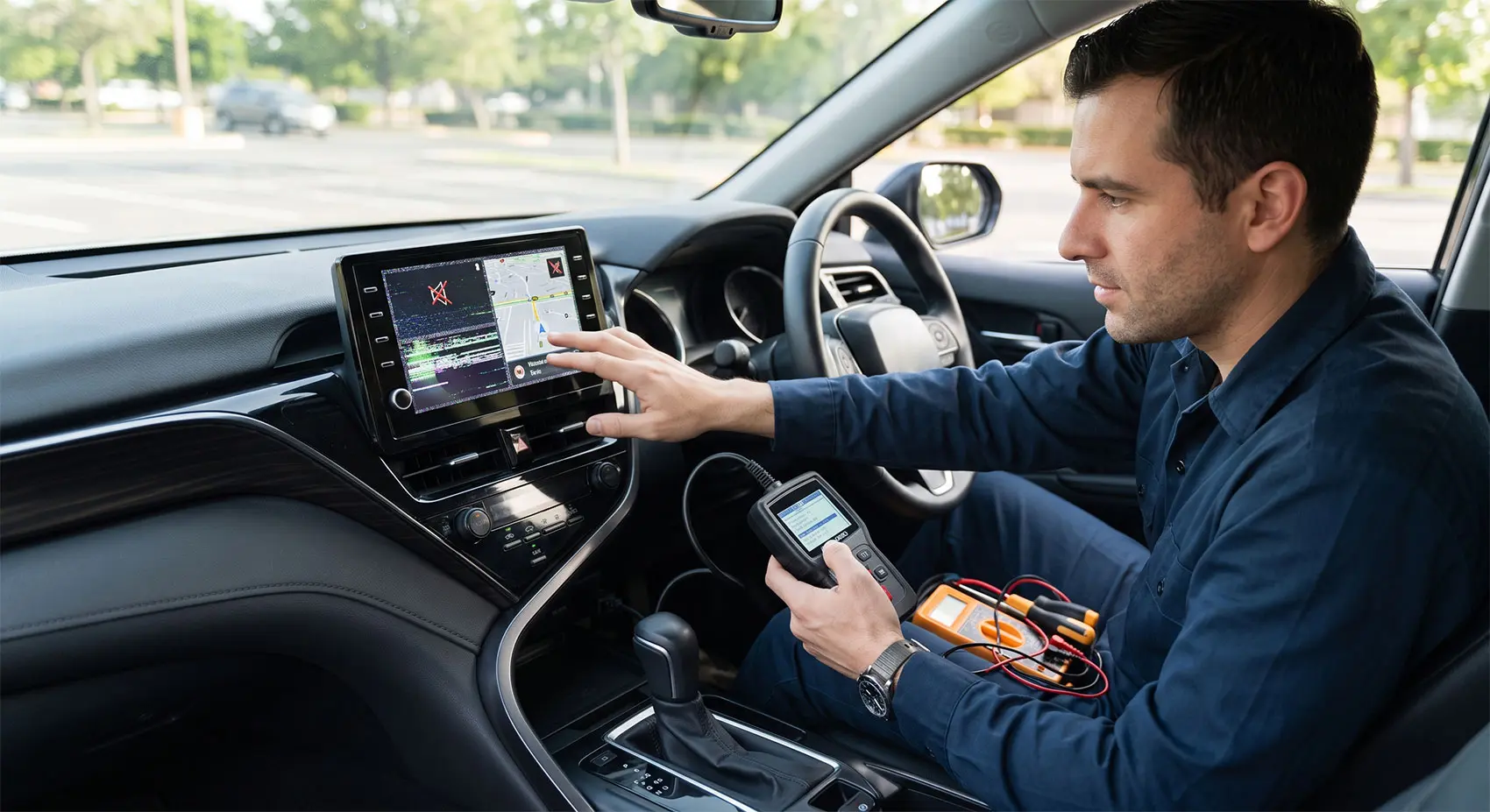
The digital experience is anchored by a standard 8-inch or an available 12.3-inch Toyota Audio Multimedia touchscreen. This isn't just a tablet slapped onto the dash; it’s a fully integrated system featuring wireless Apple CarPlay® and Android Auto™ across the entire lineup. If you opt for the XLE or XSE trims, you’re also treated to a stunning 12.3-inch fully digital gauge cluster that you can customize to show hybrid energy flow, navigation, or safety alerts. For the true tech enthusiast, the available 10-inch Head-Up Display (HUD) projects your speed and turn-by-turn directions directly onto the windshield, ensuring you never have to look away from traffic.
Comfort hasn’t been sidelined for tech, either. The 2026 model introduces acoustic noise-reducing front side windows on higher trims, creating a cabin that is remarkably quiet—a luxury usually reserved for much more expensive European sedans. Whether you choose the durable SofTex® upholstery in the SE or the leather and microfiber-trimmed seats in the XLE, the ergonomics are designed for the long haul. With five USB ports (including both USB-A and USB-C) and standard Qi-compatible wireless charging on most models, the Camry ensures every passenger stays powered up without a tangle of cords.
Safety, however, is where the Camry truly earns its crown. Every 2026 model comes standard with Toyota Safety Sense 3.0 (TSS 3.0). This isn't a watered-down version; it includes high-level features like Proactive Driving Assist, which gently brakes into curves or provides distance control, and Traffic Jam Assist to take the stress out of stop-and-go morning commutes. It’s a suite of technology that doesn't just entertain you—it watches your back.
Ownership: The Financial Case for the Crown
While the 2026 Toyota Camry is a joy to drive and look at, its most loyal subjects are often those who look at the spreadsheets. In an era where the average new car price has ballooned, the Camry remains a sanctuary of financial logic. This starts with the Resale Value. Historically, the Camry has outperformed almost every competitor in its segment, including the Honda Accord and the Nissan Altima. In 2026, data suggests that the Camry Hybrid holds roughly 60-63% of its value after five years, a figure that leaves most electric vehicles—which can lose half their value in just three years—in the dust.
Then there is the "SUV Tax." Many families in 2026 default to buying a crossover like the RAV4 Hybrid, assuming it’s the better value. However, when you compare them side-by-side, the Camry makes a staggering case for itself. The 2026 Camry Hybrid LE starts at roughly $29,000 to $30,000, which is thousands of dollars less than a comparable hybrid SUV. Furthermore, because the Camry is more aerodynamic and lighter, its real-world fuel costs are significantly lower. Over a five-year ownership period, a Camry driver can save upwards of $2,500 in fuel and insurance premiums compared to a compact SUV owner, without sacrificing much in the way of passenger comfort.
The "peace of mind" factor is also legally backed. Toyota’s Hybrid Battery Warranty for 2026 models is a class-leading 10 years or 150,000 miles. This is a massive safety net that covers the most expensive component of the car. When you combine this with ToyotaCare, which covers your factory-scheduled maintenance (oil changes, tire rotations, and multi-point inspections) for the first 2 years or 25,000 miles at no cost, the initial years of ownership are virtually stress-free. In the long run, the Camry isn't just a car you buy; it’s an investment in a predictable, low-maintenance future.
The Verdict: Who is the 2026 Camry For?
As we move deeper into the mid-2020s, the automotive market has become increasingly segmented. You have the high-performance enthusiasts, the early EV adopters, and the off-road adventurers. But the 2026 Toyota Camry isn't trying to be a niche player; it is designed for the global majority. It is for the professional who needs a quiet, dignified space for their morning commute; the parent who demands top-tier safety ratings without the "SUV price tag"; and the long-distance traveler who values 600+ miles of range over finding a fast-charger in a remote town.
Ultimately, the 2026 Camry is for anyone who values their time and money. It is the automotive equivalent of a well-tailored suit: it fits perfectly, looks sharp in any setting, and never goes out of style. While other manufacturers chase trends that may be gone by 2030, Toyota has refined a formula that works here and now. If you want a car that will start every morning for the next fifteen years while maintaining a modern, tech-forward interior, the choice in 2026 remains remarkably simple.
Conclusion:
As we look across the automotive landscape of 2026, it is clear that the Toyota Camry has done more than just survive the transition to an all-hybrid future—it has mastered it. While other manufacturers experimented with radical redesigns or pushed purely electric agendas that many drivers weren't ready for, Toyota stayed the course. By refining the Fifth-Generation Hybrid System and making features like All-Wheel Drive and high-end safety tech accessible to everyone, the Camry has solidified its place as the world’s most practical vehicle.
In a world that often demands we choose between style and substance, or performance and planet-friendliness, the 2026 Toyota Camry stands as a rare middle ground. It doesn't ask you to change your lifestyle; it simply makes your lifestyle better. As the competition continues to chase the crown, one thing remains certain: in the realm of the hybrid sedan, the Camry is still very much the King.

Written by Kousar Shabbir
Published Apr 28, 2026 in Car Reviews.