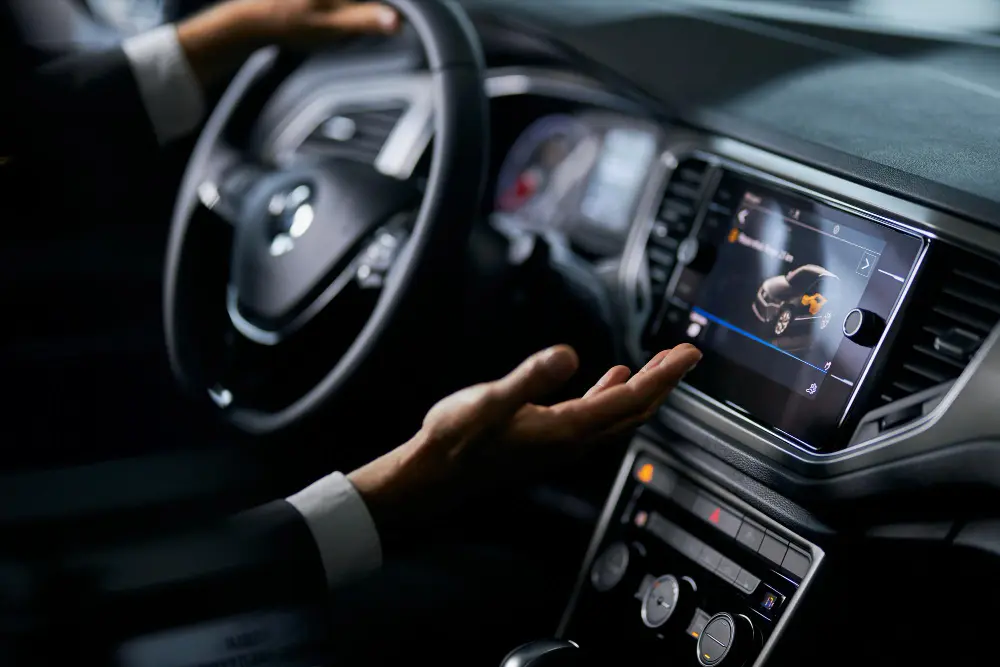
The promise of modern automotive technology has always been anchored in a single, noble goal: "Vision Zero." By 2026, the automotive industry has successfully integrated Advanced Driver Assistance Systems (ADAS) into nearly every new vehicle segment, from entry-level subcompacts to high-end luxury SUVs. Manufacturers market these systems as the ultimate safety net—a digital guardian that watches the road, keeps the vehicle centered, and reacts faster than human reflexes ever could. We were promised a future where technology would neutralize the most common causes of accidents: human fatigue, distraction, and delayed braking.
However, as we traverse the roads of 2026, the reality is far more nuanced, and at times, unsettling. While the data suggests that these systems have helped prevent millions of minor fender-benders, they have simultaneously birthed a new, insidious problem: automation complacency. When a vehicle’s steering wheel subtly adjusts to keep you in the center of the lane, the brain naturally begins to offload its cognitive burden. Drivers are no longer just "operating" a machine; they are increasingly relegated to the role of a supervisor, monitoring a system that is often just as fallible as they are, albeit in different ways.
This deep dive into 2026 lane-keep technology isn't meant to demonize innovation, but rather to strip away the glossy marketing veneer. The central question is no longer whether these systems can save lives, but whether their current implementation is creating a new class of risks that we are ill-equipped to handle. We are currently living in an awkward "hybrid" era of mobility, where the car is smart enough to assist, but not quite smart enough to be trusted entirely. In the following sections, we will dissect the sensor fusion architecture that powers your daily commute, explore the psychological traps of "nanny" tech, and ultimately, arm you with the knowledge to maintain control in a world that is trying to take the wheel away from you. Understanding these systems isn't just about technical literacy—it’s about preserving your autonomy and safety on the open road.
The Architecture of 2026 Lane-Keeping: Beyond the Camera Lens
To understand why 2026 lane-keep technology often feels like a "digital tug-of-war," you have to look past the marketing buzzwords and into the hardware. We have moved well beyond simple monocular cameras mounted behind the rearview mirror. Today’s vehicles utilize sophisticated sensor fusion—a complex dance between high-resolution wide-angle cameras, long-range radar, and, in premium models, solid-state LiDAR. These systems create a 360-degree digital map of the environment, theoretically allowing the car to "see" lane markings, road edges, and adjacent traffic with superhuman precision.
The core of this experience is the distinction between Active Lane Keeping and Emergency Lane Keeping (ELK). Active systems are the ones providing that constant, subtle resistance on your steering wheel. They are designed to keep you centered by constantly micro-adjusting the steering rack. This is where the "nanny" problem begins. When these systems are tuned for maximum lane centering, they can feel twitchy, especially on winding roads or in zones where lane markings are inconsistent. If the system’s perception algorithm becomes "confused" by a patch of tar, a shadow, or a poorly marked construction zone, it may initiate a sudden, jerky correction. For the driver, this isn't just annoying; it’s mentally taxing. You are no longer driving the car; you are constantly second-guessing the software’s decisions, which significantly increases cognitive load.
Furthermore, we must address the "Passive vs. Active" disconnect. Many drivers mistake a basic Lane Departure Warning (LDW)—which merely vibrates the wheel or chirps an alarm—with full Lane Centering. By 2026, the industry has shifted toward making these features mandatory for high safety ratings, but the implementation varies wildly between brands. Some manufacturers prioritize safety by ensuring the driver’s hands are constantly detected, while others push the limits of convenience, encouraging a "hands-off" experience that the underlying sensor fusion isn't always robust enough to support in extreme conditions. The result is a system that is technologically brilliant but psychologically misaligned with how humans actually drive.
The Psychology of Automation Complacency
The most dangerous aspect of 2026’s ADAS ecosystem isn't a sensor failure; it is the human brain's natural tendency toward adaptation. As drivers, we are evolutionarily wired to conserve energy, and when a machine consistently proves it can handle the "boring" parts of a drive—like maintaining lane position on a straight highway—our focus inevitably drifts. This phenomenon, known as automation complacency, occurs when a driver begins to perceive the vehicle as being "more capable" than it actually is. In the context of 2026 lane-keep tech, this manifests as drivers shifting from an active participant to a passive observer.
The industry has attempted to combat this with Driver Monitoring Systems (DMS) that track eye gaze and head position, but these systems often fall into a "cat-and-mouse" game with the driver. When the system detects you aren't paying attention, it issues an alert. To "pass" the test, a driver might merely glance at the instrument cluster, effectively gaming the system without actually re-engaging with the road. This creates a false sense of security where the driver feels they are being "monitored," but their mental bandwidth remains largely disconnected from the driving task.
Furthermore, we are seeing the rise of the "Ping-Pong" effect, a specific type of fatigue induced by hyper-active lane-centering software. On roads where lane markings are slightly inconsistent or worn, aggressive lane-keep algorithms will constantly fight to pull the car toward the center of the perceived lane. This creates a subtle but persistent oscillation—a side-to-side jitter—that is mentally fatiguing. Instead of the smooth, fluid control expected from an experienced human driver, the software provides a series of micro-corrections that make the vehicle feel "restless." This constant, erratic movement not only frustrates drivers but also degrades their ability to react quickly if a genuine, high-stakes emergency occurs. When the human brain is subjected to this constant low-level stimulus from the car’s steering rack, it loses the ability to distinguish between "normal" system behavior and a true safety-critical deviation. We aren't just letting go of the wheel; we are letting go of our situational awareness, setting the stage for human-machine interface (HMI) failures where the driver is too slow to intervene when the software finally hits a boundary condition it cannot handle.
Real-World Efficacy: Data vs. Marketing
When we peel back the polished marketing campaigns of 2026, the question of whether ADAS is "actually" improving safety is met with a compelling, if complex, "yes, but." According to recent studies—including large-scale data from the University of Michigan Transportation Research Institute—modern ADAS features are undeniably preventing accidents. Features like automatic emergency braking and lane-keeping assist have demonstrably cut crash frequency and reduced injury severity by double-digit percentages across millions of vehicles. The statistics are clear: in structured environments with clear lane markings, these systems serve as a critical safety net that catches human errors before they turn into tragedies.
However, these numbers often mask the "last 10% problem" that engineers struggle with today. While systems perform flawlessly in ideal conditions, their efficacy plummets in ambiguous or degraded scenarios—heavy rain, faded lane markers, or unmarked construction zones. The data reveals that while lane-keep assist significantly reduces run-off-road crashes, it is not a "fire-and-forget" technology. There is a distinct, measurable danger in the "phantom corrections" triggered by these systems when they misinterpret road features. When an ADAS system fights the steering wheel mid-corner due to a false sensor reading, it can introduce instability, forcing the driver to override the system suddenly.
Furthermore, we are seeing a disconnect between how systems are tested for safety ratings—like the rigorous new Euro NCAP 2026 protocols—and how they perform in the "wild." While manufacturers are optimizing for these test scenarios to secure 5-star ratings, real-world driving presents infinite variables that a rules-based or even early AI-driven system cannot fully anticipate. The result is a dual reality: your car is statistically safer than it was five years ago, but it is also more prone to moments of "technological confusion." For the modern driver, this means safety is no longer a passive benefit of buying a new car; it requires a new, active understanding of when to trust the system’s sensors and when to rely on your own eyes.
When to Override: Best Practices for the Modern Driver
Navigating the era of 2026 ADAS requires a fundamental shift in mindset. You are no longer just a driver; you are a "system manager." To maintain safety, you must move beyond the marketing promise of "automated driving" and treat these systems as fallible tools that require constant supervision. The most effective way to ensure your safety is to develop a "Safety Override Protocol." This starts with situational awareness that accounts for the software’s limitations. If you are entering a construction zone, navigating narrow lanes with poorly defined markings, or driving through heavy precipitation, disable the aggressive lane-centering features. These environments frequently confuse sensor fusion algorithms, leading to the "phantom corrections" that increase your risk of an incident.
Developing "Hybrid Driving" habits is essential. This means keeping your hands on the wheel not just to satisfy the sensor’s "capacitive touch" requirement, but to provide a consistent "haptic tether" to the vehicle’s steering rack. By maintaining a gentle, guiding pressure on the wheel, you can instantly feel when the system is about to initiate a correction. If the vehicle’s input feels erratic or inconsistent, you have the physical leverage to counter-steer immediately, preventing the "ping-pong" effect or a dangerous sudden lane change. Never treat the lane-keep indicator on your dashboard as a "green light" to disengage your attention; instead, treat it as a secondary, fallible observer that is there to help you, not replace you.
Furthermore, recognize the "edge cases" where ADAS logic fails. High-speed highway curves, sudden merge points, and areas where lane lines have been erased or repainted are notorious danger zones for 2026-grade autonomy. In these scenarios, the software’s "look-ahead" horizon may be too short to safely calculate the vehicle's trajectory, or it may lock onto a leading vehicle's erratic path rather than the road itself. When you see these conditions approaching, transition immediately to manual control. True mastery of modern automotive tech isn't about how much you can let the car do; it’s about knowing exactly when the technology’s confidence interval has reached its limit and taking back command before the system reaches its failure point.
Future Outlook: What’s Next Beyond 2026?
As we look past the 2026 model year, the trajectory of automotive safety is shifting from reactive assistance to predictive intelligence. The next generation of ADAS will not merely be "lane-keeping"; it will be "path-planning." Current systems are largely reactive, correcting the vehicle only after it has begun to drift. Future AI-driven systems are being developed to analyze the road geometry, traffic flow, and even the intent of surrounding vehicles to proactively position the car in the optimal part of the lane before a hazard even arises. This shift from "nanny" tech—which waits for a mistake—to "co-pilot" tech—which anticipates a path—promises to drastically reduce the erratic behavior that plagues today’s systems.
However, the true "holy grail" of safety is Vehicle-to-Everything (V2X) communication. While today's cars rely almost exclusively on their onboard sensor fusion (cameras, radar, LiDAR), V2X will allow vehicles to communicate directly with traffic signals, road infrastructure, and other connected vehicles. Imagine your car receiving a warning that a vehicle two turns ahead has slammed on its brakes, or being notified of a hazard hidden around a blind curve by the road sensors themselves. This connectivity will render the current limitations of line-of-sight sensors irrelevant. By removing the dependency on human-like visual perception, we move away from the "all-or-nothing" failures of current ADAS in bad weather or low-light conditions.
Yet, even with these advancements, the transition period remains the most hazardous. We are entering an era of "mixed autonomy," where semi-autonomous 2026 vehicles must navigate roads alongside older, manually-driven cars and unpredictable human drivers. This means the human factor will not disappear; it will merely evolve. As the vehicle’s "intelligence" grows, the driver’s role will shift toward managing a system that is increasingly opaque. The challenge for manufacturers, regulators, and drivers alike will be ensuring that as we hand over more control to the machine, our ability to understand why the machine makes a decision doesn't vanish. The future of safety is not just better sensors; it is better transparency, ensuring the driver remains a capable, informed partner in the driving task.
Conclusion
In the final assessment, the question of whether 2026 ADAS is improving safety isn't a simple binary of "yes" or "no." It is a testament to the fact that we are currently in the most challenging phase of the automotive revolution: the transition from human-operated vehicles to sophisticated, semi-automated systems. The data confirms that ADAS, when functioning within its design parameters, is a net positive for road safety, mitigating the impact of human error and providing a technological buffer that was unimaginable just a decade ago. However, the "safety" these systems provide is fragile. It relies on a delicate balance between the vehicle’s sensor-driven intelligence and the driver’s cognitive engagement.
We must accept that in 2026, the car is an intelligent partner, but it is not a chauffeur. The greatest threat to our safety today is not a sensor failure or a software glitch—it is the erosion of our own vigilance. When we treat lane-keep technology as a replacement for focus, we inadvertently create the very conditions for the accidents we hope to avoid. The future of road safety will be built on V2X communication and predictive AI, but until that infrastructure is universal, the ultimate "safety feature" in any vehicle remains the human brain behind the wheel.
By adopting a "managerial" mindset—understanding the strengths and, more importantly, the limitations of your vehicle’s ADAS—you can harness the convenience of modern technology without sacrificing your security. Use these systems to reduce fatigue on long, predictable stretches, but never surrender your situational awareness to the dashboard. The goal of "Vision Zero" is noble, but it cannot be achieved through code alone. It requires a commitment to active, informed driving where technology assists, but you remain the ultimate authority on the road. Drive with awareness, respect the boundaries of your machine, and remember that no amount of software can replace the judgment of a focused human driver.


Written by Maarukh Shahbaz
Published Jul 8, 2026 in Auto Tech.