Every autumn, millions of drivers face the same familiar dilemma when the morning air turns crisp: is it time to swap tires, or will the rubber currently on the vehicle hold up when the first winter storm arrives? For decades, vehicle owners relied on a single set of "all-season" tires, trusting the name implied complete immunity to whatever the forecast delivered. Unfortunately, that assumption has led to countless white-knuckle commutes, unexpected slides into snowbanks, and compromised stopping distances on slush-covered highways.
The reality is that tire marketing and real-world winter physics often tell two very different stories. While all-season tires are designed to handle dry summer pavement, heavy spring rain, and mild chill, they are fundamentally built around warm-weather compromises. When temperatures plummet below freezing and roads become coated in packed snow or glazed with black ice, standard all-season rubber quickly loses its ability to grip the pavement.
Enter the all-weather tire—a relatively modern category that has transformed winter driving expectations. Unlike traditional all-season tires, all-weather tires are engineered from the ground up to conquer sub-freezing temperatures, slush, and moderate-to-heavy snow without forcing you into the biannual ritual of mounting and unmounting dedicated winter tires every November and April.
Understanding the precise differences between these two tire types isn't just a matter of mechanical trivia; it is a critical safety calculation that impacts your vehicle's stopping distance, cornering stability, and cold-weather road control. In this comprehensive guide, we will unpack the chemical differences in rubber compounds, explain the legal testing behind tire sidewall symbols, analyze real-world winter performance metrics, and help you determine exactly which tire setup matches your local climate and driving habits.
The Core Engineering Difference: Rubber Compounds & Temperature Thresholds
To understand why all-season and all-weather tires behave so differently in winter, you have to look past the visible tread patterns and examine the chemistry of the rubber itself. At a molecular level, tire rubber is not a static material; it responds dynamically to ambient temperature changes through a phenomenon known in materials science as the glass transition temperature.
The 45°F (7°C) Rule: The Point of Rubber Hardening
The universal benchmark in winter tire dynamics is 45°F (7°C). When temperatures consistently drop below this critical threshold, standard all-season rubber undergoes a phase shift. The polymers begin to stiffen, losing their natural elasticity and turning hard—often compared to a cold hockey puck.
When a tire hardens:
-
It cannot conform to microscopic road imperfections.
-
The contact patch decreases in effective surface area.
-
Friction coefficients plummet significantly, even on completely dry, clean asphalt.
Many motorists assume all-season tires are only compromised when snow is physically falling, but braking tests prove that an all-season tire at 20°F (-7°C) on dry pavement takes substantially longer to stop than a tire engineered to stay supple in the cold.
Advanced Silica Polymers and Natural Oils
All-weather tires solve this temperature vulnerability by utilizing specialized rubber formulations rich in high-dispersion silica and natural plant oils (such as canola or orange oil extracts).
These ingredients allow the compound to maintain flexibility across a broader thermal spectrum—typically from -20°F to 100°F (-29°C to 38°C). Because the tread blocks stay soft and pliable in sub-freezing temperatures, they actively wrap around micro-textures in the road surface, generating mechanical grip where all-season compounds merely slide.
Decoding Tire Symbols: M+S vs. 3PMSF Rating
When shopping for tires or assessing winter capability, looking at the sidewall markings is where regulatory reality separates from marketing claims. Drivers frequently confuse two primary designations stamped into tire rubber: M+S and the 3-Peak Mountain Snowflake (3PMSF) icon.
The M+S (Mud and Snow) Stamp: A Geometry Standard, Not a Grip Test
Almost every standard all-season tire carries the M+S (or M&S) marking. However, contrary to what the lettering suggests, this rating does not involve standardized cold-temperature or ice-braking validation.
The Rubber Manufacturers Association (RMA) established M+S purely as a geometric measurement:
-
A tire qualifies if at least 25% of its tread surface area consists of open voids/grooves.
-
It requires specific tread geometry with notches extending inward from the shoulders toward the center.
-
There is zero mandatory performance testing on actual snow, ice, or sub-45°F pavement to earn this mark.
Because of this lack of dynamic testing, an M+S all-season tire can easily hydroplane over freezing slush or fail to bite on hard-packed snow.
The 3PMSF Symbol: Severe Snow Service Certification
In contrast, all-weather tires must earn the 3-Peak Mountain Snowflake (3PMSF) certification. Unlike the geometric qualification of M+S, obtaining the 3PMSF emblem requires rigorous empirical testing according to ASTM standard E1136 or ISO standards on medium-packed snow.
To earn the snowflake rating, a tire must provide at least 110% of the snow traction of an industry-standard reference tire during dynamic acceleration tests.
Legal Mandates on Winter Highways and Mountain Passes
The distinction between these two symbols carries major legal consequences. In regions with strict seasonal tire mandates—such as mountain passes in Colorado, Washington, British Columbia, and alpine zones across Europe—law enforcement requires tires bearing the official 3PMSF pictograph or physical tire chains during winter conditions. Vehicles fitted with basic M+S all-season tires are regularly turned back or fined during winter road closures.
Tread Patterns & Siping: How Traction Is Built
While rubber compounding provides the chemical foundation for winter grip, the physical architecture of the tire tread dictates how effectively power transfers to slippery road surfaces. A casual glance might suggest that all modern tires have similar tread grooves, but the engineering differences between all-season and all-weather tread designs are drastic and functional.
Sipes: The Mechanical Biting Edges
Sipes are microscopic slits cut into the individual tread blocks of a tire. When a tire rotates and presses against the road surface, these tiny channels flex open and shut thousands of times per minute.
-
All-Season Siping: Standard all-season tires feature relatively straight, shallow sipes positioned primarily to channel warm water away and maintain block stiffness for high-speed summer handling.
-
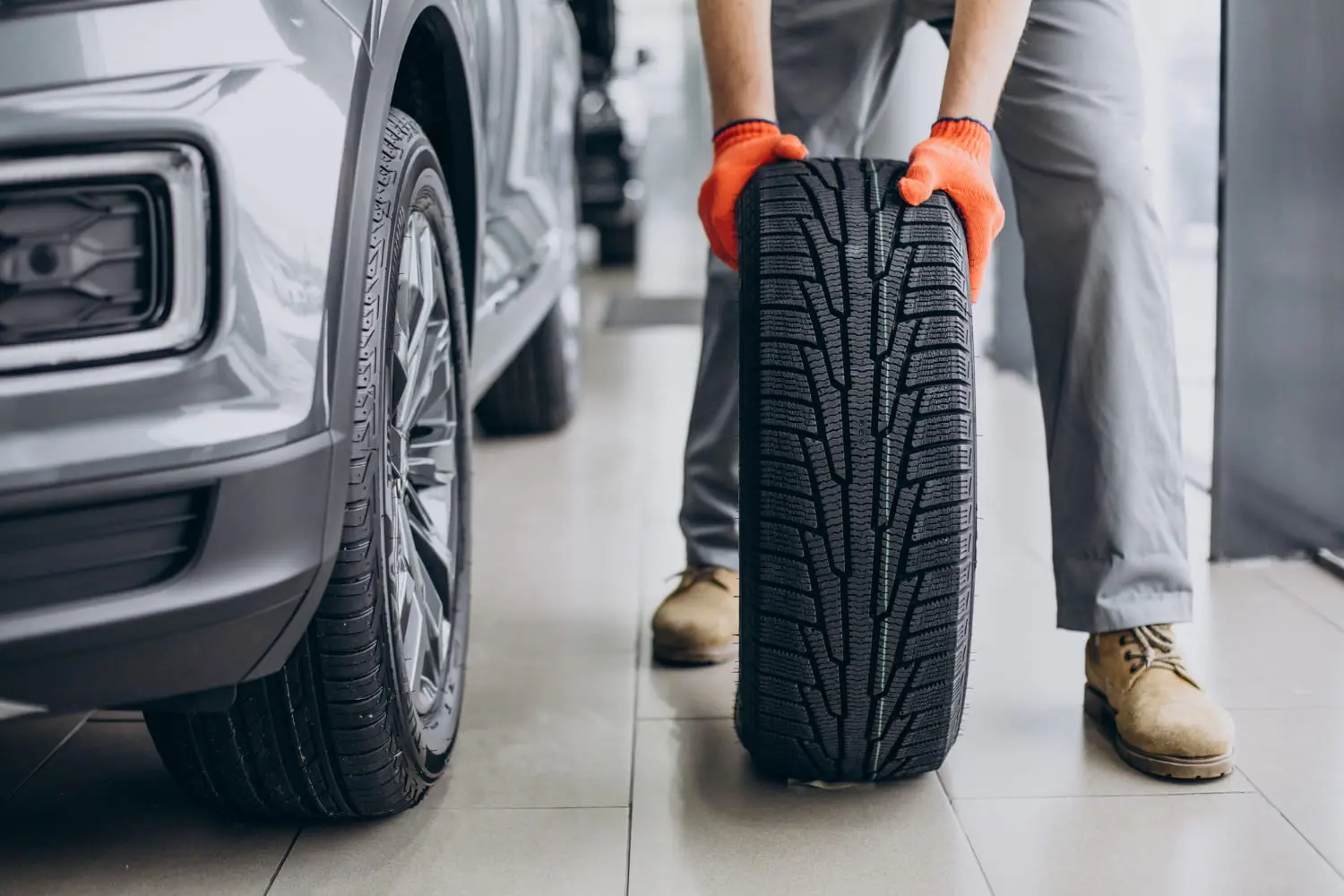
All-Weather 3D Siping: All-weather tires utilize high-density, interlocking 3D zig-zag sipes. As the tread block contacts the road, each sipe flexes open, creating hundreds of extra "biting edges" that physically claw into packed snow and surface frost. The internal 3D interlocking design prevents the tread blocks from collapsing under heavy braking, maintaining sharp handling response.
Snow-on-Snow Friction Mechanics
One of the most counter-intuitive principles in winter tire physics is that snow adheres best to other snow. High-performance all-weather tires feature specialized snow pockets and claw-like grooves designed to trap and pack snow directly inside the tread channels.
When you drive over snow-covered tarmac, the snow trapped in the tire tread bonds directly with the snow on the road surface, generating significantly higher shear friction than bare rubber sliding over a frozen layer. Standard all-season tires have smooth groove walls that allow snow to slip right out, eliminating this crucial bonding mechanism.
Slush Evacuation and Hydroplaning Resistance
Winter driving hazards are rarely limited to clean powder; road slush—a dense mixture of melting ice, water, and road salt—is notoriously difficult to manage. Because slush is heavier and more viscous than standard water, traditional circumferential all-season grooves struggle to disperse it, causing tires to ride up and hydroplane at relatively low speeds.
All-weather tires frequently implement aggressive directional V-shaped (chevron) tread patterns or sweeping lateral channels. These angled evacuation paths forcefully push thick slush outward away from the center of the tire footprint, ensuring constant rubber-to-asphalt contact during freeze-thaw transition periods.
Winter Driving Showdown: Real-World Performance Metrics
When winter conditions hit their peak, theoretical benefits must translate directly into measurable safety margins on the asphalt. Independent testing across automotive engineering groups reveals dramatic real-world performance gaps between all-season and all-weather tires when braking, cornering, and accelerating in freezing environments.
Stopping Distances on Packed Snow and Ice
The most critical safety metric for any winter driver is stopping distance. In controlled tests braking from 30 mph (48 km/h) to a complete stop on packed snow:
-
A vehicle equipped with standard all-season tires typically requires 130 feet or more to stop completely.
-
The identical vehicle fitted with 3PMSF all-weather tires halts in approximately 90 feet—a massive reduction of up to 40 feet (nearly three full car lengths).
On black ice, while dedicated studded or studless winter tires remain the absolute gold standard, all-weather compounds significantly outperform hardened all-season tires by maintaining microscopic surface contact, reducing skidding distances when antilock braking systems (ABS) engage.
Lateral Grip, Slush Planing, and Cornering Stability
Stopping in a straight line is only half the battle; maintaining steering control through corners prevents off-road collisions. When turning on snow-covered roads, standard all-season tires frequently break traction abruptly, resulting in severe understeer (where the vehicle continues traveling straight despite the steering wheel being turned).
All-weather tires provide progressive, predictable lateral grip. The interlocking 3D siping locks the tread pattern under sideways cornering loads, biting into the snow shelf and allowing the driver to follow the intended road trajectory without sudden spin-outs.
Drivetrain Synergy: AWD vs. Proper Rubber
A widespread automotive myth suggests that having an All-Wheel Drive (AWD) or Four-Wheel Drive (4WD) vehicle eliminates the need for winter-rated tires. While AWD helps a vehicle accelerate and climb hills on slippery surfaces by distributing engine torque to all four wheels, all-wheel drive provides zero assistance when braking or steering.
An AWD vehicle on hardened all-season tires will slide just as far under heavy braking as a front-wheel-drive car. Equipping all-weather tires onto an AWD, FWD, or RWD vehicle ensures that all four contact patches have the chemical flexibility and biting edges required to turn and stop safely.
The Year-Round Trade-Off: Summer Performance & Tread Life
While all-weather tires deliver dramatic safety advantages when the temperature drops, running a winter-capable tire through sweltering summer heat involves distinct engineering trade-offs that every driver must weigh.
High-Temperature Wear and Tread Longevity
The very chemical properties that keep all-weather rubber flexible at 0°F (-18°C) make the compound slightly softer when asphalt temperatures exceed 90°F (32°C).
-
Standard All-Season Tires: Engineered with harder, heat-resistant synthetic polymers, premium all-season touring tires frequently offer treadwear warranties between 65,000 to 80,000 miles (105,000 to 130,000 km).
-
All-Weather Tires: Because of their higher silica concentration and deeper siping, all-weather tires typically carry manufacturer warranties between 50,000 to 65,000 miles (80,000 to 105,000 km).
While you sacrifice roughly 15% to 20% of maximum potential tread life compared to a dedicated highway all-season tire, you completely avoid the cost and labor of buying a second set of dedicated winter rims and paying for seasonal mount-and-balance services twice a year.
Dry Handling, "Tread Squirm," and Highway Cabin Noise
At highway speeds on hot summer tarmac, deep 3D sipes and pliable tread blocks can flex under aggressive cornering—a characteristic known as tread squirm. Modern all-weather tires use interlocking sipes that lock together under lateral pressure to minimize this sensation, but enthusiastic drivers may notice a slightly softer, less crisp steering feedback on turn-in compared to an ultra-high-performance (UHP) all-season tire.
Regarding road noise, earlier generations of snow-capable tires were notorious for producing a loud, low-frequency hum. Modern acoustic sequencing and asymmetric tread pitches in current all-weather designs have largely eliminated this drone, keeping interior sound levels nearly identical to standard all-season rubber during routine highway cruising.
Buyer’s Guide: Which Tire Fits Your Climate and Budget?
Choosing between all-season and all-weather tires ultimately comes down to matching tire capabilities with your geographic location, annual mileage, and typical winter driving severity. There is no single "best" tire for every driver on the road, but clear decision criteria make the selection straightforward.
Cost-Benefit Analysis: One Set vs. Seasonal Two-Set Swaps
Running a single set of 3PMSF all-weather tires year-round eliminates several recurring ownership costs:
-
Storage and Logistics: No need to store four extra wheels/tires in your garage or pay seasonal tire-hotel storage fees.
-
Mount & Balance Labor: Saves between $150 and $250 annually in seasonal mounting, balancing, and shop labor.
-
Wheel Investment: Eliminates the upfront purchase of a second set of steel or alloy winter wheels.
For drivers in moderate winter zones covering 10,000 to 15,000 miles per year, an all-weather set delivers the lowest cost-per-mile while maintaining winter compliance and safety.
Top-Rated All-Weather Tire Models
Several premium manufacturers offer proven 3PMSF all-weather options:
-
Michelin CrossClimate 2: The category leader for snow braking, dry handling, and wet grip with a distinctive directional V-tread.
-
Nokian Encompass AW01 / WR G4: Engineered by the Finnish pioneers of winter tires, offering exceptional slush dispersion and ice tracking.
-
Goodyear Assurance WeatherReady: Features asymmetric tread zones and evolving traction sipes for variable seasonal conditions.
-
Bridgestone WeatherPeak: Focuses on ride comfort, low cabin noise, and wet braking performance in cold climates.
Conclusion & Maintenance Best Practices
The choice between all-season and all-weather tires is not merely an aesthetic or brand preference—it is a foundational safety calculation. While all-season tires serve adequately in warm, rain-heavy climates where temperatures rarely dip below 45°F (7°C), their hardened rubber compound and shallow siping make them a compromise when winter roads turn cold, slick, or snow-packed. All-weather tires, backed by the rigorous 3-Peak Mountain Snowflake (3PMSF) severe snow certification, bridge the gap by delivering dependable winter traction without the cost and hassle of seasonal tire swaps.
Essential Winter Maintenance Checklist
-
Monitor Cold Inflation Pressure: Tire pressure drops roughly 1 to 2 PSI for every 10°F (5.5°C) drop in ambient temperature. Check pressures monthly using a calibrated digital gauge when tires are cold.
-
Inspect Tread Depth Before First Snow: Winter-rated traction requires a minimum of 5/32" (4 mm) of tread depth. Once an all-weather tire wears below 4/32", its snow-trapping pockets and biting sipes lose effectiveness.
-
Maintain Strict 5,000–6,000 Mile Rotation Intervals: Regular tire rotations ensure even wear across all four corners, maximizing tread life and preserving factory mileage warranties.
Equipping your vehicle with tires suited to your actual climate conditions ensures you maintain control, short stopping distances, and peace of mind through every winter journey.



Written by Maarukh Shahbaz
Published Aug 28, 2026 in Comparisons.