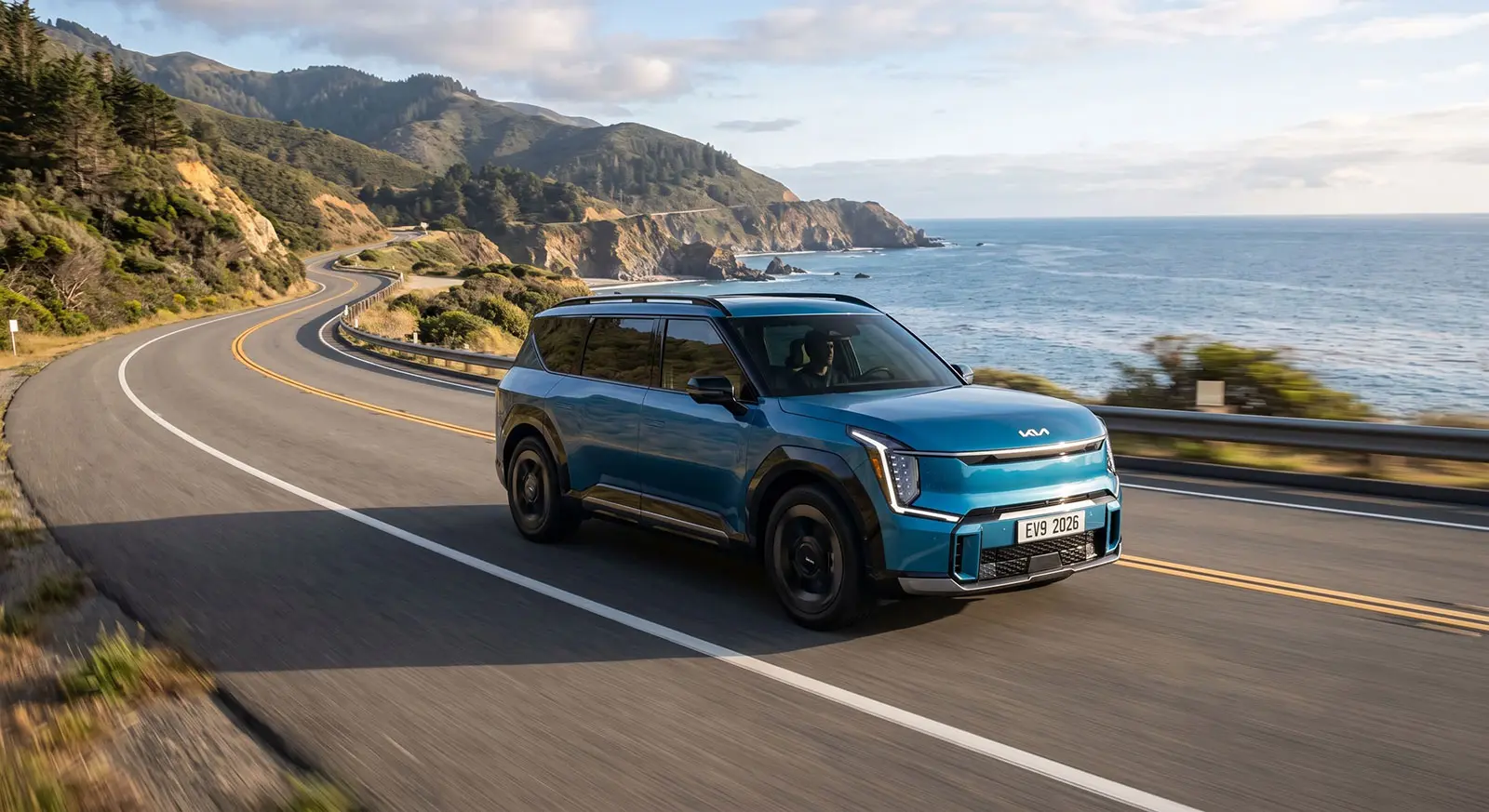
Imagine cruising down the highway at 70 mph. Your hands are lightly resting on the steering wheel, your favorite playlist is humming in the background, and you feel entirely at ease. Suddenly, your car subtly nudges itself back into the center of the lane. You didn’t turn the wheel; your vehicle did it for you. This is Lane-Keep Assist (LKA) in action, one of the foundational blocks of modern Advanced Driver Assistance Systems (ADAS).
For millions of modern vehicle owners, features like active steering, adaptive cruise control, and automatic emergency braking are no longer futuristic tech gimmicks—they are standard expectations. We have been told a comforting story by automotive manufacturers: that these smart systems act as an invisible guardian angel, filling in for human error, fatigue, and distraction. The promise is beautiful: a world with fewer collisions, lower highway fatalities, and zero-stress commutes.
But as the market share of semi-autonomous cars reaches an all-time high, an uncomfortable tension is brewing under the surface. Is your Lane-Keep Assist really keeping you safe, or is it secretly introduces a whole new class of driving hazards?
While active safety technology has undoubtedly prevented thousands of minor fender-benders, the real-world execution of these systems is far from flawless. Drivers are increasingly finding themselves battling their own steering wheels over poorly marked construction zones, experiencing sudden "phantom braking" incidents, or worse—succumbing to a dangerous psychological state known as automation complacency. When a driver begins to treat an assistance feature as a substitute for active attention, the safety net officially unravels.
To truly understand whether this technology is protecting you or putting you at risk, we need to lift the hood on how machine vision processes the open road, where the software reliably fails, and how you can safely co-exist with your car's digital co-pilot without giving up control.
How Lane-Keep Assist Works Under the Hood
To evaluate whether Lane-Keep Assist (LKA) is genuinely looking out for you, we first need to break down how a car actually "sees" the road. Your vehicle doesn't possess human intuition; instead, it relies on a highly coordinated network of physical hardware, complex software algorithms, and immediate mechanical intervention. When these components work perfectly, it feels like magic. When one link fails, the system crumbles.
The Physical Hardware: Cameras, Radar, and EPS
The eyes of any ADAS system are typically mounted at the top center of your windshield, neatly tucked behind the rearview mirror. This is a specialized forward-facing camera designed to scan the asphalt hundreds of feet ahead.
-
The Sensors: While the camera focuses heavily on visual contrast (like painted lines), it is frequently paired with a front-grille radar sensor. Radar maps the physical distance to objects, ensuring that if a lane drift happens because a vehicle ahead stopped suddenly, the car reacts appropriately.
-
The Muscle: All of this data feeds directly into the Electric Power Steering (EPS) system. Unlike older hydraulic setups, an EPS uses an electric motor attached to the steering column. When the safety computer decides you are drifting, it sends a precise electrical signal to that motor, physically turning your wheels back into place without your physical input.
The Software Brain: Machine Vision Algorithms
Having a camera is useless without a brain to interpret the video stream. This is where machine vision algorithms take over. The camera captures raw video frames at roughly 30 to 60 frames per second. The software analyzes every single frame, looking specifically for high-contrast geometric patterns—specifically, solid white lines, yellow dividers, or dotted passing markers.
Once the software detects these boundaries, it establishes a virtual "corridor" for your car. It constantly calculates your vehicle's exact position relative to those boundaries. If the mathematics show that your front tire footprint is on a trajectory to cross that virtual boundary without an active turn signal, the system triggers an emergency protocol.
Passive Alerts vs. Active Intervention
It is incredibly common for drivers to confuse the different levels of lane assistance tech. Knowing the difference can save your life:
-
Lane Departure Warning (LDW): This is a completely passive system. It acts purely as an alarm clock. If you drift, it vibrates your steering wheel, sends a haptic buzz through your seat, or emits an audible beep. It will not steer for you. If you are unresponsive, the car will leave the road.
-
Lane-Keep Assist (LKA): This is an active system. It provides a gentle, automated correction. If you begin to cross the line, it applies physical torque to the steering wheel to guide you back into the center of the lane.
-
Lane Centering Assist (LCA): This is the most proactive level. While LKA only kicks in when you are about to make a mistake (acting like a pinball bouncing off a bumper), Lane Centering actively forces the vehicle to stay dead-center in the lane at all times, providing continuous, micro-steering corrections on its own.
The Hidden Weaknesses: Where ADAS Fails Real-World Drivers
While the engineering behind computer vision is brilliant, it suffers from a fatal flaw: computers do not possess human context. They operate strictly on binary logic—either a pixel meets a contrast threshold, or it doesn't. In the messy, unpredictable world of daily commuting, this rigid logic leads to terrifying real-world system failures.
Environmental Blind Spots
The forward-facing cameras that drive your Lane-Keep Assist are only as good as their visibility. When human visibility drops, machine vision drops faster.
-
Heavy Precipitation: Torrential rain, thick fog, and heavy snow scatter light and distort lines. If a camera cannot cleanly isolate the edge of a white line against darkened, wet asphalt, the system will abruptly shut down—often with nothing more than a faint dashboard chime to warn the driver.
-
Blinding Glare: Driving directly into a low-hanging sun during dawn or dusk can completely blind an ADAS camera sensor, causing it to lose its target corridor instantly.
Infrastructure and Roadway Flaws
We do not drive on perfect, laboratory-tested highways. Our roads are filled with structural anomalies that completely disrupt machine algorithms.
-
Construction Zones: Temporary orange cones, old scraped-away lane markers that leave a dark residue, and shifted traffic lanes create a chaotic maze. An active LKA system will frequently try to follow the old, defunct paint lines, actively steering you directly into a concrete barrier or an adjacent lane.
-
Faded Paint and Tar Snakes: In rural or poorly funded areas, faded paint markers offer zero contrast. Furthermore, road maintenance crews often patch cracked asphalt with dark tar sealants ("tar snakes"). On a bright day, a camera can easily mistake a winding tar snake for a new lane boundary, triggering an unprompted steering jerk.
System Quirks: Over-Correction and Phantom Interventions
Perhaps the most unnerving aspect of driving a car with active LKA is when the system panics over nothing.
Imagine you are intentionally driving slightly to the left side of your lane to give a wide berth to a cyclist on the right shoulder. Because you didn't turn on your left turn signal, the LKA software assumes you are drifting carelessly. It applies sudden, firm right-hand torque to your steering wheel, forcibly nudging your vehicle back toward the very cyclist you were trying to protect. This aggressive over-correction requires the driver to physically muscle the steering wheel back, creating a dangerous tug-of-war at high speeds.
The Psychology of Automation Complacency
The most critical danger of active driver assistance systems like Lane-Keep Assist (LKA) isn't mechanical failure—it is human psychology. When engineers design safety nets that work flawlessly $99\%$ of the time, they accidentally prime the human brain to switch off. This dangerous behavioral shift is known in the automotive and psychological fields as automation complacency.
From Active Driver to Passive Passenger
When you drive a car without assistance tech, your brain is in a constant loop of micro-decisions: correcting the wheel, measuring distances, and assessing asphalt conditions. Your nervous system stays engaged because it has to.
However, when Lane-Keep Assist takes over the steering torque and Adaptive Cruise Control handles the pedals, your role fundamentally shifts. You are no longer actively driving; you are monitoring a computer that is driving. Human beings are notoriously terrible at sustained monitoring tasks. Within minutes of a system smoothly taking corners for us, our brain drops into a low-engagement state.
-
Delayed Reaction Times: Studies by highway safety institutes show that when a driver is relying on active ADAS, their foot drifts further from the brake pedal and their gaze lingers away from the road ahead. If the system suddenly hits a boundary line it cannot read and drops out, it takes a human driver an average of 2.5 to 4.5 seconds to process the emergency, bring their hands back to the wheel, and resume full manual control. At highway speeds, those few seconds equal the length of a football field.
-
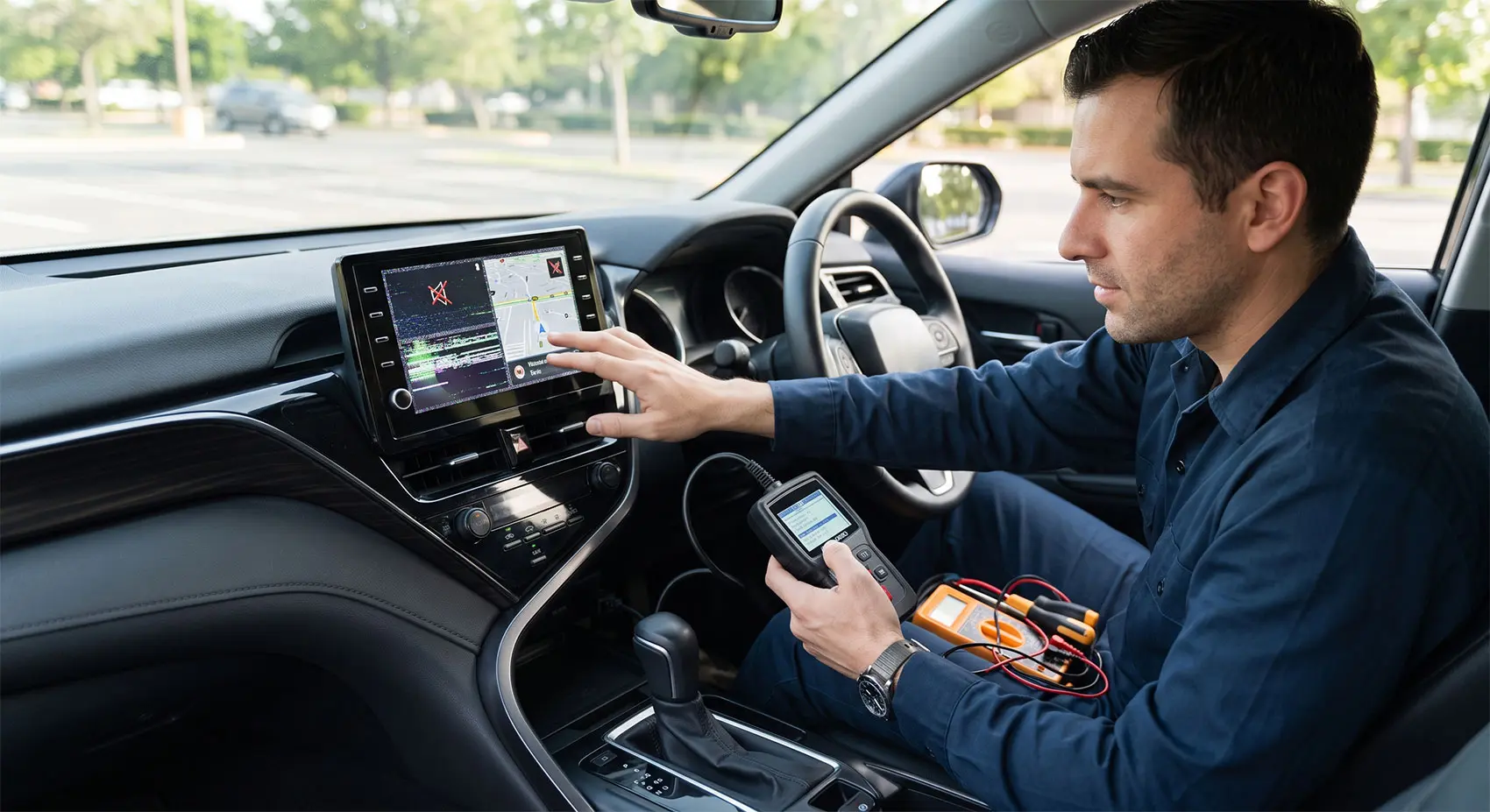
The Inattentive Habit: This psychological disengagement manifests in real-world bad habits: checking a smartphone, adjusting a dashboard screen, or looking out the side window. Because the car has "got this," the driver mentally signs off.
The Rise of Driver Monitoring Systems (DMS)
To combat this exact psychological loophole, automotive safety regulations in 2026 have increasingly mandated the use of Driver Monitoring Systems (DMS).
If the car is going to steer itself, it must now watch the driver to ensure they are still watching the road. These systems typically use small infrared cameras mounted on the steering column or rearview mirror to track your eye movement and head position. If your eyelids droop for more than a fraction of a second, or if your gaze fixes on your phone screen, the car will emit aggressive visual and audible alerts, eventually disabling the cruise features altogether to force you back into reality.
Safety Data vs. Real-World Experience
When evaluating whether driver assistance features are truly making our highways safer, we have to look closely at the dividing line between sterile test tracks and the chaotic reality of everyday asphalt. The data surrounding Advanced Driver Assistance Systems (ADAS) is heavily analyzed by traffic safety organizations, but the conclusions they reach require some careful reading between the lines.
What the Statistics Actually Say
If you look strictly at aggregate data from organizations like the National Highway Traffic Safety Administration (NHTSA) and the Insurance Institute for Highway Safety (IIHS), active safety features look excellent on paper.
-
Reduction in Front-to-Rear Crashes: Systems combining Adaptive Cruise Control with Automatic Emergency Braking show a nearly $50\%$ drop in rear-end collisions.
-
LKA Effectiveness: Specifically looking at Lane-Keep Assist and Lane Departure Warning, the IIHS found that these systems reduce single-vehicle, sideswipe, and head-on crashes by roughly $11\%$, and lower injury crash rates in those categories by $21\%$.
On the surface, an $11\%$ to $21\%$ reduction in catastrophic lane-drift accidents is a massive victory. It translates to thousands of lives saved annually across the globe.
The Real-World Disconnect
However, these macro-statistics obscure a more frustrating day-to-day reality. Safety tests conducted by regulators occur under optimal conditions: perfectly painted lines, pristine weather, predictable targets, and standardized speeds. They rarely account for the human factor or localized environmental anomalies.
Consider how this plays out on a normal commute. A driver experiences an unprompted, aggressive steering wheel jerk because their car misread a stretch of dark tar sealant on the road. The driver panics, manually fights the wheel to stay straight, and feels their heart race. No crash occurred, so this terrifying close-call is never recorded in NHTSA's accident data. Instead, it becomes what engineers call a "nuisance alert."
The real danger of these frequent false alarms is that they cause massive user frustration. IIHS studies tracking real-world driver behavior discovered that up to 33% of drivers actively turn off their Lane-Keep Assist features permanently because they find the persistent buzzing, beeping, and unprompted steering interventions too annoying to live with. When a safety feature is so poorly tuned that a third of your user base disables it entirely, its real-world statistical benefit drops straight to zero.
How to Live Safely with ADAS: Best Practices for 2026 Drivers
As advanced vehicle technology continues to flood the market, drivers must learn how to actively manage these systems rather than relying on them blindly. Staying safe in a semi-autonomous world requires shifting your mindset from a passive occupant to a proactive commander.
1. Shift Your Mindset: It is a Safety Net, Not a Chauffeur
The most crucial change you can make today is psychological. Lane-Keep Assist and Lane Centering are designed exclusively to mitigate human error, not replace human intent.
-
Keep Your Hands on the Wheel: Even if your vehicle allows "hands-free" driving for short intervals, keeping your hands lightly resting on the wheel ensures you can instantly counter an aggressive over-correction or an unexpected dropout without that dangerous 2-to-4-second processing delay.
-
Stay Alert in Transition Zones: Be highly suspicious of the system when navigating construction zones, exiting highways, or driving through intersections where lane lines suddenly expand or disappear.
2. Know When to Manually Disable Active Steering
You do not have to leave ADAS running constantly. In fact, expert drivers know exactly when the technology becomes a liability.
-
Bad Weather: If windshield wipers are on high, or if snow is beginning to coat the asphalt, turn off active lane assistance. The sensors are highly likely to drop out unexpectedly.
-
Winding Rural Roads: On narrow roads without clear shoulders or areas with heavy patchworking (like dark tar snakes), turning off active steering prevents annoying "nuisance alerts" and unexpected wheel tugs.
3. Maintain Your Vehicle's Optical Sensors
Machine vision requires absolute physical clarity to function safely. If the camera behind your rearview mirror is obstructed, the software is compromised.
-
Clean the Windshield: Keep the upper center portion of your windshield entirely clear of dirt, bug splatter, ice, and road grime.
-
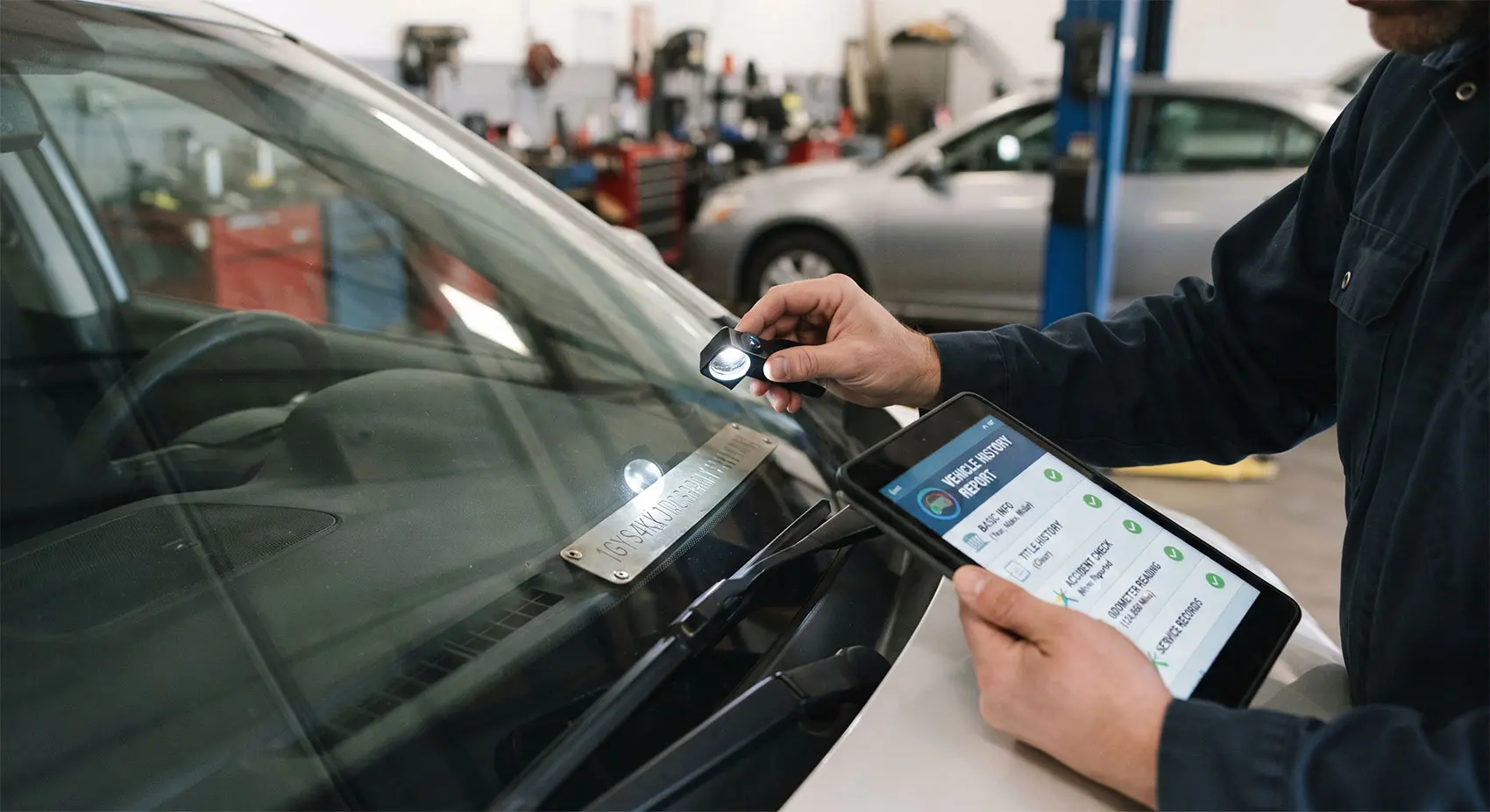
Post-Accident Calibration: If your vehicle is involved in a minor front-end collision or requires a windshield replacement, you must ensure the dealership recalibrates the forward-facing camera system. A camera misaligned by even a fraction of a degree can throw off lane tracking by several feet down the road.
Conclusion
Advanced Driver Assistance Systems, specifically Lane-Keep Assist, are major milestones on our path toward an autonomous future. When functioning under pristine conditions, they serve as a brilliant safety net, quietly preventing devastating accidents born from human fatigue or brief lapses in focus. The data collected by global traffic safety agencies proves that these systems save lives, reducing single-vehicle and lane-drift incidents by a measurable margin. On a clear night during a grueling road trip, having that digital co-pilot watching the road lines with you is an undeniable asset.
However, treating these auxiliary features as an absolute substitute for human vigilance is a critical mistake. As we have explored, machine vision is easily blinded by heavy downpours, direct morning sun glare, and the chaotic infrastructure of everyday construction zones. More dangerous still is the psychological trap of automation complacency, which turns an active, reactive driver into a passive passenger with dangerously slowed reaction times.
Ultimately, Lane-Keep Assist is a tool, not a chauffeur. Your vehicle's software does not possess human context, foresight, or the ability to navigate complex ethical road split-seconds. The technology is only as safe as the driver operating it. By understanding the system’s physical limitations, keeping its optical hardware clean, and maintaining an active grip on the steering column, you can transform ADAS from an unpredictable liability into a powerful, lifesaving shield. Stay informed, stay engaged, and remember that no algorithm can replace the protective instinct of an attentive human mind.




Written by Kousar Shabbir
Published Jun 29, 2026 in Auto Tech.