The Toyota Camry has long been the gold standard of the midsize sedan segment, often serving as the "default" choice for families, commuters, and anyone needing a vehicle that simply works. However, the automotive landscape has shifted dramatically. Beginning with the 2025 model year and continuing into 2026, Toyota transformed the Camry lineup into an exclusively hybrid sedan. This represents a significant inflection point for the brand and the segment at large. For potential buyers, this transition brings the 2026 Toyota Camry Hybrid into the spotlight not just as a reliable appliance, but as a modern, technology-forward machine that promises class-leading efficiency without the range anxiety associated with pure battery-electric vehicles.
Yet, this shift comes with a caveat that every consumer is currently weighing: the price. With an MSRP that reflects both the standard hybrid powertrain and a suite of advanced tech, the 2026 Camry is more expensive than the entry-level models of yesteryear. The central question for the modern buyer is whether this price jump represents a genuine increase in value or if the premium is simply a byproduct of current market trends. Is the 2026 Camry Hybrid actually worth the price tag, or are you paying for features and complexities you might not fully utilize? In this review, we will strip away the marketing gloss to examine the real-world performance, the long-term cost-of-ownership benefits, and the driving experience, helping you decide if this legendary sedan deserves a spot in your driveway.
Exterior and Design Evolution
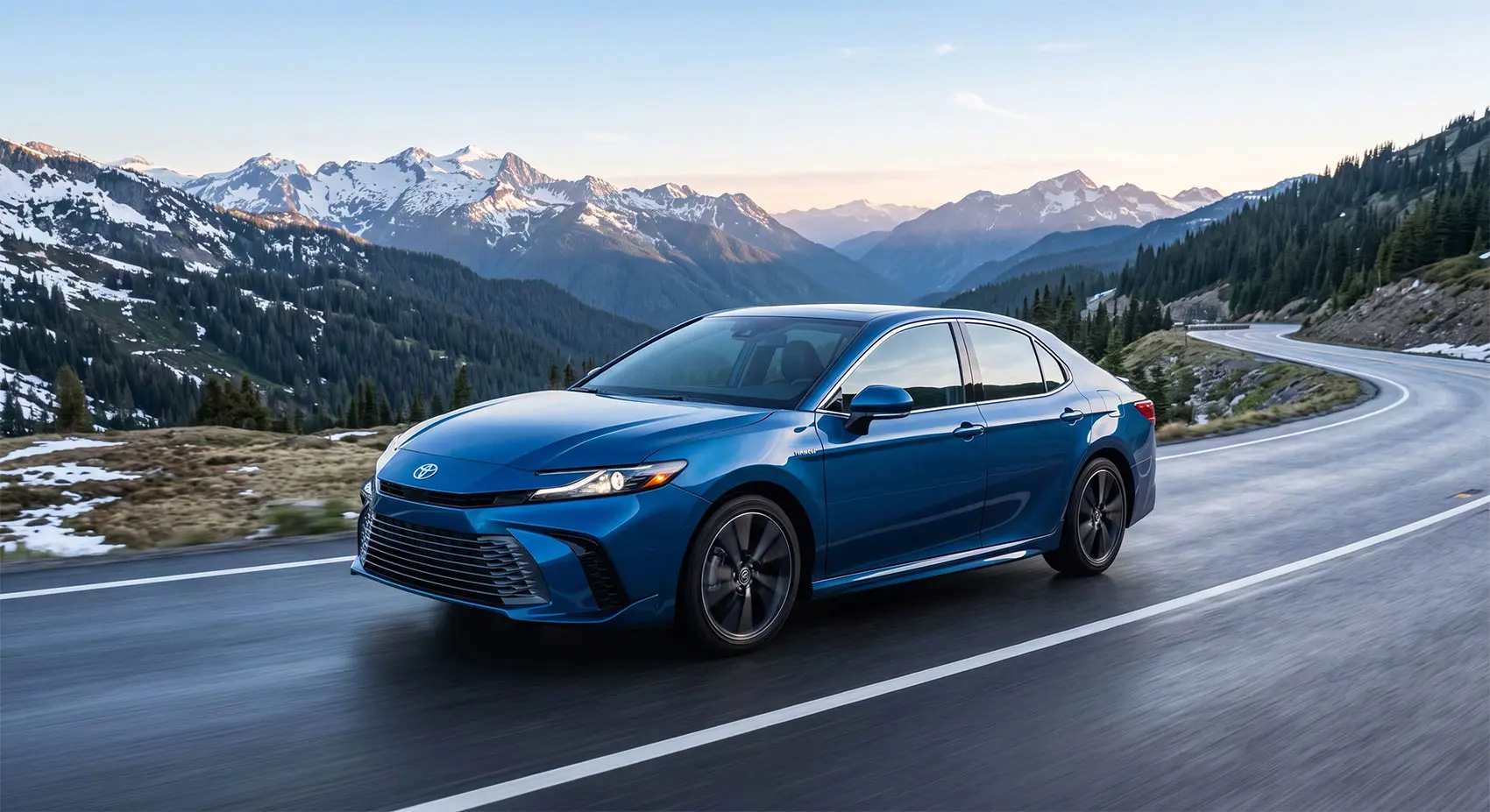
The 2026 Camry marks a departure from the conservative styling that defined its predecessors for decades. Toyota has leaned heavily into what they call the "Hammerhead" design language, which gives the car a much more aggressive, low-slung, and athletic stance. This isn't just about aesthetics; the sharper lines and redesigned front fascia serve a dual purpose by improving aerodynamics, which is critical for maximizing the fuel efficiency of the hybrid system. By reducing drag, Toyota ensures that the car cuts through the air more cleanly, allowing the hybrid powertrain to operate under less stress at highway speeds.
The trim-level differentiation has also become more pronounced. While the LE base model retains a cleaner, more understated look, the XSE trim offers a more athletic profile with larger wheels, sport-tuned suspension components, and distinctive badging. The exterior isn't just a skin-deep change; it reflects a broader effort by Toyota to shed the "boring" reputation the Camry has battled for years. Whether you are looking at the daytime running lights or the sleek profile of the rear decklid, the 2026 model feels like a car that is trying to bridge the gap between a sensible commuter and a stylish modern sedan. For many buyers, this visual upgrade alone justifies part of the price hike, as the car no longer feels like a compromise in style.
Performance: Under the Hood
Under the hood of the 2026 Camry lies the heart of Toyota Hybrid System (THS) Fifth Generation. This isn’t merely an iterative update; it is a refined, highly efficient powertrain that prioritizes seamless power delivery. The 2.5-liter four-cylinder engine is mated to dual electric motors, creating a synergy that produces a combined 232 horsepower for the Electronic On-Demand AWD models, or 225 horsepower for the FWD versions. The immediate torque provided by the electric motors means the Camry no longer feels sluggish during city driving or low-speed maneuvers. It jumps off the line with a confidence that older, strictly combustion-based Camrys lacked.
The introduction of the Electronic On-Demand All-Wheel Drive (AWD) is arguably the most significant performance feature for buyers in climates prone to snow or rain. Unlike traditional mechanical AWD systems that sap fuel economy through constant weight and friction, Toyota’s system utilizes a dedicated rear electric motor that activates only when needed. While this does add some weight to the chassis, the trade-off in traction and stability is substantial. Regarding the transmission, Toyota utilizes an electronically controlled continuously variable transmission (eCVT). While enthusiasts often complain about the "rubber band" effect of traditional CVTs, Toyota’s eCVT is exceptionally well-calibrated. It avoids the high-pitched drone of older systems, instead simulating gear shifts under hard acceleration to provide a more familiar, engaging driving experience. Ultimately, the 2026 Camry Hybrid manages to strike a difficult balance: it remains incredibly efficient for the daily commute, yet it possesses enough punch to handle highway merging and passing maneuvers without hesitation. It is a mature powertrain that prioritizes predictability and comfort, which is exactly what the typical Camry buyer is looking for.
Interior Comfort and Tech
Stepping inside the 2026 Camry, it becomes immediately apparent that Toyota has prioritized modern connectivity and user-friendly ergonomics over flashy, distracting gimmicks. The cabin represents a significant leap forward in terms of perceived quality, with a dashboard layout that feels driver-focused and intuitive. A standout feature is the updated infotainment system, which now anchors the center console with a crisp, responsive touchscreen. Integration with Apple CarPlay and Android Auto is seamless, and unlike some competitors that bury essential climate or audio controls deep within sub-menus, the 2026 Camry keeps physical buttons for primary functions. This is a subtle but vital detail that enhances the "worth" of the vehicle by reducing driver distraction and simplifying daily operation.
Material quality has also seen a marked improvement. While the base models still utilize durable plastics, the higher trims introduce soft-touch surfaces, contrast stitching, and premium seating materials that bring the Camry closer to luxury territory than ever before. Comfort for long-distance driving is excellent, thanks to well-bolstered seats and a chassis that does a commendable job of isolating road noise. Furthermore, the hybrid battery placement under the rear seats has been optimized to ensure that interior legroom and trunk capacity are not sacrificed, maintaining the Camry’s reputation as a legitimate family hauler. While it may not feature the avant-garde, minimalist aesthetic found in some EVs, the 2026 Camry’s interior is a masterclass in functional, high-quality design. It offers the kind of long-term reliability and comfort that ensures the driver feels the value of their purchase every time they sit behind the wheel.
The "Price Tag" Breakdown
When evaluating the 2026 Toyota Camry Hybrid, the "worth" calculation must move beyond the sticker price to consider the Total Cost of Ownership (TCO). In a market where fuel prices fluctuate unpredictably, the Camry’s standard hybrid powertrain offers a consistent, hedge-like benefit. By achieving 51+ MPG in combined driving, the Camry drastically reduces the monthly fuel expenditure compared to traditional midsize sedans. When you compare the MSRP of the 2026 model against the total costs of a non-hybrid vehicle, the "hybrid premium" the extra cost of the battery and electric motors is frequently recouped within the first few years of ownership through fuel savings alone.
Furthermore, depreciation is a critical factor often overlooked by budget-conscious shoppers. Toyota consistently leads the industry in residual value, and the shift to an all-hybrid lineup only reinforces this trend. As fuel efficiency becomes a more dominant factor in the secondary market, the demand for high-mileage, reliable sedans like the Camry is projected to remain incredibly strong. Unlike some competitors that may face steeper depreciation as technology ages, the Camry is viewed by the market as a long-term asset. When you combine these factors lower fuel costs, significantly reduced maintenance needs due to the regenerative braking system preserving brake pads, and sector-leading resale value the 2026 Camry Hybrid ceases to be a "more expensive" car and becomes a calculated financial choice. The higher initial price tag is not a barrier; it is an investment in a vehicle designed to minimize the cost of mobility over a long, productive lifecycle. You are effectively paying upfront for a decade of operational efficiency, which, for the average family or professional commuter, represents a genuine and significant value proposition.
Safety and Reliability
Safety has long been a pillar of the Camry experience, and the 2026 model reinforces this with the standard inclusion of Toyota Safety Sense (TSS) 3.0. This advanced suite of driver-assistance technologies includes a pre-collision system with pedestrian detection, lane departure alert with steering assist, full-speed range dynamic radar cruise control, and proactive driving assist. By standardizing these features across every trim level rather than gating them behind expensive packages Toyota is setting a benchmark for the midsize sedan class. The system operates with a level of refinement that feels unobtrusive, providing peace of mind without the constant, jarring interventions seen in early iterations of such tech.
Reliability is the other side of the safety coin, and this is where the 2026 Camry truly separates itself from the pack. Toyota’s hybrid systems are arguably the most battle-tested in the industry, having been refined over decades of real-world use in millions of vehicles. The move to an all-hybrid lineup for 2026 isn't a leap into the unknown; it is the culmination of years of data-driven engineering. Owners can expect the same legendary durability that has made the Camry a multi-hundred-thousand-mile vehicle. The hybrid battery is designed to last the life of the car, and the lack of traditional components like a complex multi-speed automatic transmission or a turbocharger significantly reduces the number of potential failure points. For the buyer, this translates to predictable maintenance costs and the assurance that the vehicle will remain a dependable asset, regardless of whether it is being used for a grueling daily commute or long family road trips. In essence, the "worth" of the 2026 Camry is anchored by this long-term reliability it is a vehicle that protects you on the road today and minimizes the likelihood of expensive, unexpected repairs tomorrow.
Ownership Myths vs. Reality: Debunking Hybrid Concerns
One of the primary hurdles for potential Camry Hybrid buyers is the lingering list of myths surrounding hybrid technology. Many shoppers still fear that the complex battery systems are "ticking time bombs" that will require a multi-thousand-dollar replacement outside of the warranty period. However, real-world data from the last two decades of Toyota hybrid production paints a much rosier picture. Modern lithium-ion hybrid batteries are engineered to outlast the vehicle's functional life for most owners, with many reaching 200,000 or even 300,000 miles without significant degradation in capacity.
Furthermore, there is a common misconception that hybrid maintenance is inherently more expensive. In reality, the opposite is true. Because the regenerative braking system handles a large portion of the deceleration effort, the friction-based brake pads on a 2026 Camry Hybrid wear down at a significantly slower rate than they would on a standard gas-powered vehicle. You are effectively paying for fewer brake jobs over the life of the car. Additionally, by eliminating components like the alternator, starter motor, and multi-speed transmission all of which are common failure points in traditional sedans Toyota has reduced the total surface area for potential mechanical failure.
When you strip away these myths, the 2026 Camry Hybrid reveals itself to be one of the lowest-maintenance vehicles on the road today. For the average owner, the primary "maintenance" consists of routine oil changes, tire rotations, and cabin air filter replacements the same simple schedule as any standard car. This "set it and forget it" reliability is the true hidden value that doesn't show up on the window sticker, but it certainly shows up in your bank account over five or ten years of ownership.
Final Verdict: Is It Worth It?
Ultimately, the 2026 Toyota Camry Hybrid is more than just a car; it is a strategic response to a changing market that demands both efficiency and long-term utility. To answer the central question is it worth the price tag? we have to look at the profile of the target buyer. If you are a high-mileage commuter who values consistency, low fuel costs, and a vehicle that will reliably serve you for years without the "range anxiety" of a full electric vehicle, the 2026 Camry is undeniably worth the investment. Its price tag reflects the cost of a highly advanced, fifth-generation hybrid system that is already proven to be a benchmark for reliability.
The "premium" you pay upfront is effectively a down payment on reduced fuel and maintenance expenses over the life of the vehicle. When you factor in the resale value, which remains higher than almost any other midsize sedan, the ownership cost over five or ten years becomes significantly more attractive than most of its competitors. While it may not offer the extreme performance of a sports sedan or the minimalist interior of a luxury EV, it succeeds in being a superior "all-rounder." It provides safety, efficiency, and comfort in a package that is designed to minimize the stress of vehicle ownership. For the vast majority of buyers, the 2026 Camry Hybrid is not just a sensible choice it is a smart financial decision that delivers lasting value far beyond its initial MSRP.

Written by Maarukh Shahbaz
Published Jul 13, 2026 in Car Reviews.