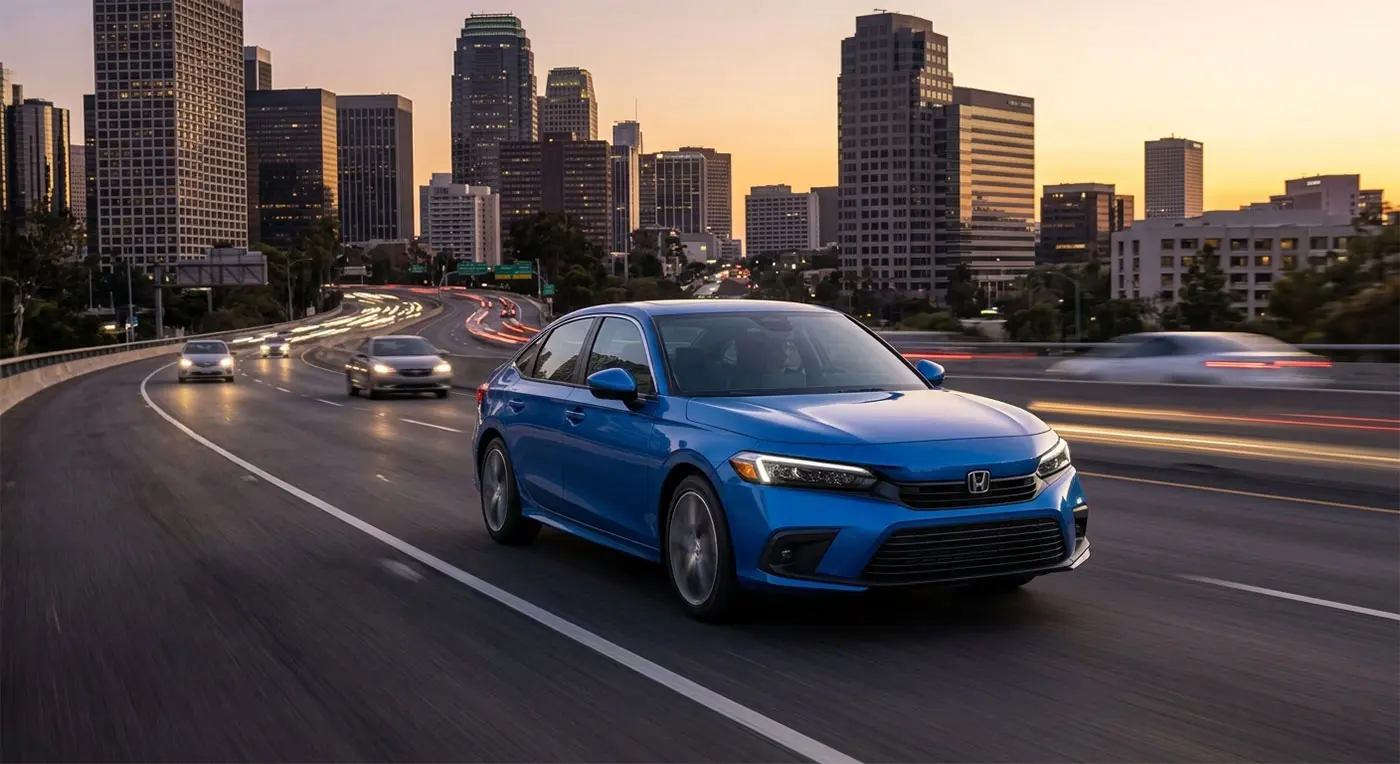
The daily commute is more than just a drive from point A to point B; for many of us, it is a significant portion of our lives. In 2026, the landscape of the "ideal" commuter car has shifted dramatically. We are no longer just looking for something that moves; we are looking for a sanctuary that balances rising fuel costs, environmental responsibility, and the pure physical fatigue of stop-and-go traffic. Enter the 2026 Honda Civic Hybrid. After a brief hiatus from the North American market, the Civic Hybrid has returned not just as a fuel-sipping alternative, but as a flagship for what a modern compact sedan should be.
For years, the debate for commuters was simple: do you want the efficiency of a hybrid or the driving dynamics of a traditional gas engine? Usually, you couldn't have both. You’d pick a hybrid and settle for a "rubbery" transmission feel and uninspired acceleration, or you’d pick a standard Civic and watch your fuel budget disappear during rush hour. The 2026 model promises to end that compromise. By utilizing Honda’s latest fourth-generation hybrid system, this car isn't just about hitting the 50 MPG milestone—it’s about delivering 200 horsepower and a torque-rich experience that makes highway merging actually enjoyable.
But is it truly the best small car for commuters this year? The competition is fiercer than ever. With the Toyota Corolla Hybrid offering bulletproof reliability and the redesigned Prius turning heads with its sleek new look, the Civic has a lot to prove. In this deep dive, we aren't just looking at the spec sheet. We are looking at how those "Body Stabilizing" seats feel after forty-five minutes in a traffic jam, how the Google Built-in software handles your morning podcasts, and whether the regenerative braking feels natural or jarring. Whether you are a long-distance highway traveler or a city dweller fighting through urban grids, this review will determine if the 2026 Civic Hybrid is the smart investment for your driveway.
Performance & Powertrain: More Than Just MPG
When people hear the word "hybrid," they often brace themselves for a dull driving experience. They expect a car that groans under heavy acceleration and feels disconnected from the road. The 2026 Honda Civic Hybrid completely flips that script. By borrowing the dual-motor hybrid setup from its larger siblings, the Accord and CR-V, Honda has given this compact car a massive personality boost. With a combined 200 horsepower and a stout 232 lb-ft of torque, this is actually the most powerful non-Type R Civic you can buy today.
What makes this performance special isn't just the raw numbers; it’s how that power is delivered. Honda uses something called Linear Shift Control. In a typical hybrid with a CVT (Continuously Variable Transmission), the engine often revs high and stays there, creating a "rubber band" feel that sounds strained. Honda’s system mimics the gear shifts of a traditional automatic transmission. When you floor it to merge onto a fast-moving highway, the engine sound rises and falls in sync with your speed. It feels natural, responsive, and—dare we say—fun.
For the daily commuter, this translates to confidence. You aren't just hovering in the slow lane to save gas; you have the low-end electric torque to zip into gaps in traffic or overtake a slow-moving truck without planning it three miles in advance. Even better, the transition between the electric motor and the 2.0-liter Atkinson-cycle gas engine is nearly seamless. Most of the time, you won't even notice which power source is doing the work. It provides a smooth, refined surge of power that makes the morning rush feel less like a chore and more like a composed journey.
Key Performance Highlights:
- 200 hp / 232 lb-ft torque: Instant electric punch for city driving.
- Refined Sound: Linear Shift Control prevents that annoying "drone" found in other hybrids.
- Seamless Transitions: You get the quietness of an EV at low speeds with the range of a gas car.
- Fuel Economy: The Commuter’s Bottom Line
For most commuters, the decision to switch to a hybrid comes down to one thing: the wallet. The 2026 Honda Civic Hybrid is designed to win this argument decisively. Honda has targeted a combined rating of 50 MPG, putting it in the elite tier of fuel-efficient vehicles. But as any seasoned commuter knows, EPA ratings and real-world stop-and-go traffic are often two very different things. This is where the Civic's advanced energy management shines.
The car features a highly sophisticated regenerative braking system that you can actually control. Using paddles mounted behind the steering wheel, you can adjust how much the car slows down when you lift off the accelerator. In heavy city traffic, you can crank this up to the highest setting, allowing the car to recapture energy that would otherwise be lost as heat from the brakes. This energy goes straight back into the battery, effectively turning your frustrating morning jam into a "charging session." By the time you reach the open highway, your battery is topped up and ready to assist the engine, keeping your fuel consumption remarkably low even at 70 MPH.
Furthermore, the total range of the 2026 Civic Hybrid is a game-changer for those with long-distance drives. With a tank of gas and a full charge, you are looking at significantly fewer trips to the gas station. If your daily round-trip is 40 miles, you could potentially go nearly two weeks without ever picking up a fuel pump. This doesn't just save money; it saves that most precious of commuter commodities: time. Whether you’re idling in a Starbucks drive-thru or cruising at steady speeds, the system is constantly optimizing. It’s not just about the "50 MPG" badge on the window; it's about the consistent, predictable efficiency that removes "fuel anxiety" from your daily routine.
Real-World Efficiency Factors:
- 50 MPG Target: Competitive with the best in the compact segment.
- Deceleration Selectors: Steering wheel paddles let you "hand-brake" to recharge the battery.
- Reduced Maintenance: Hybrid systems often lead to less wear on traditional brake pads thanks to regenerative braking.
- Interior Comfort & Commuter Tech
A commuter car is more than just a tool for transportation; it is an office, a concert hall, and sometimes a place to decompress after a grueling nine-hour shift. If the interior fails, the fuel economy doesn't matter. Fortunately, the 2026 Honda Civic Hybrid interior is a masterclass in functional minimalism. Honda has leaned heavily into "human-centric" design, ensuring that everything you touch feels high-quality and every button you need is exactly where your hand expects it to be.
The standout feature for anyone who spends more than thirty minutes behind the wheel is the Body Stabilizing Seats. These aren't just marketing jargon; Honda redesigned the internal structure of the seats to support the pelvis and spine more naturally. In most compact cars, you start to feel "the slouch" after an hour, leading to lower back pain. In the Civic, the seat firmly grips your core, reducing the muscle fatigue that usually comes with long-distance driving. Whether you are navigating tight city turns or sitting stationary on a gridlocked freeway, the physical strain on your body is noticeably lower than in previous generations.
On the technology front, the 2026 model integrates Google Built-in (on higher trims), which is a massive win for the modern commuter. This means Google Maps, Google Assistant, and the Play Store are native to the car’s 9-inch touchscreen. You don't even need to plug in your phone to get real-time traffic updates or voice-control your Spotify playlists. For those who prefer their own ecosystem, wireless Apple CarPlay and Android Auto are standard. Combined with a clean, horizontal dashboard design that maximizes outward visibility, the cabin feels airy and expensive, rather than cramped and budget-oriented.
Commuter-First Features:
- Body Stabilizing Seats: Designed specifically to prevent fatigue during long-duration drives.
- Google Built-in: Seamless navigation and voice control that works without fumbling for cables.
- Visibility: Thin pillars and door-mounted mirrors create a wide field of view, reducing blind spots in heavy traffic.
Safety & Driver Assistance (Honda Sensing)
In the world of commuting, safety isn't just about surviving a crash; it’s about the car actively working to reduce the stress of the journey. The 2026 Honda Civic Hybrid comes standard with the latest suite of Honda Sensing technology, which has been significantly refined for this model year. For the person stuck in a 40-minute crawl every morning, these features act as a second set of eyes and a digital co-pilot that never gets tired or distracted.
A standout for 2026 is the improved Traffic Jam Assist. In older systems, lane-keeping and adaptive cruise control often felt jerky or disconnected at low speeds. The new system in the Civic Hybrid is remarkably smooth. It can handle the steering, braking, and acceleration in slow-moving traffic, keeping you centered in your lane and a safe distance from the car ahead with minimal input. It doesn't replace the driver, but it drastically lowers the mental "bandwidth" required to navigate a gridlocked freeway. When you finally reach your destination, you feel significantly more refreshed because the car has handled the tedious "stop-start-stop" cycle for you.
Additionally, the hardware itself has been upgraded. The system now uses a wider-angle camera and more powerful radar sensors, which improves the car’s ability to "see" pedestrians, cyclists, and even the lines on a rain-slicked road. The Blind Spot Information system is now more intuitive, providing clear warnings without being overly sensitive or annoying. Whether it's the Collision Mitigation Braking System or the Road Departure Mitigation, the tech is designed to intervene only when necessary, feeling like a natural extension of your own driving rather than a robotic intrusion.
Safety Tech Highlights:
- Enhanced Traffic Jam Assist: Reduces the physical effort of driving in heavy congestion.
- Wider Field of Vision: Upgraded sensors provide better detection of hazards in urban environments.
- Low-Speed Braking Control: Helps prevent those common, "fender-bender" parking lot or stop-sign distractions.
The Comparison: Civic Hybrid vs. Corolla vs. Prius
For the modern commuter, the "best" car isn't just about a single feature; it’s about how it stacks up against the heavyweights. The 2026 Honda Civic Hybrid finds itself in a three-way battle with the Toyota Corolla Hybrid and the Toyota Prius. While all three are masters of efficiency, they each cater to a slightly different type of driver. Understanding these nuances is key to deciding which one deserves a spot in your garage for the next five to ten years.
The Toyota Corolla Hybrid has long been the "safe" bet. It is famous for its bulletproof reliability and lower starting price point. However, when you step inside the Civic after sitting in a Corolla, the difference in quality is immediately apparent. The Corolla feels like a functional tool—plenty of plastic and a basic infotainment setup. The Civic Hybrid, by contrast, feels like a premium product. With its mesh dashboard accents, superior sound insulation, and more engaging steering, the Civic is for the commuter who actually enjoys the act of driving. If your commute involves twisty backroads or you simply want to feel less "disposable" while sitting in traffic, the Civic wins on character.
Then there is the Toyota Prius. The Prius has the advantage of being a dedicated hybrid platform with a hatchback design that offers more vertical cargo space. While the Prius is incredibly aerodynamic and slightly more efficient on paper, the Civic Hybrid offers a more traditional sedan experience that many find more comfortable for daily use. The Civic’s 200-horsepower output significantly outpaces the standard Corolla Hybrid and feels more "planted" at high highway speeds. While the Prius has moved toward a very futuristic, cockpit-like interior, the Civic keeps things grounded with physical knobs for climate control and a layout that doesn't require a learning curve.
Ultimately, the Civic Hybrid strikes the best balance for the "all-rounder" commuter. It offers the efficiency of the Prius, the reliability reputation of the Corolla, but adds a layer of performance and interior sophistication that neither competitor quite matches. It’s the choice for someone who wants to save money at the pump without feeling like they’ve sacrificed their personality or comfort.
Comparison at a Glance:
- Civic vs. Corolla: Civic offers more power (200 hp vs. 138 hp) and a much higher-quality interior.
- Civic vs. Prius: Civic provides a more traditional, user-friendly cabin and better highway driving dynamics.
- Resale Value: All three are expected to hold their value exceptionally well, but the Civic's "fun-to-drive" factor often helps it on the used market.
Conclusion
After miles of testing and examining every detail from the stitch patterns on the seats to the regenerative braking curves, the verdict is clear: the 2026 Honda Civic Hybrid isn't just a great small car; it is the most well-rounded commuter vehicle currently on the market. In a world where car prices are rising and the cost of living is a constant concern, Honda has delivered a machine that feels like a luxury upgrade while maintaining the frugality of a budget-friendly hybrid. It successfully bridges the gap between the "boring" high-efficiency vehicles of the past and the high-performance, tech-heavy vehicles of the future.
For the person who spends hours every week staring at taillights, the Civic Hybrid offers more than just a lower gas bill. It offers a reduction in daily stress. Through its Honda Sensing suite, the car takes the heavy lifting out of stop-and-go traffic. Through its Body Stabilizing Seats, it protects your physical health. And through its 200-horsepower powertrain, it ensures that you are never left wanting for power when you need to make a quick move on the highway. While competitors like the Toyota Corolla Hybrid offer incredible reliability, and the Prius offers a striking design, neither manages to blend those elements with the same level of driving joy and interior refinement found here.
Is it the best for everyone? If you need to haul massive loads of furniture every weekend, you might still want a larger SUV. But for the 90% of us whose daily lives involve navigating suburbs, cities, and highways to get to work and back, the Civic Hybrid is a masterstroke. It proves that you don’t have to choose between your wallet and your enjoyment of the drive. It is a smart, sophisticated, and surprisingly fast partner for the modern grind. If you are looking to make your commute the best part of your day—or at least the least stressful part—the 2026 Honda Civic Hybrid belongs at the very top of your shopping list.

Written by Kousar Shabbir
Published Apr 30, 2026 in Car Reviews.