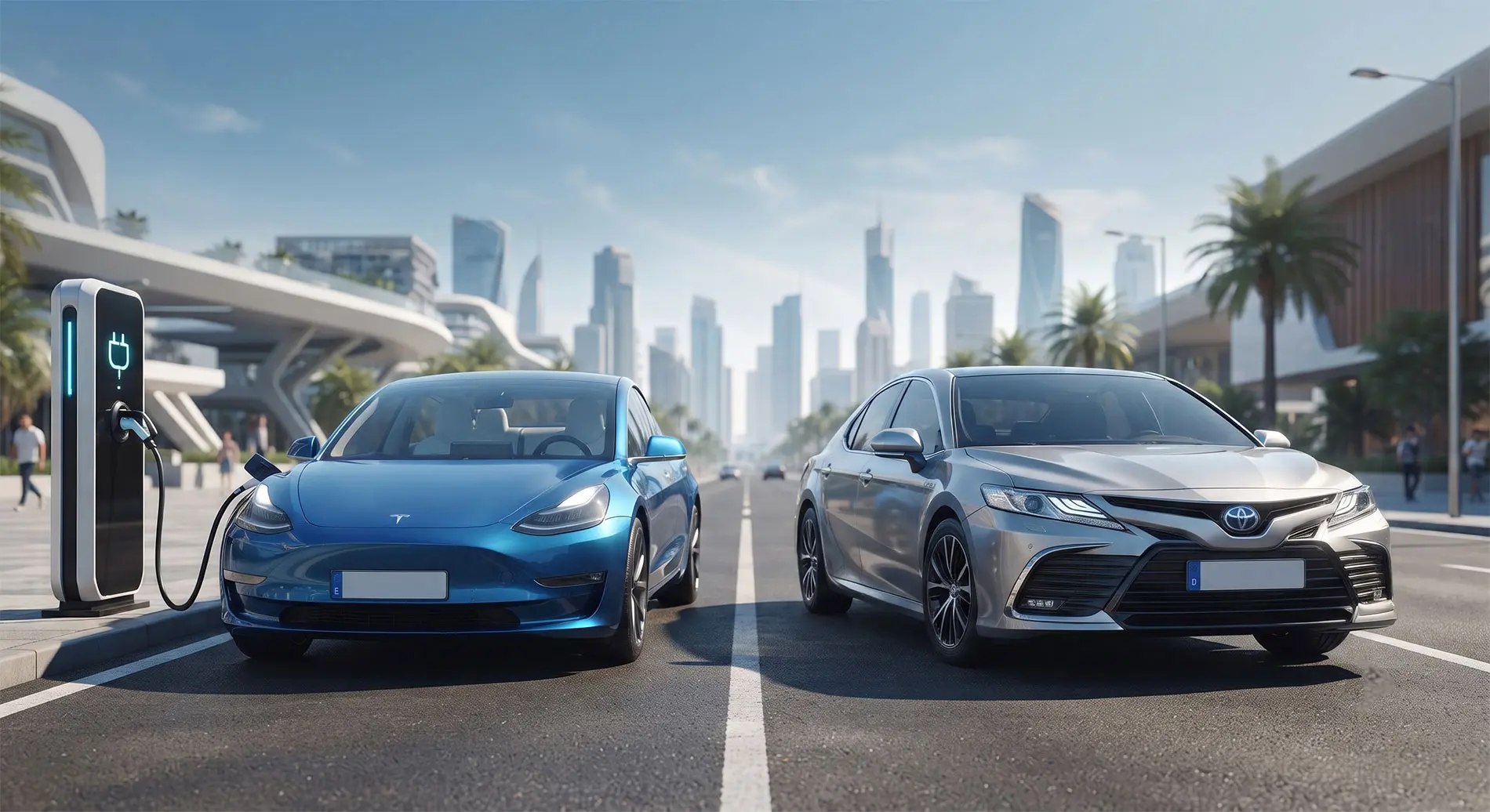
The year 2026 feels like a watershed moment for the automotive industry. As you walk onto a dealership floor, the landscape has shifted dramatically from the confusion of previous years into a more nuanced, sophisticated market. Whether you are a daily commuter in a sprawling metropolis, a suburban parent juggling school runs, or a long-distance road warrior, the question of "what powers my next vehicle" is no longer just about environmental consciousness it is about the fundamental reality of your daily life. On one side, we have the electric vehicle (EV) movement: sleek, high-tech, and promising a future of simplified maintenance and zero tailpipe emissions. On the other side, we have the gold standard of mechanical reliability: the hybrid. Specifically, vehicles like the Toyota Camry Hybrid have become the benchmark for a reason. They represent the "proven" path, offering a bridge between the internal combustion engine of the past and the electrified future.
But why is the choice so difficult in 2026? It isn't just about the price tag anymore.DC fast-charging networks have expanded significantly, although coverage and reliability still vary depending on region. Yet, the persistent infrastructure gaps in rural areas and the reality of battery degradation over long-term ownership keep many buyers anchored to the hybrid platform. This guide isn't here to tell you that one technology is inherently "better" than the other in a vacuum. Instead, we are going to look at the cold, hard data of total cost of ownership, the psychological toll of "range anxiety" versus the convenience of a five-minute fuel stop, and the long-term reliability metrics that will determine if your 2026 purchase is a smart investment or a future headache. Choosing between a cutting-edge EV and a proven hybrid is essentially a choice about your lifestyle architecture. Let’s dive into the metrics to help you make an informed decision.
The Case for the 2026 Hybrid (Focusing on the Toyota Camry)
When you look at the 2026 automotive market, the argument for the hybrid—specifically the Toyota Camry is built on the foundation of "frictionless ownership." In an era where vehicle technology is changing rapidly, there is immense value in a platform that has been perfected over two decades. Toyota’s 5th generation hybrid system is not just a powertrain; it is a masterclass in reliability. By pairing a naturally aspirated 2.5-liter engine with refined electric motors, Toyota avoids the complexity of turbochargers and high-strung transmissions that plague many competitors. This simplicity pays dividends in the long run.
The most compelling argument for the hybrid remains the total absence of "range anxiety." In 2026, while fast-charging networks have expanded significantly, they still cannot match the sheer convenience of the existing gas station infrastructure. Whether you are driving through the high-traffic corridors of a major city or taking a long-distance road trip into remote areas, a hybrid ensures you are never tethered to a charging cable. You refuel in five minutes, pay for your coffee, and you are back on the road. For many families and professionals, this operational continuity is worth more than any theoretical efficiency metric.
Furthermore, the economics of the Camry Hybrid are bolstered by its legendary resale value. Because the vehicle’s mechanical architecture is so well-understood and its longevity is well-documented—with many units regularly surpassing the 200,000-mile mark—depreciation is significantly slower compared to many pure EVs. When you purchase a Camry Hybrid, you aren't just buying a car; you are buying a long-term asset that maintains its market relevance. With a 10-year/150,000-mile warranty on hybrid components, the "risk" of modern electrified driving is effectively mitigated, leaving you with a vehicle that is predictable, affordable to insure, and remarkably cheap to maintain over a five-year ownership horizon.
The Case for the 2026 EV (Focusing on Daily Utility)
While the hybrid offers the comfort of familiarity, the 2026 Electric Vehicle (EV) offers a vision of the future that is increasingly difficult to ignore, especially for the tech-savvy daily commuter. If you are a resident in a suburban or urban area where you have access to a dedicated Level 2 home charger, the ownership experience of an EV effectively flips the traditional car-ownership model on its head. You are no longer "filling up" at a station; you are "topping off" at home, much like your smartphone. The morning routine of stepping into a pre-conditioned cabin, fully charged and ready to go without ever visiting a gas station, is a convenience that—once experienced—is hard to relinquish.
From a maintenance perspective, the EV is structurally simpler than a Toyota Camry Hybrid. With no internal combustion engine, there are no oil changes, no spark plugs, no transmission fluids to flush, and significantly fewer moving parts that can fail over time. In 2026, the cost of ownership math heavily favors the EV if you are calculating over a five-to-eight-year ownership cycle. While the initial sticker price of many EVs remains higher than a traditional hybrid, the total cost of ownership (TCO) is rapidly narrowing due to lower fuel costs and reduced service intervals.
Beyond the economics, the "experience" of driving an EV in 2026 has matured. With the integration of advanced Over-the-Air (OTA) software updates, your vehicle essentially gains features and improves efficiency long after you’ve driven it off the lot. Manufacturers have moved past the "early adopter" phase, and the latest generation of EVs offers interior layouts and driver-assistance systems that feel generations ahead of their internal combustion counterparts. For those who view their vehicle as an extension of their digital lifestyle, the seamless connectivity and performance of a modern EV make the traditional hybrid feel, quite frankly, like a relic of a bygone era. If your lifestyle allows for home charging and your commute is predictable, the EV doesn't just promise efficiency—it promises a fundamentally different and more modern way of interacting with the road.
Real-World Comparison: The "Total Cost of Ownership" Math
When you strip away the marketing hype and the emotional appeal of "going green," the battle between the 2026 Toyota Camry Hybrid and a modern electric vehicle comes down to a battle of spreadsheets. The traditional narrative that EVs are "cheaper" is becoming increasingly nuanced in 2026. The initial purchase price remains the most significant hurdle. The Camry Hybrid, benefiting from decades of manufacturing scale and a mature supply chain, typically enters the market at a price point that is several thousand dollars lower than a comparable mid-size EV. For the average buyer, this upfront cash-flow difference is significant. When you factor in current interest rates, that lower sticker price on the hybrid translates into lower monthly payments, which can be the difference between affordability and a budget stretch.
However, the "Total Cost of Ownership" (TCO) calculation shifts as you cross the three-to-five-year mark. While the Toyota requires regular maintenance oil changes every 10,000 miles, filter replacements, and the occasional spark plug service the cumulative cost of these items is relatively predictable and modest. Conversely, the EV eliminates these costs entirely. In 2026, the real variable is electricity pricing versus gasoline volatility. In regions with high electricity costs, the "fuel" savings of an EV can be marginal. But for those who have invested in home solar arrays or live in areas with favorable residential electricity rates, the cost per mile for an EV is drastically lower than the gas-equivalent for the Camry.
Furthermore, we must account for the "Insurance Premium Penalty" that still lingers for many EV models. In 2026, insurance companies are still adjusting to the higher cost of body repairs and battery replacements for electric vehicles, which can lead to premiums that are 15% to 25% higher than a traditional hybrid sedan. When you total these figures depreciation, fuel/energy, maintenance, and insurance over a standard five-year ownership term, the gap between the Camry Hybrid and a mid-range EV is surprisingly thin. If you prioritize predictable, low-risk expenses, the hybrid wins. If you are willing to navigate higher upfront costs and potential insurance volatility for the sake of long-term efficiency and minimal mechanical maintenance, the EV becomes the logical fiscal choice. It is no longer about which one is "cheaper" globally; it is about which financial trade-offs align with your specific household budget and local energy costs.
Infrastructure & Lifestyle – Who Should Buy What?
The decision between a 2026 Toyota Camry Hybrid and a modern EV ultimately comes down to your personal "infrastructure reality." In 2026, the term "infrastructure" encompasses more than just public charging stations; it refers to the environment in which you live, work, and travel. If you are a suburban homeowner with a garage or driveway where you can install a Level 2 charger, the EV becomes a seamless, "always-ready" appliance. In this scenario, the convenience factor of the EV actually surpasses that of the hybrid, because you effectively eliminate the "errand" of stopping for gas. You wake up every morning with a "full tank," which is a luxury of time and convenience that is often overlooked in traditional comparisons. For the suburban commuter whose daily mileage rarely exceeds the range of a standard mid-range EV, the switch to electric is not just an environmental choice it is a lifestyle upgrade that removes the weekly chore of visiting a fuel station.
However, if your living situation does not support home charging—such as living in an apartment complex, an older urban center, or a region where parking is strictly street-based—the EV ownership experience changes from a luxury to a logistical hurdle. In 2026, despite the massive expansion of public charging networks, relying solely on them requires a shift in mindset. You must plan your day around your car's energy needs, occasionally waiting at charging stations or altering your route to accommodate "top-offs." This is where the 2026 Toyota Camry Hybrid remains the undisputed king of convenience. For the urban dweller, the hybrid offers the same "refuel-and-go" agility as a traditional gas car. It allows you to navigate the city without the mental load of managing a charging schedule.
Finally, we must consider the "road trip" factor. If your lifestyle involves frequent long-distance travel, especially through rural regions or areas where high-speed charging is still in its infancy, the Camry Hybrid offers a level of operational certainty that most EVs cannot yet match. You can traverse the country with the confidence that you will find fuel at every exit, regardless of the local power grid's status. The hybrid doesn't care if the charger is broken, occupied, or non-existent. Ultimately, the "right" choice isn't found in the spec sheet it is found in your garage. If you can charge at home, the EV is the future. If you value absolute freedom from the charging infrastructure, the Camry Hybrid is the present.
Conclusion
As we close the book on the 2026 automotive debate, the choice between a new EV and a proven hybrid like the Toyota Camry comes down to one fundamental question: How much do you value "predictability" versus "innovation"? There is no objective winner here, only the choice that aligns with your specific life stage, local infrastructure, and budget.
The Toyota Camry Hybrid remains the rational choice for the vast majority of drivers in 2026. It is a vehicle that asks nothing of you. It does not require you to upgrade your home’s electrical panel, it does not force you to map your life around public charging availability, and it certainly does not punish your wallet with the rapid depreciation often seen in the volatile EV market. It is the "frictionless" option—a reliable, fuel-efficient partner that excels at the core purpose of a vehicle: getting you from point A to point B with absolute certainty. If you value peace of mind and the ability to drive anywhere, at any time, without a second thought, the Camry is not just a legacy choice; it is a smart, strategic investment.
On the other hand, the EV is for those who are ready to embrace a new lifestyle. If you have the luxury of home charging, the EV isn't just a car; it is a shift in your daily experience. It removes the gas station from your routine, lowers your mechanical maintenance overhead, and delivers a driving experience that feels, quite literally, electric. While the initial costs may be higher and the infrastructure outside major metros still has growing pains, the long-term trajectory is clear.
Ultimately, if you are a "plan-ahead" person with a stable living situation, the EV is the future you can enjoy today. If you are a "go-with-the-flow" person who demands total freedom and low-maintenance reliability, the hybrid is the current gold standard. The 2026 market is diverse enough to accommodate both, and whichever path you choose, you are benefiting from the most advanced automotive technology ever produced. Choose the vehicle that fits the life you live today, not the life you hope to live tomorrow.




Written by Maarukh Shahbaz
Published Jul 6, 2026 in Buying Guides.