For decades, buying a car was a transaction rooted in "mechanical certainty." You drove it off the lot, and from that moment, the vehicle was essentially frozen in time—a complex assembly of steel, rubber, and fixed hardware that slowly depreciated until its eventual retirement. However, as we move through 2026, that paradigm hasn't just shifted; it has been completely overwritten. The automotive industry has crossed a critical inflection point, transitioning from a hardware-first mindset to the era of the Software-Defined Vehicle (SDV).
In 2026, your car is no longer a static machine; it is a living, breathing digital platform. Valued at approximately $360 billion this year alone, the SDV market has moved past the "hype" phase and into full-scale industrialization. Whether you are driving a cutting-edge Battery Electric Vehicle (BEV) or a modern Internal Combustion Engine (ICE) model, the value of your ride is increasingly determined by the code running under the hood rather than the pistons firing within it.
The "smartphone on wheels" analogy, once a futuristic trope, is now a daily reality. Just as your phone receives updates that improve its camera quality or battery life overnight, 2026 models are receiving Over-the-Air (OTA) updates that can increase horsepower, refine suspension dampening, or add entire layers of autonomous driving capability while the owner sleeps. This shift represents the most significant architectural revolution since the assembly line. By decoupling hardware from software, manufacturers are finally able to innovate at the speed of Silicon Valley, rather than the four-year cycles of traditional automotive engineering.
In this 2026 outlook, we will explore how centralized supercomputers are replacing messy wiring, why Artificial Intelligence is turning cars into "self-learning" companions, and how the global power balance is shifting as tech giants and legacy automakers fight for control of the digital cockpit. Buckle up; the car you buy today is finally ready to get better tomorrow.
The Architectural Revolution—Zonal Computing & Hardware Decoupling
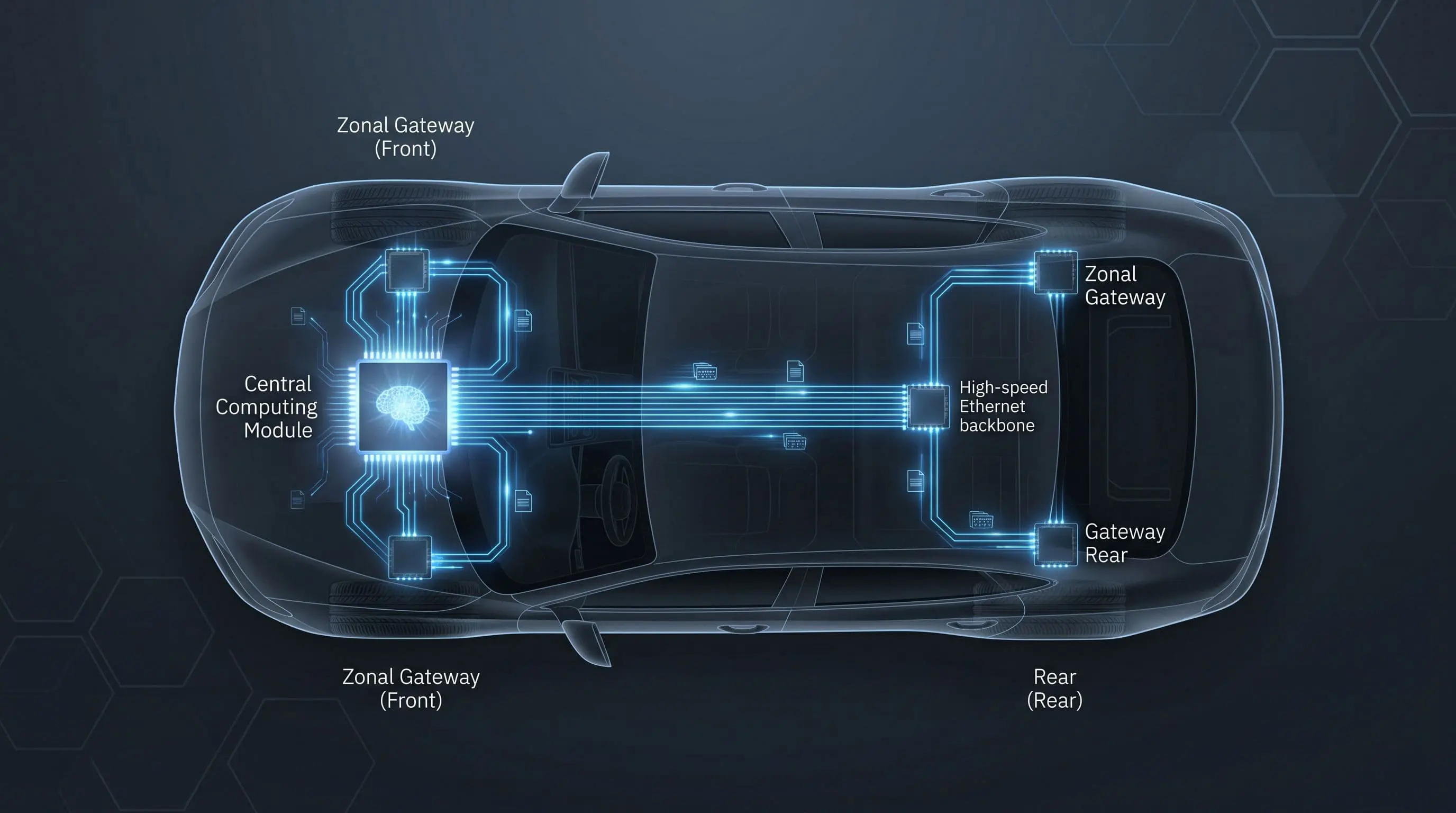
In the old world of automotive design, adding a new feature—like a lane-keep assist or a premium audio system—usually meant adding a new "black box" called an Electronic Control Unit (ECU). By the early 2020s, premium cars were bloated with over 100 of these independent units, connected by miles of heavy, expensive copper wiring. In 2026, the industry has finally cut the cord. We have moved into the era of Zonal Architecture, a streamlined approach where a few powerful "Central Computers" manage the entire vehicle’s intelligence.
This shift is more than just an engineering flex; it is a weight-loss program for the modern car. By organizing the vehicle into zones (front-left, front-right, rear, etc.) and connecting them to a central brain, manufacturers have stripped out nearly 50kg (110 lbs) of wiring harness weight. For EVs, this translates directly into better range; for ICE vehicles, it means higher fuel efficiency. But the real magic isn't the weight—it’s the decoupling.
By separating the software from the specific hardware components, automakers have solved the "planned obsolescence" problem. In a 2026 SDV, the software is "hardware agnostic." This means if a sensor fails or a better chip becomes available, the software can be ported over without rewriting millions of lines of code. It allows for a modularity we’ve never seen before:
-
Plug-and-Play Upgrades: Owners can upgrade their cockpit processing power or storage just like a desktop PC.
-
Reduced Complexity: Reducing 100+ ECUs to 3 or 4 central hubs makes it infinitely easier to debug and update the car.
-
Longevity: A car purchased in 2026 is designed to remain "modern" for at least 15 years through continuous software refreshes, fundamentally changing the resale value landscape.
Artificial Intelligence & The "Self-Learning" Car
By 2026, the term "Software-Defined" has evolved into something much more profound: AI-Defined. We are no longer talking about static lines of code that perform a single task; we are talking about neural networks that learn from every mile driven. In this new outlook, the vehicle is not just a tool for transportation—it is a cognitive partner that understands its environment and its driver with uncanny precision.
The most visible change is in the Generative AI Cockpit. Gone are the days of frustrating, "clunky" voice commands that fail to recognize your accent or intent. The 2026 car features an onboard Large Language Model (LLM) that acts as a true personal assistant. It doesn't just "turn on the AC"; it understands context. If you say, "I'm feeling a bit tired and have a long drive ahead," the car might automatically adjust the seat haptics to keep you alert, suggest a nearby high-protein snack, and switch the ambient lighting to a stimulating blue hue.
Beyond the cabin, AI is revolutionizing Predictive Maintenance. Traditionally, you took your car to a mechanic when a light appeared on the dashboard—often when the damage was already done. In 2026, the SDV uses "Digital Twins" (virtual copies of your car’s components) to simulate wear and tear in real-time.
-
Real-world example: Your car’s AI detects a subtle vibration pattern in the electric motor that deviates from the "healthy" baseline by 0.5%.
-
The Action: It notifies you via your smartphone, schedules a service appointment automatically, or in some cases, downloads a software patch that adjusts the motor’s torque delivery to bypass the mechanical stress until you reach the shop.
This intelligence extends to safety through AI-Powered Perception. By processing petabytes of fleet data, your car can "see" around corners by communicating with other vehicles (V2X). If a car three blocks ahead slams on its brakes, your SDV knows before your eyes ever could, prepping the braking system for an emergency stop before you even touch the pedal.
The OTA Economy—Monetization & The End of Dealership Dread
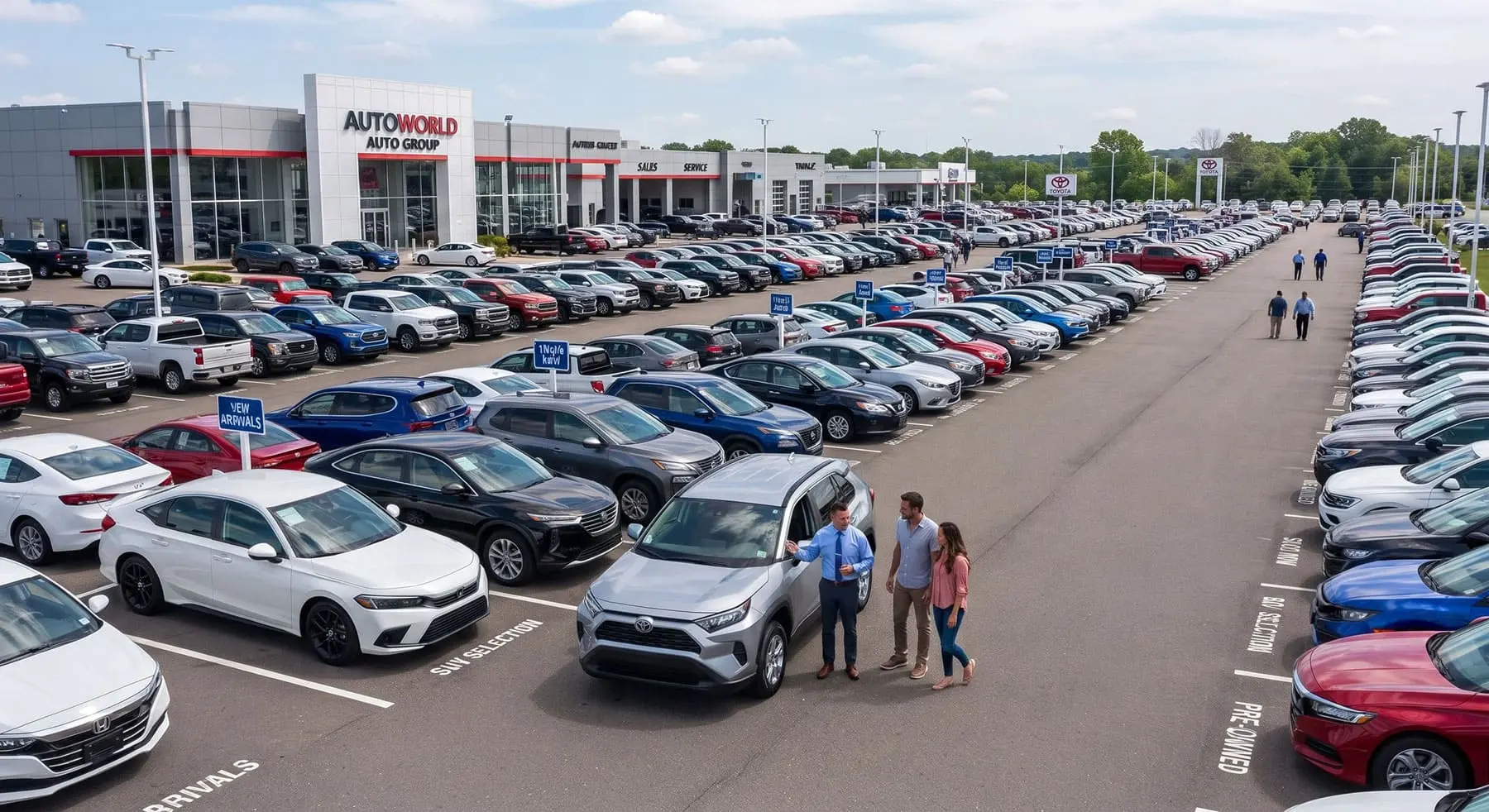
The year 2026 marks the end of the traditional "set it and forget it" business model for automakers. In the past, once a car left the dealership, the manufacturer’s revenue stream largely dried up until the owner needed a new one. Today, the Over-the-Air (OTA) economy has turned vehicles into recurring revenue platforms. This shift is fundamentally changing how we buy, maintain, and even upgrade our cars.
One of the most talked-about (and controversial) trends is Feature-on-Demand (FoD). Instead of choosing fixed options at the time of purchase, owners can subscribe to or unlock features as needed.
-
The "Seasonal" Car: Driving to the mountains for a weekend? You can download "Off-Road Pro Mode" for 48 hours to gain better hill-descent control and increased ground clearance.
-
The Performance Boost: Buying a used car and want more speed? A one-time payment can unlock an extra 50 horsepower that was previously restricted by software.
-
Subscription Services: While heated seats as a subscription met massive backlash in the early 2020s, 2026 has found a "middle ground" where high-value digital services—like advanced AI navigation or premium audio tuning—are the primary subscription drivers.
Perhaps the greatest relief for the 2026 consumer is the Death of the Physical Recall. Historically, a software bug in a braking system or an engine controller meant a time-consuming trip to a dealership. Now, 90% of non-mechanical safety recalls are handled via overnight updates. You go to sleep with a bug and wake up with a fix.
Furthermore, the "Legacy Bridge" has extended this digital life to Internal Combustion (ICE) vehicles. While EVs are the primary focus of SDV technology, 2026's software platforms are increasingly "powertrain agnostic." This means a gas-powered SUV can now benefit from the same sophisticated cabin AI and predictive maintenance as its electric counterparts, preventing legacy fleets from becoming obsolete in a rapidly digitizing market.
The Global Power Shift—Tech Giants vs. Legacy Auto
As we navigate 2026, the automotive leaderboard looks radically different than it did a decade ago. The "Software-Defined" revolution has triggered a global power struggle, forcing a massive realignment between traditional car manufacturers (Legacy OEMs), tech titans, and the agile disruptors of the East. The core question of 2026 is no longer "Who builds the best engine?" but "Who owns the operating system?"
The Rise of "China Speed"
Perhaps the most striking trend in 2026 is the dominance of Chinese OEMs like BYD, NIO, and XPENG. These companies didn't have to "pivot" to software; they were born in it. At the recent Auto China 2026 in Beijing, the gap became undeniable. While Western brands are still integrating software into their cars, Chinese manufacturers are treating cars as nodes in a wider Intelligent Mobility Ecosystem. They are moving at "China Speed"—shrinking development cycles from five years down to twenty-four months. By integrating cloud-based AI with vehicle-edge processing (such as BYD’s Xuanji architecture), they have created cars that are essentially high-performance computers that happen to have wheels.
The Western Fightback: Partnerships over Competition
In the West, legacy giants are realizing they cannot win the software war alone. 2026 has seen the maturation of "unlikely" alliances. A prime example is the RV Tech joint venture between Volkswagen and Rivian. In April 2026, this partnership cleared a massive milestone: the successful winter validation of their shared zonal SDV platform.
By investing billions into tech-native companies like Rivian, legacy players like VW are bypassing their own internal "software struggles" (which plagued them in the early 2020s) to secure a production-ready OS for their upcoming Audi and Porsche fleets. We are seeing a shift from vertical integration (making everything yourself) to ecosystem integration (orchestrating the best software and hardware from various partners).
The Silicon Valley Invasion
Meanwhile, the "Silicon Valley" contingent—NVIDIA, Qualcomm, and Google—has moved from being mere suppliers to the primary architects of the driving experience. In 2026, the "Digital Cockpit" is often powered by the same chips found in high-end AI servers.
-
NVIDIA Drive and Qualcomm Snapdragon Digital Chassis have become the "Intel Inside" of the auto world.
-
These tech giants now hold immense leverage over automakers, as the car's value is increasingly tied to the AI-powered cockpit platforms and Autonomous Driving stacks these silicon providers deliver.
The traditional power dynamic has flipped: in many cases, the automaker is becoming the "contract manufacturer" for the tech company's vision of mobility.
Challenges & The "Trust Gap"
While the technological leaps of 2026 are breathtaking, the transition to software-defined vehicles hasn't been without friction. As cars become data-hungry, hyper-connected machines, the industry is facing a "Trust Gap" that threatens to slow adoption. This isn't just about technical bugs; it’s about the fundamental relationship between a driver and their property.
The Subscription Fatigue Crisis
By mid-2026, "Subscription Fatigue" has become a genuine consumer revolt. After years of testing the waters, some automakers have pushed the "Feature-on-Demand" model too far. When a driver in 2026 realizes that their hardware—already paid for at the dealership—is being "gated" by a monthly fee (such as high-beam assist or heated steering wheels), the backlash is swift and vocal. To survive, brands are having to pivot toward Value-Added Services (like premium streaming or autonomous parking) rather than charging for basic mechanical functions.
Cybersecurity: The New Safety Rating
In the SDV era, a five-star crash test rating is no longer enough. In 2026, the industry is hyper-focused on Cyber-Resilience. As vehicles become mobile data centers, they represent high-value targets for hackers.
-
The Threat: A "Zero-Day" exploit could theoretically affect an entire fleet of hundreds of thousands of vehicles simultaneously.
-
The Solution: Automakers are now employing military-grade "Red Teams" to constantly probe their own software. In 2026, we see the widespread adoption of Hardware Security Modules (HSMs) and encrypted "Zonal Tunnels" that isolate critical driving functions (braking/steering) from the infotainment system. If your Spotify app hangs, it literally cannot touch your brakes.
Data Privacy: Who Owns Your Commute?
Finally, there is the question of Data Sovereignty. A 2026 SDV generates up to 25 gigabytes of data per hour. This includes everything from your location history and driving style to biometric data from in-cabin cameras. Global regulations, such as the matured "Automotive Data Act" in the EU, are forcing manufacturers to be transparent. In 2026, users are beginning to demand "Data Dividends"—if a car company is selling your driving data to insurance firms or city planners, consumers want a cut of that value, often in the form of lower subscription fees or free OTA upgrades.
Conclusion: What to Expect When You Step into a 2026 Model
As we look back at the trajectory of the automotive industry, 2026 will be remembered as the year the "mechanical car" finally became a "digital experience." The rise of Software-Defined Vehicles has fundamentally altered the DNA of transportation. When you step into a 2026 model, you aren't just entering a vehicle; you are logging into a mobile ecosystem that is as personal as your smartphone and as powerful as a high-end workstation.
The impact of this shift extends far beyond the driver’s seat. It has redefined resale value, turning the traditional depreciation curve on its head. Cars that receive regular, high-value OTA updates are retaining their value far better than those tethered to old-school service models. Moreover, the environmental impact is significant—zonal architecture has made vehicles lighter and more efficient, while software-led battery management is squeezing 15–20% more range out of the same physical cells compared to just five years ago.
However, the most profound change is the shift in expectation. In 2026, the consumer's relationship with their car is built on continuous improvement. We no longer accept that a car is at its "best" on the day of purchase; instead, we expect it to grow more capable, safer, and more intuitive over time. While challenges regarding data privacy and subscription models remain, the benefits of a self-learning, hyper-connected, and hardware-agnostic vehicle are too great to ignore. The automotive industry has finally caught up with the digital age, and the road ahead has never looked more intelligent.


Written by Kousar Shabbir
Published Apr 29, 2026 in Auto News.