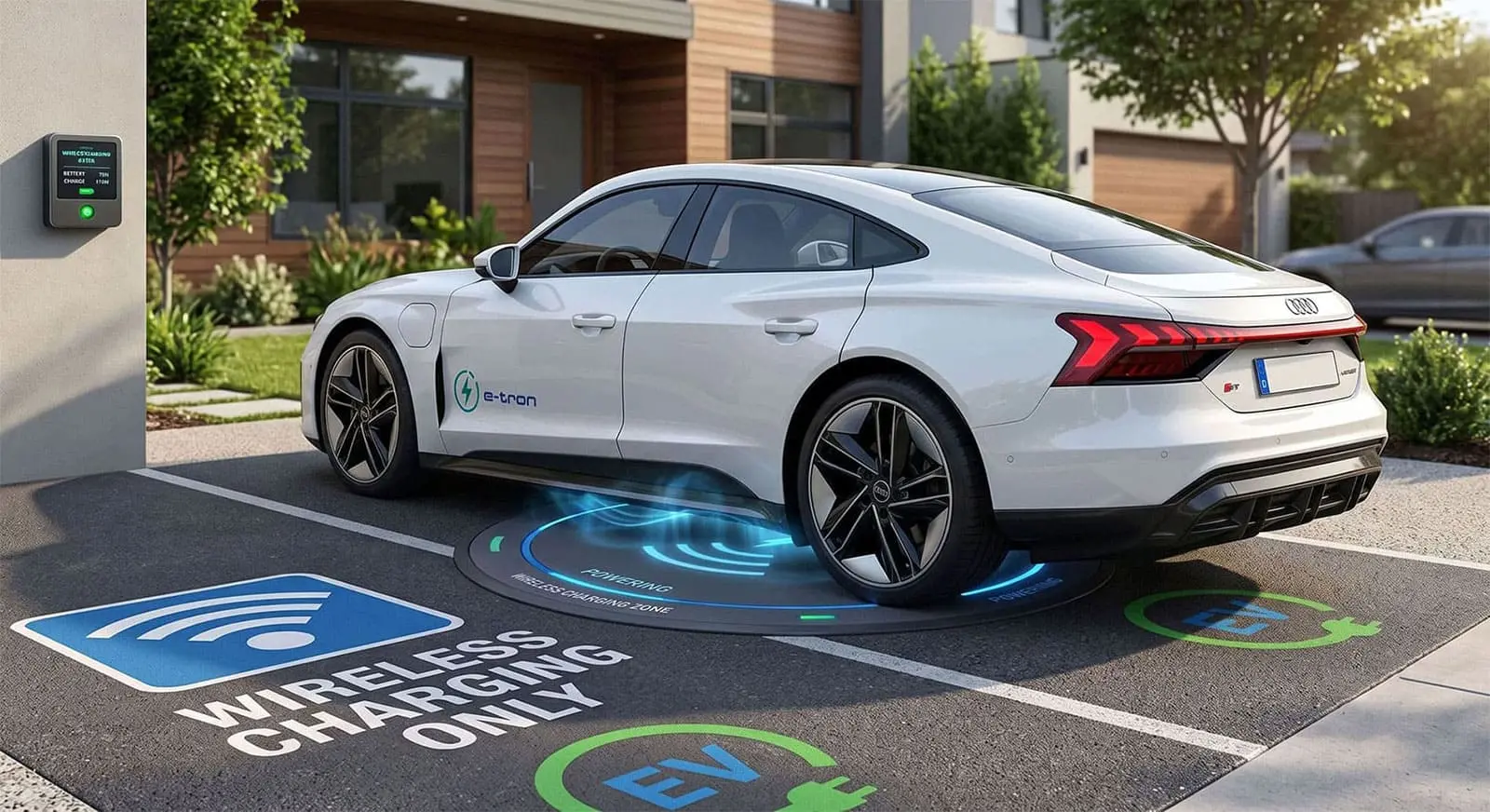
The internal combustion engine has had a century-long head start, conditioning drivers to a specific psychological rhythm: you watch a needle or a digital gauge drop, you pull into a brightly lit station, you insert a nozzle, and three minutes later you are gone. Electric vehicles (EVs) fundamentally disrupt this deeply ingrained habit. Instead of a three-minute chore, refueling becomes an administrative task assigned to your driveway or a public parking stall, tethered to thick, heavy cords that are often cold, wet, or unyielding in the dead of winter. It is this forced behavioral shift coupled with the looming fear of being stranded with an empty battery and nowhere to plug in that sustains "range anxiety." Range anxiety isn’t just a logistical calculation; it is a psychological barrier that remains one of the largest single hurdles to mass EV adoption globally.
But what if the solution to range anxiety isn't building bigger, heavier batteries or installing millions of high-voltage plug-in pedestals? What if the future of fueling is completely ambient, invisible, and entirely hands-free?
Enter wireless electric vehicle charging. By utilizing magnetic fields to transfer power across open air spaces, wireless charging technology aims to change how we interact with electric cars. Instead of actively "charging" a car, your vehicle simply accumulates energy passively while parked or, more revolutionary still, while cruising down the highway. This technology splits into two main implementation models: static wireless power transfer (SWPT), where a vehicle charges while stationary over a dedicated pad, and dynamic wireless power transfer (DWPT), where charging coils embedded beneath the asphalt supply energy to vehicles in motion. As we navigate the infrastructure demands of 2026 and beyond, cutting the physical cord represents the structural and psychological shift required to transition electric mobility from an enthusiast market into the global default.
The Mechanics: How Wireless EV Charging Actually Works
At its core, wireless EV charging eliminates the physical plug by utilizing the principles of electromagnetism to transfer energy across an air gap. While the average consumer might be familiar with wireless charging via the small Qi pads used for smartphones, scaling this technology to safely and rapidly transfer tens or hundreds of kilowatts to a vehicle requires advanced engineering. The system primarily relies on two main methodologies: standard inductive charging and magnetic resonance charging.
Inductive vs. Magnetic Resonance Power Transfer
Traditional inductive charging requires precise, close alignment between two conductive coils. An alternating current (AC) is passed through a ground transmitter pad, creating a localized magnetic field. When a matching receiver pad attached to the underside of the EV enters this magnetic field, an electrical current is induced in the vehicle's coil, which is then converted to direct current (DC) to charge the battery pack.
Magnetic resonance charging takes this a step further by tuning both the transmitter and receiver coils to the exact same electromagnetic resonant frequency. This allows high-efficiency power transfer to occur over greater vertical distances and offers much higher tolerance for lateral misalignment. If you park slightly crooked or a few inches off-center, the energy still flows seamlessly.
The Anatomy of the Hardware
A complete wireless power transfer system consists of four critical structural components:
-
The Grid Tie and Inverter: Converts utility power into high-frequency alternating current required by the pad.
-
The Ground Transmitter Pad (Tx): Usually embedded directly into the asphalt or mounted flat on a garage floor, built to withstand heavy tire traffic and extreme weather.
-
The Vehicle Receiver Pad (Rx): A lightweight, shielded coil assembly mounted underneath the EV chassis.
-
The Onboard Rectifier: Converts the captured high-frequency AC power back into stable DC power compatible with the vehicle’s Battery Management System (BMS).
Keeping it Aligned: Automated Guidance
To maximize energy transfer, automakers integrate intelligent alignment systems. Using ultra-wideband (UWB) wireless sensors, short-range radar, or around-view cameras, the vehicle's infotainment system guides the driver precisely over the sweet spot of the charging pad. In vehicles equipped with automated parking or semi-autonomous software, the car can align itself entirely without driver intervention, turning the act of charging into a completely hands-off experience.
The Efficiency Debate: Cords vs. Air Space
One of the most persistent criticisms of wireless EV charging is the assumption of massive energy waste. Sceptics often point to early generations of smartphone charging pads, which generated noticeable heat and lost a significant percentage of power to the surrounding air. However, scaling wireless power transfer to vehicular levels operates on an entirely different engineering playing fireld, effectively busting the myth that cutting the cord means sacrificing efficiency.
Efficiency Benchmarks: Closing the Gap
Modern wireless EV charging systems operating under the global SAE J2954 standard achieve grid-to-battery efficiency rates between 88% and 93%. To put that into perspective, standard Level 2 plug-in charging cables generally operate at an efficiency range of 92% to 96%, losing a small amount of energy to heat within the copper wiring and the onboard charger.
The slight variance between a physical wire and an open air gap is remarkably narrow. For an average daily charge, this translates to a difference of pennies, a negligible trade-off for the sheer convenience of hands-free operation.
Thermal Management and Foreign Object Detection (FOD)
To safely maintain high efficiency, these systems utilize advanced thermal management. Because the coils are tuned precisely via magnetic resonance, energy is transferred directly to the receiver without heating up the air or surrounding non-metallic objects.
Furthermore, safety is strictly maintained through two integrated protective systems:
-
Foreign Object Detection (FOD): If a metallic object—like a stray aluminum can, coins, or tools—falls onto the ground pad, the system instantly detects the resulting disruption in the magnetic field and pauses the power flow. This prevents the object from heating up.
-
Living Object Detection (LOD): Utilizing infrared or localized radar sensors, the pad automatically shuts down if a pet or wild animal steps into the space between the ground and the vehicle chassis, ensuring zero risk of electromagnetic or thermal harm.
Static vs. Dynamic Wireless Charging: Charge While Driving
While eliminating charging cords in a residential garage is a massive win for daily driver convenience, the technology scales into two distinct operational modes that serve vastly different purposes. Understanding the divide between Static Wireless Power Transfer (SWPT) and Dynamic Wireless Power Transfer (DWPT) is essential to visualizing how this infrastructure scales to support everything from private commuter cars to transcontinental commercial shipping.
Static Wireless Charging: Seamless Stationary Power
Static wireless charging occurs when the vehicle is parked completely still over a fixed transmitter pad. This application is the immediate low-hanging fruit for near-term infrastructure rollouts and fits perfectly into places where cars naturally idle.
-
Residential Garages: Drivers park over a pad mounted to or embedded in their garage floor, automatically replenishing their battery overnight without handling cables.
-
Urban Taxi Ranks and Bus Depots: Fleet vehicles, such as city buses or airport shuttles, follow strict linear routes or idle in designated queues. By embedding static pads along taxi ranks or transit stops, these commercial fleets can "top up" their batteries in short, 2-to-5-minute increments throughout the work shift. This operational technique, known as opportunity charging, dramatically extends their daily operational range without requiring the vehicle to sit offline at a dedicated fast charger.
Dynamic Wireless Charging: The "Infinite Range" Highway
Dynamic charging completely upends the traditional fueling paradigm by transferring energy to the vehicle while it is cruising at highway speeds. Instead of a single large pad, dynamic systems utilize a continuous sequence of smaller localized coils embedded just inches beneath the top layer of highway asphalt.
When a compatible EV drives into a dynamic charging lane, a specialized tracking system activates only the specific sub-surface coils directly beneath the moving vehicle. Energy flashes upward through the road surface into the receiver pad in milliseconds before the car moves over the next coil in line.
Revolutionizing Battery Architecture
The implications of widespread dynamic wireless roads are staggering for vehicle design and cost structures. Current EVs are forced to carry massive, heavy battery packs often weighing 1,000 to 2,000 pounds solely to accommodate long-distance road trips that happen only a handful of times per year.
If major highway corridors are equipped with dynamic charging lanes, vehicles can draw power directly from the roadway to sustain highway speeds while simultaneously trickling charge back into the onboard battery. This could allow manufacturers to downsize battery packs by up to 50% or more. Smaller batteries mean lighter, more efficient vehicles, lower retail prices for consumers, and a significant reduction in the raw material mining demands for lithium, cobalt, and nickel.
The Industry Standards and Major Players Driving the Shift
For wireless EV charging to evolve from a premium, niche novelty into a universal infrastructure pillar, global interoperability is mandatory. A driver cannot be expected to check whether a parking space's charging pad is compatible with their specific vehicle make, model, or manufacturing year. The industry requires a unified playbook, and 2026 has brought the definitive regulatory and commercial consolidation needed to make that happen.
The SAE J2954 Benchmark: Establishing the Rules
The foundational cornerstone of this entire technology sector is the SAE J2954 standard, established by SAE International. This framework acts as the universal blueprint for light-duty static wireless power transfer, dictating the exact technical boundaries that infrastructure developers and automakers must follow:
-
The 85 kHz Tuning Standard: The standard solidifies an operating frequency of exactly 85 kHz for automotive wireless charging. This specific frequency window balances high power transfer metrics with minimal radio frequency interference.
-
The Power Classification Hierarchy: It codifies three primary light-duty charging tiers:
-
WPT 1: Up to 3.7 kW (ideal for overnight home charging or plug-in hybrids).
-
WPT 2: Up to 7.7 kW (standard residential and workplace setups).
-
WPT 3: Up to 11 kW (the premium residential and public fleet benchmark, achieving parity with wired Level 2 AC wallboxes).
-
-
Interoperability and DIPS: The standard mandates the Differential Inductive Positioning System (DIPS). DIPS utilizes a low-power, localized magnetic signal from the ground pad that communicates with sensors on the vehicle. This allows automated parking algorithms or standard drivers to align the coils within a precise 100 mm lateral tolerance window in less than five seconds.
Automakers and OEM Integrations
With a clear technical standard locked in place, major automotive manufacturers are shifting their design strategies. While initial luxury offerings from companies like Porsche and Genesis laid the groundwork with factory-optional inductive plates, high-volume OEMs (Original Equipment Manufacturers) are quietly integrating receiver packages into their next-generation skateboard EV architectures.
Rather than relying entirely on aftermarket retrofits, which add structural weight and complicate vehicle warranties, factory integration embeds the receiver coil directly within the structural floor pan of the battery casing. This optimizes aerodynamic flow beneath the vehicle while allowing the receiver to tap straight into the internal liquid-cooling loops of the main battery architecture, keeping thermal levels perfectly stable during summer charging sessions.
Heavy-Duty and Grid Players
The standardization push is also climbing up the weight classes. Moving parallel to light-duty systems, the upcoming SAE J2954/2 supplement is establishing specifications for a massive WPT 9 power class, targeting charging capabilities up to 500 kW for heavy-duty commercial trucks, delivery vans, and industrial automated guided vehicles (AGVs).
Infrastructure pioneers are capitalizing on these structural rules to sign joint ventures with commercial logistics fleets, transforming freight yards into automated charging grids where human hands never have to touch a high-voltage cable again.
The Current Bottlenecks: Cost, Grid Load, and Deployment
While the technical blueprints are locked in and performance numbers match wired alternatives, the pathway to global wireless EV infrastructure deployment is not without serious hurdles. Transitioning from experimental test tracks to ubiquitous public deployment requires overcoming deep economic, computational, and environmental challenges.
The Financial Realities of Infrastructure Rollout
The primary obstacle to widespread wireless charging implementation is upfront capital expenditure. Installing a traditional plug-in Level 2 commercial charger typically costs a business or municipality between $2,000 and $5,000 per stall. In contrast, embedding an inductive or resonant ground pad requires cutting into existing concrete or asphalt, running specialized high-frequency underground conduit, and sealing the surface.
For a homeowner, adding a wireless ground pad can easily double the cost of a standard home wallbox installation due to the specialized excavation and alignment calibration required. On a macro scale, converting just one mile of standard highway into a dynamic wireless charging road currently commands costs ranging from $1 million to $2.5 million, depending on proximity to localized high-voltage grid tie-ins.
Grid Capacity Management and Peak Load Dynamics
Wireless EV charging introduces unique power spikes that utility grids must be structurally upgraded to handle. Static charging over a 11 kW residential pad is relatively easy to schedule during off-peak night hours. However, dynamic highway corridors present a massive computational challenge.
Imagine a rush-hour scenario where hundreds of heavy-duty commercial trucks and commuter EVs simultaneously cruise down a dynamic charging lane, each drawing between 11 kW and 150 kW of continuous energy. This creates localized electricity demands that can fluctuate by megawatts in a matter of seconds. To mitigate this without collapsing neighborhood substations, infrastructure developers must pair wireless roads with localized battery energy storage systems (BESS) and smart megawatt-scale solar arrays that buffer the grid from sudden demand surges.
Maintenance, Durability, and Weather-Proofing
Unlike physical charging pedestals that stand vulnerable to vandalism and weather elements above ground, wireless charging components are heavily sealed. However, they face distinct environmental stressors:
-
Thermal Cyclical Strain: Asphalt expands and contracts drastically between scorching summer heat and freezing winter conditions. Ground pads must be constructed from specialized composite polymers that flex without cracking internal copper litz wires.
-
Environmental Obstruction: While rain, ice, snow, and mud do not block the magnetic fields used in resonant charging, heavy snow accumulation requires more vehicle clearance height, which can slightly degrade power transfer efficiency if not cleared.
-
Debris Impact: Roadway systems must withstand the continuous, high-impact pounding of 80,000-pound commercial semi-trucks, meaning the structural integrity of the housing must match the lifespan of the road itself.
Conclusion
The transition from a plug-in infrastructure to ambient, continuous power transfer marks the final evolution of the electric vehicle. For over a decade, early adopters have tolerated the friction of heavy, weather-beaten charging cables and the persistent mental strain of tracking battery percentages. Wireless charging systematically dismantles these barriers. By shifting the refueling process into the background of daily life—making it an invisible, automated function of where we park and how we drive—this technology alters our psychological relationship with electric mobility.
When a vehicle can seamlessly draw power while sitting in a garage, idling at a transit stop, or cruising at highway speeds, the very concept of "range anxiety" becomes an outdated relic of the early EV era. We are moving toward an ecosystem where the battery pack is no longer a massive, heavy storage vault designed to prevent a driver from getting stranded, but rather a lighter, highly optimized buffer designed to carry the vehicle between overlapping fields of wireless power. The future of transportation isn't defined by finding the next place to plug in; it is defined by a world where you never have to think about charging again.


Written by Maarukh Shahbaz
Published Jul 1, 2026 in Auto News.