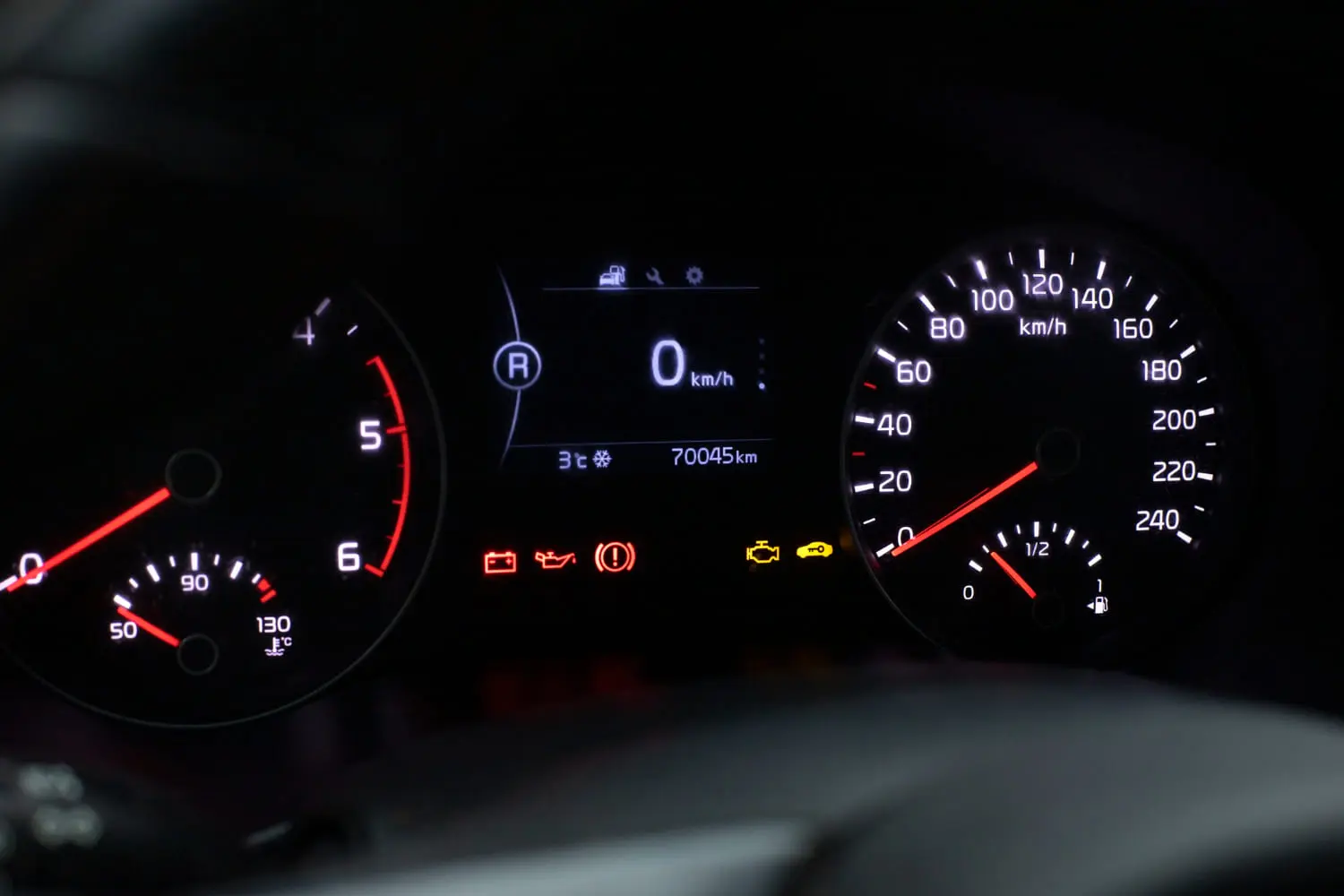
Few sights bring on an immediate sinking feeling quite like that ominous amber glow illuminating your instrument cluster. You are cruising down the highway, minding your own business, and suddenly the Check Engine Light (CEL) formally recognized as the Malfunction Indicator Lamp (MIL) stares back at you. For many drivers, this small glowing engine silhouette instantly conjures worst-case scenarios: blown head gaskets, complete transmission failures, or four-figure repair bills from the local dealership.
However, modern onboard diagnostic systems (specifically OBD-II, standardized across all passenger vehicles) are not designed to ruin your day; they exist to protect your vehicle from self-destruction. When the Engine Control Unit (ECU) detects an operating parameter that deviates from factory specifications whether it involves fuel trim, ignition timing, emissions thresholds, or airflow dynamics it logs a Diagnostic Trouble Code (DTC) and illuminates the dashboard light.
Before you panic, the most critical step is recognizing the behavior of the light itself:
-
Steady / Solid Light: Indicates an issue that requires prompt attention but does not pose an immediate catastrophic threat. You can typically drive the vehicle home or to a repair shop without causing instant mechanical destruction, provided there are no accompanying symptoms like severe overheating, knocking, or smoke.
-
Flashing / Blinking Light: Signals a severe, active engine condition—most commonly a heavy engine misfire. When the light flashes, unburned raw fuel is entering the exhaust stream, where it will ignite inside your catalytic converter, superheating it to over 1,500°F and melting its precious metal honeycomb core within miles. If your light is blinking, pull over safely and turn off the engine immediately.
Understanding why your car's computer triggered this warning is the first step toward saving hundreds of dollars in unnecessary parts-cannon repairs.
Reason 1: Loose, Damaged, or Missing Gas Cap
It may sound like an automotive urban legend, but one of the single most frequent triggers for a check engine light costs absolutely nothing to fix: a loose or improperly seated gas cap.
Modern vehicles are equipped with an intricate Evaporative Emission Control (EVAP) system designed to trap volatile organic fuel vapors within the fuel tank and purge them safely into the engine intake manifold to be burned during combustion. This system prevents harmful hydrocarbons from escaping into the open atmosphere. To ensure there are no vapor leaks, the EVAP system constantly performs automated pressure and vacuum decay tests while you drive.
When your gas cap is cross-threaded, not clicked into place, or suffering from a cracked, brittle rubber O-ring seal, the EVAP system detects a loss of negative pressure in the fuel tank lines. The Engine Control Module (ECM) interprets this pressure drop as a vapor leak and registers a Diagnostic Trouble Code—most commonly P0455 (Gross EVAP System Leak Detected) or P0457 (EVAP System Leak Detected / Fuel Cap Loose or Off).
How to Diagnose and Fix It:
-
The Click Test: Pull over to a safe area, unscrew your fuel cap completely, inspect the threading for dirt or grit, and screw it back on until you hear at least two to three distinct mechanical clicks.
-
Inspect the O-Ring: Look closely at the black rubber seal along the underside of the cap. If it is dry, cracked, flattened, or missing entirely, the cap will never form a tight airtight seal, regardless of how tightly it is turned.
-
The Clearing Cycle: After securing or replacing the cap, the dashboard light will rarely turn off instantly. The ECM must complete several uninterrupted drive cycles (often involving cold starts, highway cruising, and distinct fuel level ranges) to re-test the EVAP pressure. If the seal is restored, the warning light will automatically clear itself within 50 to 100 miles.
-
Estimated Cost to Fix: $0 (if simply loose) to $15–$30 for an OEM replacement fuel cap.
[Workflow: Step 4.2 of 7]
✍️ Reason 2: Faulty Oxygen (O2) Sensor
The oxygen sensor (O2 sensor) is a vital feedback mechanism in modern internal combustion engines. Bolted directly into your exhaust manifold and exhaust piping, these sensors continuously measure the amount of unburned oxygen exiting the engine cylinders. The Engine Control Module (ECM) uses this constant stream of voltage data to dynamically regulate the precise air-to-fuel ratio entering the combustion chambers, aiming for the stoichiometric ideal of 14.7:1 (14.7 parts air to 1 part gasoline).
Most modern passenger vehicles feature at least two to four oxygen sensors, divided into two distinct functional categories:
-
Upstream Sensors (Sensor 1): Located before the catalytic converter, upstream O2 sensors monitor raw combustion exhaust. If the sensor detects excess oxygen, the ECM considers the mixture "lean" and injects more fuel. If it detects too little oxygen, the ECM reads the condition as "rich" and trims back fuel delivery.
-
Downstream Sensors (Sensor 2): Positioned after the catalytic converter, these sensors serve a quality-control function, measuring exhaust gas after filtration to confirm the converter is scrubbing harmful pollutants effectively.
What Happens When an O2 Sensor Fails?
Over time, oxygen sensors become heavily coated in carbon soot, burned engine oil residues, or coolant deposits from slow internal leaks. As the sensor element degrades, its response time slows down or it produces erratic voltage signals.
When the ECM loses reliable data from the O2 sensor, it defaults to a pre-programmed, conservative fail-safe setting (often running excessively rich to prevent engine knock). This leads to several immediate mechanical symptoms:
-
Drastic Fuel Economy Drops: Running an unmonitored rich fuel mixture can reduce gas mileage by as much as 20% to 40%.
-
Rough Idling and Hesitation: You will notice erratic engine RPM at stoplights, subtle shuddering during acceleration, and occasional engine stalling.
-
Catalytic Converter Meltdown: Excess unburned fuel pumped into the exhaust ignites inside the downstream catalytic converter, prematurely melting its delicate internal structure and causing four-figure repair expenses.
Common trouble codes associated with oxygen sensor circuit issues include P0130 through P0167 (such as P0135 - O2 Sensor Heater Circuit Malfunction). Replacing a faulty O2 sensor promptly costs between $100 and $300, saving substantial fuel costs and shielding your exhaust system from fatal damage.
Reason 3: Failing Catalytic Converter
The catalytic converter is the cornerstone of your vehicle's emissions abatement system, functioning as an intense chemical reactor located in the exhaust stream between the engine manifold and the muffler. Packed with a ceramic honeycomb substrate coated in precious noble metals—primarily platinum, palladium, and rhodium—the converter initiates oxidation and reduction reactions to transform highly toxic combustion byproducts (unburned hydrocarbons, carbon monoxide, and nitrogen oxides) into harmless water vapor, carbon dioxide, and nitrogen gas.
Because catalytic converters have no moving mechanical parts, they rarely fail on their own. Instead, converter failure is almost always the collateral damage of upstream engine malfunctions that went unaddressed—such as running rich from a broken oxygen sensor, leaking internal head gaskets that allow coolant into the cylinders, or prolonged engine misfires that pump raw gasoline directly into the superheated catalyst.
Warning Signs of Catalytic Converter Breakdown:
-
The "Rotten Egg" Sulfur Smell: When a catalytic converter fails to properly process hydrogen sulfide compounds present in raw fuel, it emits a pungent, nauseating sulfur odor noticeable around the tailpipe and cabin.
-
Severe Engine Choking and Loss of Power: If the ceramic internal honeycomb melts or physically disintegrates into rubble, it creates severe exhaust backpressure. The engine essentially suffocates on its own spent gases, resulting in sluggish throttle response, inability to rev past 3,000 RPM, and drastically reduced top speeds.
-
Rattling Noise Beneath the Vehicle: Severe thermal shock or physical impacts can shatter the internal substrate into loose ceramic chunks that rattle like stones in a tin can whenever the vehicle is idling or revving.
The most common Diagnostic Trouble Code for this issue is P0420 (Catalyst System Efficiency Below Threshold - Bank 1). Because OEM replacement catalytic converters contain valuable rare metals and vehicle-specific engineering, replacement costs range between $1,000 and $2,500+, underscoring the necessity of resolving simple upstream sensor and spark issues immediately.
Reason 4: Mass Airflow (MAF) Sensor Malfunction
The Mass Airflow (MAF) sensor is positioned directly along your engine's intake air tract, nestled between the engine air filter housing and the throttle body. Its primary operational duty is straightforward yet vital: continuously calculate the exact mass and volume of incoming atmospheric air entering the engine cylinders across varying altitudes, temperatures, and barometric pressures.
Modern MAF sensors utilize an electrically heated platinum wire or microscopic hot-film element suspended directly inside the incoming airstream. As cooler outside air flows past this heated sensing element, it cools the wire down. The sensor's integrated circuit automatically draws additional electrical current to keep that wire at a calibrated, constant temperature above ambient air. The Engine Control Module (ECM) precisely measures this current draw to calculate instantaneous air mass, allowing it to inject the exact microgram quantity of fuel required for clean, efficient combustion.
How MAF Sensors Get Contaminated and Fail:
Because the MAF sensor sits directly downstream from the open atmosphere, it is vulnerable to physical contamination:
-
Air Filter Blow-By and Road Debris: Neglected, degraded engine air filters allow fine dust, micro-sand, and environmental soot to coat the platinum wire, insulating it from the airflow.
-
Oiled Performance Air Filters: Over-oiled reusable cotton-gauze performance filters frequently leach microscopic droplets of oil onto the delicate sensor wire, baking into a thick, sticky crust under high temperatures.
-
Symptoms of a Failing MAF Sensor: When the sensor becomes insulated or burned out, it reports skewed, sluggish airflow figures. The vehicle's computer will incorrectly miscalculate fuel delivery, leading to harsh engine stumbles during acceleration, rough vibrating idle, sudden engine stalling right after starting, and heavy black exhaust smoke caused by severe rich fuel delivery.
Common diagnostic fault codes generated by airflow errors include P0100 through P0104 (such as P0101 - Mass or Volume Air Flow Circuit Range/Performance Problem). In many instances, the MAF sensor does not even require full mechanical replacement; a $10 aerosol can of specialized, quick-drying MAF Sensor Cleaner and 15 minutes of careful DIY cleaning can clear the debris and eliminate the check engine light entirely.
Reason 5: Worn Spark Plugs and Failing Ignition Coils
Every internal combustion gasoline engine relies on a synchronized ignition cycle. For your vehicle to generate power smoothly, your ignition coils must transform the vehicle’s 12-volt battery power into tens of thousands of volts (often 20,000 to 45,000+ volts) and deliver that electrical burst to the spark plugs. The spark plug then arcs across a calibrated gap, igniting the compressed air-fuel mixture within the cylinder chamber thousands of times every minute.
When spark plugs age, their central and ground electrodes slowly erode from continuous electrical arcing and extreme combustion chamber heat. This erosion expands the spark plug gap beyond manufacturer tolerances. As the gap widens, the ignition coil must work significantly harder to generate enough voltage to bridge the distance, generating excess internal heat and ultimately causing the ignition coil windings to break down and fail.
Symptoms of Spark Plug and Ignition Coil Breakdown:
-
Engine Misfires and Jerking Under Load: When a plug fails to fire, the cylinder produces zero combustion power for that stroke. You will experience distinct physical bucking, jerking, or hesitation—especially when accelerating hard up hills or passing on the highway.
-
Flashing Check Engine Light: If the misfire is severe enough that raw, unburned fuel is pumped straight into the exhaust system, the check engine light will begin flashing rapidly. As noted earlier, this is an immediate emergency to prevent your catalytic converter from melting.
-
Hard Starts and Poor Fuel Economy: Worn plugs cause extended cranking times on cold mornings, erratic idling at stoplights, and a 10% to 15% decline in overall fuel economy due to incomplete combustion.
Diagnostic trouble codes for ignition problems are easy to identify: P0300 indicates a random/multiple cylinder misfire, while codes P0301 through P0308 point directly to the specific cylinder failing (for instance, P0303 indicates cylinder 3). Standard copper spark plugs should generally be replaced every 30,000 miles, while high-durability platinum and iridium plugs typically last between 60,000 and 100,000 miles.
Bonus Practical Guide: How to Read & Diagnose Codes at Home
A check engine light does not automatically require an immediate trip to a repair shop. Every passenger vehicle built since 1996 features a standardized On-Board Diagnostics II (OBD-II) 16-pin data port—typically located under the driver’s side dashboard near the steering column or knee bolster.
Equipping yourself with a modern OBD-II scanner allows you to pull Diagnostic Trouble Codes (DTCs) in seconds, view real-time engine sensor streams, and prevent costly, unnecessary repairs.
1. Choosing the Right OBD-II Scanner for Your Needs
-
Basic Standalone Handheld Scanners ($20–$40): Compact corded tools that plug directly into the port to read stored DTCs, provide brief fault descriptions, and clear warning lights. Ideal for quick glovebox storage.
-
Bluetooth / Wi-Fi Wireless Dongles ($30–$80): Compact adapters (such as Veepeak, OBDLink, or BlueDriver) that sync directly to iOS or Android apps. They provide live data logging (real-time RPM, fuel trims, intake air temperatures) and freeze-frame sensor snapshots recorded at the exact millisecond the fault occurred.
-
Bi-Directional Diagnostic Tablets ($150–$400+): Advanced scan tools capable of commanding active component tests (e.g., pulsing fuel injectors, testing EVAP purge valves, commanding cooling fans) for deeper DIY troubleshooting.
2. Step-by-Step Diagnostic Procedure
-
Locate the Port & Connect: Turn the vehicle's ignition off completely. Plug the scanner firmly into the 16-pin OBD-II port.
-
Ignition to Key-On Engine-Off (KOEO): Turn the ignition key to the "ON" or "Accessory" position (or press the push-button start without depressing the brake pedal) so all dash electronics power up without starting the engine.
-
Read Stored and Pending Codes: Run the scanning routine. Note both Active/Stored Codes (faults that triggered the light) and Pending Codes (intermittent issues detected across recent drive cycles that have not yet illuminated the light).
-
Analyze the Freeze Frame Data: Review the engine operating parameters at the time the code set—such as vehicle speed, coolant temperature, and short/long-term fuel trim percentages. This helps identify whether the fault happens only at idle or under hard acceleration.
3. Deciding: DIY Fix vs. Professional Service
-
Clear DIY Candidates: Replacing a loose gas cap, swapping out a mass airflow sensor or engine air filter, replacing ignition coils, or installing new spark plugs on an inline four-cylinder engine.
-
Professional Repair Candidates: Replacing downstream catalytic converters (requiring pipe cutting or welding), diagnosing intermittent wiring harness shorts, replacing buried rear spark plugs on transverse V6/V8 engines, or troubleshooting internal transmission slippage.
Conclusion & Preventative Maintenance Takeaways
A glowing check engine light is not an automatic death sentence for your vehicle, nor does it guarantee a devastating four-figure repair bill. Instead, view it as your car’s early-warning communication channel—an automated system designed to flag minor sensor irregularities, vacuum leaks, and combustion inefficiencies before they cascade into catastrophic mechanical failures.
To protect your wallet, fuel economy, and vehicle longevity, keep these fundamental maintenance principles in mind:
-
Act Early on Solid Lights: Never treat a solid check engine light as background noise. Driving for months with a simple $20 gas cap leak or a failing O2 sensor will continuously overload your exhaust system with unburned fuel, ultimately destroying your $1,500+ catalytic converter.
-
Stop Immediately for Flashing Lights: A blinking indicator demands urgent action. Pull over safely to prevent engine fires, severe cylinder scoring, and total exhaust system destruction caused by active misfires.
-
Empower Yourself with a Scan Tool: Keeping a $25–$50 OBD-II scanner in your glovebox transforms you from an anxious driver into an informed owner. Reading and logging your Diagnostic Trouble Codes before walking into a repair shop guarantees transparency, eliminates guesswork, and protects you from paying for components your car does not need.
-
Stick to Preventative Intervals: Routine spark plug replacements, regular air filter inspections, and proper fuel cap maintenance cost pennies compared to emergency roadside repairs and major component overhauls.
Addressing warning lights swiftly with methodical diagnostics keeps your engine running smoothly, maximizes resale value, and ensures hundreds of thousands of dependable miles on the road.




Written by Kousar Shabbir
Published Aug 15, 2026 in Maintenance & Tips.