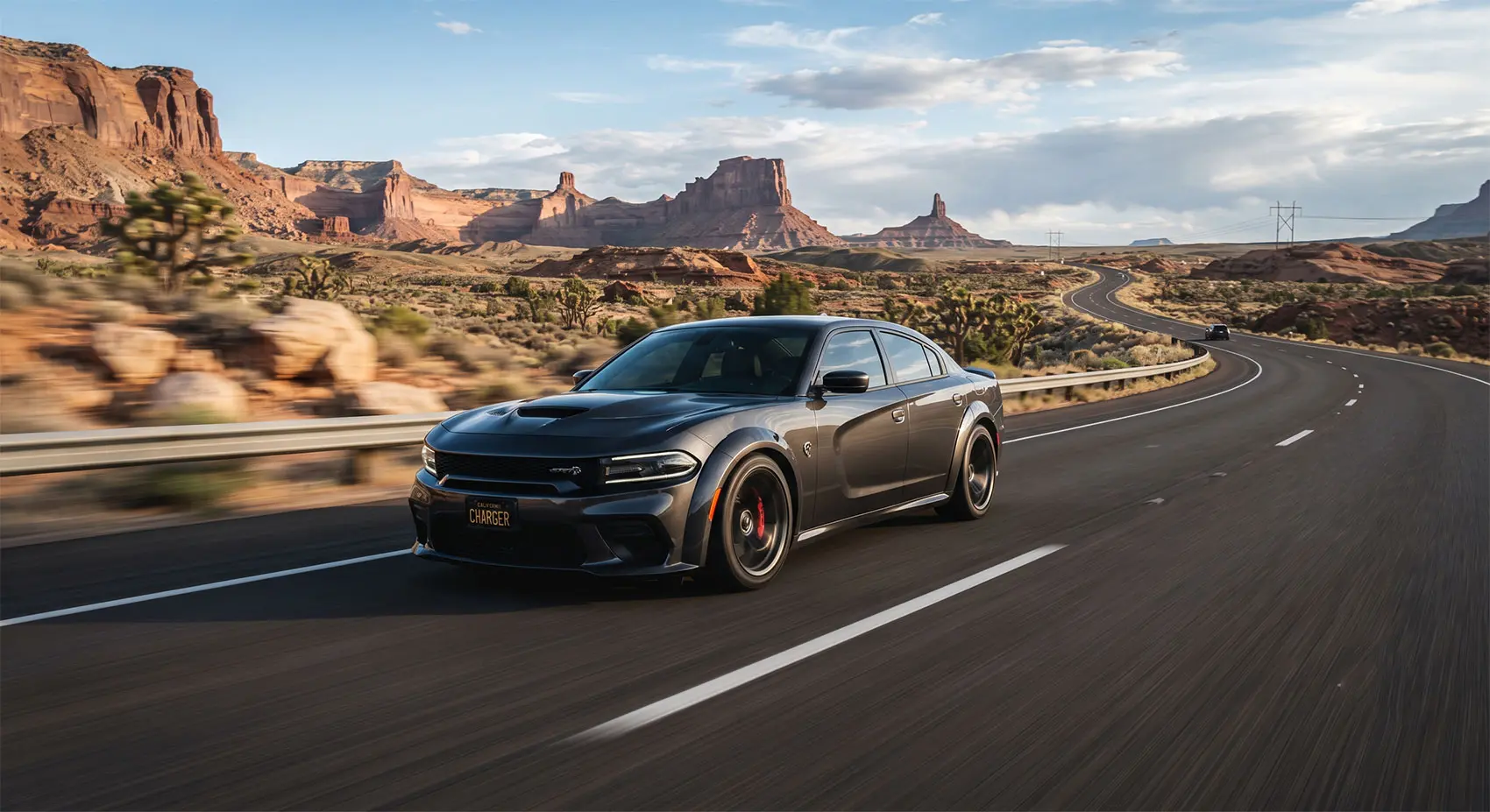
The unmistakable roar of a HEMI V8 has been the heartbeat of American muscle car culture for decades. Few sounds evoke the same level of raw power, nostalgia, and pure adrenaline as a Dodge Charger tearing down an open highway. For years, the Charger stood as a proud, unapologetic rebel in an automotive landscape increasingly dominated by silent efficiency and smaller displacement engines. It was the last true bastion of old-school American muscle, offering an intoxicating mix of aggressive styling, smoking rear tires, and sheer horsepower that captured the imaginations of enthusiasts worldwide.
However, the automotive world is undergoing its most radical transformation since the invention of the assembly line. Government mandates, shifting corporate priorities, and strict global emissions targets have forced legacy automakers to make agonizing choices. For Dodge, that harsh reality culminated in a monumental decision: the discontinuation of its best-selling, pure gas-powered Charger model.
This seismic shift has left enthusiasts asking why a vehicle dominating sales charts and defining a brand's modern identity had to be put to pasture. The phase-out of the pure gas Charger is driven by tightening corporate fuel economy regulations and a strategic shift toward multi-energy platforms, rather than a total abandonment of combustion engines. As Dodge phases out the iconic V8 era, understanding the forces behind this monumental decision reveals a complex story of survival, innovation, and adaptation in a changing world.
The Regulatory Pressure: Why the HEMI V8 Had to Go
To understand why Dodge pulled the plug on its most celebrated internal combustion engine, you have to look beyond dealership showrooms and straight into federal regulatory offices. For years, the automotive industry has faced increasingly stringent Corporate Average Fuel Economy (CAFE) standards and carbon emission caps implemented by governments worldwide. For a brand synonymous with high-displacement, fuel-thirsty V8 engines, these mandates presented an existential threat. Keeping heavy, high-performance rear-wheel-drive platforms powered by massive traditional engines compliant with future fleet-wide averages became a mathematical impossibility for Stellantis.
The financial penalties for missing these regulatory targets are staggering, running into hundreds of millions of dollars in civil penalties that can severely erode an automaker's profitability. Stellantis, like every major global auto manufacturer, had to make a hard choice: continue paying massive regulatory fines that would eventually price their vehicles out of the market, or fundamentally re-engineer their entire product portfolio. The beloved HEMI V8—a masterpiece of pushrod performance that defined an era of modern muscle simply could not be made to fit into the ultra-strict emissions matrix required for the late 2020s.
Furthermore, the shift wasn't just about avoiding fines; it was about corporate survival in an industry rapidly pivoting toward electrification and software-defined mobility. The platform architecture that housed the legendary Charger and Challenger was aging, and redesigning it for a purely gas-powered future was no longer viable given global supply chain pressures and shifting consumer demands. While enthusiasts mourned the loss of the thunderous V8 rumble, corporate strategists viewed the move as a necessary amputation to ensure the brand could survive and compete in a radically altered automotive landscape.
The Multi-Energy Pivot: Introducing the Daytona EV and the Hurricane Inline-Six
Faced with an unprecedented engineering crisis, Dodge could not simply walk away from its performance heritage. The solution required a complete paradigm shift, moving away from a single-minded reliance on V8 engines toward a flexible, multi-energy platform architecture. Enter the STLA Large platform, a modular foundation specifically engineered to support internal combustion engines, hybrid systems, and pure battery-electric propulsion. This innovative flexibility allows Dodge to bridge the gap between regulatory compliance and enthusiast expectations, ensuring that future muscle cars can take multiple shapes depending on driver preference and geographical market trends.
The most controversial yet groundbreaking manifestation of this pivot is the all-electric Dodge Charger Daytona. Boasting dual-motor all-wheel-drive configurations and up to 670 horsepower in Scat Pack trim, the Daytona EV challenges preconceived notions of what an electric vehicle can be. Dodge famously addressed the silent nature of EVs by developing the "Fratzonic Chambered Exhaust," a patent-pending system that projects a menacing, multi-decibel roar mimicking the acoustic signature of a supercharged V8. While purists initially scoffed at the idea of a battery-powered muscle car, the Daytona proves that performance figures such as a 0-to-60 mph time of around 3.3 seconds are more than capable of carrying the brand's high-octane torch into the modern era.
However, recognizing that the market wasn't ready to go 100% electric overnight, Dodge engineered a brilliant compromise: the gas-powered Charger Sixpack models. Abandoning the aging HEMI V8, these variants are powered by the revolutionary twin-turbocharged 3.0-liter inline-six "Hurricane" engine. Available in standard and high-output configurations delivering up to 550 horsepower, the Hurricane engine actually outperforms the legacy V8s in several key metrics while offering vastly improved fuel efficiency and lower emissions. By offering both the high-tech Daytona EV and the muscular Hurricane-powered fastback under one roof, Dodge has created a dual-path strategy that satisfies both eco-conscious regulators and hardline combustion traditionalists.
Market Reception, Rollout Realities, and Consumer Shifts
The launch of Dodge’s next-generation Charger lineup has been nothing short of a cultural lightning rod. When Stellantis first pulled the covers off the Charger Daytona EV, it triggered intense debates across enthusiast forums, social media channels, and automotive boardrooms. On one side, industry analysts praised Dodge for having the courage to bridge the EV transition with high-performance metrics, aggressive styling, and a unique exhaust sound generator that broke the mold of traditional silent electric driving. On the other side, purists fiercely resisted the notion of a muscle car driven by electrons rather than liquid fuel. This stark polarization highlights the delicate tightrope automakers must walk as they attempt to drag loyal, traditionalist buyer bases into an electrified future without alienating their core demographic.
Compounding this cultural friction are the broader economic and logistical realities of the current automotive market. Initial rollout strategies faced cautious consumer adoption curves for pure electric performance vehicles, particularly as high interest rates and premium pricing dampened impulse buying among younger demographic buyers. Recognizing that consumer demand for pure electric muscle was developing slower than anticipated, Dodge showcased remarkable strategic agility. The brand leaned heavily into its multi-energy platform flexibility, ensuring that production priorities could easily shift to accommodate the gas-powered Hurricane inline-six variants. This adaptability has allowed dealerships to manage lot inventory more effectively while giving buyers a tangible choice on showroom floors.
Ultimately, this transitional phase represents a crucial learning curve for both Dodge and the broader American automotive industry. The market is proving that while consumers are increasingly open to technological innovation, they are not willing to abandon the visceral, mechanical connection of internal combustion overnight. By meeting the market halfway with a dual-threat approach offering high-octane engineering in both electrified and turbocharged gas formats, Dodge is managing consumer friction better than many of its competitors. How these models perform in real-world sales over the coming years will serve as a definitive benchmark for how traditional performance brands can successfully navigate the twilight of the internal combustion era.
The Legacy of V8 Power, Aftermarket Evolution, and the Culture of Customization
To truly grasp the magnitude of Dodge's decision to sunset its traditional V8 architecture, one must look closely at the deep-seated aftermarket and car culture built around the Charger over the past two decades. The LX platform, introduced in the mid-2000s and continually refined through successive generations, became a massive blank canvas for automotive enthusiasts, backyard mechanics, and professional speed shops alike. Whether it was the unmistakable, aggressive whine of a supercharger on a Hellcat, the deep, guttural rumble of a 5.7-liter HEMI cruising down local main streets on a Friday night, or the raw track capabilities of a Scat Pack, these cars fostered an unprecedented subculture of gearheads, drag racing circles, and tightly knit car clubs that spanned generations.
When Dodge initially announced the retirement of this classic layout, it didn't just phase out a vehicle model; it temporarily disrupted a thriving commercial and cultural ecosystem of specialized aftermarket parts suppliers, performance tuners, and dedicated fans who built their entire weekends around track days, dyno tuning sessions, and regional car meets. The automotive aftermarket thrives on mechanical accessibility swapping pulleys, upgrading camshafts, and modifying exhaust systems were rites of passage for modern muscle car owners. Transitioning toward complex electrical systems and forced-induction inline-six architectures initially caused friction among traditionalists who feared that the DIY spirit of American car culture was being legislated out of existence.
However, looking at how the landscape has matured, the aftermarket community has proven remarkably resilient. While the twin-turbocharged inline-six "Hurricane" engine offers massive factory performance and hidden tuning potential, and the Daytona EV introduces instantaneous electric torque, the cultural void left by the absence of a traditional small-block or big-block V8 roar forced everyone to adapt. Tuners are actively learning how to remap forced-induction straight-six platforms, and builders are exploring new frontiers of software-calibrated performance. This evolution represents much more than a simple mechanical shift it is an emotional and cultural transformation for a community that has spent decades defining modern street culture around the physical heartbeat of an eight-cylinder engine.
Conclusion
As the automotive landscape hurtles toward an electrified future, the phasing out of Dodge’s pure gas-powered Charger marks the end of an unforgettable era in American muscle car history. For generations, the thunderous roar of a HEMI V8 was more than just a sound; it was a cultural symbol of freedom, raw power, and unadulterated rebellion on four wheels. Yet, as tightening global emissions standards, strict corporate fuel economy regulations, and shifting economic realities converged, traditional high-displacement platforms became an unsustainable path forward for Stellantis. Rather than letting the iconic Charger nameplate fade into automotive history, Dodge made a calculated and courageous pivot, redefining what it means to be a modern muscle car through a revolutionary multi-energy strategy.
This strategic evolution has successfully bridged the gap between old-school performance and next-generation innovation. By introducing the high-tech, lightning-fast Charger Daytona EV alongside the twin-turbocharged inline-six "Hurricane" gas variants, Dodge has created a balanced ecosystem that caters to both eco-conscious innovators and hardline combustion traditionalists. Initial consumer skepticism and rollout hurdles have underscored just how delicate this transition is, yet the brand’s adaptability proves that muscle car culture is not dying; it is simply evolving. The ability to deliver thrilling performance specs across both electric and turbocharged platforms ensures that the Charger will continue to dominate drag strips and turn heads for decades to come.
Ultimately, the discontinuation of the pure gas V8 Charger is not a funeral for American muscle, but rather its baptism by fire into a new technological age. It serves as a masterclass in how legacy automotive brands can survive and thrive amidst sweeping regulatory and market disruptions without entirely losing their high-performance soul. As drivers slide behind the wheel of these new-generation fastbacks, whether powered by electrons or forced induction, they are participating in a historic turning point. The heart of the beast still beats, proving that while the fuel may change, the passion for pure, unbridled horsepower remains eternal.


Written by Kousar Shabbir
Published Jul 30, 2026 in Auto News.