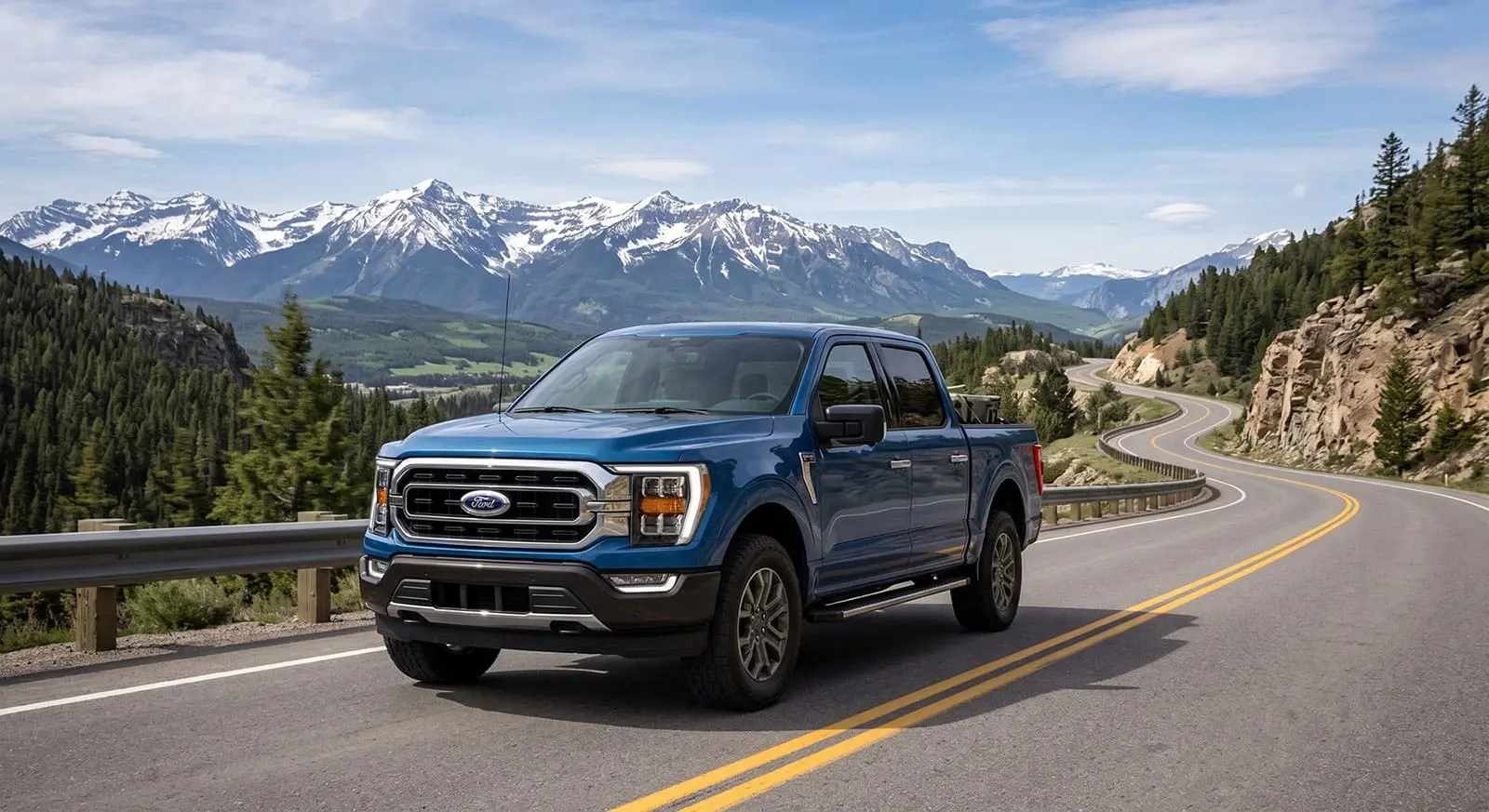
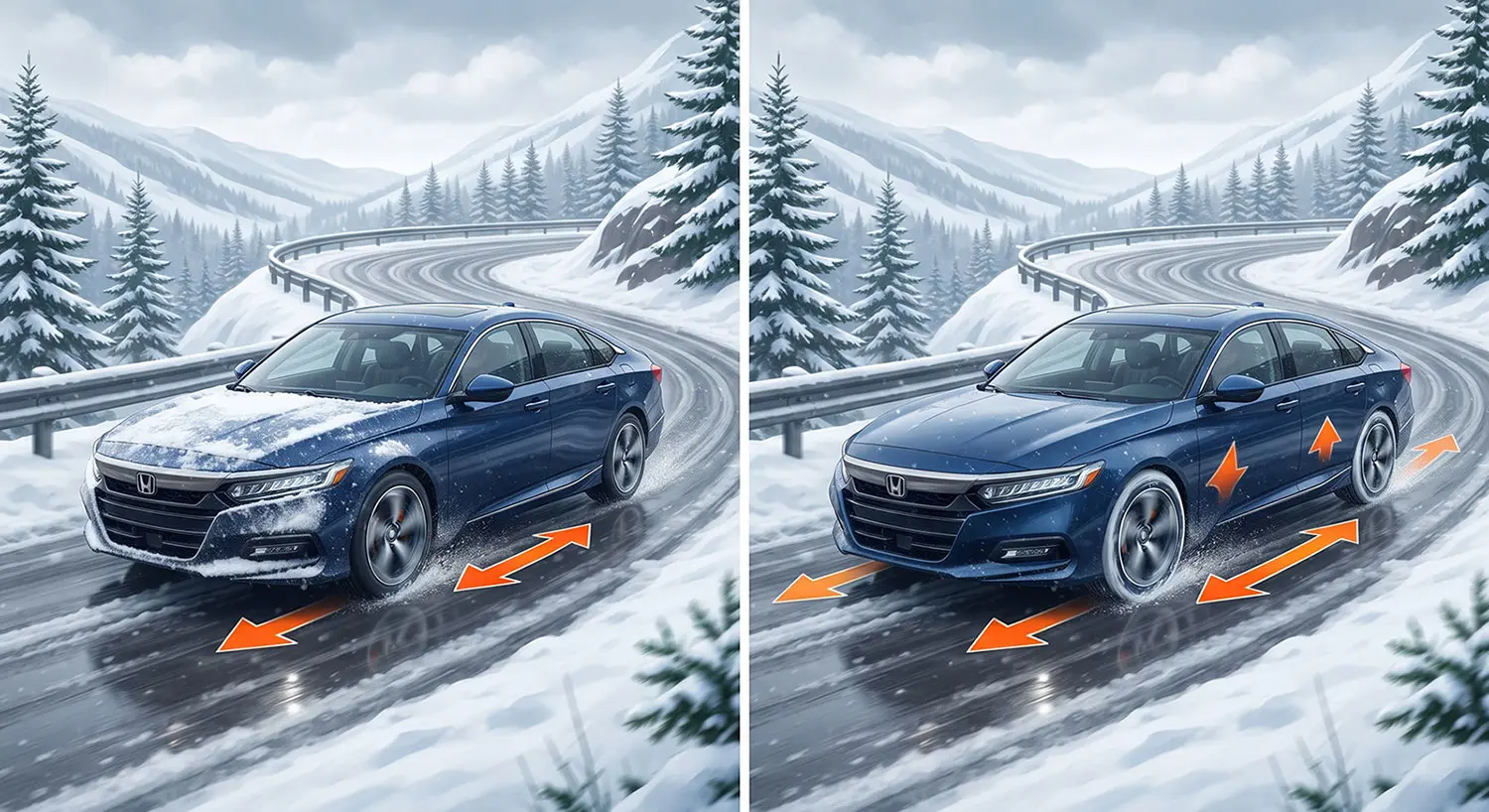
Your tires are the only part of your car that touches the road. Every time you speed up, brake, or turn, they take the load. But they do not all wear at the same speed. Some tires work harder than others, and over time this creates uneven tread. A simple service called tire rotation fixes this problem by moving each tire to a new position on the car.
Many drivers think every car gets the same rotation. That is not true. The right pattern depends on which wheels send power to the road. A front-wheel drive (FWD) car and an all-wheel drive (AWD) car need different patterns and sometimes different schedules. In this guide, you will learn how tire rotation works, how FWD and AWD rotations differ, and how to make your tires last longer.
What Is a Tire Rotation and Why Does It Matter?
A tire rotation means taking all four wheels off and putting them back in different spots. For example, a front tire may move to the back, and a back tire may move to the front. Some patterns also move tires from one side of the car to the other. The goal is simple. Each tire spends some time in every position, so all four wear at a similar rate.
This small job is cheap and quick. Most shops can finish it in about 30 minutes, and many do it free when you buy tires or get an oil change. Even so, it is one of the most skipped parts of car care. Skipping it can mean buying a new set of tires much sooner than you planned.
How Uneven Tire Wear Happens
Tires wear unevenly because each corner of the car does a different job. The wheels that steer take extra side forces in every turn. The wheels that drive the car take the push of the engine. The front of most cars also carries the heavy engine, so the front tires hold more weight. When you put all of this together, some tires lose tread much faster than others.
Road shape and driving habits matter too. Many roads are slightly curved so rain can drain off, which makes one side of the car work a little harder. Hard braking, fast cornering, and lots of short trips add to the wear. Without rotation, these small differences keep adding up month after month.
Benefits of Regular Rotation
The biggest benefit is longer tire life. When all four tires wear evenly, you get more miles from the set and can replace them all at the same time. This saves money because you avoid buying two tires early and then two more later. Even wear also helps keep your tire warranty valid, since many tire makers ask for proof of regular rotation.
Rotation also helps safety and comfort. Tires with even tread give balanced grip when you brake or turn, especially on wet roads. The ride often feels smoother and quieter too. A rotation is also a good time for a mechanic to check tire pressure, look for damage, and spot early problems with the brakes or suspension.
How Tire Rotation Works on Front-Wheel Drive Cars
Most small cars, sedans, and many crossovers today are front-wheel drive. In these cars, the engine sends power only to the front wheels. The same front wheels also steer the car and do most of the braking. That means the front tires do almost all the hard work while the rear tires mostly roll along behind.
Because the work is so unbalanced, rotation is very important on FWD cars. Without it, the front tires wear out much faster than the rear ones. The good news is that FWD cars use a simple, well-known rotation pattern that any shop or DIY owner can follow.
Why Front Tires Wear Faster
Think about what the front tires do every day. They pull the car forward, they turn left and right, and they take most of the force when you brake. The engine and gearbox also sit right above them, adding weight. All of this grinds away tread, especially on the outer edges of the front tires during turns.
The rear tires on a FWD car have an easy life by comparison. They do not steer, and they do not get engine power. They mostly follow the front tires and help a little with braking. This is why, without rotation, you may find the front tires almost bald while the rear ones still look nearly new.
The Forward Cross Pattern Explained
The most common rotation for FWD cars is called the forward cross. In this pattern, the front tires move straight back to the rear on the same side. The rear tires move forward and cross over to the opposite side. So the rear left tire goes to the front right, and the rear right tire goes to the front left.
Crossing the rear tires to the front helps even out wear on both sides of the tread. Some FWD owners use the X pattern instead, where all four tires move diagonally. Both work well for normal tires. However, always check your owner's manual first, because some carmakers suggest a simple front-to-back swap.
How Tire Rotation Works on All-Wheel Drive Vehicles
All-wheel drive vehicles send power to all four wheels. Many SUVs, crossovers, and performance cars use AWD for better grip in rain, snow, and on loose roads. Since every wheel can help drive the car, the wear is shared more evenly than on a FWD car. But that does not mean rotation is less important. In fact, it is often more important.
Many AWD systems still send more power to the front or the rear most of the time, so one axle can wear faster. On top of that, AWD systems are very sensitive to differences between tires. A rotation keeps all four tires closely matched, which protects both the tires and the costly parts that move power around the vehicle.
Why Matching Tread Depth Protects the Drivetrain
A tire with less tread is slightly smaller than a tire with more tread. That means it has to spin a little faster to cover the same distance. On an AWD vehicle, the system reads these speed differences and may think a wheel is slipping. It then keeps working to correct a problem that is not really there.
Over time, this constant work can heat up and wear out parts like the center differential, transfer case, or coupling. These repairs can cost far more than a full set of tires. This is why many AWD makers allow only a very small tread difference between tires, often around 2/32 to 4/32 of an inch. Regular rotation is the easiest way to stay inside that limit.
The Rearward Cross and X Pattern
AWD vehicles usually use the rearward cross pattern. Here, the rear tires move straight forward to the front on the same side. The front tires move back and cross to the opposite side. It is basically the opposite of the FWD forward cross, and it suits vehicles that send a lot of power to the rear wheels.
The X pattern is another popular choice for AWD. Every tire moves diagonally, so the front left goes to the rear right, and so on. Both patterns give each tire time on each axle and each side. As always, your owner's manual has the final word, since some AWD models call for a specific pattern.
Key Differences Between FWD and AWD Rotations
Now that you know how each system works, the main differences are easy to see. FWD cars use the forward cross because the front tires do most of the work. AWD vehicles usually use the rearward cross or X pattern because power reaches all four corners. In simple terms, the direction the tires move is reversed between the two.
The bigger difference is what is at stake. On a FWD car, skipping a rotation mostly means buying tires sooner. On an AWD vehicle, it can also put stress on the drivetrain and lead to expensive repairs. That is why AWD owners need to be more careful about timing and keeping their tires matched.
How Often You Should Rotate
Most carmakers suggest rotating tires every 5,000 to 7,500 miles, which is about 8,000 to 12,000 kilometers. An easy habit is to rotate your tires at every oil change. This schedule works well for most FWD cars driven in normal conditions.
For AWD vehicles, many experts suggest staying at the lower end, around every 5,000 miles. If you drive hard, tow, or use gravel roads often, rotate even sooner. Check tread depth with a cheap gauge between services, and if the gap between tires is growing, do not wait for the next scheduled visit.
Directional and Staggered Tires
Some tires are directional, which means they are made to roll in only one direction. You can spot them by an arrow on the sidewall. These tires cannot cross from one side of the car to the other. They can only swap front to back on the same side, whether the car is FWD or AWD.
Staggered setups are another special case. This is when the front and rear tires are different sizes, which is common on sports cars. Since the sizes do not match, front and rear tires cannot swap places. In some cases, they can only switch from left to right if they are not directional. Ask a tire expert if your car has this setup.
Signs You Need a Rotation Now
Your car often gives you clues. If it pulls to one side, shakes at highway speed, or makes more road noise than usual, uneven tire wear may be the cause. Take a close look at your tires. If the front ones look more worn than the rear, or the edges are wearing faster than the center, it is time for a rotation.
On AWD vehicles, also watch for a tight or binding feeling in slow turns, strange noises from under the car, or a drivetrain warning light. These can mean the tires are too different in size. Rotation can help, but it will not fix alignment or mechanical problems, so have a mechanic check the car if the signs do not go away.
Conclusion
Tire rotation is a small job with a big payoff. It helps your tires last longer, keeps grip balanced, and makes your drive safer and smoother. The key is to use the right pattern for your car. Front-wheel drive cars usually need the forward cross, while all-wheel drive vehicles usually use the rearward cross or X pattern.
AWD owners should be extra careful, because uneven tires can harm the drivetrain, not just the tread. Follow your owner's manual, rotate every 5,000 to 7,500 miles, and check your tread depth now and then. With this simple routine, you will get the most from every set of tires and avoid costly surprises on the road.
Continue reading
More from Maintenance & Tips

Written by Maarukh Shahbaz
Published Oct 22, 2026 in Maintenance & Tips.