
There is a distinct, unsettling feeling when you turn the ignition key on a sub-zero winter morning and hear nothing but a sluggish, groaning crank. Winter driving is unforgiving. Cold weather does not merely test your patience; it aggressively exposes every hidden weakness in your vehicle. When temperatures plummet, the fundamental physics and chemistry of your car change drastically: engine oil thickens to the consistency of molasses, chemical reactions inside your battery slow to a crawl, tire rubber stiffens and loses traction, and sudden blizzards can instantly transform a routine highway commute into a dangerous survival situation.
Every year, millions of motorists find themselves stranded on highway shoulders or trapped in snowbanks simply because they assumed their standard, year-round maintenance routine was adequate. It isn't. Routine maintenance keeps your car running in moderate conditions; dedicated winter preparation keeps you alive and mobile when winter storms hit. Freezing rain, sub-zero wind chills, and heavy snowfall demand specialized care, specific fluid formulations, and an uncompromising approach to vehicle readiness.
A proactive winter car preparation framework goes far beyond tossing an ice scraper into the back seat. It requires a systematic, bumper-to-bumper inspection of your vehicle’s critical mechanical, electrical, and safety systems. By addressing electrical health, thermal management fluids, traction dynamics, visibility equipment, and emergency survival gear before the first hard freeze arrives, you eliminate the risk of catastrophic breakdowns and ensure absolute peace of mind behind the wheel. In this comprehensive guide, we break down the exact, step-by-step winterization process you need to conquer freezing temperatures and ensure you never get left stranded out in the cold.
Under the Hood: Battery, Electrical, and Starting Systems
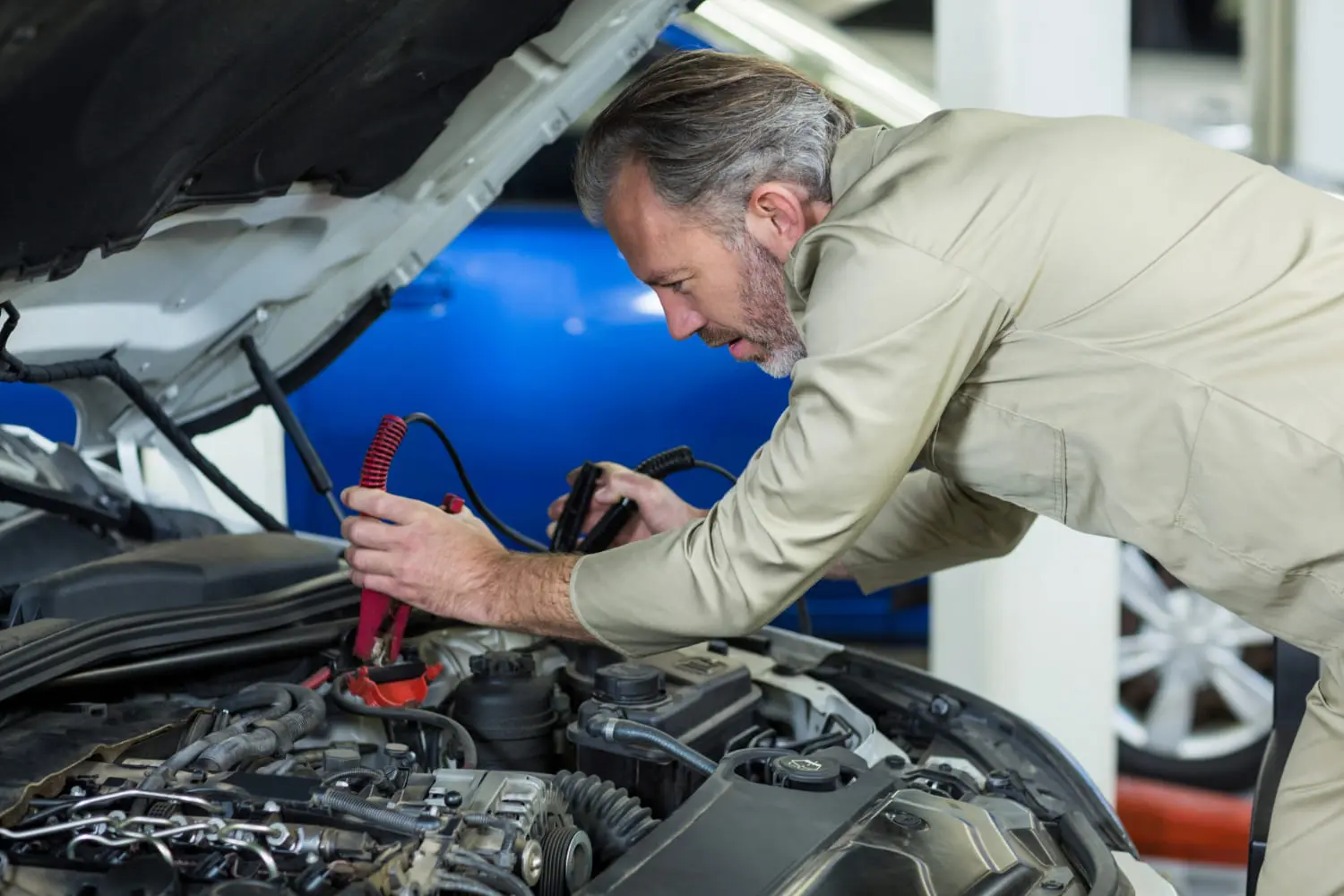
Your vehicle’s starting system operates under severe stress the moment the mercury drops. In freezing temperatures, chemical reactions inside a standard lead-acid battery slow down significantly. At 32°F (0°C), a car battery loses roughly 20–35% of its starting capacity; at 0°F (-18°C), that capacity plummets by up to 60%. Compounding this issue is the fact that cold, thick engine oil demands nearly double the usual Cold Cranking Amps (CCA) to turn the crankshaft. If your battery is already weak or older than three years, the first severe freeze will likely leave it dead.
To prevent an early morning starting failure, perform a thorough inspection and load test before winter sets in:
-
Terminal Cleanliness & Corrosion Removal: Inspect the positive and negative terminals for white, crusty sulfate deposits. Corrosion introduces electrical resistance, choking off the starter motor. Clean posts and clamps thoroughly using a stiff wire brush and a mixture of baking soda and water, then coat them with dielectric grease or anti-corrosion spray.
-
Multimeter Voltage & Load Testing: Measure the resting voltage with a digital multimeter across the terminals when the engine is off. A healthy 12V battery should read between 12.6V and 12.8V. A reading below 12.4V indicates an undercharged unit that risks freezing internally. Have a professional shop run a load test to verify actual CCA output under simulated cranking demand.
-
Alternator Output and Starter Draw: Cold weather requires maximum electrical draw for seat heaters, defrosters, blowers, and headlights. Ensure your alternator outputs a steady 13.8V to 14.5V while running under heavy electrical load. Slow cranking accompanied by flickering dashboard lights often points to failing starter brushes or insufficient alternator output.
Replacing an aging battery proactively costs far less than an emergency tow and prevents sudden, dangerous roadside stranding in sub-zero conditions.
Vital Fluids & Freeze Protection Checklist
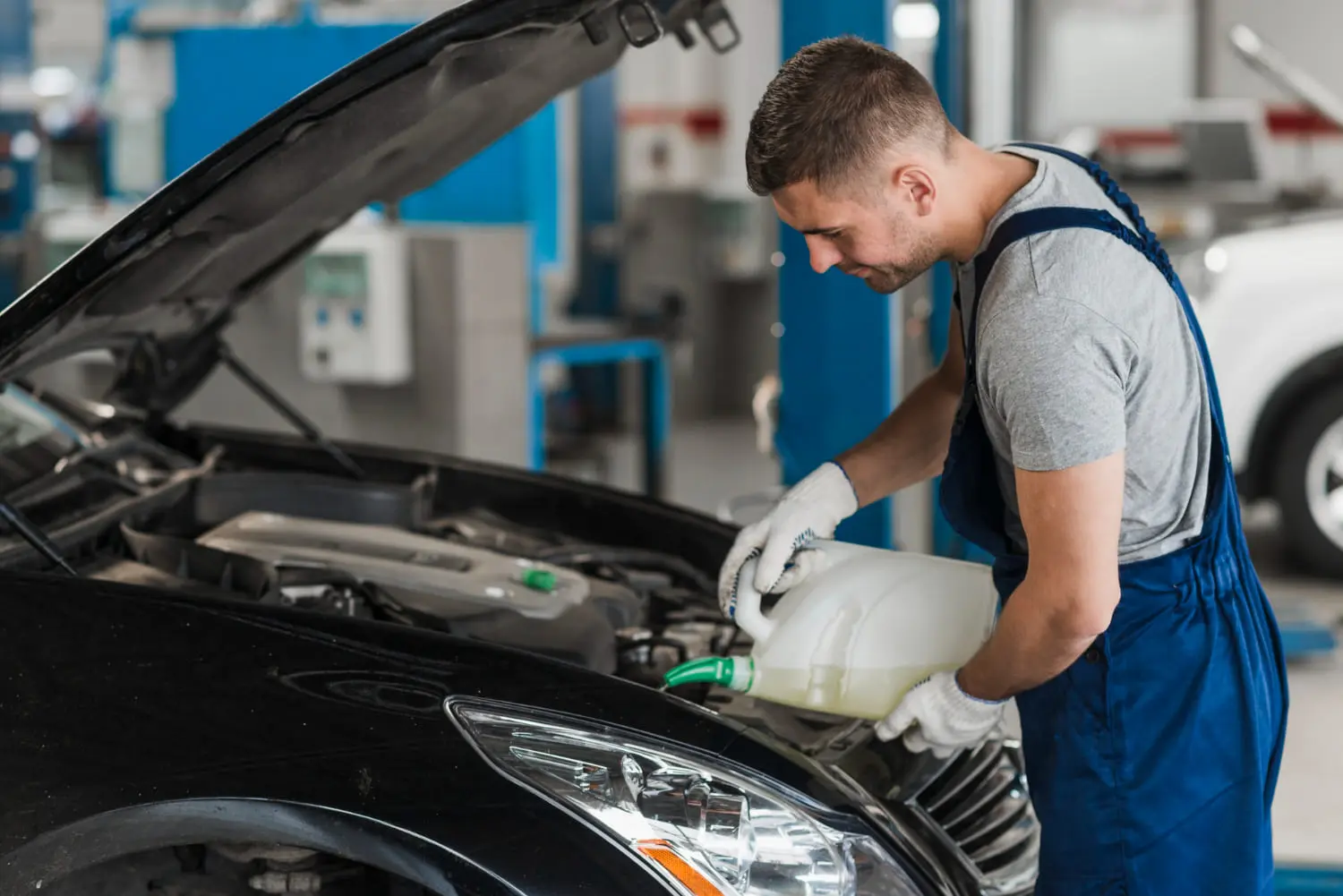
Your engine relies on a precise balance of specialized automotive fluids to lubricate moving parts, regulate operating temperatures, and transfer hydraulic force. When temperatures plunge below the freezing mark, standard fluids can thicken, freeze, or fail completely—leading to blown gaskets, cracked engine blocks, or total loss of steering and braking control. Preparing your vehicle for extreme winter requires a complete assessment of every critical fluid reservoir under the hood.
-
Coolant/Antifreeze Ratio and Hydrometer Testing: Engine coolant serves two equal purposes: preventing boil-overs in summer and preventing catastrophic freezing in winter. If your cooling system contains too much water, the liquid will freeze, expand, and crack your radiator or engine block. Use an inexpensive optical refractometer or antifreeze hydrometer to test the concentration. A standard 50/50 mixture of ethylene glycol and distilled water protects down to -34°F (-37°C). In areas facing extreme sub-zero cold, a 70/30 concentration drops protection down to -84°F (-64°C). Never exceed a 70% concentration, as pure antifreeze actually loses freeze-point efficiency and heat transfer capability.
-
Winter-Grade Motor Oil Viscosity: Engine oil thickens significantly as the ambient temperature drops, creating high internal drag that strains your starter and starves critical camshaft and crankshaft bearings during the first 30 seconds of cold startup. Check your owner's manual for recommended winter viscosities. Modern multi-grade synthetic oils—such as 0W-20 or 5W-30—use synthetic base stocks that flow instantly at sub-zero temperatures (the "W" stands for Winter, indicating low-temperature flow rates), ensuring immediate lubrication the second the engine turns over.
-
Sub-Zero De-Icing Washer Fluid: Summer washer fluid is mostly water mixed with mild detergents, which will freeze instantly inside washer lines and nozzles or flash-freeze across your warm windshield at highway speeds. Flush out remaining summer fluids and fill the reservoir with a winter-rated washer fluid containing high methanol concentrations rated for -20°F to -40°F. Ensure the fluid includes hydrophobic water-beading additives to clear road grime, salt spray, and slush efficiently.
-
Brake and Power Steering Hydraulic Integrity: Brake fluid is hygroscopic, meaning it naturally absorbs moisture from ambient air over time. In freezing weather, trapped water droplets can freeze into ice crystals inside brake lines, causing sudden pedal sponginess or complete hydraulic line blockage. Flushing old brake fluid if it is over two years old prevents moisture-related brake failure and preserves anti-lock braking system (ABS) modulation on slick surfaces.
Tire Safety, Traction & Braking Power
Your tires are the only four points of contact connecting your vehicle to the road surface, making tire condition the single most decisive factor in winter vehicle control. Many drivers operate under the dangerous misconception that all-season tires provide adequate grip year-round. However, rubber chemistry dictates that standard all-season rubber compounds begin to harden and lose flexibility once temperatures drop below 45°F (7°C). When rubber stiffens, it can no longer conform to microscopic surface textures, causing stopping distances to increase drastically even on bone-dry, cold pavement.
-
Winter Tires vs. All-Season Compounds: Dedicated winter tires (bearing the Three-Peak Mountain Snowflake / 3PMSF symbol) are engineered with high-silica tread compounds that stay supple in extreme sub-zero conditions. Furthermore, they feature thousands of microscopic slits known as sipes. These sipes expand under load to bite into packed snow and create mechanical interlock with ice, providing up to 35% shorter braking distances compared to standard all-season tires on frozen surfaces.
-
Cold-Weather Pressure Loss (The 10-Degree Rule): For every 10°F (5.6°C) drop in ambient temperature, your tires lose approximately 1 to 2 PSI of inflation pressure due to thermal air contraction. A tire correctly set to 35 PSI inside a 60°F heated garage can drop to 29 PSI once parked outside in a 10°F freeze. Under-inflated tires flex excessively, degrade directional steering response, increase shoulder wear, and compromise the contact patch required to clear slush. Check tire pressure weekly using a calibrated digital tire gauge first thing in the morning before driving.
-
Tread Depth Minimums & Tire Chains: While 2/32" is the legal limit for summer driving, winter driving demands a minimum tread depth of 5/32" (4 mm) to effectively channel slush and deep snow out from beneath the contact patch. Anything less leads directly to dangerous slushplaning. In heavy mountain passes or remote zones, carry properly sized tire chains or snow socks, and practice mounting them at home before facing a roadside blizzard.
-
Braking Response & Rotor Health: Anti-lock Braking Systems (ABS) rely on steady traction to pulse the calipers effectively without locking wheels. Check that your brake pads have adequate friction material remaining and inspect brake lines for corrosion. Road brine and salt accelerate surface rust on steel brake rotors, which causes initial brake grab and uneven pedal feel during the first few stops of a trip.
Exterior, Visibility, and Modern ADAS Sensors
Visibility is your primary line of defense when navigating low-light winter storms, blowing snow, and dense freezing fog. A mechanical system running in peak condition is useless if you cannot clearly see the road ahead or if your vehicle's safety computers are blinded by a layer of road salt and packed slush. Preparing your vehicle’s exterior and vision systems involves optimizing mechanical wiping hardware, cabin climate airflow, external illumination, and modern sensor arrays.
-
Beam-Style Winter Wiper Blades & Glass Care: Traditional framed wiper blades feature exposed metal hinges and brackets that quickly pack with ice and freeze in place, causing the blade to lift off the glass and leave dangerous, blinding streaks. Upgrade to heavy-duty, beam-style silicone winter blades enclosed in a continuous rubber boot that prevents ice accumulation. Treat exterior glass surfaces with a hydrophobic glass sealant so rain, sleet, and road spray bead up and slide off effortlessly, and never use windshield wipers to scrape heavy ice—doing so immediately tears the delicate silicone squeegee edge and strips internal wiper motor gears.
-
HVAC Defroster Output & Cabin Air Filter: Your car's climate control system is not just for occupant comfort; it functions as an essential active safety system to clear internal window condensation. Ensure your air conditioning compressor engages when the front defroster is activated, as the A/C system acts as a dehumidifier to strip moisture from incoming air. Replace a clogged cabin air filter before winter; a restricted filter drastically reduces airflow volume, causing windshield fogging that takes minutes to clear during critical driving moments.
-
Headlight Clarity, Fog Lamps, and Road Grime: Winter daylight hours are short, and dark wet asphalt absorbs light far more than dry concrete. Polish cloudy, oxidized polycarbonate headlight lenses with a restoration compound to recover maximum lumen output. Keep a spray bottle of glass cleaner and a microfiber towel in your trunk to wipe away road salt, grime, and slush buildup from your headlight lenses and taillights every time you stop to refuel.
-
Cleaning ADAS Cameras, Radar, and Ultrasonic Sensors: Modern vehicles rely heavily on Advanced Driver Assistance Systems (ADAS)—including adaptive cruise control, automatic emergency braking, and lane-keeping assist. These systems depend on optical cameras mounted behind the upper windshield and radar/lidar transceivers nestled in the front grille or bumper. During winter driving, slush and road brine easily coat these sensor housings, triggering unexpected "Sensor Blinded" errors or disabling crucial automated collision avoidance features. Make it a habit to wipe clean front grille radar covers, side-mirror blind-spot cameras, and ultrasonic parking sensors before every trip.
Modern Vehicle Tech: EVs and Hybrids in Cold Weather
Electric vehicles (EVs) and hybrid powertrains introduce unique thermal dynamics that demand specific winter management strategies. Unlike internal combustion engine (ICE) vehicles that produce abundant waste heat to warm the cabin, an EV must draw power directly from its high-voltage battery pack to generate heat via resistive heating elements or energy-efficient heat pumps. Combined with the natural slowdown of lithium-ion chemical kinetics in frigid weather, real-world EV driving range can decline by 20% to 40% in severe sub-zero temperatures if not managed correctly.
-
Battery Preconditioning & Scheduled Departures: Lithium-ion cells operate at peak chemical efficiency between 68°F and 86°F (20°C to 30°C). When parked in freezing ambient temperatures, the battery's internal resistance rises, restricting both energy output and fast-charging acceptance rates. Use your vehicle’s mobile app or onboard infotainment system to schedule a departure time while the car is still plugged into a Level 2 home charger. This activates the thermal management loop to warm the battery chemistry and cabin using grid power rather than draining valuable onboard range before you hit the road.
-
Understanding Cold-Weather Regenerative Braking Limitations: When a high-voltage battery is cold, it cannot rapidly accept heavy incoming electrical currents. Consequently, EV drivers will notice that regenerative braking is heavily restricted or temporarily disabled upon initial startup. As a result, one-pedal driving dynamics change dramatically, and your vehicle will coast much farther when you release the accelerator. Rely on mechanical friction brakes early in your drive until the battery reaches nominal operating temperature, and reduce regenerative aggressive settings on packed ice to avoid unexpected wheel slip.
-
Efficient Cabin Heating & Range Preservation Tactics: Cabin air heating is one of the highest parasitic electrical loads on an EV battery. To maximize highway driving range, prioritize localized contact heating—such as heated seats and a heated steering wheel—which directly warms occupants using only 50 to 100 watts of power compared to the 3,000 to 5,000 watts drawn by full HVAC blowers. Set the ambient cabin temperature a few degrees lower (around 68°F / 20°C) and ensure your tires are pumped to winter-spec PSI to counteract cold-induced rolling resistance.
The Ultimate Winter Emergency Roadside Kit
Even with meticulous mechanical preparation, winter weather remains inherently unpredictable. A sudden blizzard, an unexpected patch of black ice, or an accident blocking the highway can leave you stranded in your vehicle for hours in sub-zero temperatures. In extreme cold, an unexpected stranding transforms from a minor inconvenience into a genuine survival situation. Your vehicle’s trunk should house a purpose-built winter emergency kit designed to keep you warm, hydrated, visible, and capable of self-recovery.
-
Survival & Thermal Protection Gear: If your engine cannot run, vehicle cabins lose interior warmth in under 20 minutes. Pack multiple heavy wool or Mylar thermal space blankets, winter-rated sleeping bags, insulated waterproof gloves, thermal hats, and chemical hand and foot warmers. Store non-perishable, high-calorie energy bars, nuts, dried fruit, and water stored in non-rigid bottles (to prevent cracking when frozen).
-
Self-Recovery & Traction Hardware: Avoid waiting hours for an overwhelmed tow truck by carrying compact recovery tools. Include a foldable aluminum snow shovel, heavy-duty recovery tow straps with rated D-ring shackles, a bag of coarse silica sand or non-clumping clay cat litter for instant tire traction, and high-strength plastic traction recovery boards. Always carry a standalone, lithium-ion portable jump-starter pack capable of delivering 1500+ peak cranking amps so you can revive a dead battery without waiting for a second vehicle.
-
Safety, Illumination & Signaling Equipment: Winter storms severely reduce ambient visibility. Pack high-intensity LED emergency flares or magnetic flashing warning beacons, a rugged 1000-lumen tactical flashlight with extra lithium batteries (standard alkaline batteries quickly fail in sub-zero cold), a high-visibility reflective safety vest, a multi-tool, a basic first-aid kit, and a high-capacity portable power bank to keep your smartphone charged.
Conclusion: Peace of Mind on the Winter Road
Conquering severe winter driving conditions is entirely a matter of preparation over panic. Frigid temperatures, freezing precipitation, and icy asphalt show zero mercy to neglected vehicles, transforming minor component weaknesses into catastrophic roadside failures. By taking a proactive, systematic approach—securing robust electrical output, balancing vital freeze-protection fluids, mounting high-traction winter rubber, maintaining 360-degree visibility, managing EV battery health, and packing a comprehensive roadside emergency survival kit—you effectively insulate yourself and your passengers against the worst hazards of the cold season.
Winterizing your vehicle demands a modest investment of time and attention upfront, but the dividends are immense. You avoid costly emergency towing bills, eliminate the stress of sluggish sub-zero cold starts, and maintain complete steering and braking command across hazardous winter terrain. Before heading out on your first winter road trip, perform one final walkthrough: verify your fluid levels, inspect your wiper blades, check your tire pressures cold, and confirm your emergency gear is secured in the trunk. Preparation transforms winter driving from a high-stress hazard into a safe, confident, and reliable journey.

Written by Kousar Shabbir
Published Aug 18, 2026 in Maintenance & Tips.