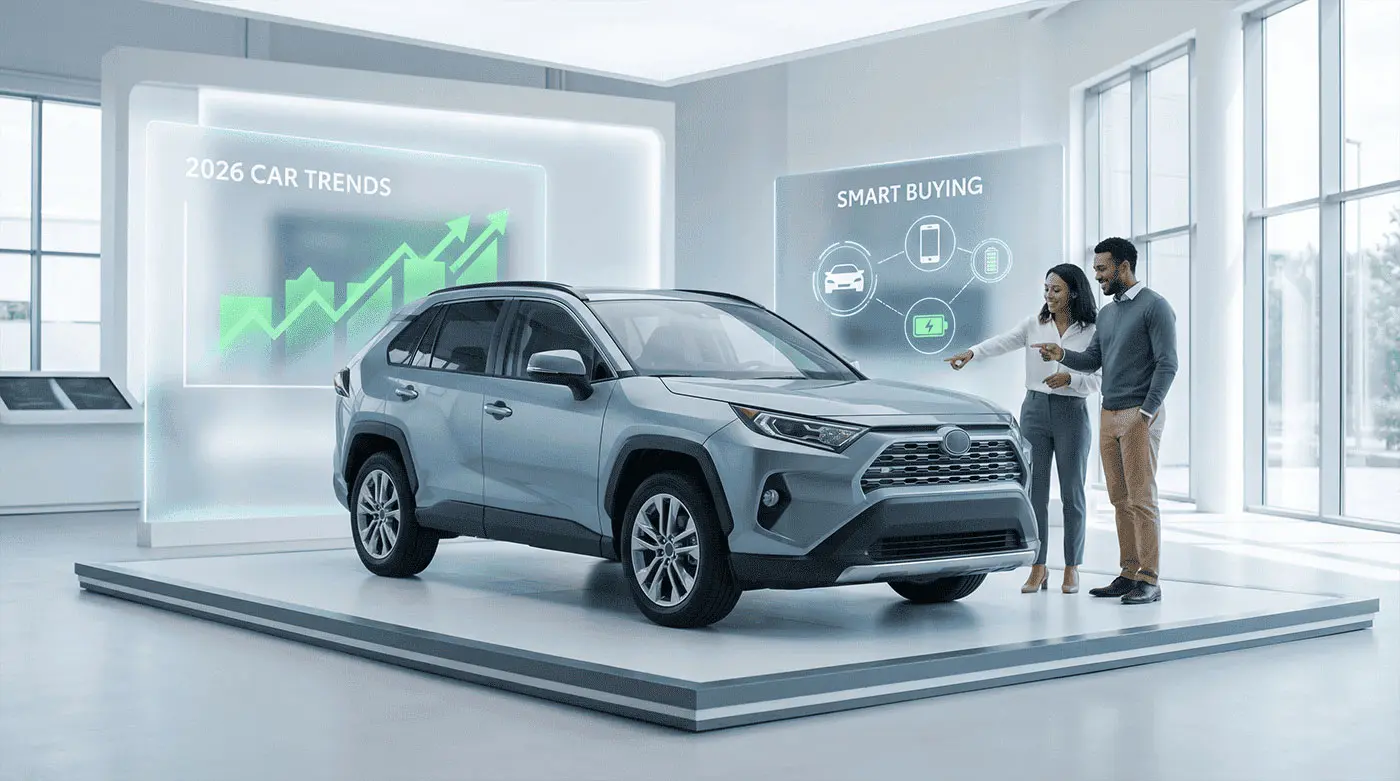
The automotive world of 2026 is a far cry from the supply-chain-choked, price-gouging chaos of just a few years ago. If you’ve stepped onto a dealership lot recently, or even just browsed online, you’ve likely noticed a palpable shift. We are no longer in the era of "buy whatever is available before it's gone." Instead, we have entered the age of pragmatic innovation.
For the 2026 car buyer, the "new car smell" now comes with a side of software updates and artificial intelligence. The flashy, all-electric promises of the early 2020s have matured into a balanced marketplace where hybrids are the undisputed kings and electric vehicles (EVs) are finally finding their footing in the sub-$30,000 "affordability" zone. However, this new landscape brings its own set of hurdles. High interest rates remain a "sticky" reality, and the average transaction price for a new vehicle has hovered stubbornly around the $50,000 mark.
Buying a car in 2026 requires more than just a good credit score; it requires a tech-savvy mindset. You aren't just buying a machine with four wheels; you are buying a Software-Defined Vehicle (SDV). This means your car’s value, safety, and even its horsepower are increasingly tied to code rather than just cylinders. From navigating the "subscription trap" where heated seats require a monthly fee, to understanding why a "Battery Health Certificate" is more important than a clean oil report, the rules of the game have changed.
This guide is designed to cut through the marketing noise. We aren't here to tell you which color looks best; we're here to explain how 2026’s specific market forces—like the surge in Chinese EV competition and the rise of "Agentic AI" co-pilots—will affect your wallet over the next five years. Whether you are a die-hard internal combustion fan or looking to make the leap to a plug-in, these are the five trends you cannot afford to ignore before signing on the dotted line.
The Hybrid Renaissance (Bridging the Gap)
In 2026, the automotive "gold rush" toward all-electric vehicles has hit a fascinating roadblock: reality. While EVs are the future, the Hybrid Renaissance is the story of the present. For the average buyer this year, the hybrid is no longer seen as a "compromise" but as the smartest financial and logistical move on the board. With full hybrids (HEVs) capturing over 35% of the market share in early 2026, it is clear that consumers are voting with their wallets for a technology that offers efficiency without the "infrastructure anxiety."
Why Hybrids Are the "Safe Bet" in 2026
The surge in hybrid popularity is driven by a simple equation: convenience + cost. As gas prices remain volatile and the public charging network—while improving—still struggles with reliability in many suburban and rural areas, hybrids offer a "get out of jail free" card. You get the 50+ MPG efficiency of an electrified powertrain but can still refuel in five minutes at any gas station. In 2026, manufacturers like Toyota, Honda, and Hyundai have standardized hybrid powertrains across their most popular SUVs and trucks, making them the default choice rather than a niche upgrade.
Total Cost of Ownership (TCO) Advantages
-
Depreciation Protection: Unlike early-generation EVs, which have seen unpredictable resale values, 2026 hybrids are holding their value remarkably well. They are the most "liquid" asset in the used car market.
-
Fuel Savings Without the Premium: The price gap between a gas-only car and a hybrid has narrowed to roughly $1,500–$2,500. For the average driver, this "hybrid premium" is paid back in fuel savings within the first 18 to 24 months of ownership.
-
PHEVs: These are becoming increasingly practical for drivers with home charging. By 2026, some newer plug-in hybrids offer approximately 40–80 miles of all-electric range, allowing many commuters to handle daily driving on electricity alone while still retaining the flexibility of a gasoline engine for long-distance road trips without relying on public charging.
Real-World Example: The Urban Commuter
Take a look at the 2026 mid-sized SUV market. A standard gas engine might average 28 MPG. Its hybrid counterpart delivers 42 MPG. Over a typical 12,000-mile year, the hybrid saves the owner roughly 143 gallons of fuel. At $4.00 a gallon, that’s $572 back in your pocket annually, not counting the higher resale value you’ll enjoy when you trade it in four years from now. In 2026, the "pragmatic buyer" isn't waiting for the grid to catch up—they’re buying a hybrid.
The Rise of the AI "Co-Pilot" and Software-Defined Vehicles
If you step into a flagship showroom in 2026—whether it’s Mercedes-Benz, BMW, or even a tech-forward brand like Xiaomi—the most significant change isn’t under the hood. It’s in the dashboard. We have officially moved past the era of "infotainment" and entered the era of the AI Co-Pilot. In 2026, cars are no longer just machines; they are Software-Defined Vehicles (SDVs), meaning their personality and capabilities are determined more by their code than their pistons.
From Voice Commands to "Agentic AI"
Remember the frustrating days of yelling "Call Mom" three times before the car understood? In 2026, that feels like ancient history. Modern vehicles from Honda, Volkswagen, and Mercedes now integrate "Agentic AI"—assistants powered by large language models (LLMs) that actually understand context.
Instead of specific commands, you can now have a conversation. You can say, "I’m feeling tired and I’m hungry for something spicy," and the car’s AI will proactively suggest a highly-rated Thai restaurant on your route, adjust the ambient lighting to a stimulating "vibrant" mode, and slightly stiffen the suspension to keep you engaged. This shift from reactive (doing what you ask) to proactive (anticipating what you need) is the hallmark of 2026 automotive tech.
Over-the-Air (OTA) Updates: Your Car Gets Better with Age
The most revolutionary aspect of the SDV is that the day you drive it off the lot is the worst the car will ever be. In the past, a car’s features were frozen in time the moment it left the factory. Today, thanks to robust Over-the-Air (OTA) updates, your car can receive:
-
Performance Boosts: Manufacturers can tweak battery management software to give you an extra 10–15 miles of range overnight.
-
New Safety Features: AI-driven hazard detection is constantly updated to recognize new types of road obstacles or changing traffic patterns.
- Longevity: By 2026, centralized computing platforms (like those developed by NVIDIA and Bosch) allow for "lifecycle management," meaning your 3-year-old car can still run the latest navigation software as smoothly as a brand-new model.
Predictive Maintenance: The End of the "Mystery Squeak"
One of the most practical benefits of 2026 AI is Predictive Maintenance. Instead of waiting for a check engine light, your car’s AI monitors micro-vibrations in the motor and thermal fluctuations in the battery. It can detect a component failure weeks before it actually happens. In many cases, the AI will even cross-reference your digital calendar and suggest a service appointment during a window when you don't have meetings, ensuring you’re never stranded by a "surprise" repair.
Safety First: The "Guardian Angel" Effect
Safety in 2026 has moved toward biometric intelligence. Sensors in the cabin now monitor your respiratory rate and heart rhythm. If the AI detects signs of a medical emergency or extreme drowsiness, it doesn't just beep—it can safely pull the car over to the shoulder, turn on hazard lights, and contact emergency services with your exact location and vitals. This "Level 2+" and "Level 3" autonomy is becoming a standard expectation for the safety-conscious buyer, making the 2026 vehicle a true guardian on the road.
The $30,000 EV Milestone (Affordability Returns)
For years, the biggest complaint about the electric vehicle revolution was the "green premium"—the fact that going electric usually meant spending north of $50,000. In 2026, we are finally witnessing the death of that barrier. This is the year of the Affordable EV. Thanks to a combination of falling battery prices, the adoption of Lithium Iron Phosphate (LFP) chemistry, and fierce global competition, the sub-$30,000 electric car is no longer a unicorn; it’s a showroom staple.
The Arrival of the New Guard
Affordable EV competition is intensifying in 2026 and beyond. Chevrolet’s Bolt is making a highly anticipated return on GM’s newer battery architecture, aiming to preserve its reputation as one of the most accessible EVs on the market with pricing expected below $30,000. Meanwhile, the redesigned Nissan Leaf has evolved from its aging hatchback roots into a sleeker crossover-style EV, starting near the $30,000 threshold. Automakers like Kia and Hyundai are also expanding their lower-cost EV portfolios with smaller urban-focused models, reflecting a growing industry push to deliver practical, technology-rich electric vehicles without the premium price tag.
How LFP Batteries Changed the Math
The secret sauce behind these lower prices is a shift in battery technology. Most 2026 "budget" EVs have switched to Lithium Iron Phosphate (LFP) batteries.
-
Cost-Effectiveness: LFP batteries don't use expensive cobalt or nickel, which slashes production costs.
-
Durability: These batteries can be charged to 100% daily without the significant degradation seen in older nickel-based batteries.
-
Safety: LFP chemistry is inherently more stable, reducing the risk of thermal runaway. For the 2026 buyer, this means a car that lasts longer and costs less, even if the total range is a slightly more modest 220–250 miles—more than enough for 90% of daily driving.
The Global Competition Factor
We cannot talk about 2026 affordability without mentioning the "elephant in the room": Chinese EV manufacturers. Brands like BYD and Geely have forced Western automakers to accelerate their timelines. To remain competitive against high-quality, low-cost imports, domestic manufacturers have had to streamline their manufacturing processes. The result for you, the consumer, is a price war that is finally working in your favor.
Real-World Example: The "Second Car" Strategy
In 2026, many families are adopting the "EV for the city, Hybrid for the trip" strategy. By purchasing a sub-$30,000 EV like the Bolt LT, a household can handle all school runs, grocery trips, and commutes for pennies on the dollar compared to gas. With many of these vehicles now qualifying for revamped federal or local tax credits (depending on your region), the effective price can sometimes drop into the low $20,000s—a price point we haven't seen for a quality new car in nearly a decade.
Navigating the "Subscription Trap"
As we move through 2026, a new line item has appeared on the monthly budgets of car owners: the software subscription. While you might be used to paying for Netflix or Spotify, the automotive industry has fully embraced the "Features on Demand" (FoD) model. In 2026, buying a car is increasingly like buying a smartphone—the hardware is all there, but the best features might be locked behind a digital paywall.
Pay-to-Play: The New Reality of Hardware
The most controversial trend this year is the subscription for physical hardware. Though brands like BMW faced significant backlash for charging for heated seats in the past, the practice has matured into a more subtle "tier-based" system in 2026.
-
Performance Boosts: Mercedes-Benz and Tesla now offer "Acceleration Upgrades" where a one-time or monthly fee unlocks more horsepower from the electric motors already sitting in your chassis.
-
Luxury on Demand: Some 2026 models from Audi and Cadillac allow you to subscribe to "Matrix LED" lighting or adaptive suspension settings only when you want them—perhaps for a winter road trip or a summer track day.
-
The "Frunk" Fee: Even traditional brands have joined in; Ford recently introduced a small fee to digitally unlock certain storage features in the 2026 Mustang lineup.
Why "Service Subscriptions" Make More Sense
Not all subscriptions are a "trap." In 2026, most buyers accept that features requiring ongoing data or cloud processing should carry a fee. This includes:
-
Advanced Driver Assistance (ADAS): Systems like GM's Super Cruise or Tesla’s FSD now require monthly "connectivity and mapping" fees to stay active, as they rely on real-time high-definition map updates.
-
In-Car Entertainment: With 5G now standard in 2026 vehicles, "Premium Connectivity" packages that include high-speed Wi-Fi, satellite maps, and video streaming are common and generally viewed as fair value.
The Rise of "Membership" Ownership
By 2026, we are seeing a shift from traditional leasing to all-inclusive car subscriptions. Services like "Care by Volvo" have expanded, allowing you to pay one flat monthly fee that covers the car, insurance, maintenance, and even wear-and-tear items like tires. This appeals to the 35–50 age demographic that values "cost transparency" over long-term equity. In 2026, many buyers find it easier to pay $800 a month for everything than to handle four separate bills and a large down payment.
How to Avoid the Trap
Before you sign the papers in 2026, you must ask the dealer for a "Digital Feature Disclosure." 1. Check for "Lifetime" vs. "Subscription": Ask specifically which features are "hard-coded" and which will disappear if you stop paying. 2. The Resale Risk: Be aware that a car with "locked" features may be harder to sell privately. A second-hand buyer in 2030 might not want to pay $20 a month for the heated seats you originally "bought." 3. New Consumer Laws: Thankfully, in 2026, new regulations (especially in the UK and parts of the US) require "Click-to-Cancel" transparency, preventing automakers from making it impossible to opt-out of these digital fees.
Trend 5: Future-Proofing Your Resale Value
In the past, keeping your car’s resale value high was simple: don’t smoke in it, change the oil every 5,000 miles, and try not to hit anything. But in 2026, the secondary market has evolved. With the rise of electric vehicles and software-defined features, the "mechanical" condition of a car is no longer the only thing buyers care about. To protect your investment in 2026, you need to think like a tech collector, not just a car owner.
The Battery Health Certificate: The New "Carfax"
If you are buying an EV or a Plug-in Hybrid (PHEV) in 2026, the most critical document you’ll deal with isn’t the title—it’s the Battery Health Certificate. Because the battery can account for up to 40% of an EV's total value, savvy used-car buyers are no longer satisfied with just seeing the odometer.
-
State of Health (SoH): In 2026, standard diagnostic reports now provide a "State of Health" percentage. A car with 30,000 miles but an 88% SoH (due to heavy fast-charging) may actually be worth less than a car with 50,000 miles and a 94% SoH.
-
The "Gold Standard" Score: Market data from early 2026 shows that vehicles with a verified SoH above 92% command a price premium of roughly 10–15% over uncertified listings. When you buy your 2026 vehicle, ensure you have access to an app or service that tracks this data so you can prove your "gentle" charging habits to the next owner.
Choosing "Timeless" Tech Over "Trendy" Gadgets
Resale value in 2026 is heavily dictated by how well your car’s computer will age. We are seeing a split in the market:
-
The "Bricked" Risk: Avoid trims that rely entirely on proprietary, niche software systems that might not be supported in five years.
-
The Safe Bet: Stick to manufacturers that have committed to long-term Over-the-Air (OTA) support. Brands like Toyota, Tesla, and Honda are currently leading the 2026 resale charts (with the Toyota Tacoma and Honda Civic retaining over 50% of their value after five years) specifically because their tech platforms are built for longevity.
-
Physical Buttons vs. Screens: Interestingly, a "counter-trend" is emerging in the 2026 used market. Buyers are beginning to pay more for vehicles that retained physical knobs for climate and volume, as early all-touchscreen interfaces from the 2022–2024 era are starting to fail or feel clunky.
The "Hybrid Premium" in the Used Market
As we discussed in Trend 1, the hybrid renaissance is in full swing. Data for 2026 shows that used hybrids—especially SUVs like the Toyota RAV4 Hybrid or the Honda CR-V Hybrid—are currently the most "liquid" assets in the automotive world. They sell faster and closer to their original MSRP than gas-only counterparts. If you are looking for a vehicle that you can exit easily in three years, a hybrid remains the undisputed champion of "future-proofing."
Documentation is the New Detail
Finally, "future-proofing" in 2026 means digital transparency. Keep a folder (digital or physical) that includes:
-
Software Update Logs: Proof that you’ve kept the vehicle’s "brain" updated.
-
Charging Logs: For EVs, showing that you mostly used Level 2 (home) charging rather than degrading the battery with daily DC fast-charging.
- Transferable Subscriptions: If you paid for a "lifetime" feature (like a performance boost or self-driving package), ensure you have the paperwork showing it transfers to the new owner. This can add thousands to your final sale price.
Conclusion
As we look at the automotive landscape of 2026, one thing is abundantly clear: the "perfect time" to buy a car has finally arrived, but only for the informed consumer. We have moved past the era of desperate bidding wars and entered a period where technology, sustainability, and affordability are finally beginning to align. Whether you are eyeing a revitalized hybrid, a budget-friendly EV, or a tech-heavy luxury cruiser, the power has shifted back into the hands of the buyer.
However, with that power comes a new kind of responsibility. Buying a car in 2026 is no longer a "set it and forget it" transaction. It is the beginning of a digital relationship. To truly succeed in this market, you must look beyond the sticker price and consider the Total Digital Cost. Ask yourself: Will this car still be "smart" in 2030? Am I comfortable with the subscription model this manufacturer uses? Does this vehicle fit my actual daily infrastructure, or am I buying for a lifestyle I wish I had?
Drive into 2026 with your eyes open, your software updated, and your budget intact. The road ahead has never looked more promising.




Written by Kousar Shabbir
Published Apr 28, 2026 in Buying Guides.