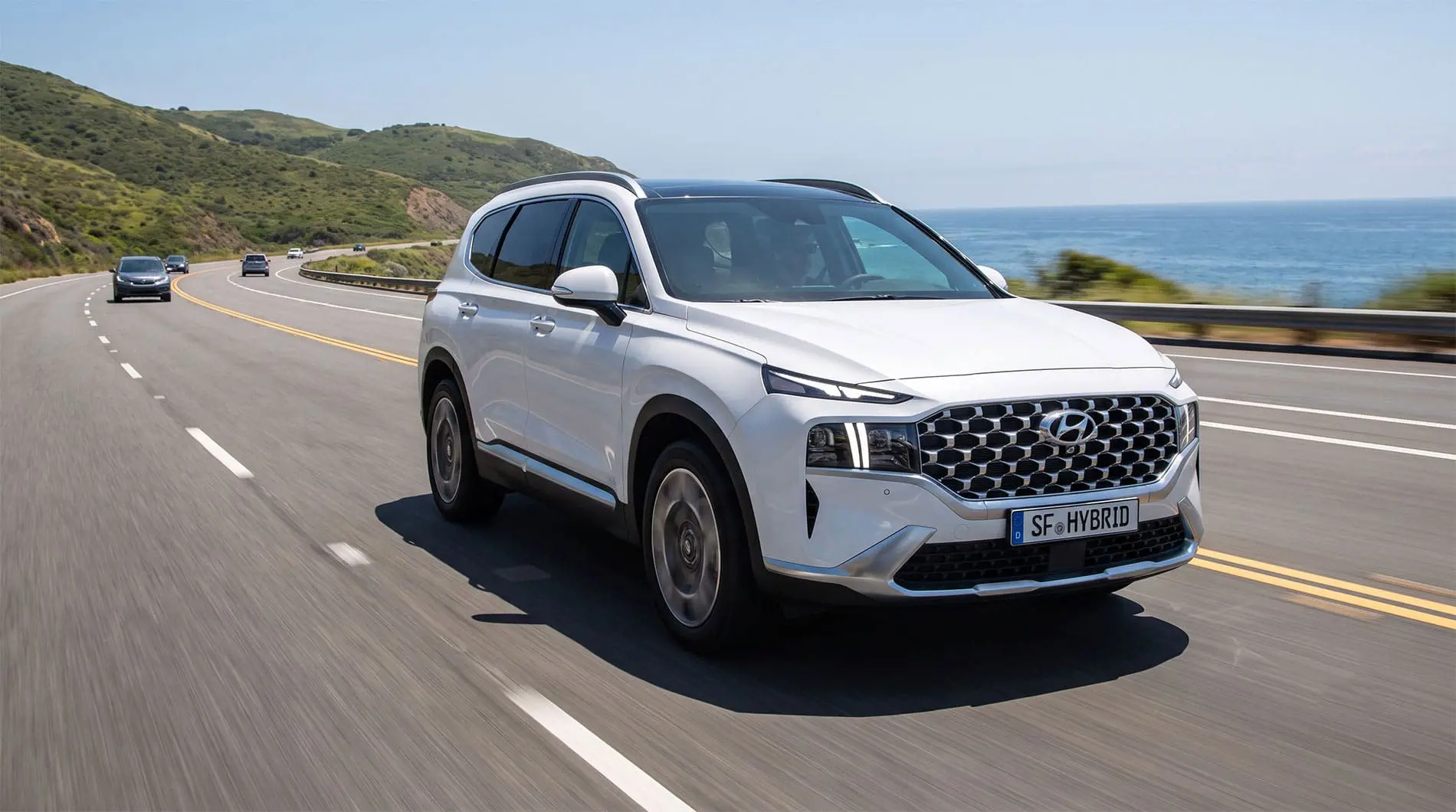
The automotive industry is currently navigating a period of unprecedented transformation. As global environmental concerns reach a fever pitch, legislative bodies, including the EPA in the United States and the European Union with its rigorous Euro 7 standards, are tightening the reins on carbon emissions. For manufacturers like Hyundai, the challenge is not merely to meet these stringent requirements, but to do so while preserving the performance, reliability, and utility that consumers demand from modern SUVs. At the heart of this transition stands the Hyundai Santa Fe Hybrid, a vehicle that has become a benchmark for how traditional internal combustion engineering can be successfully integrated with forward-thinking electrification.
As we move closer to the 2026 model year, these new emissions regulations are acting as a catalyst for rapid technological evolution. We are witnessing a fundamental shift in how the Santa Fe Hybrid is engineered moving away from merely "meeting standards" toward a design philosophy that anticipates future regulatory tightening. This shift is reshaping everything from powertrain calibration and battery energy density to the very materials used in the vehicle’s construction. For prospective buyers and automotive enthusiasts alike, the question is no longer just about fuel economy; it is about the long-term viability of hybrid technology in a world that is aggressively pivoting toward a zero-emission future. In this article, we will explore the intricate relationship between these emerging 2026 mandates and the engineering philosophy behind the Santa Fe Hybrid, examining how Hyundai is effectively future-proofing one of its most popular models against an increasingly complex regulatory landscape.
Decoding the 2026 Emissions Mandates
The global automotive sector stands at a crossroads, with 2026 marking a definitive pivot point in regulatory history. Both the United States' Environmental Protection Agency (EPA) and the European Union’s implementation of the Euro 7 standards are introducing a paradigm shift that extends far beyond traditional tailpipe emission caps. For decades, manufacturers focused primarily on carbon dioxide and nitrogen oxide limits. However, the 2026 mandates are significantly more comprehensive, targeting the entire lifecycle of the vehicle.
The most critical change in the 2026 landscape is the inclusion of non-exhaust emissions. For the first time, regulatory bodies are accounting for particulate matter generated by brake friction and tire abrasion. This is a massive shift, particularly for SUVs like the Hyundai Santa Fe, which due to their size and weight traditionally produce higher levels of these pollutants compared to smaller hatchbacks. Furthermore, these regulations mandate stricter durability requirements for hybrid batteries. Manufacturers are now responsible for ensuring that the battery’s state of health remains within specific parameters over an extended period, moving the goalposts from "initial performance" to "long-term environmental impact."
For Original Equipment Manufacturers (OEMs), these rules are not merely suggestions; they are existential hurdles. The pressure to reduce carbon footprints has accelerated the transition away from pure internal combustion engines (ICE). Traditional engines are struggling to meet these limits without massive, costly hardware additions. This has forced the industry to adopt "bridge" technologies highly sophisticated hybrid systems that can squeeze the absolute maximum efficiency out of every drop of fuel while simultaneously monitoring real-world emissions performance through advanced onboard diagnostic systems. These mandates are effectively forcing a transformation where software becomes just as important as the mechanical hardware under the hood, ensuring that emissions performance is maintained not just in a laboratory, but in the unpredictable conditions of real-world daily driving.
Regulatory Landscape: EPA vs. Euro 7
While the US EPA's recent multi-pollutant standards focus on aggressive fleet-wide reductions by 2027, the Euro 7 standard (effective November 2026) introduces unique challenges for SUVs. Euro 7 is pioneering the regulation of non-exhaust emissions, specifically targeting particulate matter (PM) from brake pads and tire abrasion. For a vehicle the size of the Santa Fe, this necessitates advanced regenerative braking calibration to minimize physical brake engagement and the use of low-friction, eco-optimized tires. Furthermore, Euro 7 mandates stricter Battery Durability Requirements, requiring EVs and PHEVs to retain a specific percentage of capacity over 10 years or 124,000 miles, a standard Hyundai is addressing through its sophisticated Battery Management System (BMS) cell-balancing protocols.
The Santa Fe Hybrid—Hyundai’s Strategic Response
To navigate the treacherous waters of 2026 regulations, Hyundai has doubled down on its proprietary "Smartstream" powertrain technology. Unlike a simple hybrid system that merely assists the engine, Hyundai’s current evolution is designed to act as an intelligent energy management hub. The core philosophy here is to decouple engine load from vehicle demand. By utilizing a high-torque electric motor paired with a turbocharged 1.6-liter engine, the Santa Fe Hybrid can keep the internal combustion unit within its most thermally efficient operating band for a significantly larger percentage of the driving cycle.
This is not just about fuel savings; it is a direct compliance strategy. By reducing the reliance on the gasoline engine during stop-and-go city driving where emissions are typically highest Hyundai effectively lowers the vehicle’s fleet-wide carbon average without needing to sacrifice the size or passenger comfort that define the Santa Fe. Furthermore, the integration of regenerative braking systems has been overhauled. In the 2026-ready models, these systems are more aggressive and better calibrated to work in tandem with the physical braking hardware, addressing the new regulatory concerns regarding brake-dust particulate matter.
What makes this response truly strategic is its "bridging" nature. Hyundai recognizes that while full electrification is the ultimate goal, the current charging infrastructure and consumer range anxiety make pure BEVs a difficult sell for all households. By perfecting the hybrid SUV, Hyundai creates a product that satisfies the immediate, draconian 2026 emissions standards while simultaneously building brand loyalty. They aren't just selling a car; they are selling a compliant, high-performance SUV that doesn't force the driver to change their lifestyle. The Smartstream system is essentially a software-defined powertrain it is constantly learning and adjusting its energy split to stay within regulatory limits, proving that even as standards tighten, the SUV doesn't have to disappear; it just has to get much, much smarter.
Technical Deep Dive: The Smartstream Advantage
The efficiency of the Hyundai Santa Fe Hybrid hinges on the Integrated Thermal Management System (ITMS). Unlike traditional engines that rely on simple thermostats, the ITMS uses a complex three-way valve setup to dynamically regulate coolant flow. By accelerating oil warming during cold starts and capturing exhaust heat to stabilize engine temperature, the system minimizes parasitic losses. Coupled with Continuously Variable Valve Duration (CVVD)—which adjusts intake valve timing independent of valve opening—the engine can effectively switch between Atkinson and Otto cycles. This allows for superior volumetric efficiency under high loads and reduced pumping losses during low-throttle cruising, keeping the Santa Fe well within the 2026 carbon intensity targets.
Real-World Impacts for Drivers and the Future
The transition toward 2026-compliant vehicles is more than a regulatory hurdle for manufacturers; it directly alters the ownership experience and long-term value proposition for the average consumer. Historically, the "hybrid tax"—the price premium paid for hybrid technology—was weighed against potential fuel savings at the pump. Today, that calculus has expanded to include the "future-proofing" premium. As regulations tighten, vehicles that fail to meet these new, stringent standards face the looming threat of becoming obsolete or, at the very least, less desirable in the used-car market. The Hyundai Santa Fe Hybrid, by virtue of its sophisticated powertrain, is effectively shielding its owners from this depreciation risk.
For the daily driver, the impact of these regulations is most visible in the vehicle's "smart" energy management. You may notice that the car operates in electric-only mode during low-speed, urban environments more frequently and for longer durations than its predecessors. This is a deliberate calibration choice to keep tailpipe emissions near zero during the most polluting phases of a commute. While some drivers might perceive this as a shift in driving dynamics, it ultimately translates into lower fuel consumption and reduced wear and tear on the internal combustion engine components. Furthermore, as automakers integrate advanced telematics to report on compliance and battery health, consumers will benefit from more precise maintenance scheduling, ensuring that the vehicle’s high-voltage battery stays optimized for its entire lifespan.
Looking beyond the immediate horizon, the Santa Fe Hybrid serves as a glimpse into the future of automotive utility. As we approach 2026, the industry is moving away from the "all-or-nothing" approach to electrification. Instead, we are seeing the rise of the high-performance, emissions-compliant hybrid as a primary vehicle for families. These regulations are pushing Hyundai to refine its battery chemistry and thermal management systems, innovations that will eventually trickle down into more affordable, mainstream models. For a buyer today, investing in a 2026-ready Santa Fe Hybrid is essentially purchasing a ticket into the next generation of automotive technology—one that values efficiency, long-term sustainability, and performance in equal measure. The future of the SUV isn't about compromise; it’s about this precise level of engineering finesse.
Consumer Guidance: Maximizing Longevity & Compliance
To ensure your Santa Fe Hybrid remains compliant and performs optimally under these new regulatory scrutiny levels, consider these detailed practices. Understanding the nuance of your vehicle’s battery chemistry and energy management system is no longer just "nice to have"—it is essential for long-term ownership.
-
Optimal SOC Window: Maintain your hybrid battery's state of charge between 20% and 80%. Avoid deep discharges or keeping the vehicle at 100% charge for extended periods in extreme heat, as this accelerates the chemical degradation of the lithium-ion cells. By staying within this "buffer zone," you preserve the battery’s capacity, which is vital for meeting the stringent durability requirements mandated by 2026 standards.
-
Regenerative Braking Utilization: Familiarize yourself with "Eco" and "Smart" drive modes. These are not merely for fuel efficiency; they are specifically calibrated to maximize kinetic energy recovery. By relying more on regenerative braking than physical friction brakes, you reduce the release of non-exhaust particulate matter—a key metric under the new Euro 7 and updated EPA guidelines. Using these modes helps keep your vehicle’s environmental profile as clean as the day it left the factory.
-
Cooling System Maintenance: The battery cooling filter is a critical, often overlooked component. A clogged filter restricts airflow, leading to localized thermal stress on individual battery modules. Ensure this filter is inspected every 30,000 miles to keep the battery within its optimal thermal range. Consistent thermal management is the single most important factor in ensuring the battery stays compliant with long-term performance mandates.
-
Software Health and Telematics: Keep your vehicle’s over-the-air (OTA) software updated. Hyundai frequently pushes refinements to the Battery Management System (BMS) to improve energy distribution efficiency based on real-world driving data. These updates often include "compliance patches" that optimize how the car manages emissions during cold starts or high-load scenarios. Ignoring these updates could mean your vehicle is operating on outdated efficiency parameters.
-
Proactive Inspection of Friction Components: Given the new focus on non-exhaust emissions, consider using OEM-certified, low-dust brake pads when replacements are required. Using generic, high-dust aftermarket pads may negatively impact your vehicle’s adherence to the particulate emission standards that manufacturers are now being held accountable for. Always consult with your service center to ensure that replacement parts maintain the vehicle’s "compliance-ready" status.
Conclusion
As the 2026 model year approaches, the Hyundai Santa Fe Hybrid stands as a testament to the fact that strict environmental regulations do not have to signal the end of the capable, family-oriented SUV. Instead, these mandates are acting as a powerful forcing function, driving manufacturers to innovate at a pace we have rarely seen before. By leaning into its sophisticated Smartstream technology, Hyundai has managed to strike a delicate balance: delivering the utility and performance that drivers expect while strictly adhering to increasingly rigorous global tailpipe and particulate emission standards.
For consumers, this evolution represents a significant upgrade in value. The modern hybrid SUV is no longer just a "greener" alternative; it is a smarter, more efficient, and more future-proof vehicle that is engineered to stay relevant in a rapidly changing legislative environment. While the road toward full electrification is long, models like the Santa Fe Hybrid are providing the essential bridge—demonstrating that efficiency and power can coexist beautifully. As we look toward 2026 and beyond, it is clear that the companies that will thrive are those that view these regulations not as a burden, but as an invitation to engineer better, more sustainable products. The Hyundai Santa Fe Hybrid is not just meeting the future; it is helping to define it, offering peace of mind to buyers who want a vehicle that respects both their needs on the road and the environment we all share.


Written by Maarukh Shahbaz
Published Jul 7, 2026 in Auto News.