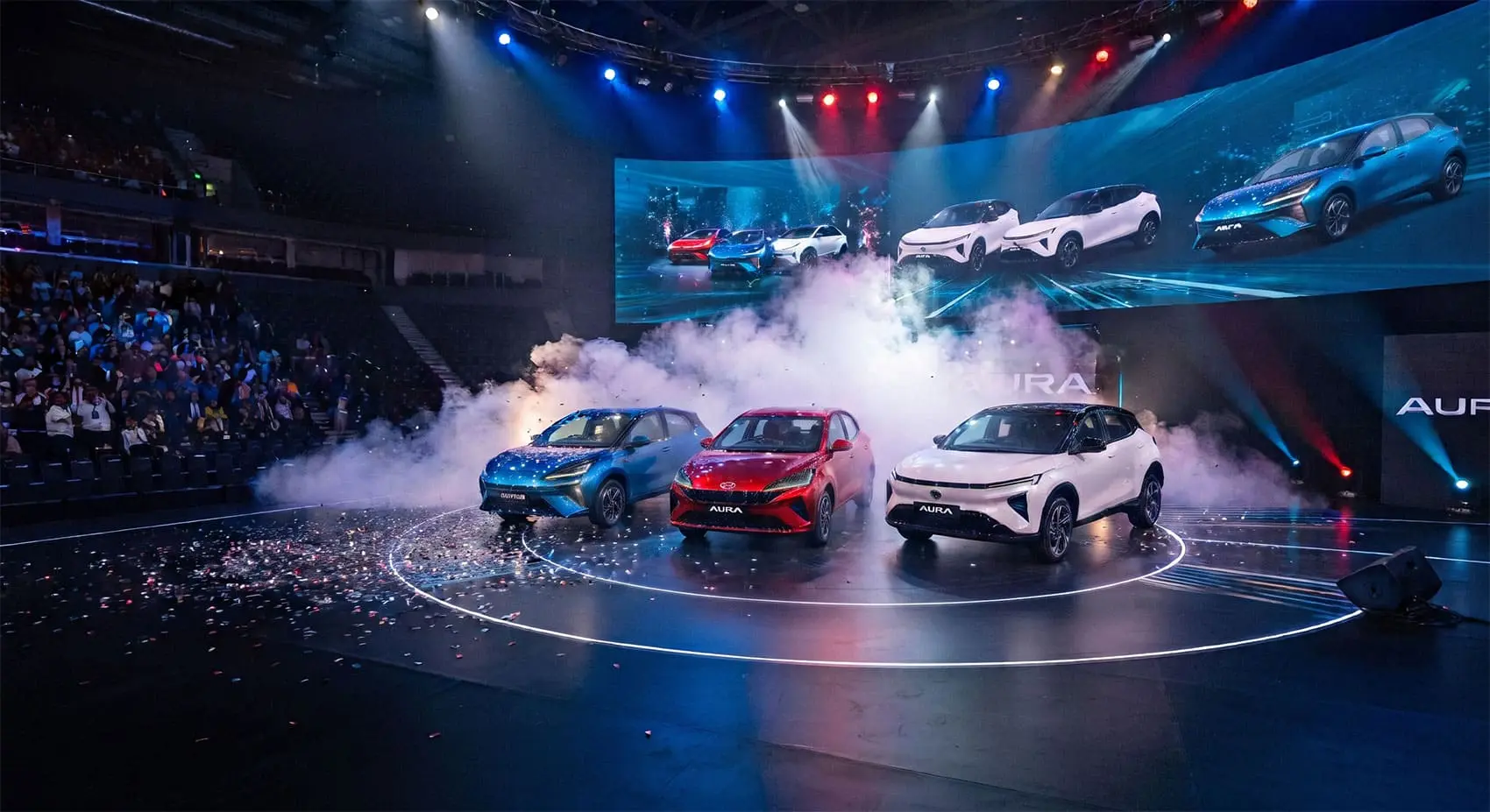
For decades, the ritual of the international auto show followed an intoxicating, predictable rhythm. Crowds gathered around rotating pedestals under stadium spotlights to gaze at radical, low-slung machines boasting scissor doors, neon-bathed cockpits, and speculative performance figures that lived purely in the realm of automotive fantasy. These traditional concept cars were rolling sculptures—deliberate exercises in aesthetic drama designed to capture global headlines, gauge consumer appetite, and quietly gather dust in corporate museum basements once the next show season rolled around.
Today, that paradigm has undergone a seismic transformation.
We have entered an era where concept cars are no longer mere styling exercises; they are the battle-tested digital and mechanical blueprints for the immediate future of mobility. The historic dividing line between far-flung prototypes and commercial production vehicles has compressed from a decade-long wait into a matter of months. Modern concept vehicles function as fully operational testbeds for software-defined architectures, artificial intelligence integration, structural solid-state energy containment, and circular manufacturing methodologies. When an automaker reveals a concept vehicle now, it is an explicit declaration of corporate survival and technological intent.
As we examine the landscape right now, the industry stands at a rare inflection point where electrification, autonomous computing power, and sustainable aerodynamics intersect. Concepts are no longer promising the distant moon; they are establishing the engineering foundations for the vehicles you will test drive, purchase, or summon within the next few product cycles. From radical active aerodynamics that morph at highway speeds to steer-by-wire cabins devoid of mechanical linkages, these prototypes reveal a thrilling, uncompromising glimpse into the next automotive epoch. Let’s dive into the groundbreaking concept cars that are actively redefining the rules of the road.
The Design Revolution – Aerodynamics Meets Software-Defined Cabins
The exterior and interior architecture of the modern concept car has fundamentally broken away from the static, mechanical conventions of the past century. Where traditional design was once dictated by the unyielding placement of internal combustion engines, bulky transmissions, and fixed physical switchgear, today's prototypes are shaped by the dual forces of computational fluid dynamics and software-defined spatial architecture. Designers now possess unprecedented freedom to sculpt silhouettes that cut through air with minimal resistance while transforming vehicle interiors into dynamic, reconfigurable living environments.
-
Ultra-Low Drag Coefficients and Morphing Active Aero Surfaces
Aerodynamic efficiency is no longer confined to static wind-tunnel tuning. Modern electric concept vehicles routinely target ultra-low drag coefficients—pushing well below the $0.20\,C_d$ barrier—to extract maximum operational range from battery packs. To achieve this without compromising high-speed stability or aggressive aesthetic proportions, concepts are integrating active aerodynamic surfaces that physically morph depending on driving conditions. We see automated front air curtains, deployable rear diffusers, motorized active wheel shutters that seal during cruising, and adaptive rear spoilers that extend or tilt to manipulate vortex shedding in real time. These dynamic physical transformations allow a vehicle to operate as a slippery, hyper-efficient cruiser on the motorway while generating targeted downforce the moment cornering loads demand grip.
-
The Cockpit Overhaul: Steer-by-Wire, Pillar-to-Pillar Displays, and AI Copilots
Step inside modern prototypes and the mechanical steering column is entirely absent. Steer-by-wire technology decouples the steering yoke or wheel from the front axle, transmitting driver inputs purely through high-speed digital signals and redundant actuators. This architectural liberation allows steering controls to retract flush into the dashboard during automated or stationary modes, opening vast interior cabin room. Spanning the entire dashboard width, seamless pillar-to-pillar OLED and Micro-LED displays replace fragmented instrument clusters. Backed by generative AI copilots and contextual neural engines, these interfaces adapt proactively—surfacing critical navigation telemetry, ambient controls, or predictive route guidance without cluttering driver sightlines with unnecessary digital noise.
-
Design in Action: Luxury and High-Performance Vision Vehicles
Prominent modern vision vehicles—such as the BMW Vision Neue Klasse architecture and performance concepts from Mercedes-AMG, Porsche, and Audi—demonstrate this seamless fusion. Rather than relying on traditional chrome accents and decorative grilles, exterior front fascias are reimagined as interactive, illuminated digital surfaces that communicate with pedestrians and surrounding traffic. Inside, physical buttons are reduced to tactile, haptic-feedback touchpoints embedded invisibly beneath premium textiles, proving that high-tech digital control and minimalist aesthetic elegance can coexist seamlessly.
Powertrain Breakthroughs – Solid-State Batteries and Beyond
The beating heart of any concept vehicle has moved past the era of high-revving internal combustion engines into high-density electrical propulsion. Automakers are using current prototypes to solve the two greatest challenges facing electric mobility: charging downtime and real-world range degradation. Rather than simply packing heavier, larger lithium-ion packs into vehicle floors, current engineering prototypes are pioneering fundamental chemical and structural transformations.
-
The Promise of Solid-State Energy Density and 800V/900V High-Voltage Architectures
At the forefront of concept powertrain engineering is the transition to all-solid-state battery (ASSB) cells. By replacing flammable liquid electrolytes with solid ceramic or polymer separators, concept vehicles achieve energy densities exceeding 400–500 Wh/kg—nearly double the volumetric efficiency of conventional lithium-ion cells. Paired with ultra-fast 800-volt and emerging 900-volt electrical architectures, solid-state testbeds slash thermal buildup during sustained high-current charging. Concept demonstrations indicate 10% to 80% replenishment in under 10 minutes, making the EV charging cycle indistinguishable from a traditional fossil-fuel pump stop while reducing battery degradation across extreme temperature ranges.
-
Modular Chassis Platforms and Cell-to-Chassis Structural Integration
Powertrains in modern prototypes are integrated directly into the vehicle's structural skeleton through "cell-to-chassis" and "cell-to-body" engineering. The battery pack no longer sits inside a heavy protective tray bolted underneath; it functions as a primary torsional load-bearing member of the vehicle frame. This structural efficiency reduces curb weight by hundreds of kilograms and lowers the center of gravity, unlocking sharper handling dynamics. Furthermore, scalable modular skateboard platforms allow automotive groups to deploy the identical underlying drive unit—spanning dual-motor, tri-motor, and torque-vectoring quad-motor layouts—across sedans, crossover utility vehicles, and rugged commercial pickups with minimal tooling modifications.
-
Real-World Metrics vs. Lab Projections: Realizing the 600+ Mile Range
Concept vehicles like the Mercedes-Benz Vision EQXX and Toyota’s solid-state endurance testbeds have moved out of enclosed laboratories and onto open highways to prove these architectures in variable real-world weather. Through silicon-carbide (SiC) power inverters, high-efficiency axial-flux electric motors reaching 97% energy conversion, and passive rooftop solar arrays powering auxiliary electronics, modern concept powertrains regularly validate operational ranges surpassing 620 miles (1,000 km) on a single charge under real traffic conditions.
Radical Sustainability – The Circular Automotive Economy
Environmental responsibility in concept design has moved far past the superficial application of recycled floor mats and faux-leather seat covers. The latest wave of concept vehicles serves as an experimental laboratory for genuine circularity—engineering every single component, adhesive, substrate, and structural panel for non-toxic harvesting, biological breakdown, or closed-loop remanufacturing at the end of the vehicle’s lifecycle.
-
Bio-Fabricated Materials: Mycelium, Micro-Algae, and Agricultural Waste Composites
Concept car cabins are actively ditching petroleum-derived synthetic polymers in favor of lab-grown and agricultural byproducts. Seat structures and acoustic insulation are being grown from fungal mycelium networks, which offer superior sound-dampening properties and structural rigidity while remaining 100% compostable. Interior trims leverage silk-like textiles spun from bio-engineered spider proteins, dashboard substrates molded from hemp and flax fibers, and dyes derived directly from micro-algae. By utilizing agricultural residues such as pineapple leaf fibers, citrus peel byproducts, and FSC-certified reclaimed wood veneers, automakers prove that ultra-luxury tactile refinement does not require animal leather or carbon-intensive petrochemical synthesis.
-
Cradle-to-Cradle Manufacturing and Monomaterial Construction
A major roadblock in traditional automotive recycling is the complex bonding of disparate materials—such as laminating polyurethane foam directly onto polypropylene plastics—which makes automated separation nearly impossible. Modern concept vehicles address this by pioneering "monomaterial" component engineering. Entire seat assemblies, door panels, and headliners are crafted from single-polymer families, like 100% recycled PET. This allows the entire interior module to be shredded, melted, and spun into new automotive components without complex manual disassembly or chemical contamination. Furthermore, structural aluminum alloys in chassis concepts are strictly color-coded and unblended to enable closed-loop, low-energy re-smelting.
-
Leading Examples from the Global Show Circuit
Concepts like the Polestar Precept, the BMW i Vision Circular, and Genesis vision studies highlight how circular design enhances premium aesthetics. By celebrating raw textures—exposed compressed flax weaves, translucent bio-polymers, and bronze-patinated recycled metals—these concept vehicles establish a bold, contemporary design language that replaces decorative excess with purposeful, minimalist sustainability.
The Production Reality Check – Concept to Showroom Floor
The most critical test of any concept car is not how brightly it shines under expo lights, but how much of its foundational engineering survives the unforgiving gauntlet of real-world vehicle production. Historically, the journey from concept clay model to commercial assembly line was notorious for diluting visionary styling into bland compromises. Today, rapid digital prototyping, software-defined modularity, and aggressive global competition have drastically compressed this timeline, turning today's radical testbeds into next year's showroom reality.
-
Which Concept Innovations Will Hit Showrooms by 2027–2030
The automotive pipeline indicates that several key concept technologies are already transitioning into commercial deployment:
-
Solid-State Battery Chemistry: Major automakers (including Toyota, BMW, and Nissan) have scheduled pilot-line production and initial consumer vehicle rollouts featuring semi-solid and all-solid-state cells between 2027 and 2028.
-
Steer-by-Wire Systems: Following initial homologation hurdles, full steer-by-wire cabins with variable-ratio steering yokes are being integrated directly into flagship electric sedans and performance grand tourers.
-
Zonal Computing Architecture: The massive clusters of 70+ separate electronic control units (ECUs) found in older cars are officially being replaced by centralized high-performance compute clusters running unified operating systems.
-
-
Engineering, Regulatory, and Manufacturing Bottlenecks
Despite rapid advancement, bridging the gap between prototype and production requires solving immense industrial challenges. Crash safety regulations demand rigid structural pillars and pedestrian-impact crumple zones that can constrain ultra-sleek, low-drag concept front ends. Steer-by-wire and Level 3/Level 4 autonomous computing stacks require expensive dual-redundant fail-safe hardware and stringent global homologation approval before commercial release. Moreover, scaling bio-composite textiles and lab-grown mycelium acoustic liners to automotive grade requires proving UV resistance, ten-year wear durability, and cost parity with legacy synthetics.
-
Production Proof Points: From Show Car to Daily Driver
We are already seeing direct lineage between radical concepts and road-going machinery. The aerodynamic optimizations pioneered in ultra-slippery prototypes are directly dictating the contours of production EVs, while edge-to-edge curved pillar displays and contextual AI voice assistants are arriving as standard equipment in modern production crossovers and executive flagships.
What Concept Cars Reveal About Our Driving Future
The modern concept car has evolved from a transient auto show spectacle into an essential roadmap for the next century of personal mobility. As we have seen across design breakthroughs, ultra-dense solid-state energy architectures, and closed-loop bio-material interiors, the vehicles gracing design studios right now are purposeful testbeds solving the most pressing environmental, computational, and logistical challenges facing the automotive industry.
We are witnessing an unprecedented convergence where the historical trade-offs between zero-emission sustainability, uncompromised performance, and intelligent autonomous computing are finally dissolving. The radical active aerodynamics and steer-by-wire cabins pioneered in today's prototypes are actively establishing the new benchmarks for commercial engineering. Rather than signaling an era of generic transportation pods, these concepts prove that the future of driving remains deeply emotional, visually captivating, and technologically transformative. For automotive enthusiasts, prospective buyers, and industry observers, the message is clear: the bold innovations previewed in these vision vehicles will be parked in our driveways far sooner than we think.


Written by Kousar Shabbir
Published Aug 18, 2026 in Auto News.