The Toyota Prius and RAV4 are legendary for their longevity, often clocking well over 200,000 miles with little more than routine oil changes and tire rotations. However, there is one component that eventually faces the inevitable march of time: the hybrid battery pack. For many owners, the hybrid system feels like a "black box"—it works flawlessly until, suddenly, it doesn’t. Understanding the health of your hybrid battery isn't just about avoiding a breakdown; it is about empowerment. When you know the subtle signs of degradation, you transition from a reactive driver who fears the worst to an informed owner who can plan ahead, save thousands in unnecessary repairs, and ensure your vehicle stays on the road for years to come.
Many drivers mistakenly believe that a failing battery results in a catastrophic, instant failure. In reality, the systems within your Toyota are designed to communicate distress long before the vehicle loses power. By observing small changes in how your car operates—how the engine sounds, how it consumes fuel, and how the battery display behaves—you can detect a failing cell or a degrading module early. This guide is designed to strip away the technical jargon and provide you with five critical, easy-to-spot indicators that your hybrid battery is reaching the end of its service life. Whether you are driving a high-mileage Prius or a daily-commuter RAV4, recognizing these symptoms is your first line of defense. We will walk through the science of what is happening under your floorboards and provide actionable steps on how to manage these issues, ensuring that your investment continues to pay dividends in fuel efficiency and reliability.
The "Hidden" Cost: Decreased Fuel Economy
One of the first and most common indicators of a failing hybrid battery is a subtle, yet persistent, decline in fuel efficiency. Because the Toyota Prius and RAV4 Hybrid rely on a sophisticated synergy between the internal combustion engine (ICE) and the electric motor, any weakness in the battery pack forces the vehicle to deviate from its optimized operating mode. When the hybrid battery loses its capacity to hold a charge effectively, it can no longer provide the necessary torque to assist the engine during acceleration or to power the vehicle at low speeds.
Consequently, the car’s computer system—the brains behind the Hybrid Synergy Drive—detects this reduced capacity and forces the gasoline engine to run more frequently and for longer periods. You might notice that your vehicle no longer stays in "EV mode" as long as it once did, or that the engine kicks on almost immediately after you begin to accelerate from a stop. This increased reliance on the gasoline engine directly translates to a noticeable drop in your miles-per-gallon (MPG) ratings. Many owners ignore this as a symptom of aging tires, colder weather, or even poor gasoline quality, but when you notice a steady, unexplained decrease in your MPG over several months, it is often a silent cry for help from your aging battery cells. Monitoring your fuel economy over consistent driving routes can serve as an early warning system, allowing you to address battery degradation before it manifests as a total system failure on the highway.
Dashboard Warning Messages
While a drop in fuel economy is often the earliest, most subtle indicator, the most urgent signal is the appearance of warning lights on your dashboard. Modern Toyota hybrids are equipped with an advanced battery management system that constantly monitors the voltage, temperature, and internal resistance of each battery module. When the system detects that a specific module or the pack as a whole is performing outside of pre-defined safety parameters—often due to cell imbalance or extreme degradation—it will trigger a series of alerts.
Commonly, you will see the "Check Hybrid System" message illuminated on your multi-information display, often accompanied by the master warning light (the red triangle) and the "Check Engine" light. Many owners fall into the trap of thinking these warnings are mere electronic glitches or temporary sensor errors. While it is true that these lights can occasionally be triggered by minor issues like a loose fuel cap or a faulty 12V auxiliary battery, in the context of high-mileage vehicles, they are far more likely to indicate genuine hybrid battery trouble.
Crucially, the "Check Hybrid System" warning should never be ignored or cleared with an OBD-II scanner without a full investigation. Once the vehicle's computer flags this error, it often enters a "limp mode" or reduces power output to protect the remaining functional components. Continuing to drive in this state can lead to a complete breakdown, potentially leaving you stranded or, worse, causing collateral damage to the expensive hybrid inverter. If this light appears, the most responsible action is to have the diagnostic trouble codes (DTCs) read immediately. Codes such as P0A80—which specifically points to a replacement-required hybrid battery pack—are the definitive "end-of-life" signal for your battery. Recognizing these indicators early allows you to schedule repairs on your own terms rather than being forced into an emergency replacement on the side of the road.
Erratic State-of-Charge (SOC) Fluctuations
If you have ever felt like your battery display is performing a frantic "dance," you have likely witnessed one of the most definitive signs of cell degradation. In a healthy Toyota hybrid, the State-of-Charge (SOC) indicator on your dashboard typically moves in a predictable, linear fashion. It rises steadily during regenerative braking and descends gradually as you use electric power to cruise or accelerate. However, when a hybrid battery is failing, this behavior becomes erratic and, at times, alarming.
You might find that your battery gauge shows a full charge, only to watch it plummet to two or three bars within seconds of slight acceleration. Conversely, the system might suddenly "jump" from a near-empty state to fully charged in the span of a few city blocks. This phenomenon is caused by the internal resistance of the battery cells increasing as they age. When resistance is high, the battery voltage becomes unstable; the car’s Battery Management System (BMS) struggles to track how much power is actually left because the voltage readings are jumping all over the map.
Think of it like a battery in an old smartphone that shows 50% charge and then suddenly powers off. Because the hybrid system relies on precise voltage thresholds to decide when to charge and discharge, these rapid fluctuations confuse the computer. If you notice your gauge jumping sporadically, it means the battery pack can no longer buffer energy effectively. It is no longer able to hold a "steady" state, and the cells are likely discharging unevenly. Ignoring these symptoms can lead to the battery being pushed beyond its safe limits, which often accelerates the failure of the remaining "healthy" cells. If you notice this "jumpy" gauge, it is time to have a professional run a load test to determine exactly how many modules have lost their capacity.
The Engine "Overdrive" (Frequent Cycling)
In a healthy Toyota hybrid, the engine and electric motor work in a seamless dance, often switching back and forth so smoothly that the driver barely notices. However, when your hybrid battery begins to fail, this harmony is disrupted. Because the battery can no longer hold enough energy to assist the car, the vehicle’s control computer compensates by running the gasoline engine much more aggressively. You may notice that the engine pitch becomes significantly higher and more strained, or that it cycles on and off far more frequently than it did when the car was newer.
This is often described by owners as the "overdrive" effect. If you are cruising at low speeds—a scenario where a hybrid should typically be silent and running on electric power—and you notice the gasoline engine revving as if you are climbing a steep hill, it is a major red flag. The car is effectively "stealing" power from the engine to drive the wheels and simultaneously charge the dying battery, which is a highly inefficient process. Not only does this lead to that dreaded decrease in fuel economy we discussed earlier, but it also places excessive wear and tear on your engine components. The engine is essentially doing the work of two systems, and this constant, high-revving cycle can lead to secondary mechanical issues over time. If you hear your engine laboring in situations where it should be idling or silent, it is a prime indicator that the battery's ability to act as the primary power buffer is severely compromised.
Cooling System & Temperature Failures
The health of your hybrid battery is inextricably linked to its thermal management system. Unlike a standard lead-acid car battery, which sits under the hood and is exposed to engine heat, the high-voltage hybrid battery in your Prius or RAV4 is tucked away in a more enclosed space—usually beneath the rear seats or in the cargo area. To prevent the battery from overheating during the chemical process of charging and discharging, Toyota engineers designed a dedicated air cooling system. This system relies on a cooling fan that pulls ambient air from inside the cabin and pushes it through the battery pack to keep temperatures within a safe, stable range.
The most common "failure" here isn't necessarily the battery pack itself, but the cooling system. Over time, the intake vent for this fan—often located near the rear seats—can become clogged with dust, pet hair, debris, or even stray clothing items. When this airflow is restricted, the battery temperature spikes rapidly, especially during hot summer days or heavy highway driving. When the internal battery sensors detect these high temperatures, the computer will throttle the battery's power output to protect it from thermal damage, leading to a noticeable drop in performance and, eventually, a "Check Hybrid System" warning.
If you find that your car's performance consistently degrades after driving for a while, or if you can hear the cooling fan running loudly and continuously while the car is idling, this is a prime sign of thermal stress. Checking your battery cooling fan intake for blockages is one of the easiest, most overlooked pieces of preventative maintenance. Simply keeping this vent clean can often resolve what appears to be a major battery issue, effectively "resetting" the thermal efficiency of your hybrid system. However, if the fan is clean and the warnings persist, it indicates that the internal cells have likely sustained heat damage and are no longer able to manage their own temperature effectively.
The Roadmap After Diagnosis
Once you have identified the symptoms—be it a drop in fuel economy, an erratic dashboard gauge, or those persistent warning lights—you reach a critical crossroads. The natural question is: "What now?" Dealing with a failing hybrid battery is not necessarily a signal that your Toyota’s life is over. In fact, compared to a major transmission failure or a blown head gasket, a battery replacement is a straightforward procedure.
When deciding between repair, reconditioning, or full replacement, consider the "Total Value vs. Investment" matrix. If your car is otherwise in excellent condition, replacing the hybrid battery pack is often the most cost-effective way to add another 100,000 miles of service. With aftermarket options now widely available, the cost of replacement has dropped significantly from the early days of hybrid technology.
If you aren't ready to commit to a full replacement, professional "battery reconditioning" or "module balancing" can sometimes breathe new life into an aging pack. This process involves testing the individual modules within your battery and replacing only the weakest links, effectively restoring balance to the pack’s voltage. While not a permanent "forever" fix like a brand-new battery, it can be a highly effective bridge for owners who plan to keep their vehicle for another two or three years.
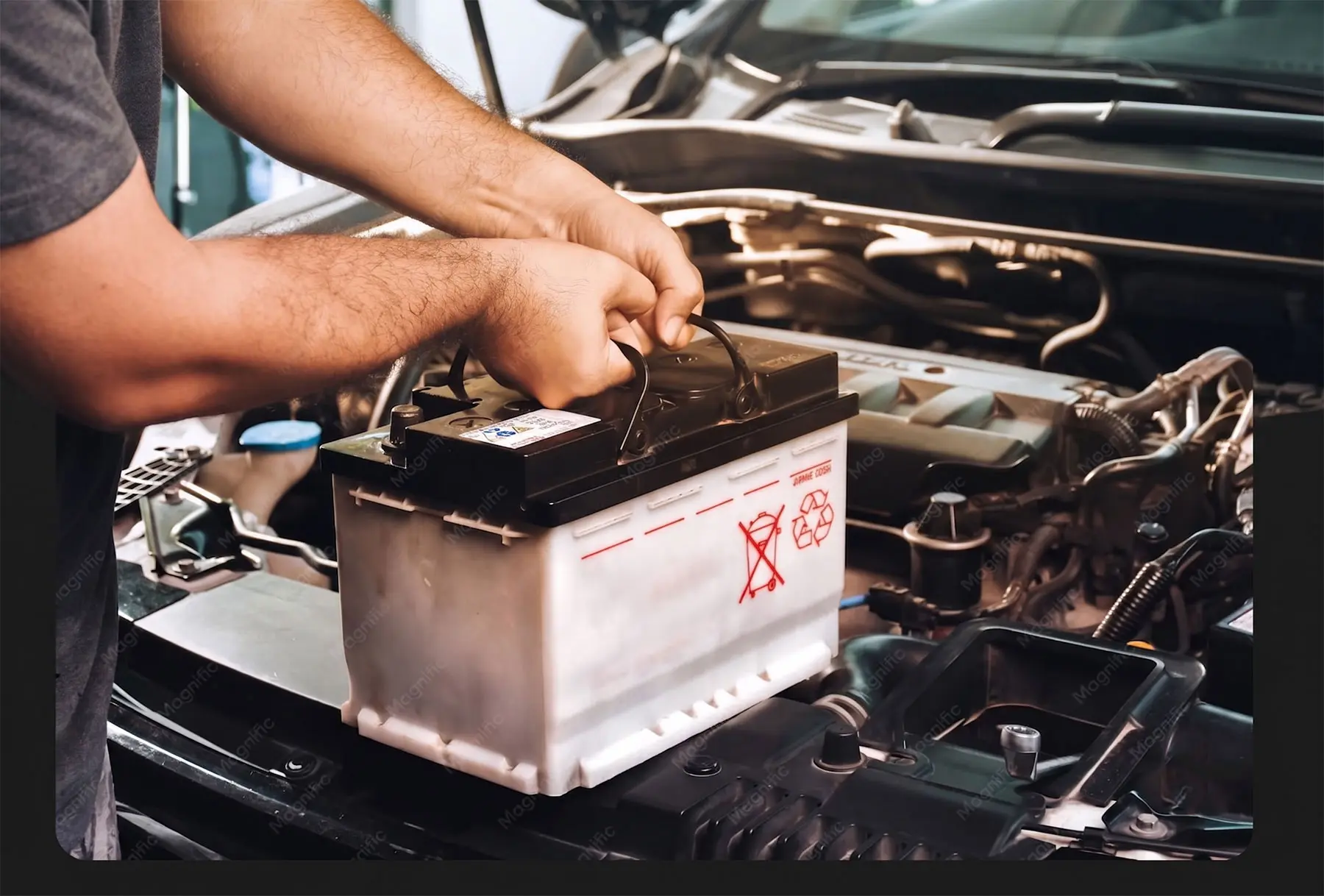
Finally, never underestimate the power of simple, proactive maintenance. Many hybrid batteries reach the end of their life prematurely simply because they spent years running at elevated temperatures due to restricted airflow. Make it a habit to check your cooling fan intake every 10,000 miles. A simple vacuuming or cleaning of the fan screen can prevent heat-related cell degradation, ensuring that your battery stays in that "sweet spot" of performance for as long as possible. Remember: being an informed hybrid owner means knowing when to troubleshoot, when to maintain, and when to invest.
Conclusion
In summary, a failing hybrid battery is rarely a sudden, catastrophic event. Instead, your Toyota Prius or RAV4 will almost always provide you with subtle, persistent clues long before it leaves you stranded. From the gradual creep of declining fuel economy and the erratic behavior of the State-of-Charge gauge, to the tell-tale signs of a laboring gasoline engine and cooling fan noise, these symptoms serve as your early warning system. By staying attuned to the "voice" of your hybrid’s powertrain, you shift from being a passive driver to an empowered owner, capable of making informed decisions about repair versus replacement.
The longevity of the Hybrid Synergy Drive is one of the greatest engineering achievements in modern automotive history. With proper attention—such as keeping your battery cooling intake free of debris and responding promptly to diagnostic codes—many of these vehicles are capable of running for well over 200,000 miles. When the time eventually comes to address a failing battery, view it not as the end of your car’s utility, but as a maintenance milestone. Whether you choose to recondition your existing pack or invest in a high-quality replacement, your Toyota remains a platform worth maintaining. Stay vigilant, keep your cooling system clean, and trust your intuition when your car starts telling you that something is amiss. A well-maintained hybrid battery is the heartbeat of your vehicle's efficiency, and protecting it ensures that you continue to enjoy the reliability and fuel savings that drew you to the Toyota hybrid experience in the first place.




Written by Maarukh Shahbaz
Published Jul 8, 2026 in Maintenance & Tips.